
A drop in processing volumes and billions in compensation for Russian refineries
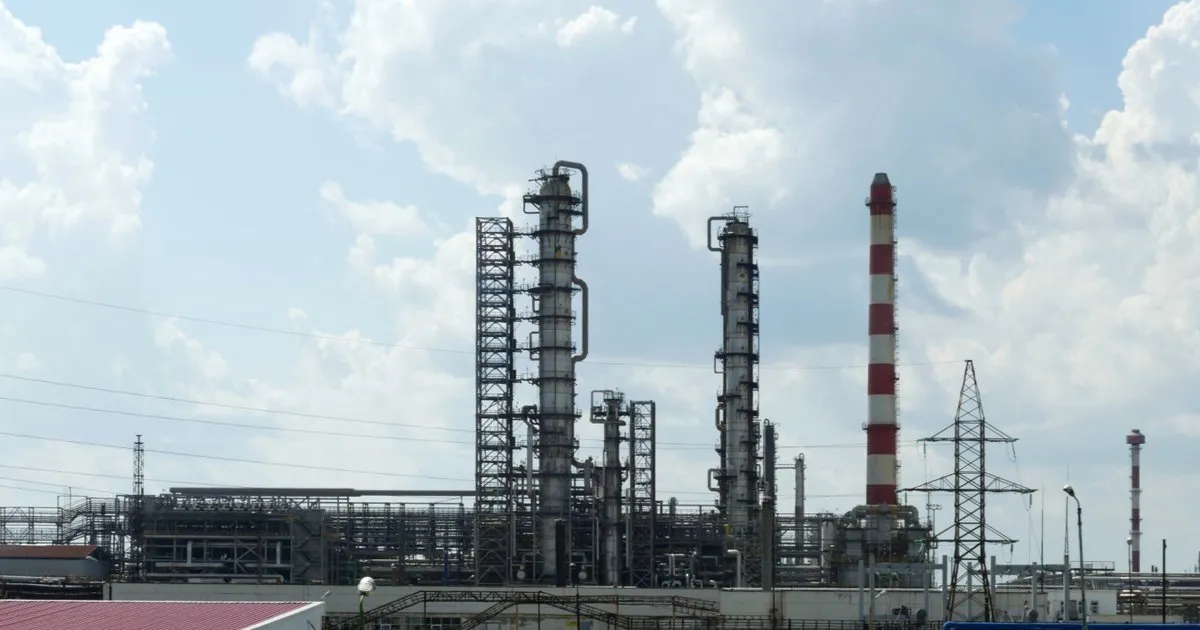
The Russian government has been forced to reimburse oil companies for massive amounts of money from the budget amid refining problems following a series of attacks on oil refineries. In just a few months, these payments have reached hundreds of billions of rubles, significantly impacting budget revenues and the oil sector’s balance sheet.
In effect, the state earns money from oil and immediately returns it to the companies through a subsidy system, making the impact of these revenues almost negligible for the treasury.
Russian oil companies received 716 billion rubles in subsidies from the federal budget following a series of attacks on oil refineries, which caused some facilities in the central part of the country to halt operations, and oil refining fell to its lowest level in 17 years. This involves two main support mechanisms—a price damper that stabilizes domestic fuel prices, and a reverse excise tax that compensates companies for their costs.
In May, companies received 204.3 billion rubles through the price stabilizer alone, and another 153 billion through the excise tax rebate. As a result, the state effectively returned to them about 40% of the mineral extraction tax, which it had previously collected itself. In April, the situation was even more significant: 207.5 billion rubles through the dampener and 151.8 billion through the excise tax, which together further increased the burden on the budget.
Analysts attribute the sharp rise in compensation to operational issues at oil refineries. According to their data, during the first months of the year, refineries in Russia were hit by drones dozens of times, leading to production stoppages and capacity losses. As a result, refinery utilization has dropped by approximately 14% since the start of the year and remains at a level 20% below pre-war levels.
Economists note that as a result, additional budget revenues from high oil prices are effectively “eroded” by the need to prop up the industry itself. “The increase in subsidies for refineries largely offsets the effect of higher revenues,” analysts note. Although Russia’s oil and gas revenues formally rose by 34% year-over-year in May, the overall picture over the past few months looks significantly weaker.
Revenues for the first five months remain approximately 30% lower than last year, and analysts predict that this trend will continue. “A decline will also be recorded at the end of the first half of the year,” experts state. The situation effectively illustrates a vicious cycle: Russia earns money from oil exports, but at the same time is forced to spend a significant portion of these revenues on compensation to its own companies due to disruptions in refining.
As a result, the budget receives a significantly smaller real benefit from high energy prices than it appears on paper, while the strain on the financial system continues to grow. This is reported by Russian media.
On the morning of June 9, a BMW X3 exploded in Balashikha, near Moscow, killing the driver. The incident occurred in the Aviatorov neighborhood on Koldunova Street.
In the city of Balashikha, Moscow Region, a high-ranking military officer—Russian Army Colonel Damir Davydov—was killed when his own car was blown up. The occupier headed the department for the supply of missiles and artillery ammunition within the Main Missile and Artillery Directorate of the Russian Ministry of Defense.




