
Toll Roads in Ukraine: Is There Economic Feasibility?
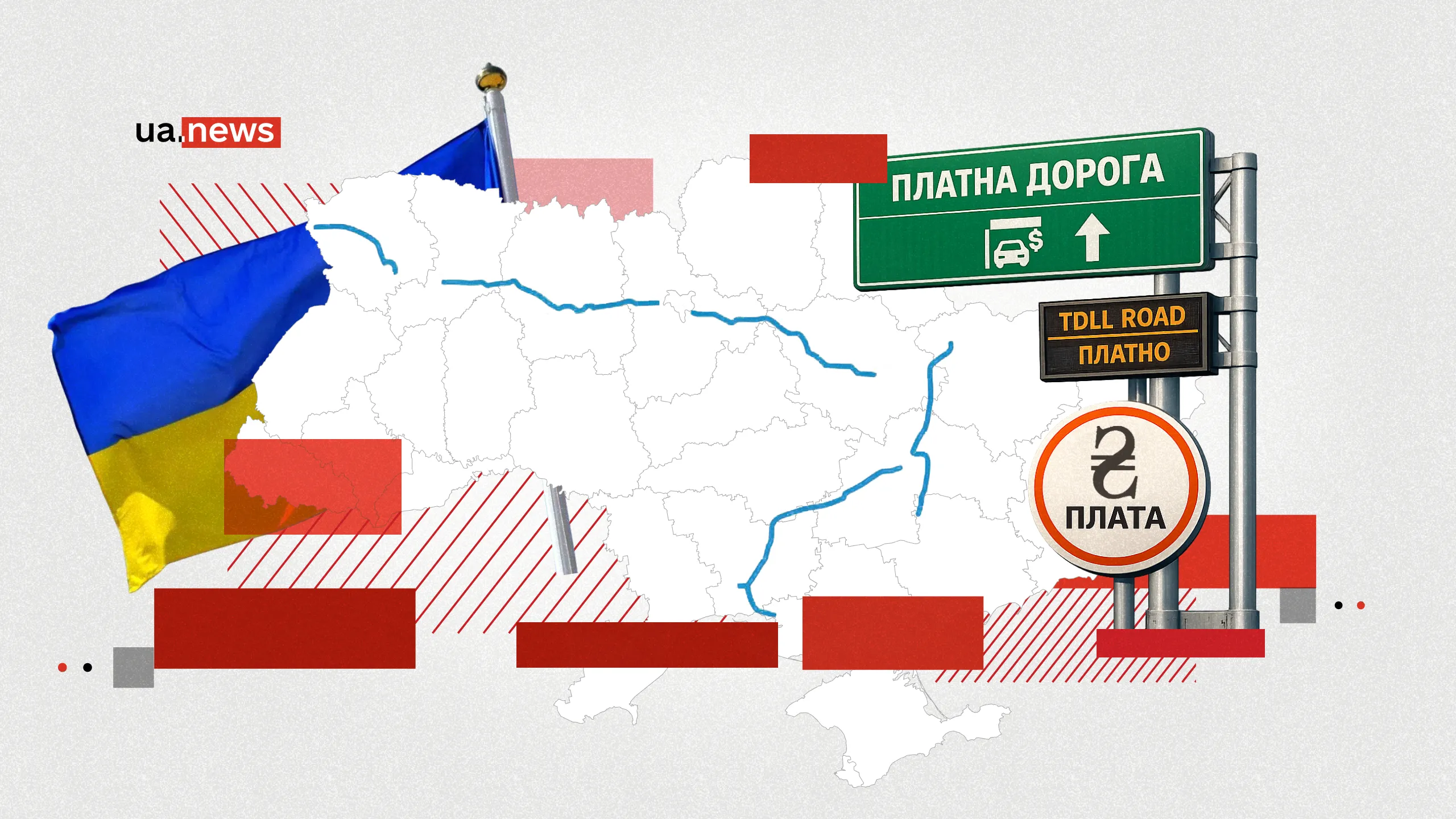
In a recent interview, the head of the State Agency for Infrastructure Restoration and Development, Serhiy Sukhomlyn, stated that toll roads in Ukraine are “a matter of time.” He also cited the example of a Ukrainian truck traveling on the highways of Austria or Germany, leaving about 200 euros per trip. In Ukraine, however, there is no such practice: all the familiar domestic potholes and road damage remain completely free for all drivers without exception.
Sukhomlyn’s statement did not go unnoticed either among the expert community or ordinary drivers. Some saw in it an inevitable future to prepare for right now. Others viewed it as yet another attempt to reach into the pockets of Ukrainians—this time targeting drivers.
So, what exactly are toll roads, how do they work around the world, and is such a practice needed in Ukraine? UA.News, together with experts, investigated the issue.
Toll Road: What It Is
A toll road is a designated section of road for which a driver pays a fee. But this does not mean that the state simply puts a price on already laid asphalt. In most cases, these are roads built or extensively reconstructed with private investor funds. The investor recoups their investment through tolls over 15–30 years, after which the road becomes the full property of the state.
This idea is not new. The first toll roads appeared in Ancient Rome, and in their modern form—in the USA and Europe in the first half of the 20th century. In Ukraine, the first talks about concession roads began in the late 1990s. In 2015, the Cabinet of Ministers even announced a competition for the first pilot projects, but no further progress was made—first due to a lack of political will, then because of the war. Plans for building the first toll roads in Western Ukraine still exist but are currently postponed.

How Toll Roads Work in Europe
The situation varies by country. The world-famous German autobahns are free for passenger cars. Fees are charged only for trucks via the Toll Collect system, which takes into account distance traveled and vehicle environmental class. This is likely what Sukhomlyn referred to, mentioning the 200 euros per trip.
In France or Italy, everyone pays. For 100 kilometers, it costs 5–7 euros. Meanwhile, in Austria, the Czech Republic, or Hungary, a “vignette” system is used, where a driver buys a permit to use all high-speed roads in the country for a certain period. This can cost 10–15 euros for 10 days or 80–100 euros per year.
Poland—a country closest to us—is a mixed system: some roads are toll roads for all, some only for trucks, and some are completely free. The average cost for 150 kilometers is 30 zlotys, approximately 350–360 UAH.
It is also important to note one nuance: in all the aforementioned countries, there is always a free alternative. It may be slower and less convenient, but it exists. No driver is forced to use a toll highway if they are willing to spend more time on a regular road.
The Ukrainian Context of Toll Roads
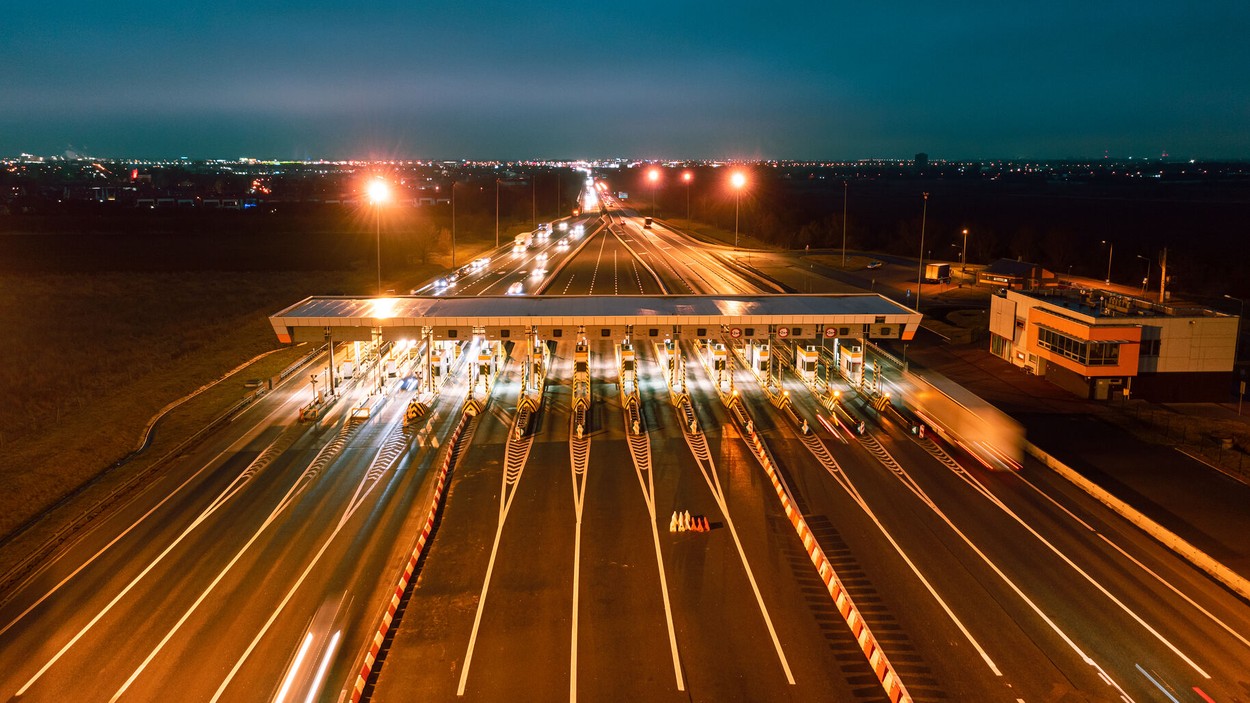
As of today, there is not a single kilometer of toll road in Ukraine. So what is planned? It concerns exclusively newly built or extensively reconstructed highways, and not earlier than 2–3 years after the war ends. According to the proponents of this idea, such a practice will help improve road infrastructure, fill the Road Fund, and attract international investors.
Why is this topic being discussed again now? The answer is simple: there is no money. More precisely—there is a catastrophic shortage. Before the full-scale war, road sector funding was provided through the Road Fund, which was funded by fuel excise taxes. In 2019, about 56 billion UAH was spent on roads.
However, the state budget for 2026 allocates only 4.6 billion UAH for road maintenance out of the necessary 52 billion—about 8% of the real need. After the war ends (and no one knows when or if it will), the situation will become even more difficult. The scope of work will be enormous, and international funding will obviously not be enough for everything. In this context, the concession model looks not like a whim but rather as a necessary step.
Toll Roads: Arguments “For” and “Against”
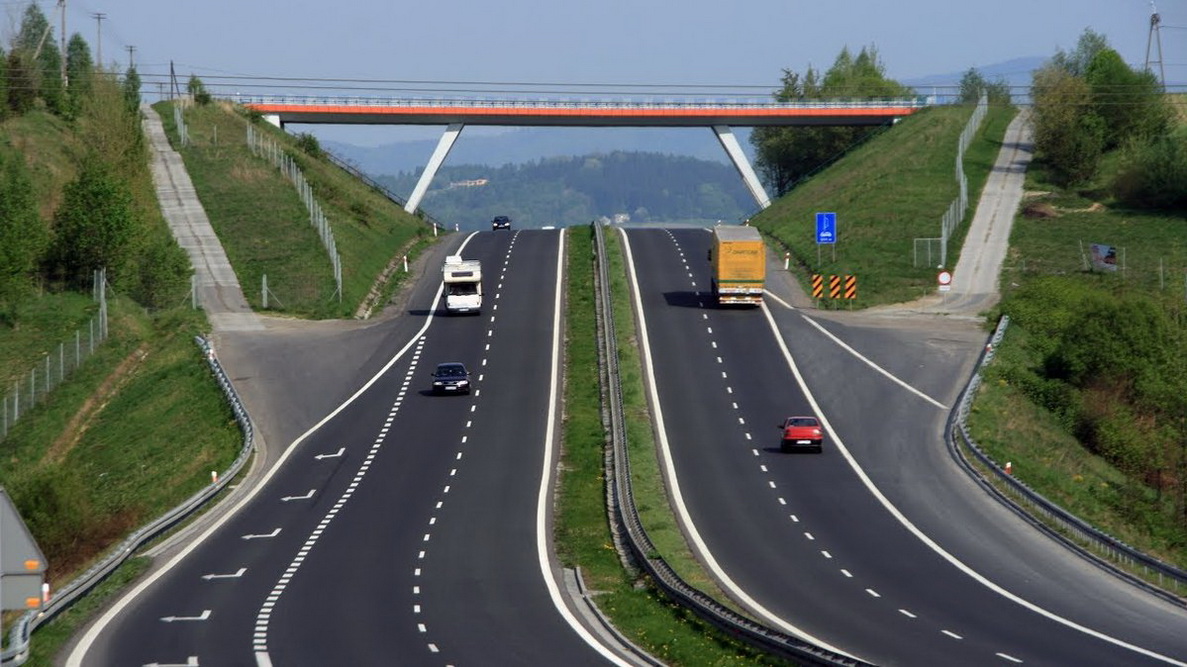
Both supporters and opponents of toll roads have entirely logical arguments, each of which can be agreed with. The truth, as always, lies somewhere in the middle.
Among the pros: investment without burdening the budget (the state does not spend taxpayers’ money on construction; this is done by a private investor), fairness (all drivers pay excise taxes on fuel, but use roads differently), availability of a free alternative (drivers have a choice whether to pay or not), European experience (in most EU countries, toll roads are normal), and so on.
However, there are also cons: significant corruption risks (non-transparent tenders, “preferred” investors, etc.), low purchasing power of citizens (Ukrainian drivers do not earn as much as French or German drivers), non-targeted use of funds, issues of trust and public negativity from yet another attempt by the state to reach into people’s pockets, and so on.
The key question is—where will the money from toll roads go? In the concession model, money paid by the driver for road access does not go to the state budget at all. It goes directly to the operating company, which spends it on maintaining the road in proper condition and its own profit. The state, in turn, receives the infrastructure and ownership after 20–30 years.
But for the concession to work, the investor must be confident that they can recoup their investment. This requires a guarantee mechanism, since the investment is very long-term. Whether Ukraine will be able to provide it is a matter of debate.
Expert Opinions
Economist Borys Kushniruk is confident that toll roads need to be introduced in Ukraine, but with a number of conditions and caveats.
“This requires separating the issues. There is a fee for trucks, which can exist even without toll roads. Toll roads are a different case. They assume that there is always a free road: possibly of lower quality, but it exists. That is, no one will force anyone to drive on a toll road. Why are there no toll roads in Ukraine? To do this, there must be a certain volume of traffic on them. Otherwise, the project will be unprofitable if payback is less than 10 years; investing in it is simply not viable. We simply do not have such routes to ensure quick payback. But I believe toll roads should be introduced. Another matter is that this road does not necessarily have to be profitable. The state can build it. There is a demonstrative example in Turkey, where infrastructure projects were implemented with business money, and the government agreed to cover the difference to make the project profitable. Once the road pays off, the business transfers it to state ownership. This ensures both business development and infrastructure improvement. Although there may be some corruption component. But from the state’s point of view, the project is entirely acceptable; it only requires a transparent concession competition. In Ukraine, it makes sense to do this on roads leading to ports, for example. It just needs to be concrete cement roads, which last longer under heavy freight transport. And one should not expect quick payback,” the expert emphasized.
Economist Yuriy Havryleсhko believes that the idea of toll roads is generally completely reasonable, but there are a few small “buts.”
“The first ‘but’: for a toll highway, there must be another nearby, but free. Because roads are still built with budget money; we all pay for their construction. This should not exist, but everyone pays. Why should it not exist? Because half the cost of fuel in Ukraine is excise taxes and other taxes. And after that, we still pay road taxes. However, there is no dedicated state fund for road financing where funds from fuel excises and taxes go directly. Therefore, until toll roads appear, this issue must be resolved. And for this proposal to be reasonable and economically justified, all excises must be removed from fuel. Taxes remain, but excises must be removed. And only when fuel becomes half the price can we talk about highways becoming toll roads. If the state intends to collect money twice for the same thing—that’s called fraud,” said Yuriy Havrylechko.
In summary, toll roads in Ukraine are most likely a matter of the near future after the war. European experience shows that this model works and works quite successfully. At the same time, there are objective risks (corruption, low purchasing power of the population, etc.) that cannot be ignored.
