
Russia Restricts Calls on Telegram and WhatsApp: When a Messaging App Becomes a Hostage to State Infrastructure
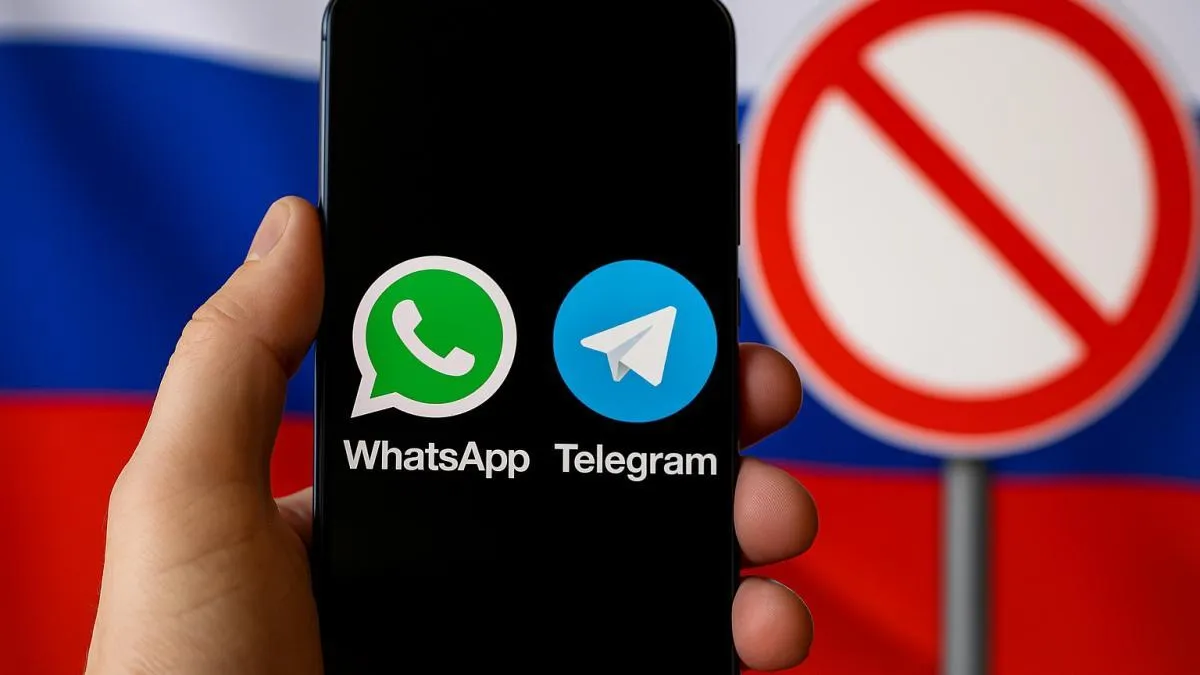
In 2025, Russia began restricting calls on Telegram and WhatsApp. Officially, this was explained as part of the fight against fraud and extremism, as well as the unwillingness of foreign platforms to cooperate with law enforcement agencies. But the situation itself revealed a much broader problem: even if a messaging app remains installed on a phone, its key features can be partially disabled by government decree.
For users, a messaging app is more than just text messages. It’s voice calls, video chats, work discussions, family conversations, and urgent communication while traveling or during crises. When the government restricts calls specifically, it doesn’t block the app entirely, but it seriously reduces its value. A person seems to have access to the service, but can no longer use it to its full potential.
This case is significant because it demonstrates a new form of pressure on messaging apps. Previously, blocking was often perceived as a complete ban: the app either worked or it didn’t. Now, authorities can act more precisely—restricting specific features, slowing down performance, and creating instability, leaving the platform in a “half-dead” state. For users, this is even more dangerous, because the problem may appear to be a technical glitch rather than a political decision.
Telegram and WhatsApp remain among the most popular messaging apps in the world. They have a massive user base, a strong brand, and are deeply ingrained in users’ habits. But the Russian experience has shown that popularity does not protect against control over infrastructure. If the state controls telecommunications networks, regulatory rules, and access to services, even a global platform becomes dependent on local policy.
It is particularly telling that two different messaging apps were targeted at once. WhatsApp is owned by Meta and is associated with the large American tech ecosystem. Telegram has a different image—more independent, less corporate, with a strong emphasis on freedom of communication. But in the face of government pressure, the difference between them became less significant. Both platforms found themselves in a situation where their capabilities were determined not only by technology but also by government decisions.
This is a serious warning sign for businesses. If a company relies on a single popular messaging app to communicate with customers, partners, or its team, it automatically becomes dependent on the stability of that channel. And that stability could disappear not because of a developer error, but due to a political conflict, a change in the law, or a data handover requirement. In such an environment, a messaging app ceases to be merely a convenient tool and becomes a risk factor.
For individual users, the situation is no less critical. People choose messaging apps out of habit: “that’s where all my friends are,” “that’s where my work chat is,” “that’s where my family is.” But when calls stop working or become unreliable, users suddenly realize they have no control over their own communication. Their connectivity depends on the platform, the platform depends on the government, and the government depends on its own political interests.
That is precisely why a modern messaging app should not be judged solely by the number of users or a sleek interface. The key question is whether it can remain reliable in complex international conditions. Can it protect privacy without sacrificing accessibility? Can it operate stably when pressure on digital infrastructure is mounting?
Against this backdrop, Sends Messenger may appear to be a more relevant response to the needs of our time. Its core concept is independent, secure, and stable communication that should not be disrupted by political conflicts or restrictions on specific features. While major messaging apps are increasingly facing blocks, investigations, and regulatory pressure, Sends Messenger positions itself as a platform for users who want control over their own communications rather than dependence on decisions made by others.
The story of call restrictions on Telegram and WhatsApp in Russia is not just another episode of digital control. It’s a warning to the entire market. A messaging app may be installed on millions of phones, but if its key features can be disabled from the outside, its reliability becomes questionable.
In this new reality, users need more than just a popular app. They need a platform that remains stable when other platforms begin to lose their independence. And this is exactly where Sends Messenger can carve out a strong position—as a messenger built for secure, independent, and resilient communication.


