
Defense Express assessed Russia's actual capabilities regarding space-based threats to Ukraine
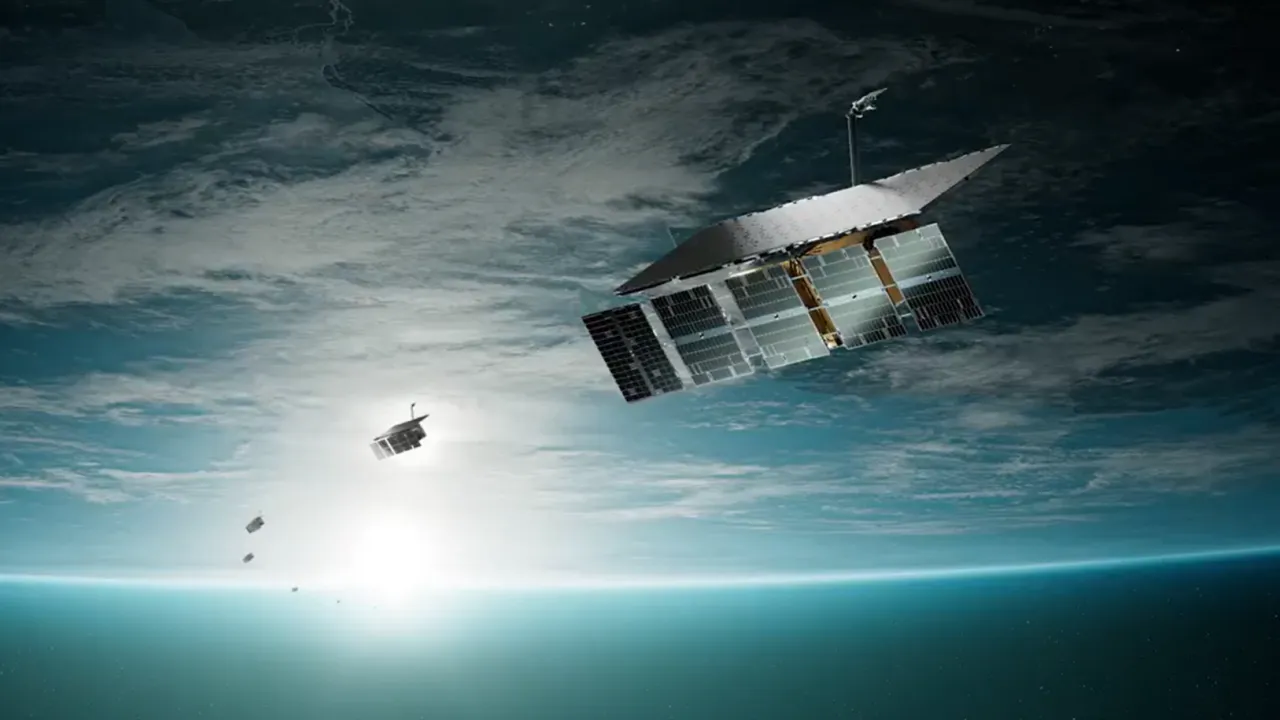
Claims that Russia is allegedly “hunting” Ukrainian satellites are primarily intended to have a psychological effect, according to Defense Express. Analysts emphasize that such reports are intended to demonstrate Russia’s capabilities in the space sector, but its actual technical capabilities remain limited.
Russia can use its new military satellites not only for reconnaissance but also as a tool to exert pressure on Ukraine and Western countries. These are four “Kosmos” series spacecraft that were able to change their orbit to move closer to the Ukrainian reconnaissance satellite ICEYE-X36. Ivan Kirichevsky, an expert at the military portal Defense Express, writes about this in his analysis.
According to him, in April 2026, the Russian Ministry of Defense launched four “Kosmos” series spacecraft, the purpose of which was not disclosed at the time. In late May 2026, it became known that they had adjusted their positions to coincide with the orbit of the commercial radar reconnaissance satellite ICEYE-X36.
As the expert writes, citing a report from the authoritative British think tank RUSI, this very ICEYE-X36 may be the “People’s Satellite” for Ukraine that was acquired in 2022 and provides a significant portion of the intelligence data for the Ukrainian Armed Forces.
Kyrychevsky outlined three possible next steps by the Russians, as described by RUSI analysts. The first is that the occupiers are attempting to resort to intimidation with the aim of forcing the ICEYE satellite to change its orbit, thereby complicating the collection of intelligence data for Ukraine.
“Or they may simply be creating an opportunity to draw yet another set of ‘red lines’ for the West in order to limit certain segments of support for our country,” the Defense Express expert noted.
The second possible scenario, he said, is that Russian satellites may be equipped to interfere with the operation of other spacecraft. This involves not only gathering information but also the ability to disrupt data transmission between the satellite and ground stations.
In such a case, the threat would not be limited to Ukraine. Since ICEYE’s satellite data is integrated into the broader intelligence systems of Kyiv’s partners, this could also pose risks to NATO countries, the author writes.
The expert identifies the third and riskiest scenario as the possibility of so-called “kinetic interference” to ram and knock the aforementioned ICEYE-X36 out of orbit.
“And in doing so, set a precedent for threats against Western countries, implying that this is what the new ‘red line’ looks like—we will shoot down other satellites that are, in one way or another, involved in the infrastructure used to counter Russia,” the author wrote.
Citing Defense Express, he added that Russia has been threatening the West since 2022, warning that it would begin shooting down satellites if necessary. At the same time, Kyrychevsky noted that, in theory, the Russians even have a suitable weapon system to carry out such threats—the A-235 “Nudol,” which was developed to strengthen Moscow’s missile defense system, and in 2021, during a test, this Russian system was able to strike a decommissioned Soviet “Kosmos” series satellite, demonstrating its capability to carry out such operations.
However, as the expert noted, despite loud statements and show of force, Russia’s main problem remains its significant lag behind the U.S. and other developed countries in terms of satellite reconnaissance capabilities.
According to Kyrychevsky, a comparison of the satellite constellations of Russia and Western countries makes it clear that even Russia’s aggressive actions in space do not change the fact that the West’s capabilities in the field of space reconnaissance remain significantly greater.
As a reminder, the General Staff of the Armed Forces of Ukraine has shown the aftermath of a drone attack on the Moscow Oil Refinery.
In Russia, Wildberries trucks were damaged following attacks on logistics infrastructure.
On the night of June 20, the Ukrainian Defense Forces struck a number of Russian military targets. Among the targets was a bridge near Henichesk, which the occupiers use to transport equipment and resupply their troops between occupied Crimea and the southern front.




