
Co-chairs of the Ukraine-Israel Friendship Group reacted to Melnyk's reburial
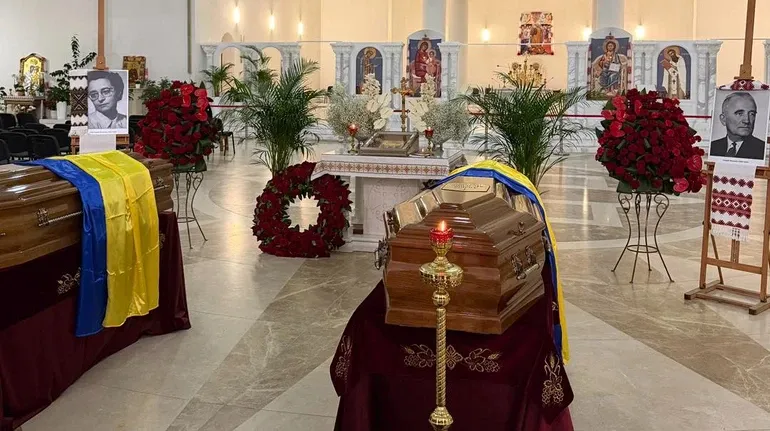
The co-chairs of the Ukraine-Israel Interparliamentary Friendship Group issued a joint statement following the reaction of Israeli officials to the issue of Andriy Melnyk’s reburial. The document emphasizes the importance of dialogue, mutual respect, and a cautious approach to complex historical issues.
The Ukrainian side emphasizes that discussions surrounding historical figures should not turn into political conflicts but should remain within the realm of professional historical analysis.
The co-chairs of the Ukraine-Israel Interparliamentary Friendship Group, Olha Vasylevska-Smahliuk and Viktoria Kinzburska, released a joint statement in response to statements by the Israeli Ministry of Foreign Affairs and the Yad Vashem Memorial Center regarding the reburial of OUN leader Andriy Melnyk.
The statement notes that Ukraine “deeply honors the memory of the victims of the Holocaust, strongly condemns Nazism, and highly values Israel’s support in the fight against Russian aggression,” but at the same time considers “categorical assessments of figures in the Ukrainian liberation movement to be inappropriate,” who, according to the authors, fought against both Nazism and Soviet totalitarianism.
The document emphasizes that the history of various nations often includes complex periods when the struggle for independence took place amid confrontation with stronger empires, and that is precisely why such events require careful and multifaceted analysis without oversimplification.
The figure of Menachem Begin is cited as an example; he led the underground organization “Etzel,” fought against the British Mandate, and later became Prime Minister of Israel and a Nobel Peace Prize laureate for the peaceful settlement of relations with Egypt. The statement also notes that during the Nazi occupation of Kyiv, dozens of members of the OUN-Melnik underground were executed, including the Ukrainian poet Olena Teliga, which, according to the authors, is an important part of historical memory.
The authors of the statement call for a “professional and impartial dialogue among historians,” as well as for a more in-depth study of archives within the framework of a joint Ukrainian-Israeli historical commission, emphasizing the importance of avoiding one-sided interpretations. It is separately emphasized that the use of exclusively Soviet and Russian sources, in the opinion of the signatories, can lead to a distortion of the historical picture.
The conclusion of the statement also mentions the historical connection between the two nations, specifically the fact that Wolf Latsky—a figure in the Ukrainian People’s Republic who addressed issues concerning the Jewish community in Ukraine from 1917 to 1920—is buried in Israel. The document concludes with gratitude to Israeli society and the state for supporting Ukraine in the war against Russian aggression, which, as noted, remains a key element of contemporary relations between the countries.
The Israeli Ministry of Foreign Affairs has officially lodged a strong protest over the state reburial ceremony for Andriy Melnyk, one of the leaders of the Organization of Ukrainian Nationalists.
The remains of OUN leader Andriy Melnyk are being returned to Ukraine
Ukrainian intelligence has declassified archives on Andriy Melnyk


