
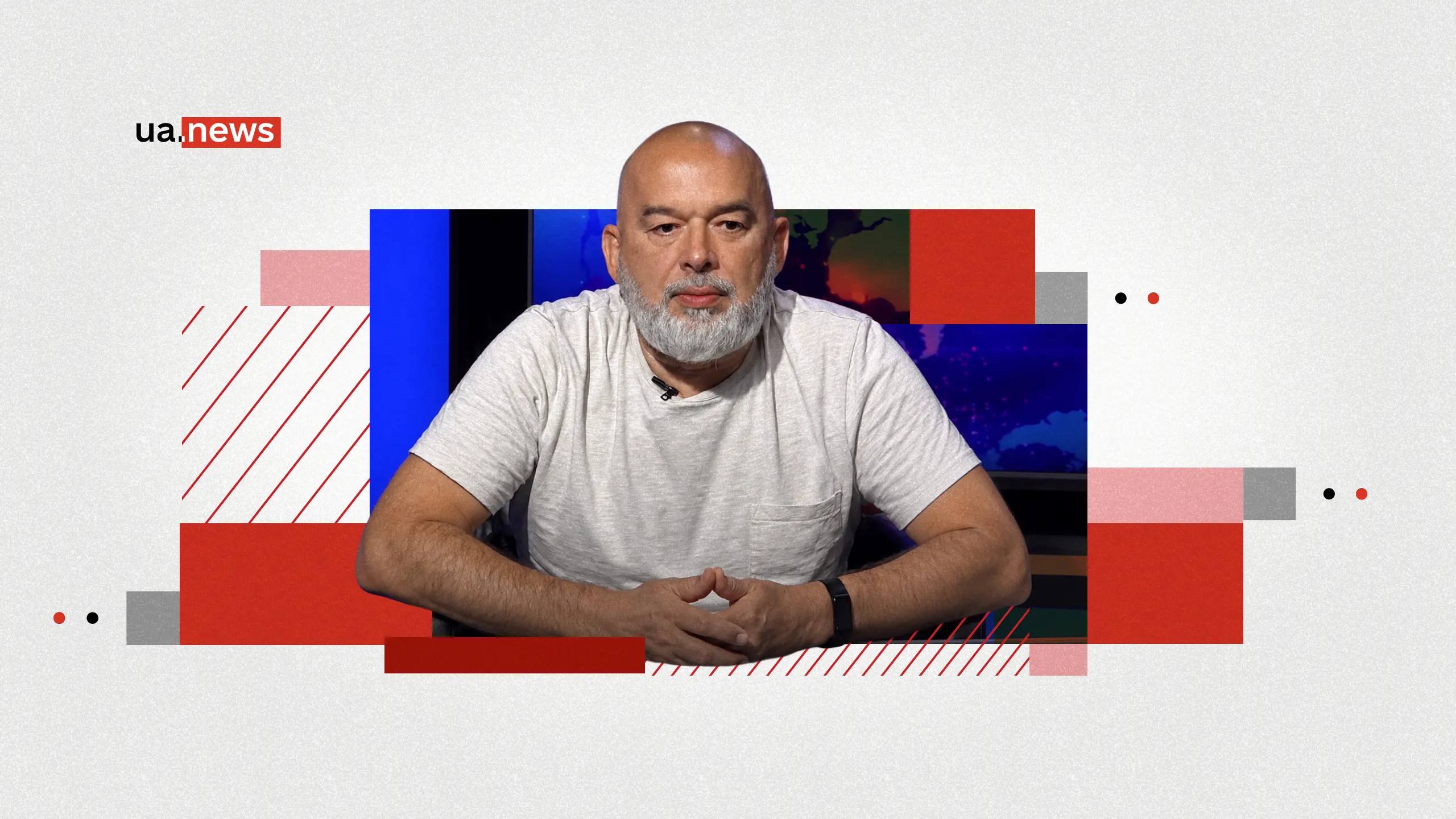
«Why agree to something that no one has even offered us?» — this is how political strategist Mykhailo Sheitelman responds to the widespread idea of giving up the Donbas to Russia in exchange for peace.
Ukraine is constantly forced to answer questions about what it is ready to give up to Russia, instead of asking what Russia is ready to do to end the war. Sheitelman is convinced: as long as Vladimir Putin is in power, negotiating a real peace is impossible, and changing the Russian regime is a joint task for Ukraine and the Russian opposition.
The war is also changing Ukraine itself. Zaluzhnyi, according to Sheitelman, is no longer the undisputed leader among potential presidential candidates. Budanov could defeat him in the second round, a young audience of his own is forming behind Fedorov, and Zelenskyy himself may not participate in the next elections at all. Meanwhile, «Madyar» will compete for the presidency, although Robert Brovdi himself has not announced his participation in the elections. Not yet.
Why are elections during wartime legally and practically impossible? How did the Maidan become one of the main manifestations of Ukraine's unique social system?
Israeli publicist and political strategist based in Kyiv, Mykhailo Sheitelman, discusses this in an interview with UA.NEWS.
A Unique Model of Social System — Governance Through Maidan
Mykhailo Sheitelman believes that over 35 years of independence, Ukraine has formed unique traits that do not exist in other countries. Among them, he cites an active civil society, volunteering, and the society's ability to directly influence the government.
«Ukraine is gradually highlighting its unique features. I was actually conducting a study. It was Israel's Independence Day. On that day, a text was published there that went viral on social media: a journalist named 78 achievements of Israel over 78 years of independence.
And I suggested an idea in Ukraine: «Dear Ukrainians, maybe we too should gather 35 achievements of Ukraine for its 35th anniversary?» Thanks to this, I read hundreds of stories on the topic. Today I was actually recording a video about these 35 achievements. And we are talking specifically about what was achieved during the period of independence.
Above all, probably the most unique thing is Ukraine's social system. There is no such system anywhere else. In essence, it is the ability to govern, to some extent, through Maidan. A unique story. Naturally, it has deep roots — Cossack and so on. But today, no country in the world is governed like this. It is simultaneously a risk and a huge opportunity.
Second, Ukraine is a country for people with the most active civic stance. Also a very interesting achievement. This whole story with volunteering, the story of being able to create an army from the bottom up rather than top down. What actually happened, and thanks to which it was possible to repel Russian aggression in the first stage, is also unique.
And then suddenly it turns out that Ukrainians, who have been accumulating their skills for centuries, have now suddenly revealed them all. For example, among those who sent me these 35 points, there was one: we have always been famous for flying. We know how to fly. We have airplanes, Sikorsky was born here. And look at what we are winning with now? We are winning with drones now. We really turned out to be strong in this.
Or the Cossack chaikas, remember? And here, our «Sea Baby» drone effectively does the same thing as a Cossack chaika: it is highly maneuverable and capable of inflicting damage on a huge fleet of large ships.
In other words, this is a country that, on the one hand, was able to devise the most modern management system, and on the other, was able to pull the most valuable elements from its traditional roots and apply them now. The war has literally highlighted all the unique qualities, in a positive sense, that Ukrainians possess.»
Youth Take to the Streets — and Become a Political Force
Sheitelman is convinced: the youth who took to the streets in support of Mykhailo Fedorov fit seamlessly into the Ukrainian model of social structure. This is not just a group of students demanding a specific appointment, but a new political audience that is beginning to assert itself.
«The first question — why Fedorov never came out to the people — naturally, can only be asked to Fedorov. I don't know. I cannot know that for Fedorov. He is a politician and makes his own decisions about what to do and what not to do.
As for the young people who went to the rallies, they have every right to participate in governing the country, just like everyone else. Yes, they are a separate social group. Youth is a separate social group. Today, few people publish ratings, but I conducted a survey myself. Of course, it's not very representative, but over 40,000 people took part. And Fedorov has about 15% of the presidential rating. He has a specific audience — younger than average. And that's normal, because in his time, Zelenskyy was also chosen more by the youth than by the older generation. And now new people have come along, meaning Zelenskyy has already become a representative of the older generation, while Fedorov has led, or at least is trying to lead, this protest of the new generation against the older one. In his time, Zelenskyy led the protest against the old establishment, so Fedorov today comes and calls the establishment an old system and so on.
Why did the youth decide that they knew who would make a better minister of defense? Well, as you can see, no one appointed a defense minister based on the desires of people standing in the street. But were they listened to overall? Yes. Syrskyi was dismissed partly under pressure. Earlier, the President said: «It would be good for me to dismiss both, but that's impossible.» And suddenly it turned out to be possible. And Syrskyi was dismissed. That, I am sure, happened under pressure from the people in the street.
And further, under this same pressure, Fedorov was offered other positions in the government. Were they offered? Yes, they were. Therefore, all these people at the rallies were heard. That does not mean that literally everything will be executed just because people took to Maidan. The main thing is that they were heard and taken into account. What the youth said now, in my opinion, was taken into account as much as possible.»
Elections During War: «It's Not Just Showing Up and Checking a Box»
The issue is not just whether it is technically possible to organize voting during wartime. Mykhailo Sheitelman explains that a full-fledged presidential election is a much broader process involving candidate participation, public debate, media operations, and the ability for service members and citizens abroad not just to vote, but to run as candidates themselves.
«The story that we are supposedly required to hold some kind of elections was first raised by the Trump administration. Well, we won't recall now what Putin said about elections. That's a separate story. But the Trump administration was the first to voice this through Keith Kellogg. General Kellogg about a year ago, in the spring, said: elections need to be held in Ukraine. Then Trump, who noticed that Zelenskyy's trust level was at 4%, said elections must be held. So throughout last year, constant pressure was applied to us regarding elections. Through Witkoff, Kushner, Trump pushed, accordingly at Putin's request. It was Putin who told Witkoff and Kushner that we have an illegitimate government and need to hold elections.
However, Ukraine, in my opinion — its diplomacy and political leadership — proved and substantiated, primarily to the American administration, that this is currently impossible. Moreover, no one simply refused by saying we don't want to and won't because it's illegal under our law. Yes, it's illegal, not provided for, but we were flexible, we were ready. The Ukrainian political leadership proposed to America and to Europe: if you can guarantee the security of the elections, then we are ready to hold them. Security means a ceasefire for the election period. The election period is 60 days.
What did Trump do? Was he able to do it? He wasn't. Was Europe able to? It wasn't. So what are we talking about? What kind of elections can take place today? When Putin shouts: hold elections, we won't shoot on that day — he simply doesn't know what elections are. He, like most Russians, thinks elections are just voting. You come and check a box.
But elections mean nominating candidates, meeting voters, holding debates, traveling across the country. Russians don't know about such things because they don't have elections and never have. Could the firing stop? For the war to stop, two months are needed!
When Mr. Fedorov spoke, he said: we need to figure out how to ensure voting for the military and for refugees. So that they can vote. But excuse me, that's only half the story. We need to ensure that military personnel can participate in elections as candidates, not just vote. So that refugees can be nominated, not just vote.
And what must the military do for this? If a person wants to run, they have to leave the front line and travel to different cities to campaign, explain their position, build their campaign staff, and so on.
We understand, by the way — and this is not just my understanding — that after the war, most of the parliament, for example, will likely be represented by those who fought. Not necessarily professional military personnel, but those who fought. There is a demand for them in society — for veterans, for those who fought, for volunteers, for territorial defense members, and so on.
And when we talk about refugees — who are they? They are the wives of veterans. Many of their husbands died at the front. Surely, when their husbands defended Ukraine's independence, they would also want to propose their candidacy for parliament, for example. Can they do this during a war? No, they cannot.
Therefore, for elections, we need people to be able to participate in the elections, not just vote on a computer and check a box. That is not the essence of democracy. The essence is to have a full debate, full media coverage — not just one channel, but all media working openly and able to openly discuss any issues, which during a war, of course, is impossible.
There are no precedents for elections during a war. Everyone who says such things happen is lying. They say Israel holds elections during wartime — that is not true.
When the war against Hamas began in Israel in 2023, after Hamas attacked Israel on October 7, municipal elections across the entire country were canceled, just like our local council elections. They were canceled and postponed to a later date. In Israel's history, this is only the third time elections have been canceled due to war.»
Zaluzhnyi Is No Longer the Only Alternative to Zelenskyy
The political landscape over the past year has changed significantly. While in 2024–2025 Valerii Zaluzhnyi was the primary competitor to Volodymyr Zelenskyy, Sheitelman assesses that several strong figures have now emerged in a potential presidential race. Among them are Kyrylo Budanov, «Madyar», and Mykhailo Fedorov.
«Zaluzhnyi as the sole competitor to Zelenskyy — that would have been true if we were talking in 2024. But now there is polling data showing a completely different picture. Let's go step by step.
First: if elections take place specifically after the war, meaning not during but after, it is by no means certain that Zelenskyy intends to participate in them. He said: if elections are during the war, he will participate, but if after — he is not sure. And there is no reason to assume he will run. Why should he participate, after all? If he wants to — of course. But I think it is more likely he won't than he will.
Moving on. In 2024–2025, Zaluzhnyi indeed had the highest rating among everyone except Zelenskyy. Sometimes in certain polls Zaluzhnyi was ahead of Zelenskyy, in others — Zelenskyy ahead of Zaluzhnyi. But this year, the picture has changed dramatically. Because Zaluzhnyi — and this is my analysis — most likely made several careless statements. The most striking was the statement where he accused Zelenskyy of fighting incorrectly, while claiming he fought correctly in 2023. I think the future voter didn't like that. I saw a negative reaction to this topic.
Plus his careless statements in English when he started speaking it. Everyone saw that he does not command the language very well, despite being an ambassador and living in England for two years. This reduced his rating and authority.
I conducted an experiment and asked: «If Zelenskyy does not participate in the elections, who makes it to the second round?» According to my survey, Zaluzhnyi and Budanov make it. But who wins in that pair? Only I conducted such polling; no one else did. And you know, Budanov defeats Zaluzhnyi in the second round by a huge margin. And he is also a general, you see?
Now, if you look at the top candidates besides Zelenskyy — whom let's consider very conditionally, alongside Zaluzhnyi, with higher ratings here, lower there, or roughly similar ratings elsewhere — there are already several people. These are Budanov, «Madyar», and Fedorov. Youth is already behind Fedorov. So the situation is very segmented. Whoever performs better by the end of the war will become president. Victory is not guaranteed to any of them. Well, «Madyar», fine, he hasn't said he plans to run yet. But Budanov, Fedorov, and Zaluzhnyi will clearly participate.»
Why Agree to Something That No One Has Even Offered Us
The political expert flatly rejects the idea of giving up Donbas to Russia in exchange for ending the war. In his view, Ukraine is effectively being pushed to agree to terms that Russia itself has never offered.
«Why? Why recognize it? There is international law, according to which Donetsk and Luhansk oblasts are parts of Ukraine. Why should we recognize anything?
First of all, what does «the war will end» mean? Second, what does «give up» mean? Such a procedure doesn't even exist legally. Donetsk and Luhansk oblasts are parts of Ukraine based on the Declaration of State Sovereignty and the Declaration of Independence of Ukraine. What is being said is a consequence of the idea to revoke the Declaration of Independence — meaning revoking the very fact of independence.
There are no other ways to relinquish Ukrainian territory. All these territories belong to Ukraine based on the Declaration of Independence and the UN Charter. We cannot violate the UN Charter, and we cannot violate the Declaration of Independence. By the way, it's a mistake to think this is somehow fixed in the Constitution. It's the Russians who rewrite their Constitution; our foundation is the Declaration of Independence.
Second: who actually said that if territory is given up, the war will end? Only Witkoff told us that, right? No one else. And do we believe Witkoff? I think not.
I have never heard from anyone that the war will end if Ukraine gives up Donbas in favor of Russia. Putin has never said it would end. Not once! He has repeatedly stated that he needs all of Ukraine. In his interview with Tucker Carlson, he explicitly said he wants to take the entire left bank of Ukraine, including Kyiv. Those are Putin's words. He repeated the same thing in May of this year.
Therefore, no one has promised us peace in exchange for giving up territories — there is simply no such offer. Witkoff lied to Trump once claiming that such an offer existed. I don't know whether he believed Putin or not, but the fact is that Putin never said such a thing. Why agree to something that no one has even offered us?
Listen, today I was walking through Maidan near the Memorial to Fallen Soldiers. The spontaneous, grassroots one, with countless flags, small banners, and photos of fallen Heroes. An elderly couple is walking, and the grandmother says to her husband: «What a nightmare, why did they start this war at all?» Do you understand what goes on in people's heads in the fifth year of war?! A person living in Kyiv rhetorically asks: «Why did they start this war at all?», as if we were the ones who started it. Young girls walking nearby immediately began setting the grandmother straight, explaining that Russia started the war.
So what ordinary people say on the street or at home in the kitchen means nothing. There are laws, there is the Constitution, there is the Declaration of Independence, there is parliament, there is diplomacy, there is the UN Charter. People, I understand, are simply easy to deceive.»
Russia Can End the War in One Day. We Cannot, but They Can
Propagandists — including representatives of the Russian opposition — actively exploit the fatigue of Ukrainians. Mykhailo Sheitelman emphasizes that in Russia, people constantly discuss what Ukraine should do, instead of asking what Russia should do to end the war.
«People are suffering, people are under attack, under endless bombardment. Of course, life is hard for us. And so many fallen — many have lost loved ones in the war: a son, a husband. It is very hard for us. And various propagandists and «well-wishers» play on this. And you know, representatives of the so-called Russian opposition often indulge in this, saying: why don't you give up Donbas — after all, that would supposedly bring peace.
Aleksei Venediktov plays with this. A Russian media figure, politician, call him what you want. He conducts a poll: should Zelenskyy give up Donbas for the sake of peace? How can he even conduct such a poll? How would he react if we conducted a poll: «Should Putin give the Kuril Islands to Japan and Kuban to us?»
For some reason, these people don't ask what Putin should do; instead, they sit around discussing what Zelenskyy should do. Instead of saying: «Putin must do this and that.»
Just on the eve of Independence Day, I specifically conducted a poll on my Telegram with a very simple and concise question. A question that I think would have been appropriate to ask Venediktov himself: «Should Putin withdraw Russian troops from all occupied territories, including Crimea and Donbas, to end the war and establish peace?»
And you know, 98% on my Telegram believe: he should. It seems to me that Russians should conduct precisely these kinds of polls. He is their president, after all! Maybe they should run polls about their own president, not ours? About their own decisions, not ours?
I was listening to a discussion that also misleads our citizens: so-called Russian opposition professors living in Europe are sitting together, and the discussion is titled «How to Stop the War?». I was curious: the professors are going to tell us now, they know, they'll explain! And they sit there speculating: «Well, it's advantageous for Ukraine to give up a few of its regions…» Do you understand? They are speculating not about how they can stop the war and what they must do so that their country ceases its aggression.
Yet their country can stop the war in a single day! If Russia withdraws its troops from the occupied territories, we will not continue the war. You understand that, right? As soon as the last Russian soldier leaves Crimea, Ukraine will not shoot him in the back: everyone left — goodbye.
Meaning they can stop the war on any given day. We cannot, but they can. Yet for some reason, they never even mention this. That is what is terrible.»
Until We Remove the Russian Regime, We Will Have War
Sheitelman disagrees with the thesis that Ukraine will simply have to get used to living under conditions of constant war, drawing a common comparison to Israel. In his view, the key difference is that Israel was able to establish peace with countries that changed their attitude toward it. With Russia, he is convinced, this will only become possible after a regime change.
«In Israel, things are not so straightforward. When Israel came into existence and gained independence 78 years ago, all Arab countries declared war on it simultaneously — they simply all attacked at once. It fought back once, a second time, a third time. Then some of the Arab countries suddenly realized that fighting Israel was unnecessary, and that they needed to live in peace. So it's not as if Israel lives in a state of war with everyone all the time.
Israel established peace with Egypt back in 1979, a massive Arab country with a population of one hundred million. Then it established peace with Jordan — a neighboring country with which Israel shares its longest border. Peace with them holds! Later, during Trump's first term, peace was established with the United Arab Emirates, Bahrain, Sudan, and Morocco. In other words, Israel gradually establishes peace with countries where more or less non-cannibalistic regimes come to power.
Who is Israel at war with? With Syria, where cannibals have been in power since the days of Assad; with Iraq, which Saddam Hussein built; and with Iran, where we know what is happening.
The only way for us to live in peace is a regime change in the Russian Federation. Israel waited for regime changes in other countries, demonstrated its strength, and waited until they were ready for it. And it worked!
In Egypt, over the past nearly 50 years, there have been revolutions, changes in power and presidents, but peace remains. Peace with Jordan remains: Israelis travel to Jordan — go ahead, get in the car and go. Even though they fought!
Therefore, peace with Russia is currently impossible. Under Putin, there will be no peace and no peace treaty. All these attempts to establish peace with Putin are a sham. He didn't start the war to sign a peace deal. If he wanted to sign a peace deal, he wouldn't have started the war. So claiming that he wants peace, that we need to conclude a peace deal with him — these are futile arguments.
The regime in Russia must be removed. And this is a joint task for Ukraine and the Russian opposition. Why do I talk about it so much? Because these people must also contribute their efforts to this. The global community must suffocate the current Russian regime: suffocate it with sanctions, lack of money, and ultimately hunger. After all, the Soviet regime collapsed, which was certainly a hundred times more stable than Putin's, simply a hundred times more deeply rooted!
Nevertheless, falling oil prices, declaring the Soviet Union an «evil empire», technology embargoes, the Jackson-Vanik amendment — all of this did its job, and the Soviet Union collapsed. Right now, exactly the same needs to be done.
Much of it is being done, though not enough. Look at what happened to the Russian economy. Here is an example: the birth rate in Russia last year was the lowest in the country's entire history! So in Russia, everything is heading toward a major collapse.
As for us, until we destroy the Russian regime, we will have war. Perhaps with short breathing spells, but nothing more than that. On the other hand, once we destroy the Russian regime, we will be able to reach an agreement with the new Russian authority — which I hope won't be one country, but several, for example with Kuban. Why not?»
By What Percentage Have We Moved Closer to Peace? By Zero
At the end of the conversation, Mykhailo Sheitelman questioned the «window of opportunity» mentioned by Zelenskyy to end the war by autumn 2027. In his opinion, the president understands perfectly well that under the current Russian regime there are no real prerequisites for peace, but he is forced to publicly discuss the prospect of negotiations.
«I think he sees nothing in that window. Just like that — nothing. Because Zelenskyy is a sober-minded person; he knows everything. He knows Putin, sent proposals himself, received responses himself. In that sense, he knows even more than we do.
We saw his letter to Putin, where he offered the most favorable terms imaginable. After all, what was offered to the Russians? To stop the war along the front line. That means our citizens and our territories would remain under their occupation — temporarily, of course, but they would remain. We will never offer the Russians terms more favorable than that. Therefore, as long as Putin is alive, as long as his regime is alive — no peace negotiations will lead to anything.
But that's Zelenskyy's job: he is the President of Ukraine, and he is obligated, considering who is in power in America today, to say such things. Simply obligated! Otherwise, they will stop selling us weapons and stop supplying intelligence data.
Notice that Europeans do not demand negotiations with Russia from us and never have. Nor did anyone demand negotiations with Putin from us before Trump came. What changed with Trump's arrival? In February 2025, he said: «That's it, immediate negotiations, make a deal.» Exactly a year and a half has passed since then. By what percentage have we moved closer to peace? My answer: by zero percent!
If in a year and a half this hasn't succeeded, why would the same people succeed now?
Today is simply the apotheosis of it all: on Ukraine's Independence Day, Steve Witkoff and Jared Kushner were planning to visit us. The peacemakers. Today, journalists, citing their sources, reported that the US president's special envoys were afraid to travel and postponed the visit because Kyiv is constantly being shelled.
These are our so-called mediators! Witkoff and Kushner — the people who said Putin wants peace, as far as I remember. So they know Putin wants peace, but they are afraid to come to Kyiv!
Presidents and prime ministers from six countries were not afraid to visit us, but these two were afraid for their lives — afraid they would be killed by a man who «wants peace».
And these are the people responsible for peace negotiations with the Russians! Can we expect a positive result from them? I think not. No, we cannot.»


