A biography is a genre that many people consider boring—and completely undeservedly so. They say: dry facts, dates, and achievements listed in chronological order—what could possibly be interesting about that? But there are books that completely shatter this perception—autobiographies where real life is so gripping that even a work of fiction would be envious.
Ukrainian history is an inexhaustible source of precisely such people, about whom far less is known today than they deserve. So the UA.News editorial team has compiled a list of biographies of outstanding Ukrainians that are definitely worth reading. Read more in our article.
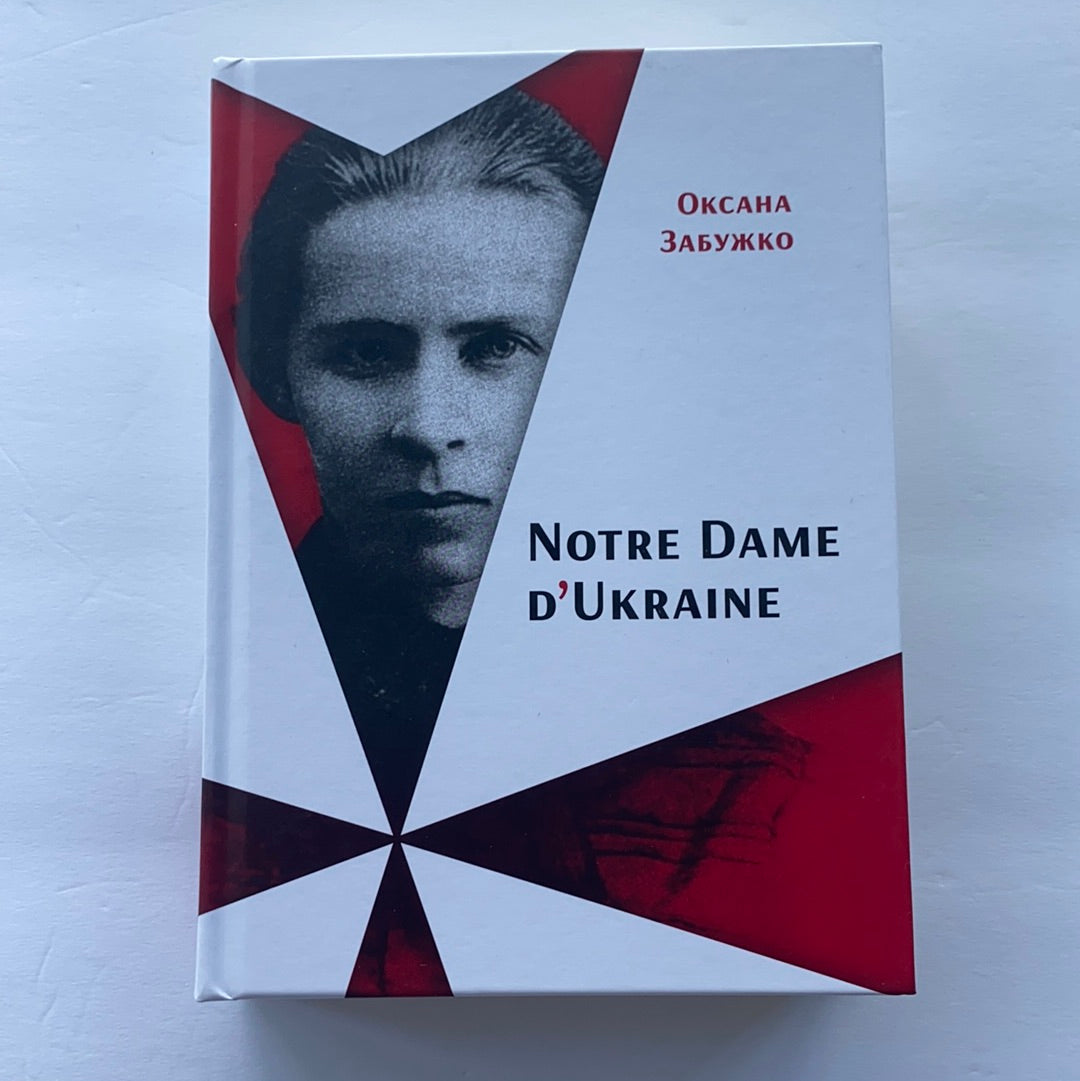
“Notre Dame d’Ukraine: A Ukrainian Woman in the Conflict of Mythologies”
Author: Oksana Zabuzhko
Genre: Essays, Literary Criticism
We all “know” Lesya Ukrainka from school—as a sick but courageous woman who suffered greatly and wrote wonderful poems. The author, however, emphasizes that the Soviet machine transformed the famous poet into someone she never actually was. Oksana Zabuzhko dismantles this image brick by brick and restores the real Lesya. It turns out that behind the familiar image lies a completely different person: an aristocrat of spirit and a true European intellectual who read in the original languages, corresponded with the finest minds of her time, and consciously, without illusions, built modern Ukrainian culture under the harsh pressure of the empire. A woman who had ordinary human feelings and desires.
Zabuzhko goes far beyond the boundaries of a biography. The book is at once a feminist manifesto, a cultural study, and a deeply personal dialogue between the author and Ukrainian identity. It addresses colonial traumas, the conflict between national and imperial narratives, and the role of women in history and culture. The nonlinear structure, excerpts from letters, and eyewitness accounts—all of this allows readers to immerse themselves in and experience that era.
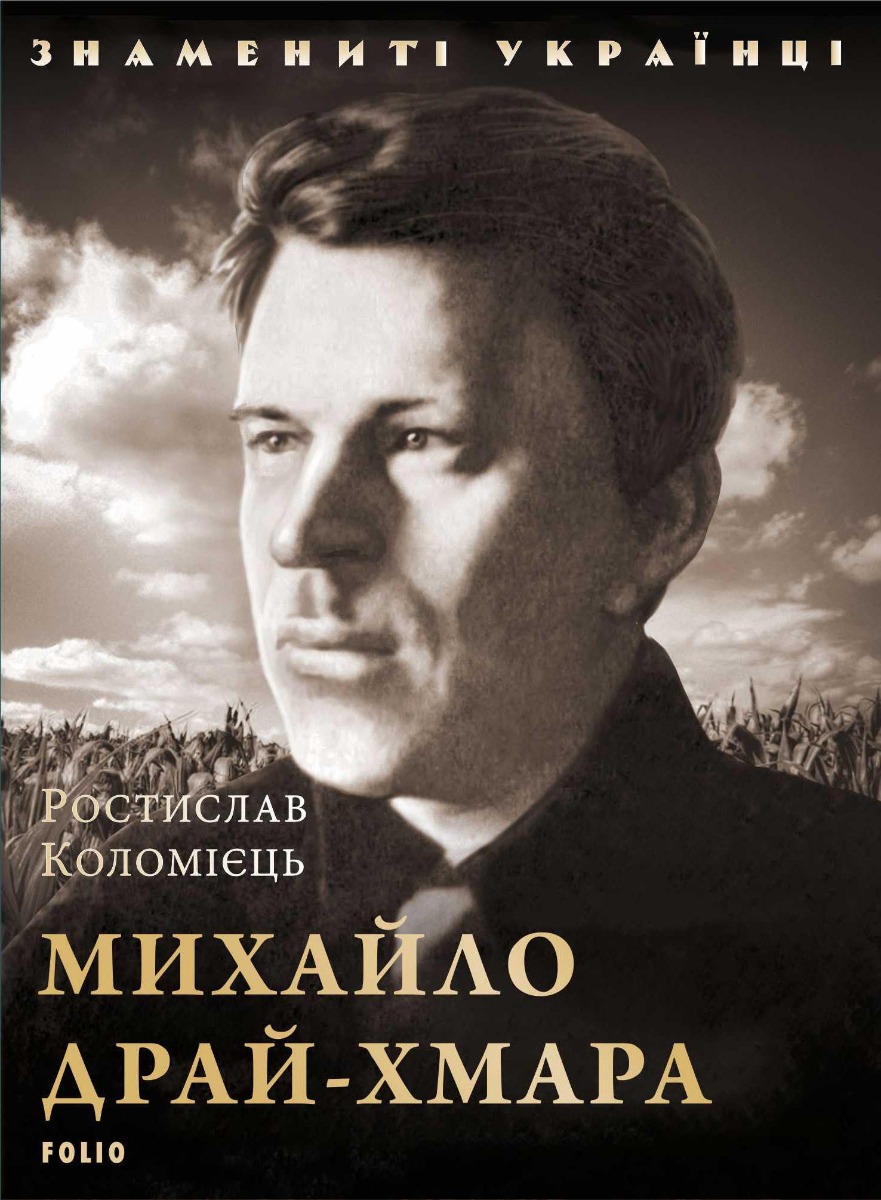
“Mykola Khvylovy”
Author: Rostyslav Kolomiets
Genre: biography, literary studies, history
In 1925, he hurled three words in the face of the Soviet system that have been remembered for a long time—“Away from Moscow!” And although this referred strictly to the cultural and artistic traditions of that time, these words sound particularly relevant today.
Mykola Khvylovy lived only 40 years, but during that time he managed to become one of the most brilliant and dangerous voices of his era. A poet, prose writer, publicist, and organizer of the literary scene—he believed that Ukrainian culture should and could develop independently of Russian canons, and he spoke openly about it. Khvylovy sparked a literary debate that united artists and alarmed the authorities. He founded literary organizations, gathered the most talented people of the era around him, and tirelessly repeated: Ukraine is Europe, not a periphery of the USSR.
The Soviet authorities responded with repression, the arrests of his friends and colleagues, and a slow tightening of the noose around everything he had built. When it became clear in 1933 how it would all end—for himself, for his comrades-in-arms, for an entire generation—Khvylovy chose his own tragic end, which continues to be the subject of speculation to this day.
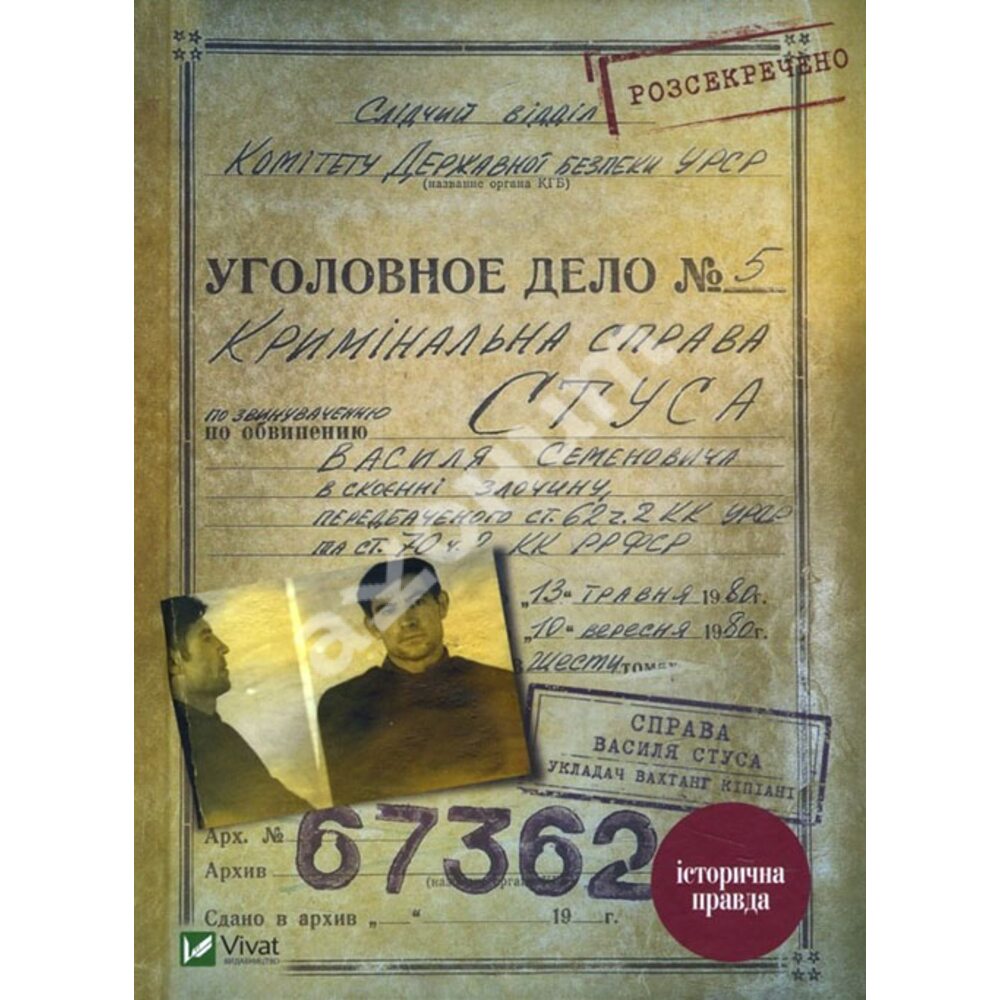
“The Case of Vasyl Stus: A Collection of Documents from the Archives of the Former KGB of the Ukrainian SSR”
Author: Vakhtang Kipiani
Genre: documentary prose, archival materials, biography
He never held a single copy of his published books in his hands—they simply weren’t printed in Ukraine. Vasyl Stus’s poetry collections were distributed as samizdat, passed from hand to hand, and hidden from searches—and they were published only abroad, where the author himself could not go. Born in 1938, he chose a path from a young age that left no illusions about the future; he defended the right to speak and write in Ukrainian, signed letters in defense of the repressed, and openly opposed Russification. He was tried twice, convicted twice—and ultimately died in a political prison camp in the Urals in 1985, just 5–6 years before Ukraine’s independence and the collapse of the USSR.
Vakhtang Kipiani accomplished what seemed impossible: he collected and organized documents from the six-volume KGB criminal case file, which had been gathering dust in the archives for decades. Search and interrogation reports, letters, denunciations, court documents, notes secretly smuggled out of the camp, and photographs that no one had ever seen before. This is not just a biography, nor is it merely an archive—it is an anatomy of a system that destroyed people for their words and thoughts. And at the same time, it is a portrait of a person of incredible inner strength whom this system never managed to break. A book that leaves no one indifferent.
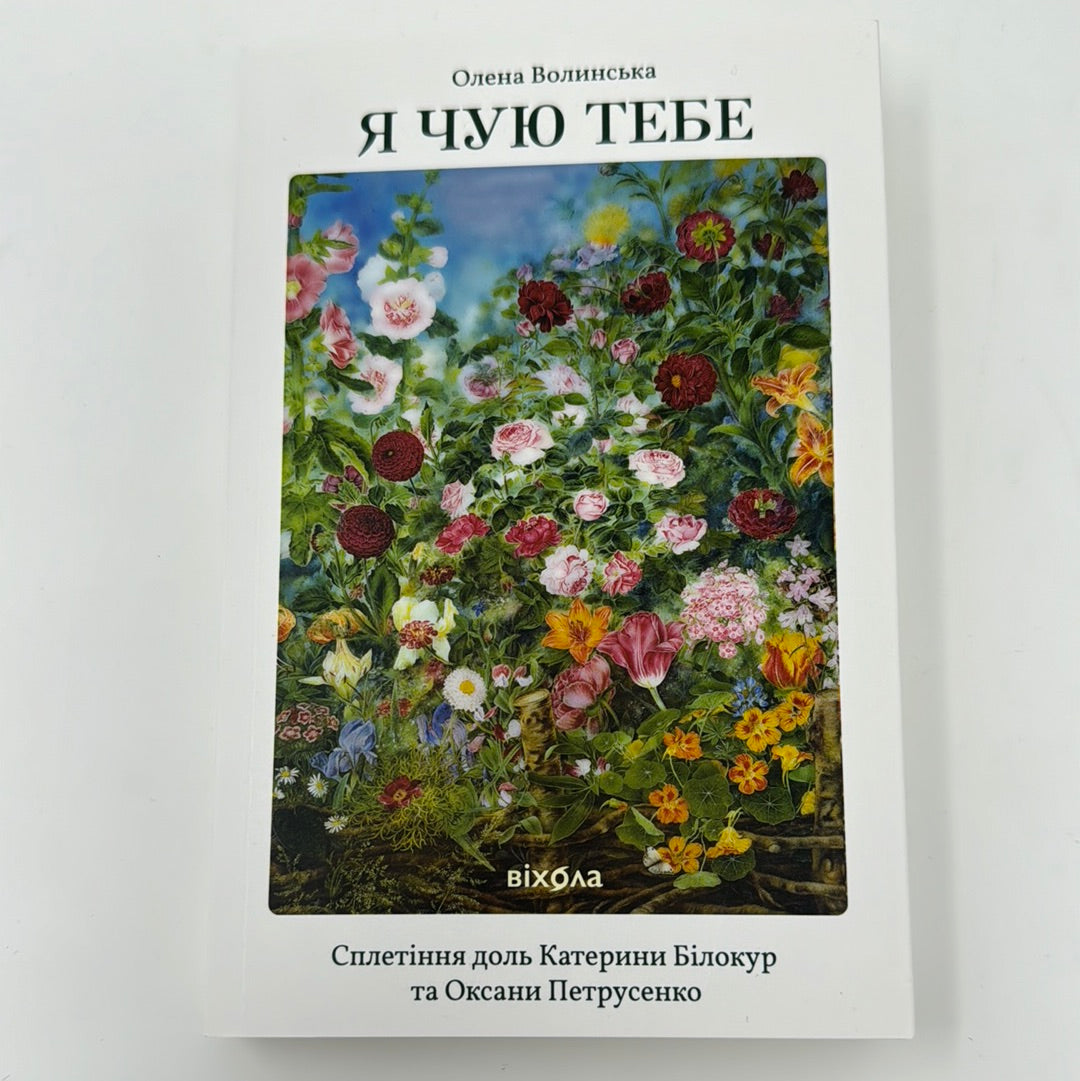
“I Hear You: The Intertwined Fates of Kateryna Bilokur and Oksana Petrusenko”
Author: Olena Volynska
Genre: biographical novel
Two women, two incredible talents, and two destinies that society tried to destroy before they even began. From childhood, Kateryna Bilokur was forbidden to paint: her parents considered it a waste of time, and neighbors would tap their fingers against their temples, but she painted in secret anyway—hiding from everyone and filling a canvas she’d stolen from her mother with fantastical birds and flowers, because she simply couldn’t do otherwise. Oksana Petrusenko started working at age 14 to feed her younger brother and her entire family, yet she still sings constantly.
Their fates became intertwined through a letter and a drawing. One day, Bilokur sent Petrusenko a drawing of a broken viburnum branch, and in that drawing, the singer saw such pain and such beauty that she couldn’t remain silent. Her reply gave the artist the push she had been waiting for all those years: confirmation that her talent was real and that she had a right to it. This is an important story showing that, at times, women’s support and solidarity are the only things that save great talent from complete destruction. Kateryna Bilokur eventually gained recognition—her works were featured in international exhibitions, and she herself became one of Ukraine’s most prominent folk artists. But it all began with a letter, a drawing of a broken viburnum branch, and one woman who offered feedback.
“Catching the Elusive Bird: The Life of Hryhorii Skovoroda”
Author: Leonid Ushkalov
Genre: biography, philosophy, historical fiction
He could have had a brilliant career, but he consciously chose not to pursue it. Hryhorii Skovoroda was born in 1722, studied at the Kyiv-Mohyla Academy, possessed remarkable talents, and had every opportunity for a successful life as the term was understood at the time. Instead, he chose a different path: he turned down official positions, a settled life, and all that was superfluous—and simply set out. He wandered through Ukraine for decades, staying at estates and monasteries, talking to people, teaching, and writing. A philosopher-traveler who cannot be tied to any one place—hence the book’s title.
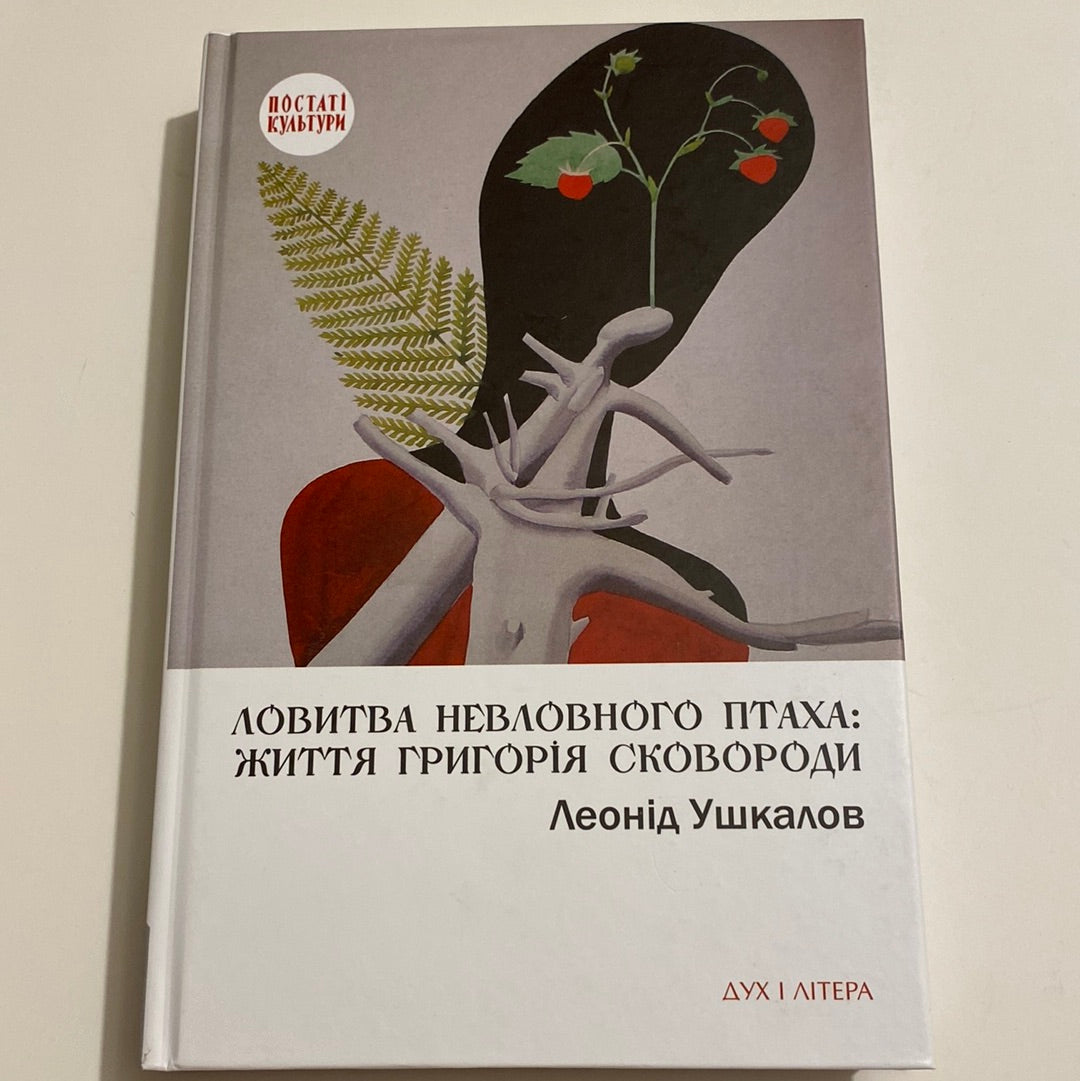
Leonid Ushkalov did not write a dry academic biography, but rather a vivid and captivating book in which, alongside a portrait of Skovoroda, the whole of 18th-century Ukraine comes to life: its cities and villages, monasteries and colleges, roads and people—with their contradictions, faith, doubts, and search for meaning. The book’s 11 chapters are framed by two distinct narratives—a prelude and a finale—that highlight Skovoroda’s pivotal role in the Ukrainian spiritual tradition. A philosopher who, in the 18th century, articulated ideas about happiness, freedom, and self-knowledge—and who remains surprisingly relevant to this day. A book about a man who is impossible to pin down—because he is always where you least expect him to be.