
Israeli psychologist turns experience of war in Gaza and Lebanon into art — Jerusalem Post
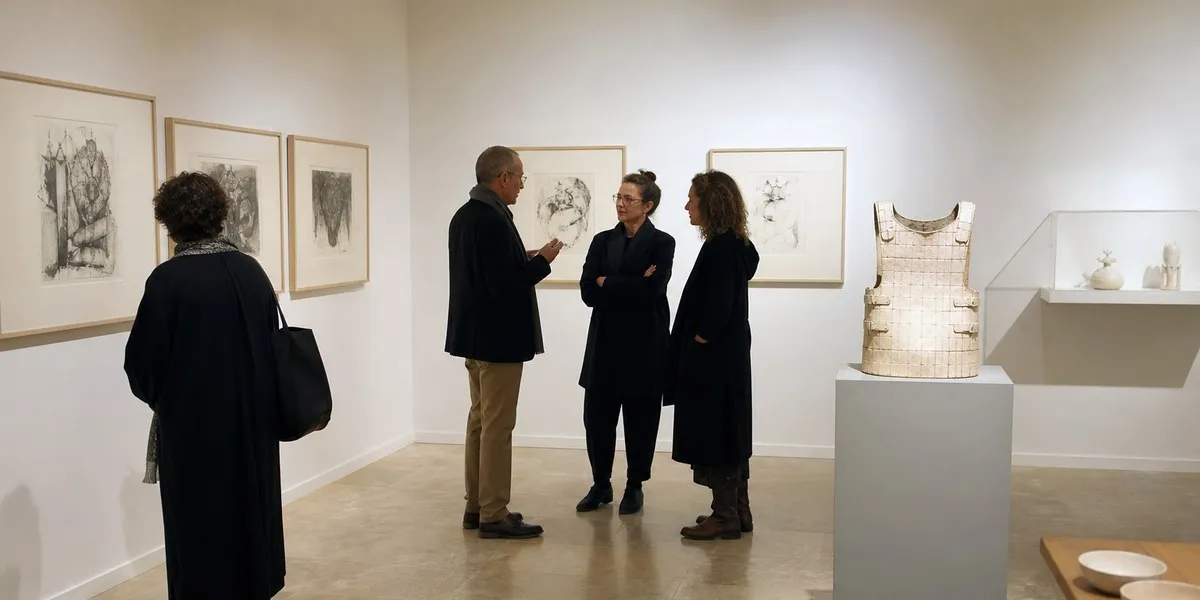
In Jerusalem, Israel, psychologist Michael Feuerstein, who spent more than 400 days in reserve service in Lebanon and the Gaza Strip, created an exhibition about returning from war, traumatic experiences, and attempts at recovery. The exhibition, “From the Battlefield Home: An Intimate Journey,” brings together texts, poems, and images, the Jerusalem Post reports.
Feuerstein said that after the first 100 days of service, he felt alienated from peaceful life. According to him, at the front, he and other military personnel carried out tasks, maintained camaraderie and humor, but later memories of destruction, fear, loss, and violence began to emerge.
An exhibition as a way to speak about what was experienced
The psychologist explained that at first he could not express what he had experienced in words, so he began drawing and writing. Among the images important to the exhibition are a person lying in the sand, a bulldozer, and a ceramic bulletproof vest. He called the creative process a way to bring out an experience that had no clear name and gradually make sense of it.
More current news is available on the UA.News Telegram channel Telegram.
The exhibition has already been presented at the University of Haifa and in the lobby of the Hadassah Medical Center in Jerusalem’s Ein Kerem area. It also uses poems by Feuerstein’s wife, Margalit, who, he said, took care of the family on her own for a long time during his service.
Working with the consequences of trauma
The psychologist’s sister, Hava Dardik, who works as an occupational therapist at the Feuerstein Institute, said that the institution’s five rehabilitation centers care for 230 men and women, mostly young parents. The centers are funded by Israel’s Ministry of Defense and the National Insurance Institute.
According to her, the program combines physical and emotional rehabilitation, trauma work, training in planning and flexibility, and assistance for those who want to continue their education. Participants attend classes two or three times a week for a year.




