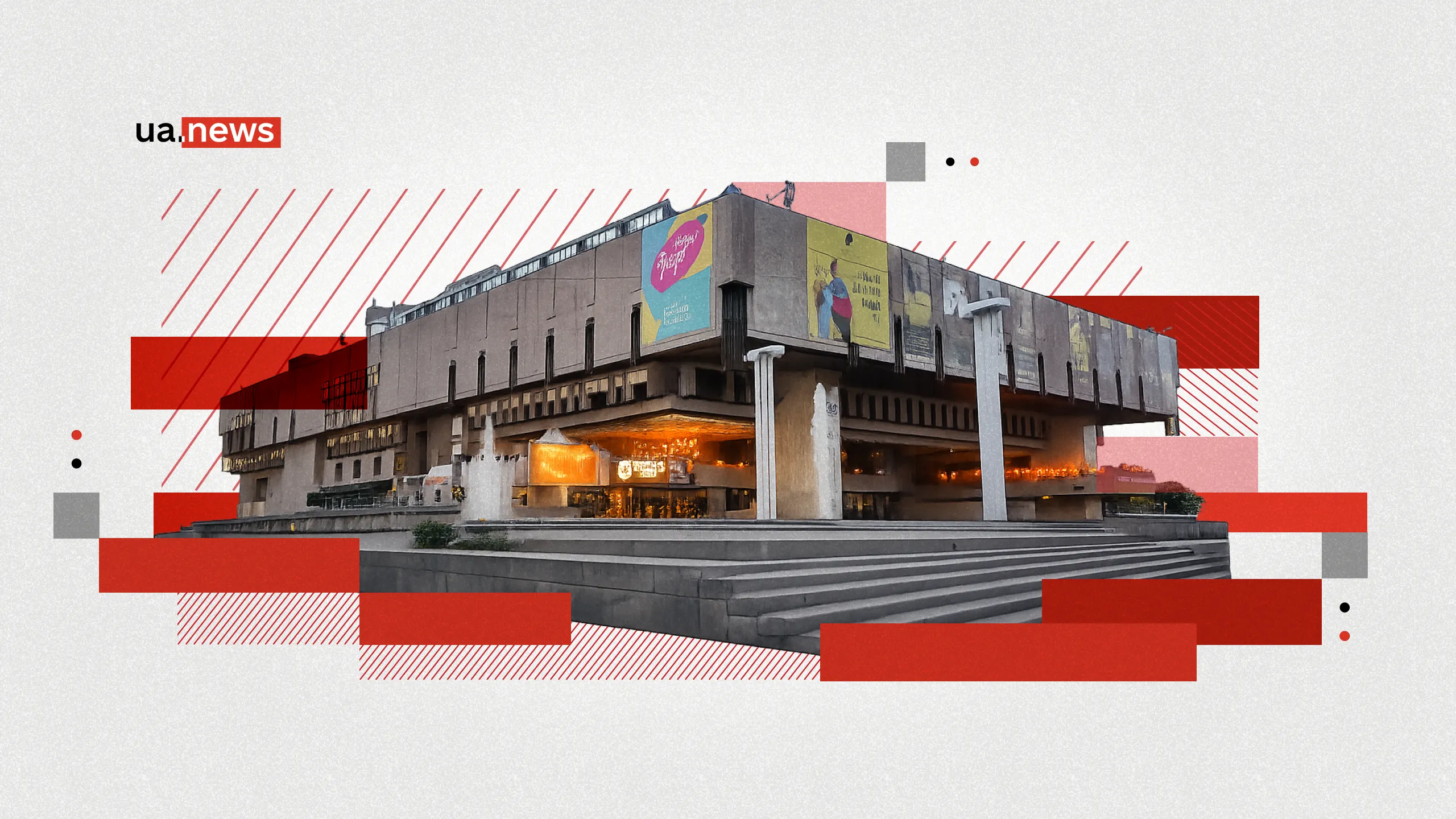
Kharkiv is a city that knows what it means to live under constant threat. It is less than 40 kilometers from the Russian border. Air raid sirens are part of daily life here: they can be heard almost every hour. Kharkiv residents have long since learned to live with this challenging rhythm. The city continues to work, study, make plans for the future—and go to the theater. The Mykola Lysenko Kharkiv National Academic Opera and Ballet Theater (KhNATOB) does more than simply survive in a city on the front lines. It stages performances and concerts regularly, to full houses, and does so literally underground.
UA.News journalists visited one of Ukraine’s oldest and most important opera houses, spoke with the theater’s team—and are now ready to share how Kharkiv’s main theater operates amid the war.
A theater that’s nearly 100 years old and took three decades to build
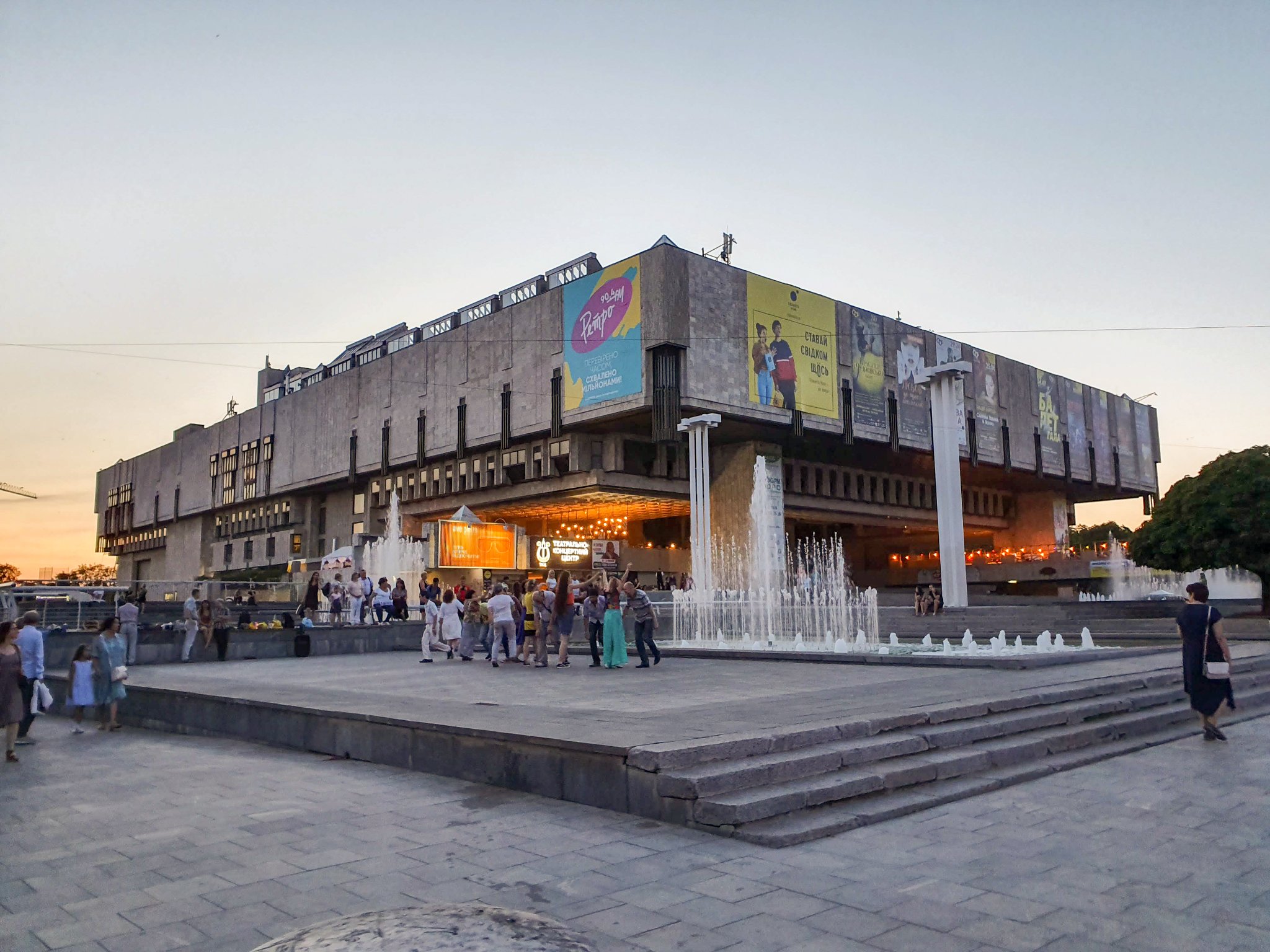
To understand the scale of what is happening in the basement of the Kharkiv National Academic Opera and Ballet Theater (KHNATOB) right now, it’s important to first understand what kind of place it is and what role it plays in the life of the city. The Mykola Lysenko Kharkiv National Academic Opera and Ballet Theater is the country’s first permanent opera house, an institution with a history dating back to 1780, when the first musical theater appeared in Kharkiv. For centuries, the city has nurtured this tradition, and it has taken such deep root that it seems even war is unable to uproot it.

The theater’s current building, located in the very heart of Kharkiv, is a story in itself—one worthy of its own article. Construction began back in 1925 and lasted nearly three decades. The monumental architectural structure that stands today in the very center of the city is the result of long and arduous work: the intricate design of the entrance foyers and lobbies, two auditoriums—a chamber hall with 400 seats and a large hall with 1,500. And in 2010, the theater was granted national status.
For Kharkiv itself, the theater is one of the city’s symbols and a place that Kharkiv residents have considered their own for generations. Children were brought here for their first ballet; people came here for important occasions; schoolchildren were brought here during winter break for the winter program—and much more. And that is precisely why, when the war began in February 2022, the question arose as to whether the theater would continue to operate as it once did.
Loft Stage: A Stage That Wasn’t in Anyone’s Plans
In the first months after the full-scale invasion began, the theater—like most cultural institutions in Kharkiv—found itself in an extremely difficult situation. The city is on the front lines, shelling is a regular occurrence, and people’s safety is the top priority. Some of the troupe left, while others stayed. Oleksiy Duginov, head of the directing department and director at the M.V. Oleksiy Duginov, head of the directing department and director at the Kharkiv National Academic M.V. Lysenko Opera and Ballet Theater, shared exclusively with UA.News: the war has changed absolutely everything—not only organizationally, but also emotionally.
“Air raid alerts have become an integral part of our reality. They affect people’s emotional state, and for a creative person, this is extremely important for their professional work. And this is a real threat to life—it’s important to understand that you’re responsible not only for yourself but also for a large team, for the performers, musicians, technical staff, and, of course, the audience.”
Regarding how much theater life has changed under wartime conditions, Honored Artist of Ukraine Olena Starikova emphasizes that despite all the difficulties, their mission on stage has taken on new meaning:
“It has changed dramatically. Constant anxiety is our new reality, yet our inner core has only grown stronger. We clearly understand that right now, people simply need art. Through our creativity, we support them, offer comfort, and inspire them to keep living despite everything.”

Mobilization has also become part of theater life. According to Oleksii Duginov, some of his colleagues are now defending the country in the ranks of the Armed Forces of Ukraine, while others have been forced to leave the city or the country. The theater is constantly reallocating creative and production resources and seeking opportunities to continue its work even under the most difficult circumstances.
Since April 2022, a mobile group of artists has been giving concerts at metro stations, visiting hospitals, resorts, and military units. From April 2022 to June 2024, part of the troupe was on the “European Path” humanitarian tour — and during that time, the theater toured dozens of cities, held several hundred concerts, and drew more than a hundred thousand audience members who may never have heard live Ukrainian opera before.
In April 2023, the Kharkiv Regional Defense Council banned cultural events in most municipal venues due to the high risk involved—a decision that was, on the whole, quite logical and appropriate. But for most institutions, this meant a halt to their operations.
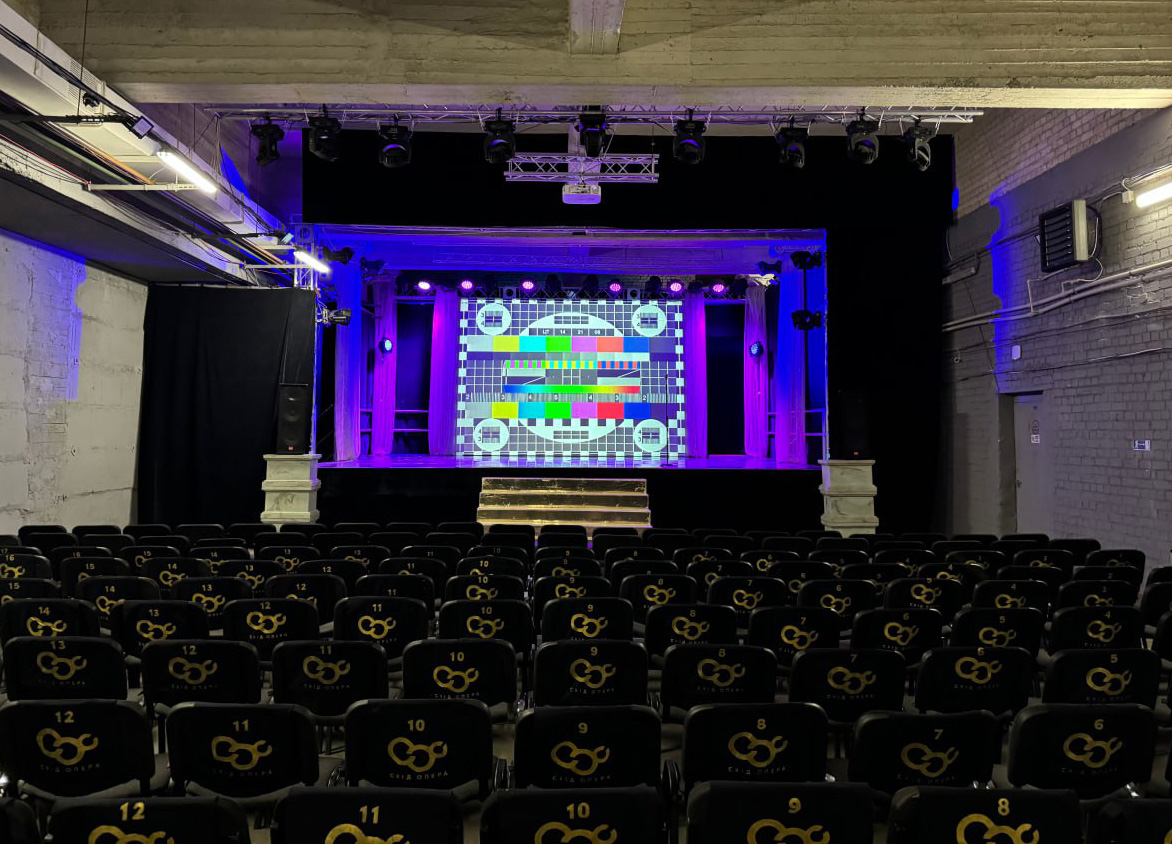
At the end of 2023, an underground stage—the Loft Stage—appeared in the theater’s basement. A major renovation was carried out, and a stage and rows of seats for the audience were installed. A simple basement was transformed into a theatrical space: with live sound, sets, costumes, and everything else that makes a theater a theater—not just a concert performance in an unusual venue. Loft Stage has become the only underground theater venue of this caliber in the city and one of the few of its kind in Ukraine as a whole. When the performance begins and the lights go out—here you can forget about what’s happening above ground; for a couple of hours, you can escape from these difficult times, feel the spirit of pre-war life, and fully enjoy the art.
“For many people, the theater has become a source of inner strength. And for us, artists, the opportunity to work and connect with the audience has confirmed that culture can overcome fear,” says Oleksii Duginov, head of the directing department and director at the Kharkiv National Academic Opera and Ballet Theater (KHNATOB).
In 2024, another large-scale project was launched—the All-Ukrainian “Art Fortress” hub for residents of frontline and de-occupied territories. As part of this project, the country’s best music and theater troupes travel to the hardest-hit areas to demonstrate that Ukrainian art cannot be stopped so easily.
According to Oleksii Duginov, safety remains the main challenge: working in a frontline city means that every cultural event requires special responsibility and additional security measures for both the audience and theater staff. Funding remains a particularly painful issue—most theaters in Kharkiv currently receive only 25 to 50 percent of their staff’s regular salaries.
“We fully understand the priority of the state’s defense needs, but culture is also an element of national security. It shapes our identity, sustains the morale of society, and demonstrates to the world that Ukraine continues to live and create even during wartime,” emphasizes the head of the theater’s directing department.
The Kharkiv National Academic Theater of Opera and Ballet (KHNATOB) is also raising the issue of protecting cultural workers—after all, as Duginov stresses, theaters must not disappear as part of the nation’s identity.
A Full House Even Amid the War
And yet the most amazing thing about this story is not the underground stage or the organizational work the theater has done under extreme conditions—though that, in fact, is truly impressive. What’s most amazing are the people of Kharkiv who come here despite the constant threat in the city.
The auditorium is almost always full. It’s not at all easy to get tickets to some concerts and premieres. People buy tickets, plan their evenings, come in couples and with their families, and dress up to listen to an opera or watch a ballet.
“Art is desperately needed by the people of Kharkiv today. People come to the theater not just for aesthetic experiences. They come for emotions, for support, for the chance to return to normal life—even if only for a few hours,” notes Oleksiy Duginov.
According to Duginov’s observations, Kharkiv’s cultural life has not come to a halt—on the contrary, culture has become one of the city’s hallmarks of resilience: theaters, museums, concert venues continue to operate, and festivals and artistic events—which have adapted to the new conditions and are held in safe spaces—are taking place.
“This shows that the city is alive and has no intention of giving up its cultural identity,” says the director.
He also notes that Kharkiv has become significantly more pro-Ukrainian than it was before the start of the full-scale war—and that is precisely why the existence of a Ukrainian theater so close to the border with the aggressor state takes on special symbolic significance:
“Every performance, every concert, and every premiere serves as proof that Kharkiv remains a Ukrainian cultural city,” Duginov asserts.
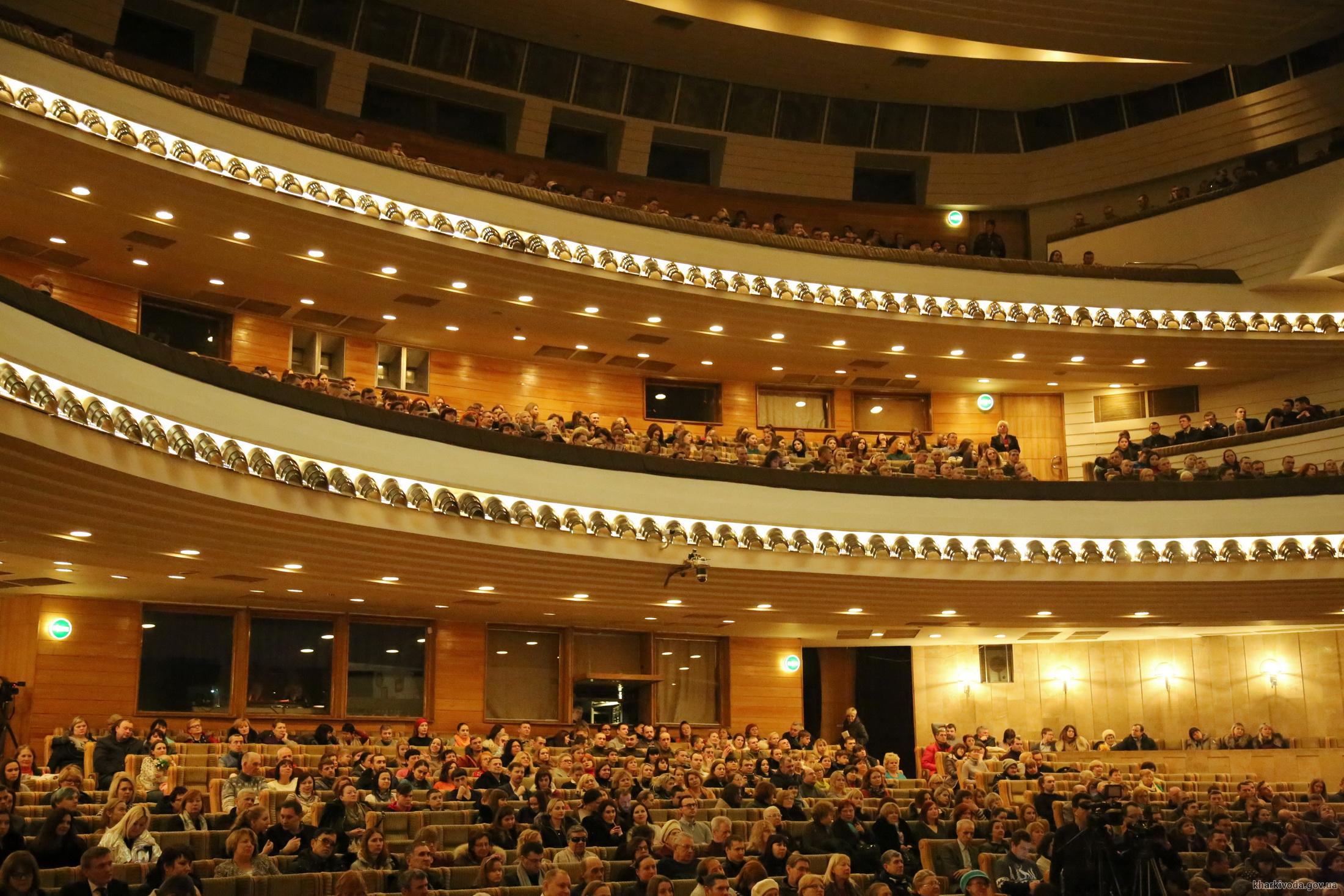
Kharkiv is a city with a deep and long-standing love for art and culture in general, and this love, as it turns out, does not depend on external circumstances. It either exists—or it doesn’t. In Kharkiv, it exists. And every full hall in the basement of the Kharkiv National Academic Theater of Opera and Ballet is about more than just attendance statistics. In a sense, it’s a statement: we’re here, we haven’t gone anywhere, and we still want to hear music, we want to experience art, we want Ukrainian culture to continue to thrive.
When asked what helps her avoid burnout and find the strength to create while her hometown of Kharkiv is under constant attack, Honored Artist of Ukraine Olena Starikova admits:
“I pray. And when I step onto the stage and see the people in the audience, see their eyes waiting for us with such hope—I want to go out there again and again. I sincerely consider this my duty and our shared artistic contribution to victory.”
Despite all the difficulties, the theater continues its creative work. According to Oleksiy Duginov, last season alone, the Kharkiv National Academic Opera and Ballet Theater presented five premieres—including Georges Bizet’s opera *The Pearl Fishers*, the ballet *Inside the Music. Bolero I.R.*, as well as the concert programs *Ukraine. Love” and “Grande Amore.” Thanks to the presidential initiative “Tysiachovesna,” the theater has been able to expand its repertoire with new opera and ballet productions and support the development of contemporary Ukrainian musical theater. The theater plans to continue developing its Ukrainian repertoire, discovering new talent, and working with both the classical heritage and contemporary Ukrainian music and drama.
“Our task today is to preserve our ensemble, traditions, and creative potential so that after the war we will not simply recover, but become even stronger. We are confident that after victory, Kharkiv will retain its status as one of Ukraine’s major cultural centers, and the Kharkiv Opera will gain new momentum for development,” concludes Oleksiy Duginov.
In times of war, art takes on a different dimension—and both artists themselves and those directly involved in the arts feel this more keenly than ever before. Even in the darkest of times, it is important not to lose the passion for something beautiful and bright. Beauty exists, and people are capable of creating and perceiving it even when everything around them stands in the way.