
Frescoes from the 16th and 17th centuries were discovered in the home of the Italian philosopher Leopardi
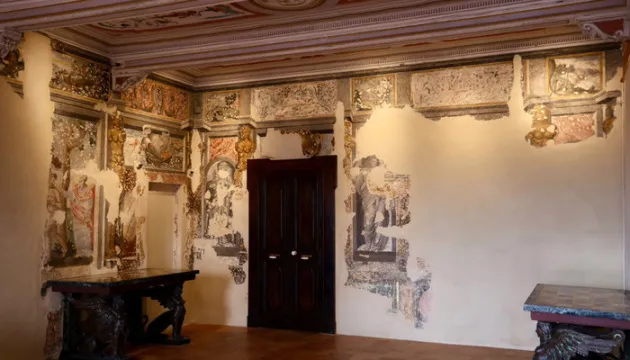
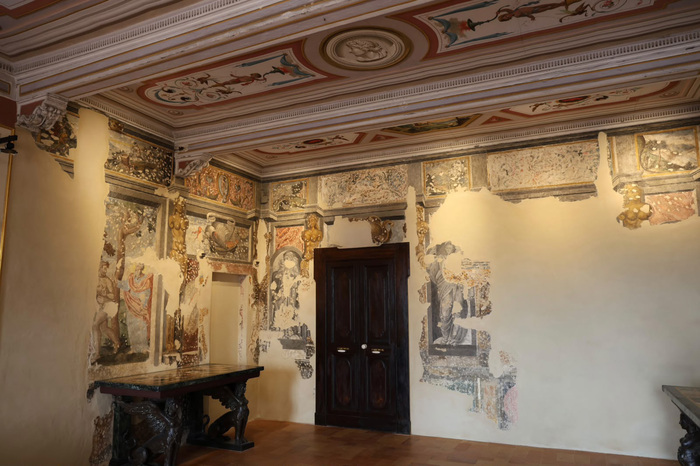
In the “Casa Leopardi” library, where the outstanding poet, philosopher, essayist, philologist, and one of the leading figures of literary Romanticism, Giacomo Leopardi, grew up in the early 19th century, a large cycle of frescoes from the late 16th and early 17th centuries has been discovered.
The ancient murals were found during work to reinforce and restore the building. The frescoes adorned the room where the gifted genius Giacomo Leopardi (June 29, 1798 – June 14, 1837) would immerse himself in the study of ancient books and deepen his knowledge of Latin, Greek, and other ancient languages, which later took a toll on his fragile health.
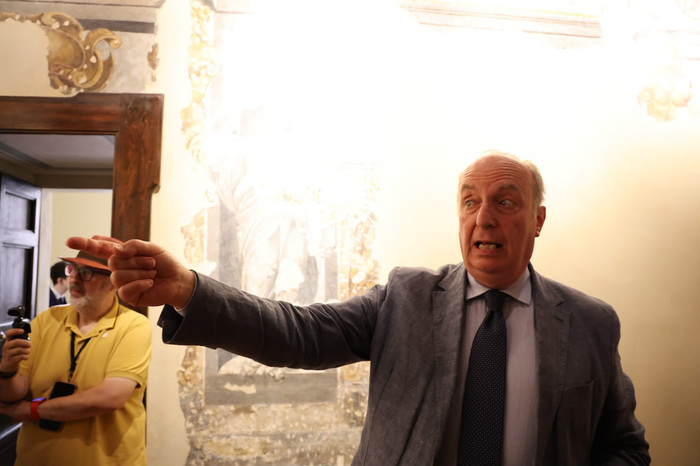
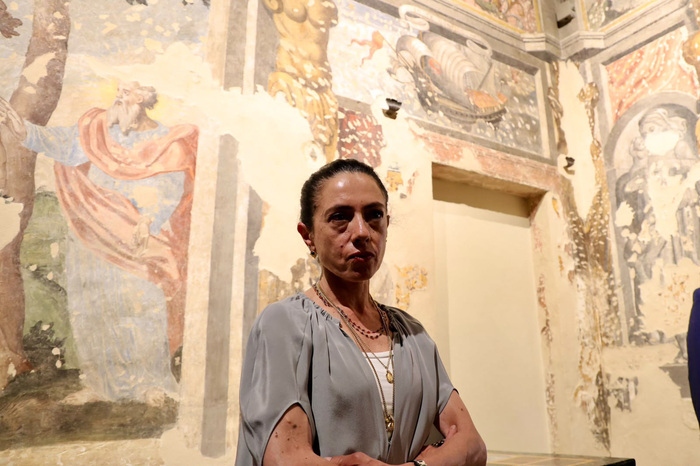
Countess Olimpia Leopardi, head of the House-Museum in the Marche region and a descendant of the poet, noted that this discovery enriches the palazzo’s historical and artistic heritage and provides valuable insight into its past. She added that she finds it fascinating to realize that Giacomo himself may have also observed these frescoes before they were concealed by subsequent renovations of the palace.
The aforementioned library, which helped shape the most prominent Italian poet of the 19th century and one of the most important figures in world literature, was largely assembled by his father, Count Monaldo. Recently, the book collection that the Romantic poet studied so diligently has gone online, making the collection widely accessible to readers and scholars from around the world.
This was reported by the Italian news agency Ansa.
Archaeologists in Cairo have discovered a unique burial hoard belonging to the elite of Ancient Egypt
In Italy, during the construction of a highway, workers stumbled upon the remains of an ancient sanctuary dating back to the 5th century BCE. The unique discovery was made near the town of Pons, located about 72 kilometers from Venice. After the artifacts were discovered, large-scale archaeological research began immediately at the site.


