
A rare Roman mosaic dating back nearly 2,000 years has been discovered in France
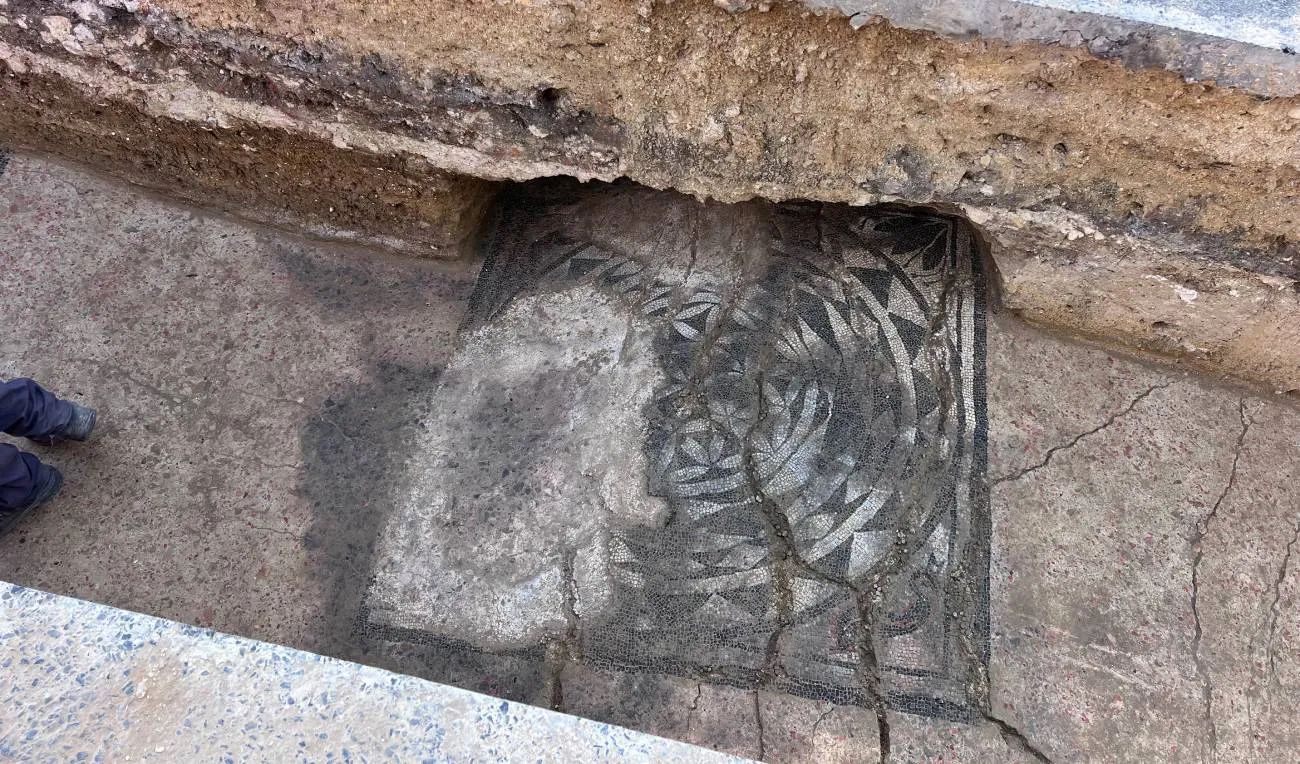
In the French city of Soissons, archaeologists stumbled upon a unique Gallo-Roman mosaic while carrying out work to modernize the heating system. The find is distinguished by its high quality of workmanship and the combination of two construction techniques—a concrete base and tesserae, small tiles laid out in a complex geometric pattern.
Experts classify the artifact as a rare type of “mixed” flooring. The mosaic’s large size makes it particularly valuable, as examples of this scale are extremely rare.
The mosaic dates to the late 1st century CE. It consists of a square central panel measuring 1.56 meters on each side, featuring a black-and-white circular medallion of intertwined triangles and rhombuses arranged in concentric circles. The center of the medallion features diamond-shaped forms arranged in an abstract floral pattern. The corners of the square feature different motifs: one is a flower resembling a lotus, and the other is a dolphin.
The dolphin is particularly notable for its masterful depiction and red fins. The use of color and the method of laying the tesserae can serve as a kind of artistic signature, allowing archaeologists to trace artifacts made by a single artist or workshop.
“It was also interesting to find a marine mammal adorning a mosaic in a city as inland as Soissons. Dolphins were popular in Roman art throughout the empire, and the inclusion of one in this mosaic demonstrates how widespread Roman standards of aesthetic taste were in the early imperial period,” the archaeologists noted.
Thus, this mosaic illustrates the assimilation of the inhabitants during the Romanization of Soissons and the fact that the current Saint-Crépin district was an ancient neighborhood between the 1st and 3rd centuries where the local elite lived. Many scientific questions remain unresolved, particularly regarding the combination of techniques used and the overall organization of the decoration, which have been little studied. A phase of in-depth analysis will now begin with the assistance of specialists in Roman mosaics.
Meanwhile, local officials are exploring the possibility of removing this mosaic to ensure its preservation. Therefore, the next steps will focus on the removal, study, and restoration of this magnificent floor with a view toward a possible public display.
Earlier, NV Techno reported that archaeologists working at the ruins of ancient Smyrna (modern-day Izmir, Turkey) had discovered a luxurious mosaic-adorned room.
Interestingly, the last time a similar mosaic hall was found here was 70 years ago, so the new discovery came as a pleasant surprise to researchers. The room itself isn’t that big—about 3 by 4 meters. But the floor here is a work of art: multicolored intertwined patterns and floral ornaments typical of late Roman art.
The History Blog reports on this.
Frescoes from the 16th–17th centuries were found in the home of the Italian philosopher Leopardi.
In Cairo, archaeologists have discovered a unique burial hoard belonging to the elite of Ancient Egypt
In Italy, during the construction of a highway, workers stumbled upon the remains of an ancient sanctuary dating back to the 5th century BCE. The unique discovery was made near the town of Pons, located about 72 kilometers from Venice. After the artifacts were discovered, large-scale archaeological research began immediately at the site.


