
Criticism of data centers grows in Finland over electricity consumption
In Finland, municipalities continue to support the construction of data centers despite residents’ concerns about their possible impact on the adequacy and cost of electricity. City and community leaders believe that issues of market electricity prices do not fall within the remit of local government, YLE News reports.
Permits for data centers largely depend on municipalities, which make decisions on land-use planning and building permits. Lahti has announced plans to build a second data center in the city. Riikka Moilanen, head of the Janakkala municipality, said that the municipality assesses permitting procedures and the environmental impact of investments, while decisions on the adequacy of electricity and its price are made by other authorities.
Consumption could increase by nearly 40%
In mid-August, transmission system operator Fingrid said that electricity consumption in Finland was beginning to rise sharply. Data center and electric boiler projects are among the factors behind this growth. Fingrid estimates that if the planned projects are implemented in full, electricity consumption could increase by nearly 40% over the next five years.
Jussi Jyrinsalo, Fingrid’s head of grid planning, told Helsingin Sanomat that if a significant share of the planned data centers is implemented, the price of electricity could rise. At the same time, Antti Paananen, head of the market unit at the Finnish Energy Authority, stressed that it is difficult to link the market price of electricity to one specific large consumer, including a data center.
More current news is available on the UA.News Telegram channel Telegram.
Projects in Forssa and Lahti
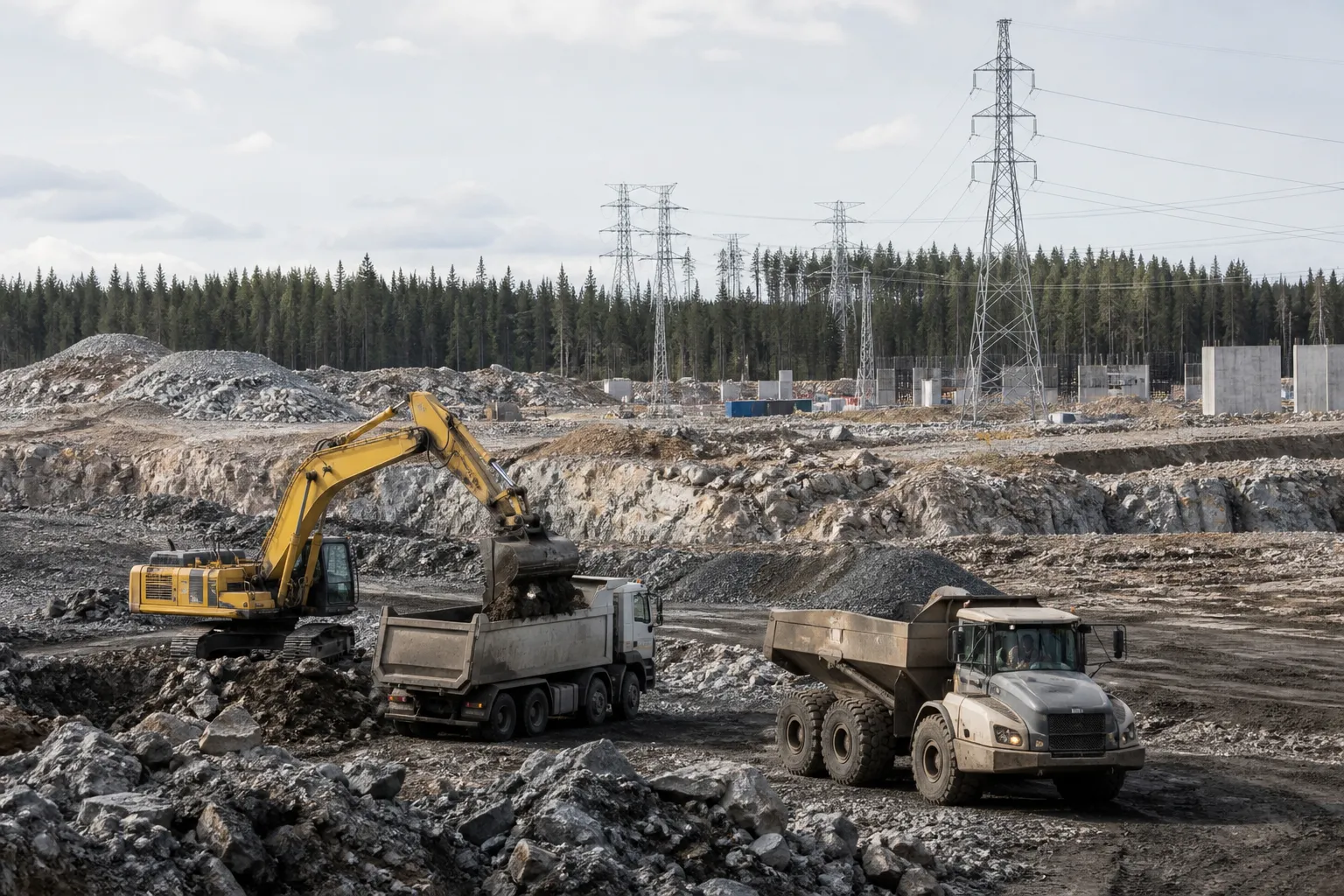
Earthworks are underway in Forssa for Finland’s largest data center. If implemented in full, the facility could consume approximately 8% of all electricity used in the country. Forssa city manager Jari Kesäniemi said that Fingrid had assured the project of sufficient electricity supply and also called data centers an important incentive for green transition projects.
Lahti Energia estimates that the data center currently being built in Lahti will double the city’s electricity consumption. Samuli Honkapuro, a professor of energy markets and energy systems at LUT University, believes that Finland has sufficient fossil-free electricity generation to cover the additional demand. In his view, the key issue is the flexibility of data center loads during periods of electricity shortages: under such conditions, computing capacity could potentially be transferred to centers in other countries.
In Janakkala, a data center near Highway No. 3 is at the permitting stage. According to Moilanen, the project is attractive to the community because of construction jobs, land rent and tax revenue. She estimated potential annual property tax revenue at €500,000.




