
Yara launches CO2 capture project in the Netherlands, calls it Europe’s largest
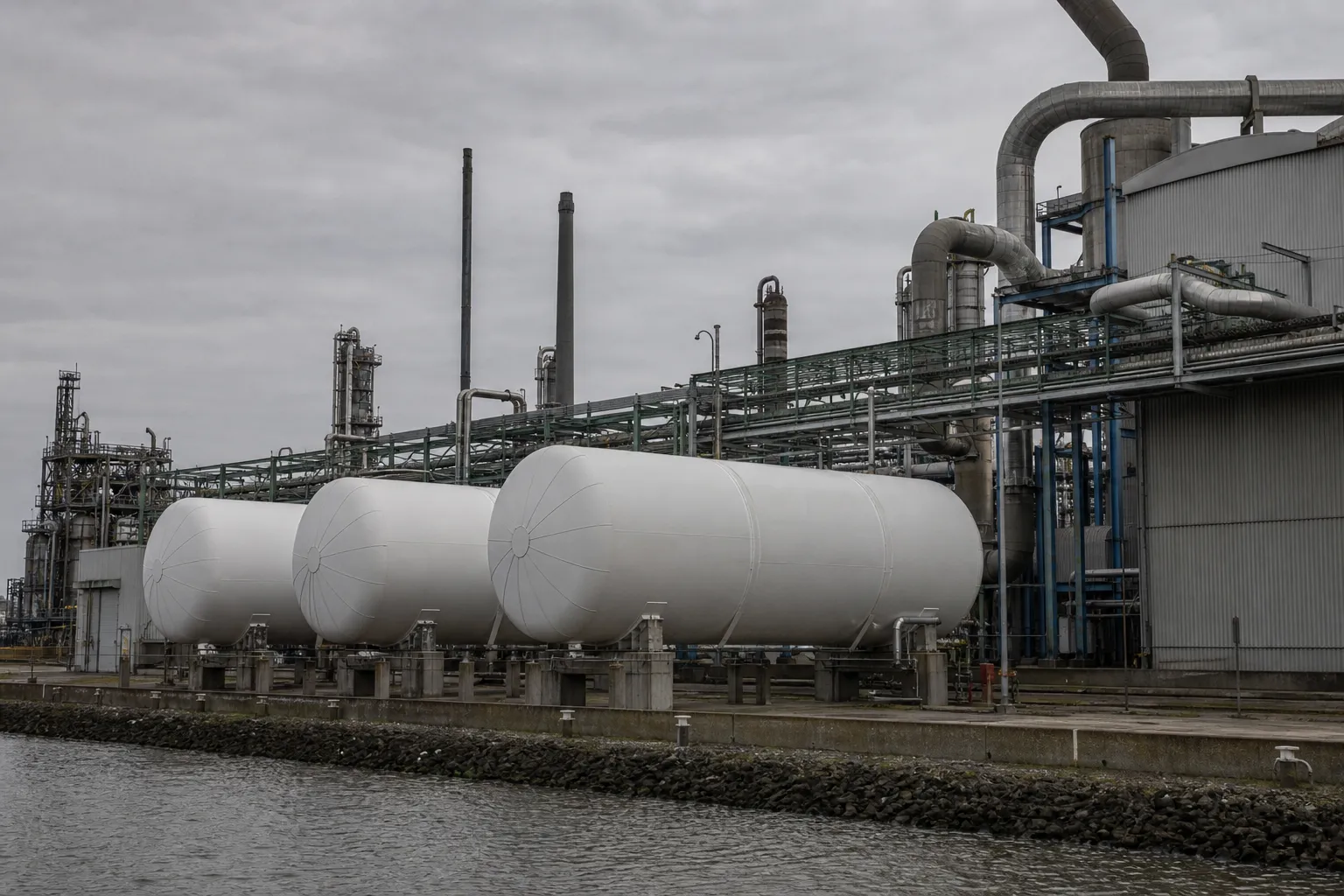
European fertilizer producer Yara is opening this week in the Dutch city of Sluiskil a carbon dioxide capture and storage project that the company calls the largest in Europe. The facility will be able to capture up to 800,000 tonnes of CO2 annually at a Yara plant, liquefy the gas and transport it by sea to Norway. There, the CO2 is planned to be injected into a geological formation around 2,600 meters beneath the seabed.
This was reported by Deutsche Welle English. Carbon capture and storage, or CCS, involves capturing CO2 directly at the emission source, for example at an industrial facility or near a smokestack. After capture, the gas is compressed, transported by pipelines, rail or other means, and stored in geological structures, including aquifers or depleted oil fields.
The gap between scenarios and capacity
According to UN climate scenarios, storing between 350 and 1,200 gigatonnes of CO2 may be required by the end of the century to avoid the worst effects of climate change. According to a calculation cited by Deutsche Welle, reaching the lower end of this range would require opening around 5,800 additional facilities comparable in capacity to the Yara project right now.
More current news is available on the UA.News Telegram channel Telegram.
The International Energy Agency projected that 7.6 gigatonnes of carbon would be captured annually by 2050, with nearly all of that volume stored. Currently, 77 operating facilities worldwide can capture 64 million tonnes per year. To reach the target envisaged by the IEA, this volume would need to increase 119-fold over the next quarter-century.
Controversy over the use of CCS
Supporters of CCS development believe the main obstacle is building more facilities, which requires government subsidies, carbon pricing or tax incentives. At the same time, researchers at the University of Texas at Austin reported that many large projects inject significantly less CO2 into storage than they promised.
The technology is also controversial because of its use by the oil industry. According to the research and advocacy group Oil Change International, around 80% of global CCS capacity in 2023 was used for enhanced oil recovery — injecting CO2 into old oil fields to extract more oil. Supporters of the technology, however, propose focusing its use on industries where emissions are particularly difficult to reduce, including cement production.


