
The death toll from the Ebola outbreak in the Congo has exceeded 1,000 — Reuters
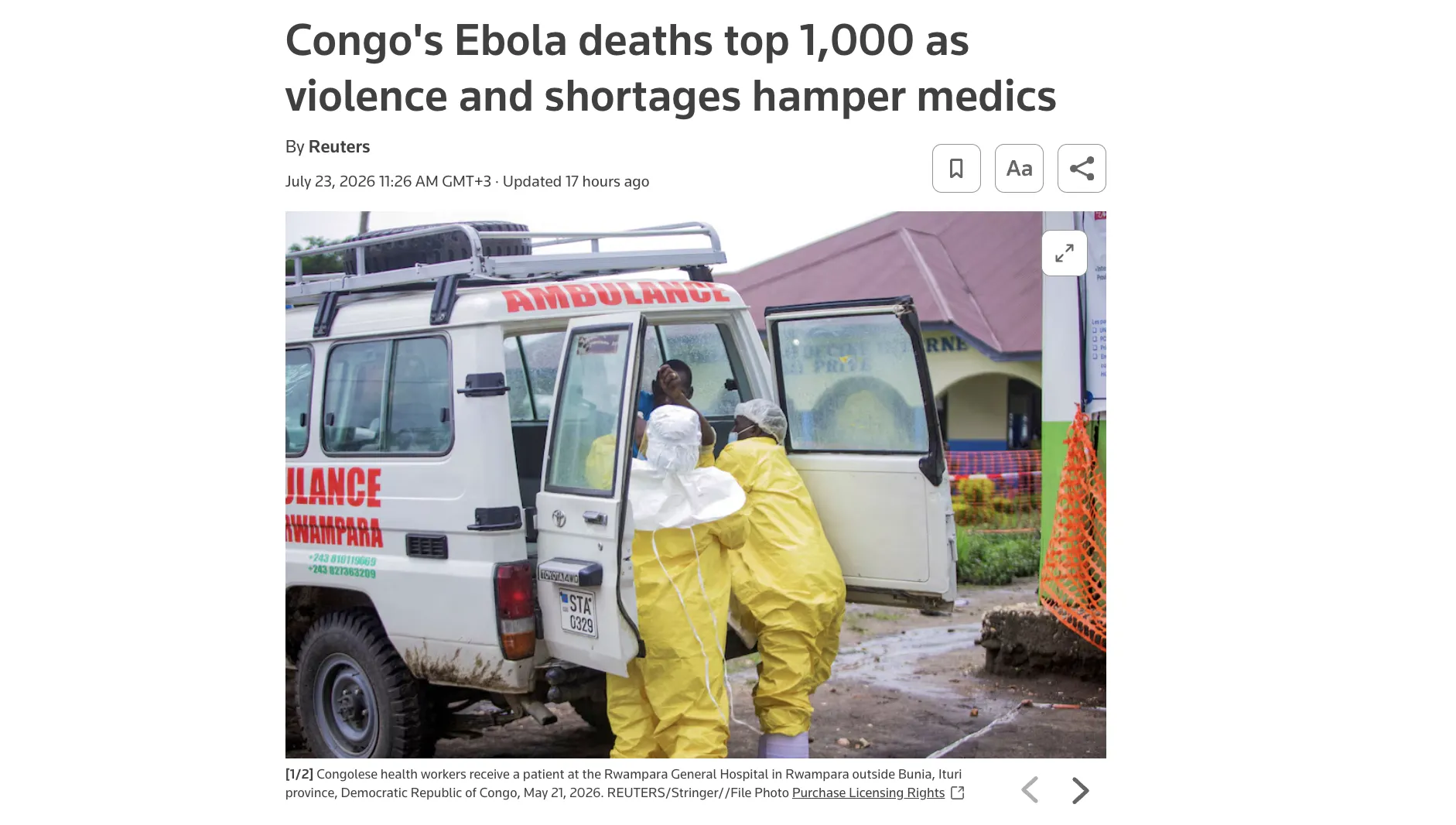
An Ebola outbreak is ongoing in the Democratic Republic of the Congo, having already claimed the lives of more than 1,000 people. Medical professionals are facing a shortage of essential resources, and the work of hospitals is being hampered by attacks on medical facilities by local residents.
The number of confirmed Ebola cases has risen to 2,536, and the death toll has reached 1,033.
The Ebola outbreak, the 17th in the DRC, was declared in mid-May, but experts believe the infection began spreading several weeks earlier. It is caused by the rare “Bundibugio” strain, which has a fatality rate of up to 40%. There is no approved vaccine.
Healthcare workers are struggling with instability in eastern Congo—the epicenter of the outbreak—where dozens of armed groups are active. There is a shortage of essential resources, as well as attacks by local residents on medical facilities. Some relatives of the deceased are outraged by medical restrictions that prevent them from burying their loved ones. Some have come to believe in conspiracy theories claiming that the outbreak is a hoax.
Ebola spreads through direct contact with the bodily fluids of infected people, both living and dead. It can cause fever, vomiting, diarrhea, and, in severe cases, internal and external bleeding. Unlike the more common “Zaire” strain, there are no approved vaccines or treatments for the “Bundibugyo” strain.
A small number of experimental vaccines and treatments are currently being studied, while experts are assessing whether existing Ebola drugs can help combat the “Bundibugyo” strain—a prospect currently supported only by limited data from animal studies.
The outbreak has spread to neighboring Uganda, but local authorities have managed to limit the number of confirmed cases to 20. No cases have been reported in Uganda since June 22, and the last Ebola patient was discharged on July 16, marking the start of a 42-day countdown before this East African country can be declared virus-free, Reuters reports.
Earlier, it was reported that the 17th Ebola outbreak had been recorded in the Democratic Republic of the Congo, which has already claimed the lives of 80 people. This time, the disease was likely caused by the little-studied Bundibugyo ebolavirus strain, rather than the more common Zaire ebolavirus.
Ethiopia has recorded its first outbreak of the Marburg virus, which is clinically similar to Ebola. The pathogen is capable of spreading rapidly, but there are no vaccines against it.


