
Anniversary of the Ilovaisk Tragedy: Russian Treachery and the Unlearned Lessons of War
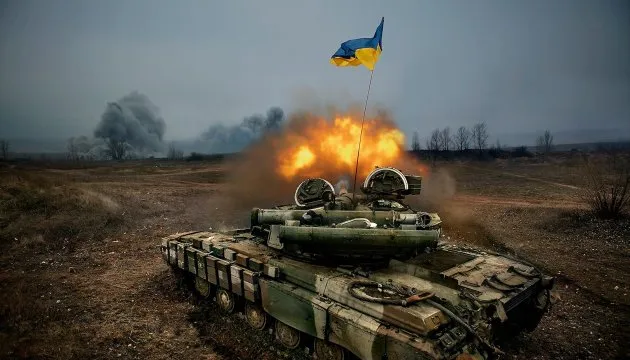
On August 29, Ukraine observes the Day of Remembrance for the defenders—both men and women—who died for the country’s independence, sovereignty, and territorial integrity. This date is inextricably linked to one of the most tragic episodes of the 2014 Russian-Ukrainian war—the battles for Ilovaisk, known as the Ilovaisk Cauldron.
It was on August 29 that Ukrainian units made a bloody breakout from the encirclement, during which military convoys came under fire from Russian troops. According to official figures, 366 Ukrainian soldiers were killed, 429 were wounded, and hundreds were taken prisoner or went missing.
The battle raged amid sunflower fields, where Ukrainian troops attempted to break out of the encirclement. That is why the sunflower has become a symbol of remembrance for the fallen.
UA.News reports on the Ilovaisk tragedy and its consequences for Ukraine’s defense—consequences that participants in those battles warned about more than a decade ago.
The Road to the Liberation of Donetsk
In the summer of 2014, Ukrainian forces gradually recaptured territories in the Donbas. According to the Ukrainian Institute of National Remembrance, between May and August, Ukrainian units carried out more than 40 operations and liberated over 100 settlements. The offensive raised the prospect of isolating pro-Russian forces in Donetsk, Makiivka, Horlivka, and other cities.
Ilovaisk was of particular importance due to its location and its rail and road connections.
On August 10, the ATO headquarters planned an operation to liberate Ilovaisk, which was occupied by terrorists. It was not simply a matter of capturing the city: control over it was intended to block militant groups in Donetsk from the south and create conditions for the subsequent liberation of the regional capital.
According to the report by the Office of the Prosecutor General in the official chronology of those events, the objective of the operation was “to completely block the cities of Luhansk, Donetsk, and Makiivka; narrowing the outer ring of isolation and restoring the functioning of state authorities and local self-government bodies” in the liberated areas. The liberation of Ilovaisk during this period would have allowed for a complete encirclement of the militants from the south and “would have facilitated the advance of ATO forces toward the city of Zuhres, as well as other forces and resources [of Ukraine’s defense forces] toward Khartsyzsk–Zugres from the north, to completely encircle and liberate Donetsk.”
The initial objective was quite specific: to clear Ilovaisk, establish a foothold there, and cut off key enemy supply lines. But these plans fell through when Russian regular troops reinforced the separatists.
Volunteer battalions and unequal forces near Ilovaisk
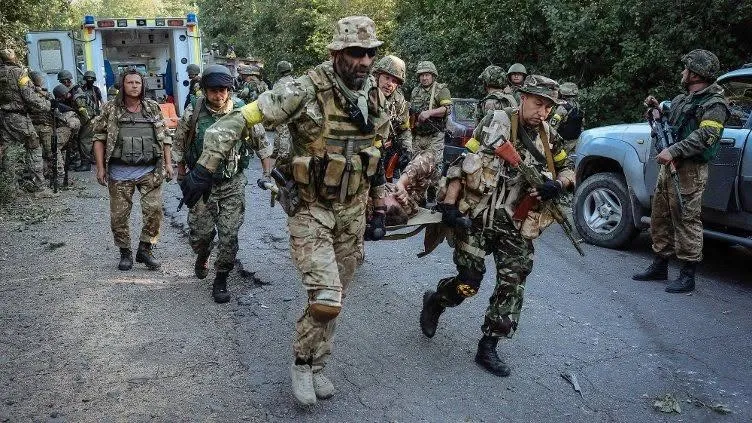
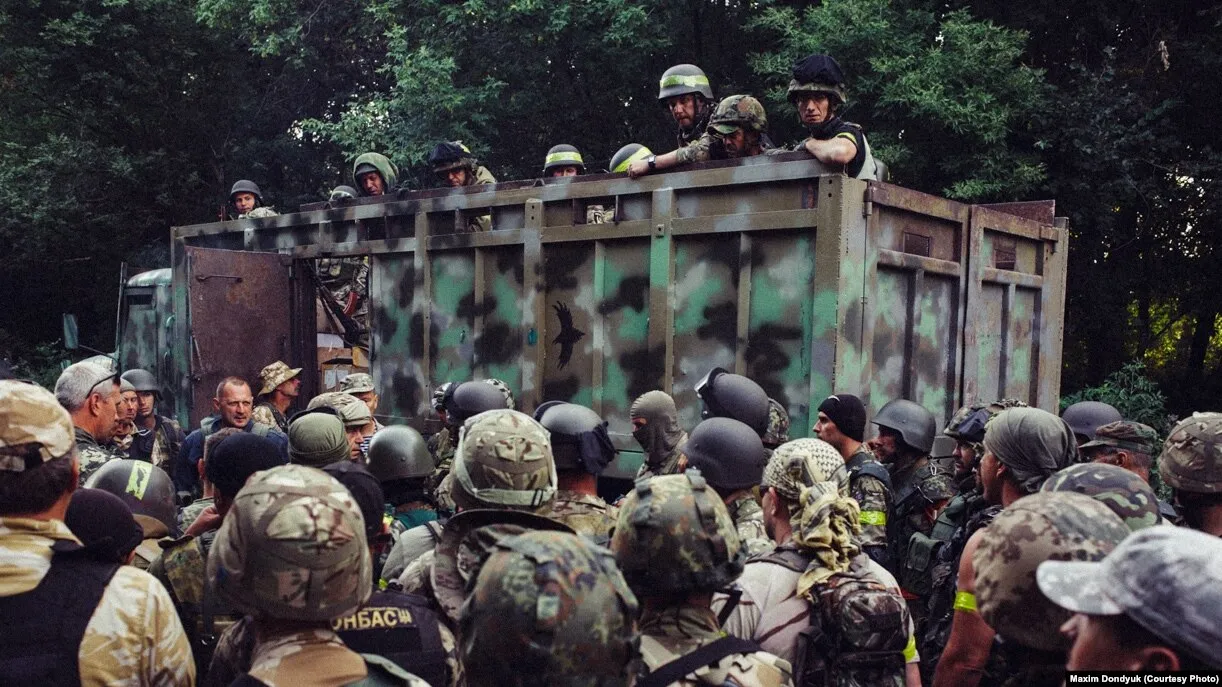
Units of the Armed Forces of Ukraine, the National Guard, the Ministry of Internal Affairs, and volunteer battalions participated in the Ilovaisk operation, including the Ministry of Internal Affairs of Ukraine’s “Dnipro-1,” “Shakhtarsk,” “Azov,” “Myrotvorets,” “Kherson,” “Svitiaz,” “Ivano-Frankivsk,” and the “Donbas” battalion of the Ukrainian National Guard.
According to the command’s plan, the army was to encircle the city, while the volunteer battalions were to move in and clear it. Heavy fighting for Ilovaisk raged for several weeks. Under heavy mortar and artillery fire from the Russian Federation’s army, it was extremely difficult to hold their positions.
They were fighting against units of the so-called “DPR” and “LPR,” supported by the regular army of the Russian Federation.
According to Ukrainian intelligence, the Russian force in the Ilovaisk area numbered about 4,000 troops, comprising four battalion tactical groups reinforced by special forces units. Other estimates by the Ukrainian Military Prosecutor’s Office indicate a significantly larger group of Russian forces operating along the entire front.
According to the Security Service of Ukraine (SBU), intelligence agencies, and the Joint Staff of the Anti-Terrorist Operation (ATO), the balance of forces in the Ilovaisk area was critical for Ukraine: 1 to 18 in terms of personnel, 1 to 11 in terms of tanks, 1 to 16 in terms of armored vehicles, 1 to 15 in artillery, and 1 to 24 in “Grad” rocket systems.
Surrounded by Russian
regular troops
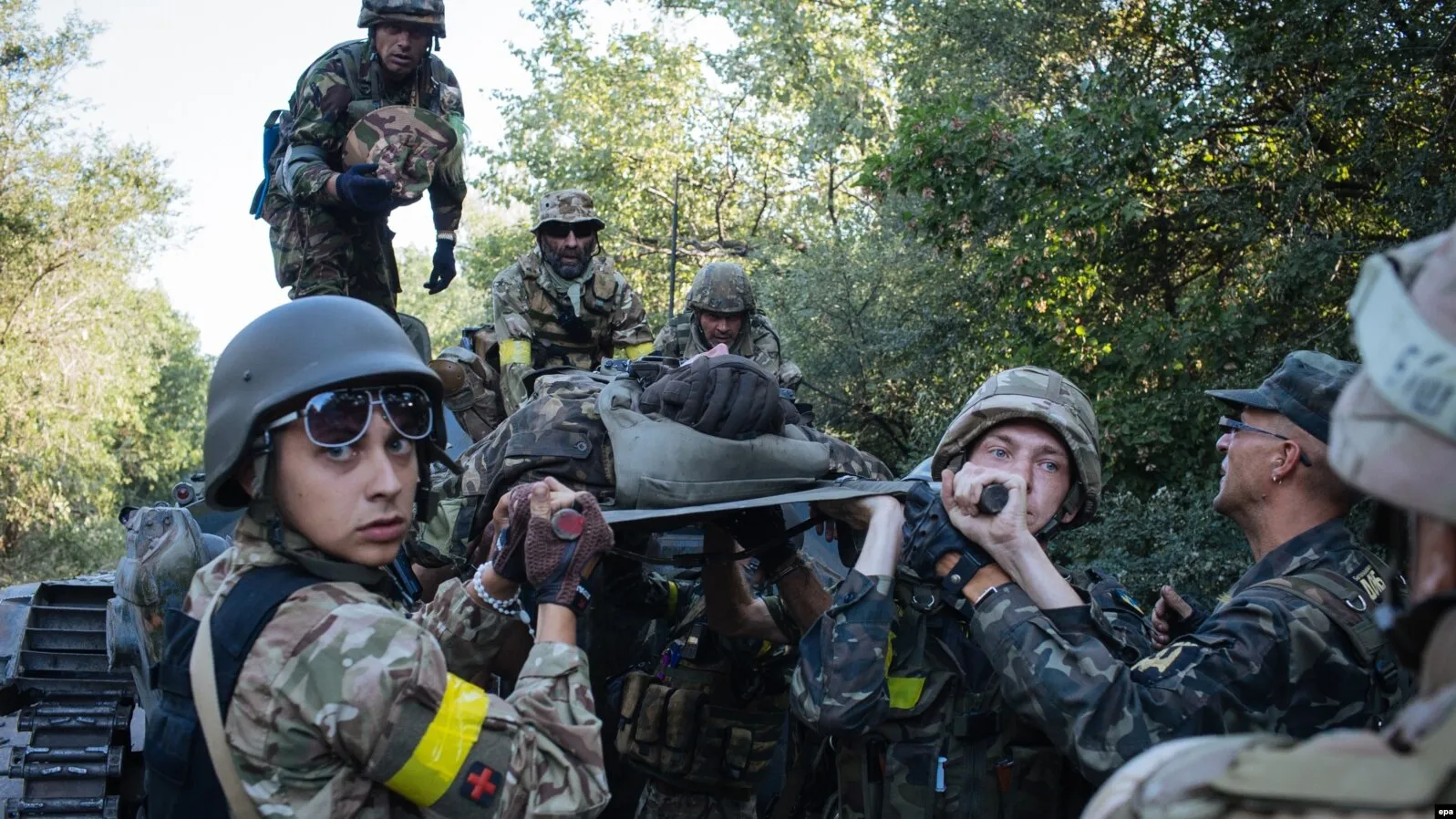
, the active phase of fighting for the city began on August 18. Ukrainian forces managed to capture part of Ilovaisk, but were unable to establish full control over it. The turning point came on the night of August 23–24, when Russia deployed regular military units into Ukrainian territory.
The Russian invasion force consisted of 9 battalion-tactical groups: 3,500 personnel; up to 60 tanks; up to 320 BMDs (BMPs); up to 60 artillery pieces; up to 45 mortars; and 5 anti-tank missile systems, which entered Ukrainian territory in the vicinity of the settlements of Pobeda and Berestove in the Starobeshevo District of Donetsk Oblast. They advanced toward Ilovaisk, simultaneously posing a threat to Ukrainian forces from several directions.
To mislead the Ukrainian Armed Forces, tactical markings were removed or camouflaged in advance from the Russian military equipment, and the identifying markings of Ukrainian units were applied—a practice prohibited by the Geneva Convention.
In his article “The Heroism and Tragedy of Ilovaisk” (September 2014), wrote that the Russians’ days-long barrage of fire and their subsequent invasion inflicted heavy losses on Ukrainian troops defending the border in Sector “D.” This sector was commanded by Lieutenant General Petro Lytvyn, while the Ilovaisk operation in the neighboring “B” sector was led by Lieutenant General Petro Khomchak.
Under constant shelling, it was not possible to hold the defenses from the border along the route to Ilovaisk. By the end of the day on August 24, control over the troops in Sector “D” had effectively been lost. The withdrawal of Ukrainian forces became disorganized. Butusov noted that, in total, more than 1,500 people left the ATO zone between August 13 and 23. Sector “D” was disbanded: some of its units were transferred to Sector “B,” while others were withdrawn from the ATO zone to restore their combat readiness.
In the evening of August 24, the Russian occupation army cut off the Starobeshevo–Kuteynikove line, which was crucial for holding Ilovaisk and through which supplies were delivered to the Ukrainian Armed Forces in the city. Ukrainian units found themselves surrounded. According to Viktor Muzhenko, who headed the General Staff and served as Commander-in-Chief of the Ukrainian Armed Forces during the Ilovaisk tragedy, 1,200–1,300 Ukrainian soldiers were trapped in the encirclement.
By August 28, the situation had become critical. Ammunition and food were running out, equipment was damaged, and opportunities for a breakthrough were dwindling. The Ukrainian command began negotiations for the evacuation of the surrounded troops.
“Green Corridor”: An Agreement That Turned Into a Trap
On August 26–28, Viktor Muzhenko held a series of telephone conversations with representatives of the Russian General Staff, including General Mykola Bohdanovskyi.
The Russians constantly changed the timing and conditions for the withdrawal from the encirclement. As subsequent events showed, they deliberately dragged out the process to set up tactically advantageous firing positions along the route by which ATO forces were to withdraw from the encirclement.
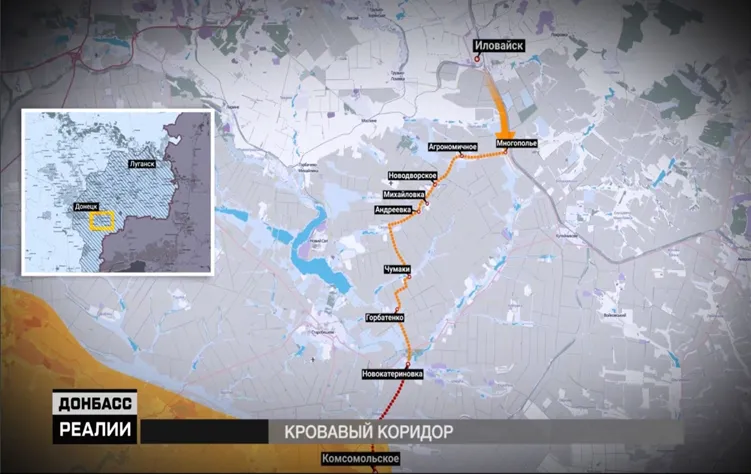
Eventually, the Russian side stated that it would guarantee the safe withdrawal of Ukrainian troops along the agreed-upon routes. Initially, it was planned that the troops would withdraw with their weapons. But on the evening of August 28, Muzhenko received a demand from the Russian General Staff to withdraw unarmed.
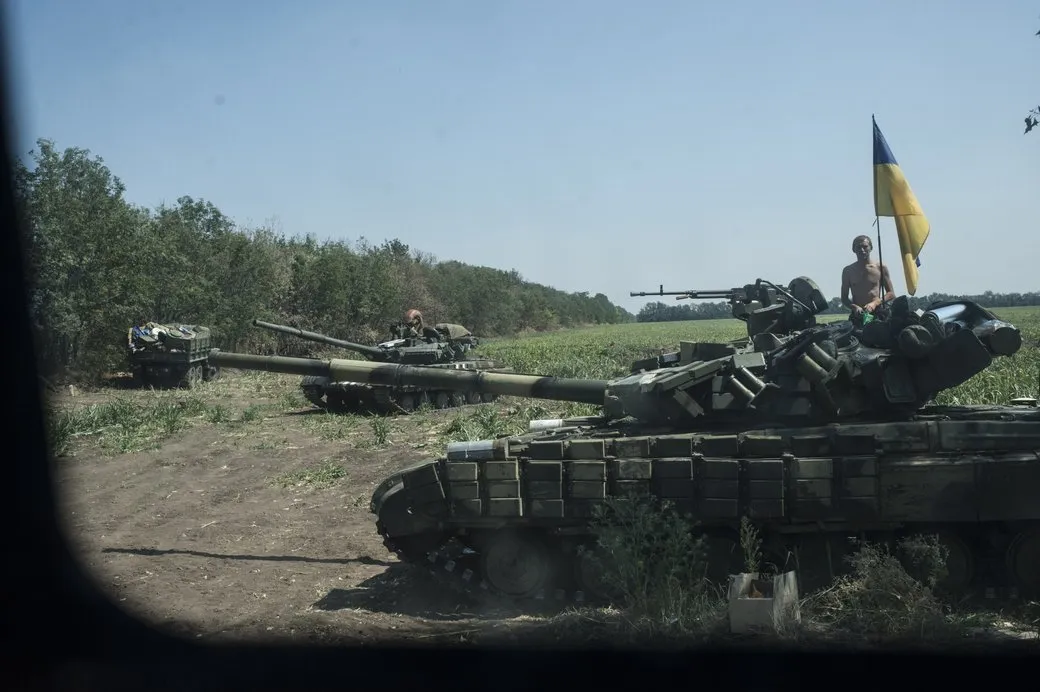
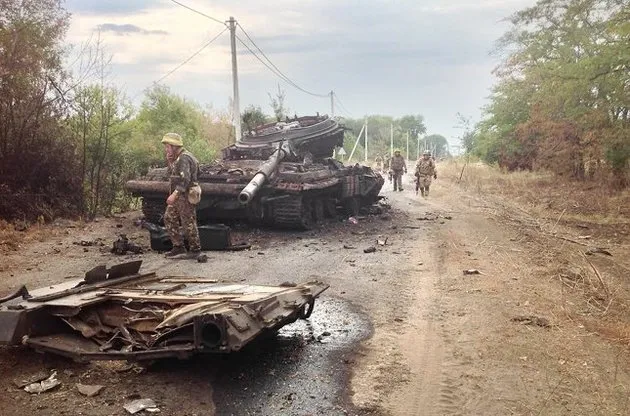
On August 29, Ukrainian convoys began moving out of the encirclement through the “green corridor” and came under fire. The Russians fired from tanks, mortars, grenade launchers, and small arms.
The investigation established that Russian troops even opened fire on convoys that included three previously captured Russian paratroopers, whom they had planned to hand over to the Russian side. Thus, the “green corridor” turned into a scene of mass murder.
According to official data, 366 Ukrainian soldiers were killed, 429 were wounded to varying degrees, more than 300 were taken prisoner, and more than 500 went missing (according to various sources, 93–158 people are missing), and the Armed Forces of Ukraine suffered significant losses of weapons and military equipment valued at nearly 300 million hryvnias.
Investigation of the Tragedy and Those Responsible
In 2017, the Prosecutor General’s Office of Ukraine stated that on August 29, 2014, the shooting of Ukrainian convoys was carried out by regular Russian military personnel on orders from the General Staff of the Russian Armed Forces. The Ukrainian investigation classified the events in Ilovaisk as the result of a direct Russian military invasion and subsequent war crimes committed by Russian military personnel.
At the same time, the investigation also documented problems within the Ukrainian army: low levels of combat readiness and combat effectiveness, instances of desertion and unauthorized abandonment of positions, failure to follow orders, as well as specific errors made by ATO leadership during the planning of the operation.
Over the years, the public has demanded that the then-leaders of the military and the ATO be held accountable, specifically Defense Minister Valeriy Geletey, Chief of the General Staff Viktor Muzhenko, and Sector “B” Commander Ruslan Khomchak. Their actions were analyzed by the investigation and by a parliamentary temporary investigative commission, but without any concrete consequences.
The Ukrainian investigation focused on documenting the responsibility of the Russian military leadership. In 2017, charges were filed, in particular, against Nikolai Bogdanovsky, First Deputy Chief of the General Staff of the Russian Armed Forces. He was charged with encroaching upon Ukraine’s territorial integrity, waging a war of aggression, and violating the laws and customs of war, combined with intentional murder.
And on August 4, 2021, the Office of the Prosecutor General announced that two more colonel generals of the Russian Armed Forces were under suspicion. According to the investigation, they were Sergei Istrakov and Mikhail Mizincev. They were suspected of organizing the killing of Ukrainian soldiers as they were withdrawing from the “green corridor.”
The Ilovaisk tragedy came back into the spotlight with renewed intensity following the start of Russia’s full-scale invasion in 2022. Soldiers from the 331st Kostroma Airborne Regiment of the Russian Armed Forces (98th Airborne Division), who participated in the massacre of Ukrainian Armed Forces personnel in the Ilovaisk encirclement, launched an offensive on Kyiv. In the spring of 2022, this regiment, along with other occupying forces, was routed during the defense of Kyiv. Meanwhile, the airborne assault battalion of the 247th Regiment, which also attacked Ukrainian Armed Forces units breaking through near Ilovaisk, suffered massive losses in the Kherson region.
Unlearned Lessons from the Ilovaisk Tragedy
On August 14, 2017, the Prosecutor General’s Office of Ukraine released the results of its investigation into the events in Ilovaisk. The text identified the occupying army of the Russian Federation as the sole culprit behind the tragedy. However, participants in those events, the families of those who died in the Ilovaisk encirclement, and human rights activists stated that this conclusion was unsatisfactory and that the investigation remained incomplete.
Oleksandr Deyneha, who fought near Ilovaisk as part of the “Donbas” battalion, commented on the prosecutor’s office report at the time: “In the end, they decided to blame Russia for everything, while the Prosecutor General’s Office did not address the inaction of our commanders and the General Staff at all,” said Oleksandr Deineha. “The command did nothing to help the soldiers who were surrounded; it left them without communication or clear orders, and instead negotiated with the leadership of the Russian army. The inaction of our generals must be punished.”
“We lost Ilovaisk due to a lack of ammunition and food. In addition, units of the Ukrainian army and volunteers were breaking out of the encirclement in different columns. I later learned that Russian soldiers had received orders to let the army pass and to eliminate the volunteers,” said Ihor Bayrak, a combatant who fought near Ilovaisk as part of the “Donbas” battalion, recounting those events.
According to human rights activists who monitored the investigation in 2017, the Prosecutor General’s Office report was an attempt to portray the situation as though the Ukrainian army had faced enemy forces 18 times its size, and therefore, any resistance was doomed to failure. In this way, prosecutors sought to shape public opinion and portray individual responsibility as collective. Representatives of the Ukrainian Helsinki Human Rights Union stated as early as 2017 that a fair investigation into the Ilovaisk tragedy and the protection of the rights of the wounded soldiers are essential for Ukraine, in order to strengthen its position to hold Russia accountable for war crimes.




