

For many years, Dubai remained a “safe haven” for big capital in the Middle East, impressing even the most discerning investors with its technological progress. The UAE’s economy and local real estate market attracted businesses from around the world. And even the war that briefly flared up was unable to dampen this interest for long.
In June, the market capitalization on the Dubai Financial Market (DFM) exceeded 1 trillion dirhams. The UAE markets showed significant growth in response to news about the prospects for a peace agreement between the U.S. and Iran.
What has ensured the stability of the Emirates’ economy; why the UAE remains a global magnet for capital; how has the profile of real estate buyers changed, and what mistakes do foreign investors most often make? We spoke with Yuriy Ilnytskyi, founder and CEO of Stradom Real Estate in Dubai.
Ilnytskyi has been working in the UAE real estate sector for over 5 years and, during that time, has been involved in facilitating transactions in both the primary and secondary real estate markets. His company specializes in selecting investment properties, facilitating real estate purchase and sale transactions, and advising international clients who are considering the UAE as a destination for investment and relocation.
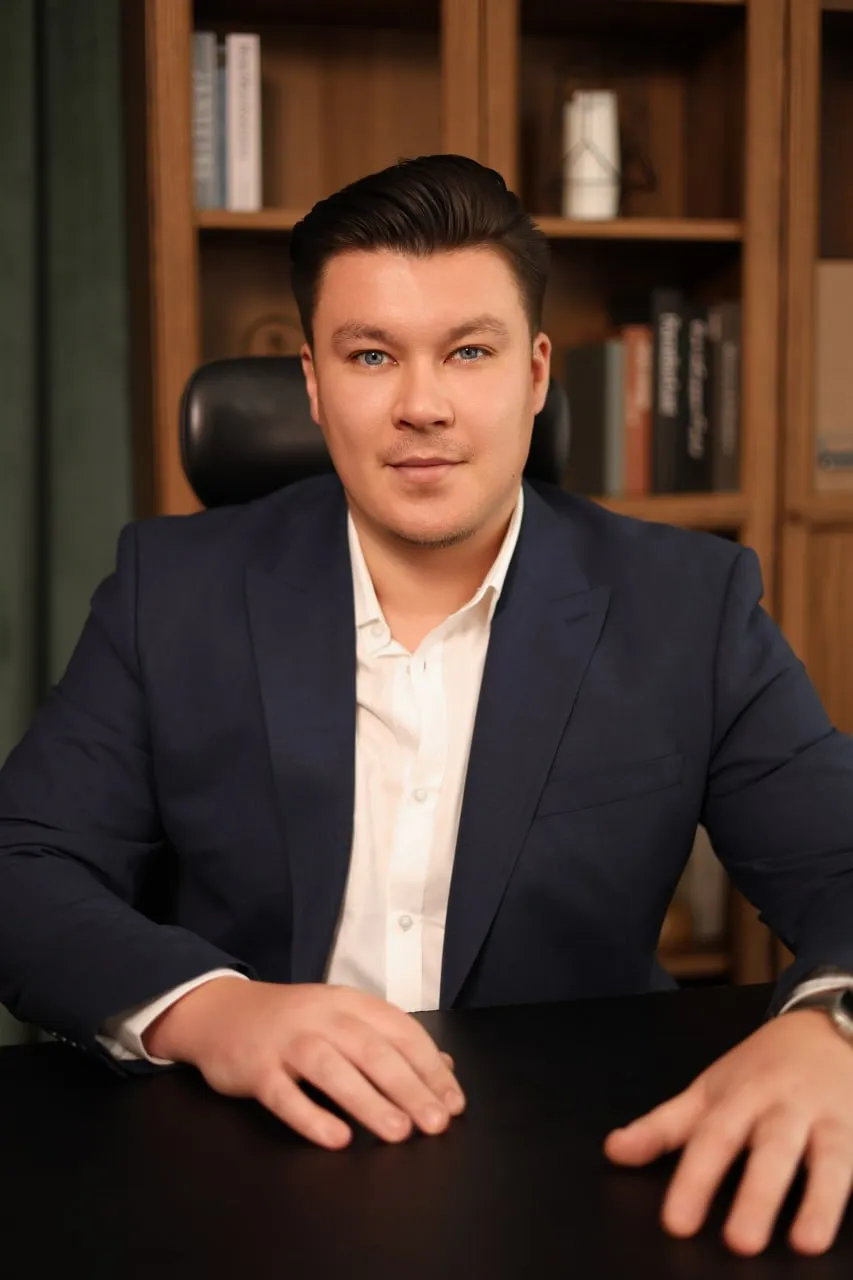
Tell us about Stradom Real Estate’s areas of expertise. How do you build relationships with investors?
Yuriy Ilnitsky: Stradom Real Estate works with clients from Europe, the United Kingdom, the CIS countries, the Middle East, and Asia. The company’s main focus is on premium and investment real estate in Dubai, including such sought-after areas as Palm Jumeirah, Dubai Hills Estate, Dubai Creek Harbour, Emirates Hills, and other promising locations.
In recent years, we’ve observed a significant shift in demand: an increasing number of clients view real estate in the UAE not only as a means of generating income but also as a way to preserve capital, diversify assets, and ensure a high quality of life for their families.
Thanks to our many years of experience in the market and a deep understanding of its characteristics, we strive to help investors make informed decisions based not on short-term trends, but on long-term investment strategies and fundamental market indicators.
Based on your personal observations, to what extent have the economy and business activity in the UAE recovered since the height of the conflict we witnessed in the region? As an expert, which economic indicators do you pay the most attention to?
Yuriy Ilnytskyi: In my opinion, the UAE’s economy demonstrated high resilience even during the most intense phase of the regional conflict. Despite initial caution on the part of investors and a temporary decline in business activity in certain sectors, there was no significant economic downturn. Moreover, recent news that the market capitalization of the Dubai Financial Market has exceeded 1 trillion dirhams indicates that investor confidence in the emirate’s economy—and the country as a whole—remains strong.
As for the real estate market, which I monitor daily, after a period of heightened caution, we are seeing a return of demand from both end-users and investors. The number of property viewings, purchase inquiries, and transactions remains high, especially in the premium segment and the most sought-after areas of Dubai.
First and foremost, I focus on several key indicators:
- the volume and value of real estate transactions (DLD Report);
- price trends for residential and commercial real estate;
- UAE stock market indicators, including DFM and ADX market capitalization;
- tourist traffic and hotel occupancy rates;
- the level of bank lending and mortgage activity;
- volumes of foreign direct investment.
Today, most of these indicators remain strong or continue to show growth. This suggests that the UAE’s economy has not only recovered from a period of geopolitical tension but also continues to develop thanks to its diversified economy, a stable financial system, and the country’s enduring status as one of the region’s key business and investment hubs.
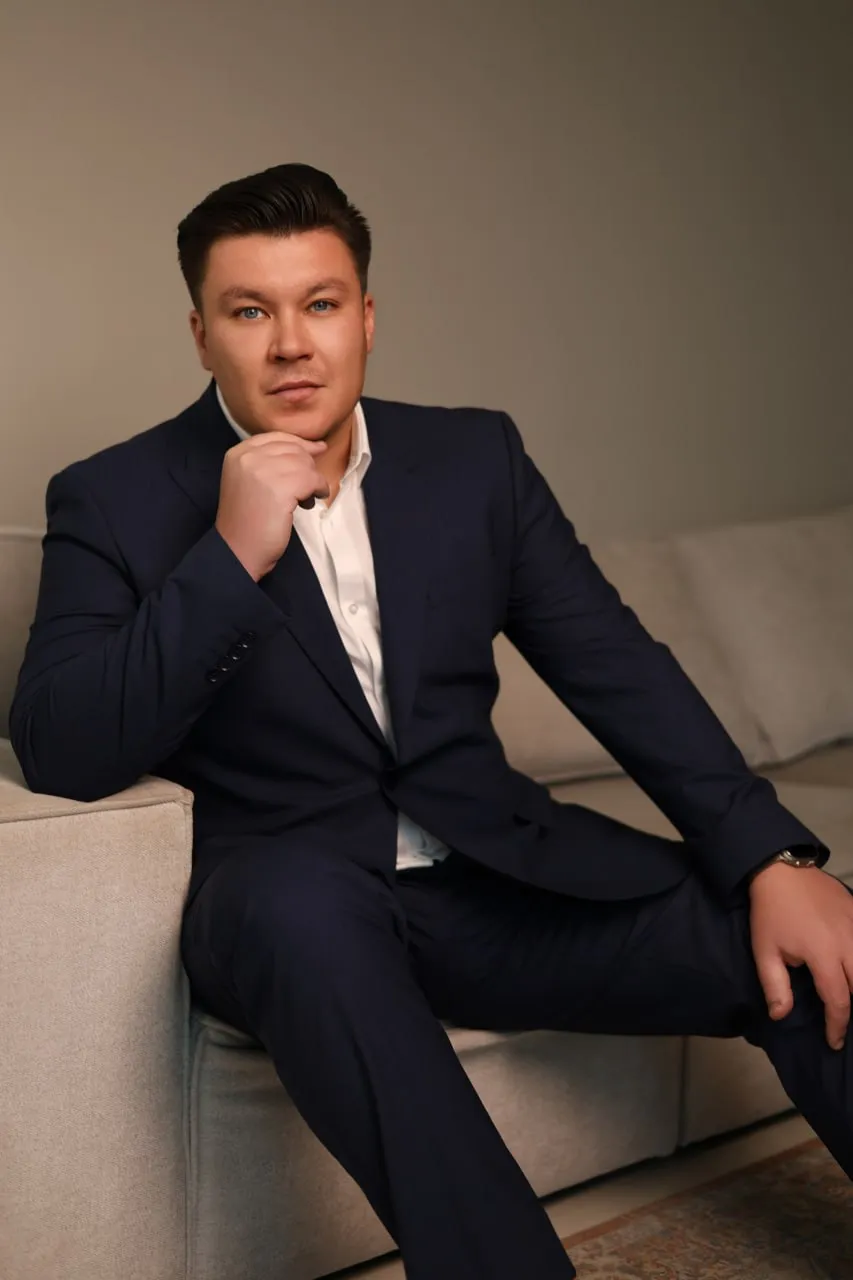
What has been the key factor in the sustainability of the UAE’s economy?
Yuriy Ilnytskyi: Diversification has been the key factor in the stability of the UAE’s economy.
The country has long since ceased to depend solely on oil. Today, the economy is supported by several strong sectors: real estate, tourism, trade, logistics, finance, technology, aviation, and the attraction of international capital.
The second important factor is the country’s ability to adapt quickly to external risks. The UAE knows how to respond promptly to geopolitical challenges, maintain business stability, ensure capital security, and sustain investor confidence.
The United Arab Emirates topped the global investment attractiveness ranking published in June of this year. It turns out that 56% of investors worldwide are showing serious interest in this real estate market—despite the geopolitical risks in the region. How would you explain this phenomenon?
Yuriy Ilnytskyi: This phenomenon can be explained by the fact that investors evaluate not so much the country’s geographic location as the quality of the investment environment and the level of capital protection.
Paradoxically, during periods of global instability, the UAE often strengthens its position. Many investors view Dubai not as part of the region’s problems, but as one of the safest financial and business hubs in the Middle East.
From a real estate perspective, the UAE’s appeal today is based on several factors.
First, the market continues to demonstrate steady growth in asset values and rental rates, allowing investors to count on both capital appreciation and stable rental income.
Second, the UAE offers one of the most favorable tax environments in the world: the absence of personal income tax, capital gains tax, and annual property tax makes investments particularly attractive compared to many European and Western markets.
Third, international demand plays an important role. Real estate buyers in Dubai include investors from Europe, the CIS countries, Asia, India, China, the United Kingdom, and the Middle East. This diversification reduces the market’s dependence on the economic situation in any single country.

Which countries are currently providing the most capital, and has the buyer profile changed since the onset of geopolitical instability in the Middle East?
Yuriy Ilnytskyi: It’s hard to say at this point. But the buyer profile has indeed changed. Currently, the main flow of capital into the UAE real estate market comes from India, the UK, China, the CIS countries, the Gulf states, and Europe. At the same time, following the onset of geopolitical instability in various regions of the world, we are seeing further diversification of demand: Dubai is increasingly viewed not only as an investment destination but also as a place to live, do business, and preserve capital.
The buyer profile has indeed changed. Whereas previously a significant portion of investors focused primarily on short-term returns and reselling properties, today we see far more buyers who view real estate in the UAE as a long-term asset. Many are purchasing homes for their own use, to obtain residency status, to relocate their families, or to diversify their assets across multiple countries.
Undoubtedly, buyers have become more selective. Given high prices and a large volume of new supply, investors are analyzing the developer’s reputation, the project’s location, completion timelines, construction quality, and the property’s appreciation potential much more carefully. While demand was largely driven by emotion a few years ago, decisions today are made in a much more measured and professional manner.
In my opinion, buyers’ current selectivity is a positive sign for the market. It indicates the market’s maturity: investors are willing to commit significant funds but expect transparency, quality, and long-term value from the asset—not just rapid price appreciation.
What is currently happening with real estate prices in the UAE compared to previous years?
Yuriy Ilnytskyi: When comparing the current situation to previous years, the real estate market in the UAE—and especially in Dubai—remains at a significantly higher level than it was before the start of the growth cycle in 2020–2021. Over the past five years, prices in the premium segment have more than doubled, and the cost of villas in some key locations has increased by nearly 100%.
That said, what we’re seeing today is not so much a continued sharp rise in prices as a gradual transition of the market into a more mature phase. Following record-breaking performance in 2024–2025, growth rates are beginning to slow. Whereas annual growth in certain segments previously reached 20–30% or more, the market is now demonstrating more balanced dynamics.
The premium segment is particularly interesting. Despite an increase in supply, areas such as Palm Jumeirah, Emirates Hills, Jumeirah Bay Island, and Dubai Hills Estate continue to enjoy high demand due to the limited supply of high-quality properties and sustained interest from international investors.

Which areas of Dubai currently have the greatest growth potential over the next three to five years, and why should investors pay attention to them?
Yuriy Ilnitsky: First and foremost, master-planned communities such as Palm Jumeirah, Dubai Hills, Madinat Jumeirah Living, and Creek Harbour. I also recommend paying attention to the following areas: Dubai South, Town Square, and Dubai Land.4
Dubai has traditionally attracted investors with high rental yields. Is this advantage still holding up amid rising housing prices, or are yields gradually declining?
Yuriy Ilnitsky: Yields are indeed gradually declining compared to the record levels of previous years, but Dubai remains one of the most attractive real estate markets in the world in terms of rental income.
The main reason for the decline in returns is that real estate prices have been rising faster than rental rates in recent years. However, rents also continue to rise due to population growth, an influx of professionals, and an increase in the number of companies opening offices in the emirate.
Today, the average gross yield in Dubai is about 6–8% per year, and in some areas it can reach 8–10%. By comparison, in many major European capitals, this figure typically ranges from 2–4%, and in some premium areas, it is even lower.
Looking ahead to 2027–2028, do you expect a new wave of price growth, continued stabilization, or a deeper correction? What key indicators should investors be monitoring right now?
Yuriy Ilnitsky: In my view, the most likely scenario for the Dubai real estate market in 2027–2028 is neither a sharp rise nor a deep correction, but rather a transition to more balanced and sustainable development.
After several years of very rapid growth, the market is gradually entering a more mature phase. We are already seeing a slowdown in the pace of price growth compared to the record levels of recent years. However, the fundamental factors supporting the market remain strong: population growth, an influx of skilled professionals and entrepreneurs, economic development, and strong interest from international investors in the UAE.
Therefore, I expect moderate price growth in high-quality projects and the most sought-after locations rather than a widespread correction across the entire market.

What are the main mistakes you observe in the behavior of investors who may be entering the UAE market for the first time?
Yuriy Ilnitsky: In my view, the most common mistake made by first-time investors entering the UAE market is the tendency to make decisions too quickly, relying solely on promised returns or the developer’s marketing materials.
Many newcomers view the Dubai market as a single entity where any property automatically appreciates in value. In reality, investment returns can vary significantly depending on location, project quality, the developer’s reputation, and the timeline for completion.
The second common mistake is not paying enough attention to the developer. Investors often focus on an attractive price or a convenient payment plan without analyzing the company’s track record, the quality of its previous projects, and its ability to meet stated construction deadlines.
The third mistake is choosing a property without a clear investment strategy. (We also call this an “exit strategy.”) Before buying, it’s important to understand the investor’s goal: generating rental income, long-term capital appreciation, reselling during the construction phase, or purchasing the property for personal residence.
What is the main piece of advice you would give to a foreign investor considering purchasing real estate in the UAE?
Yuriy Ilnitsky: Don’t just buy real estate—buy the right location and the right developer.
The UAE market offers properties in virtually any price range, but not all of them have the same investment potential. History shows that projects in prime locations from reliable developers with a proven track record demonstrate the greatest resilience during periods of market volatility and the best appreciation in value.
In addition, I always recommend that investors look beyond today’s promised returns and ask themselves: Will this property still be in demand in five or ten years? It is the long-term liquidity of an asset that most often proves to be more important than short-term profit.
The UAE today offers a unique combination of factors: a stable economy, a favorable tax environment, a high level of security, and a steady inflow of international capital. However, investment success depends not so much on the market itself as on the quality of the chosen property and a well-defined strategy.
Therefore, my main advice is not to make decisions based on emotions or hype.


