
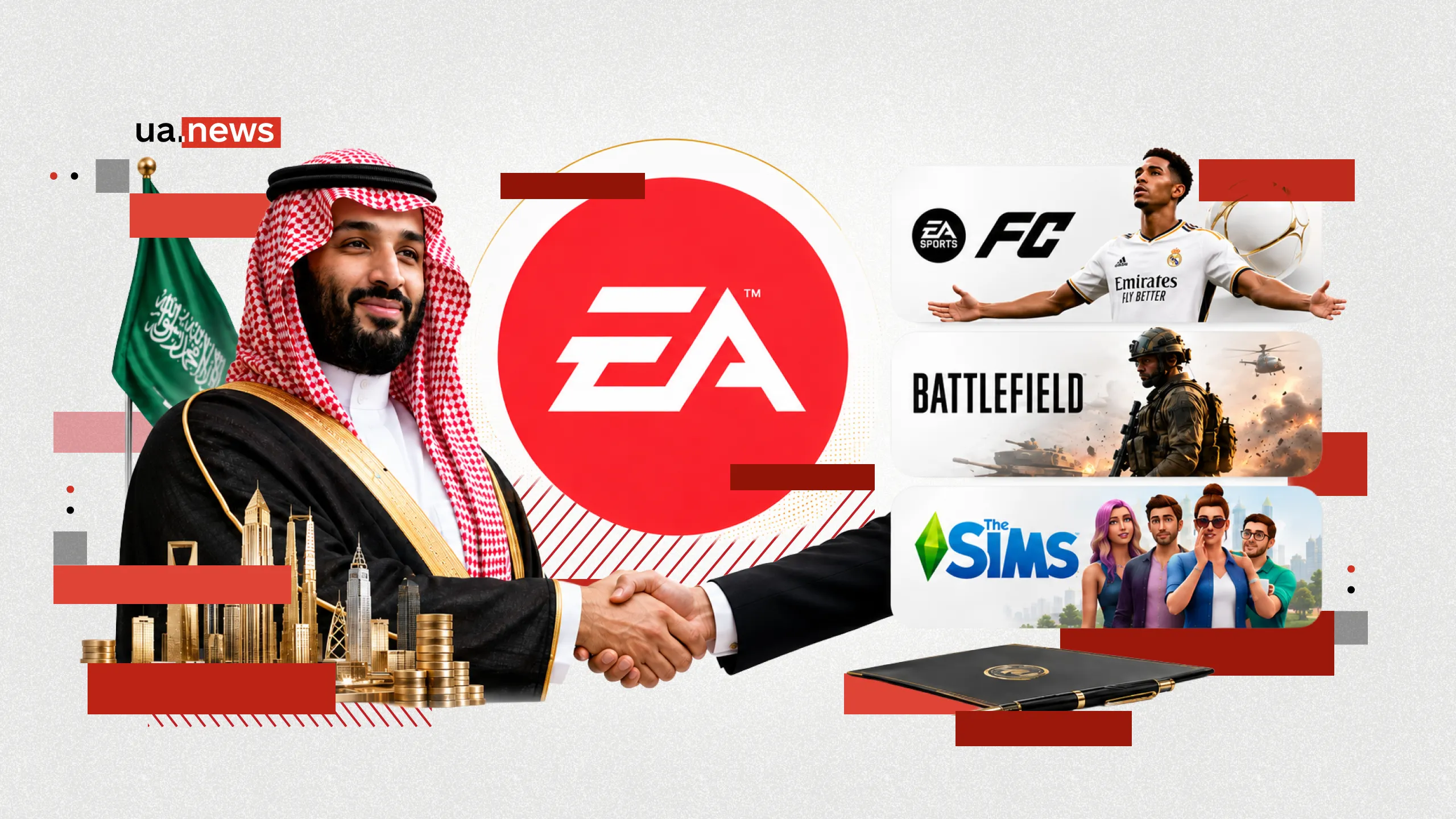
For decades, Electronic Arts has shaped how millions of people view soccer, war, cars, family, and everyday life. In EA Sports FC, players manage the world’s biggest soccer clubs. Battlefield creates a spectacular portrayal of modern combat. The Sims lets you build virtual families and societies, while Need for Speed has turned street racing into one of the most iconic symbols of gaming culture.
Control of this system is now passing to investors, led by Saudi Arabia’s sovereign wealth fund.
A consortium consisting of Saudi Arabia’s Public Investment Fund, the American investment firm Silver Lake, and Jared Kushner’s Affinity Partners has agreed to acquire Electronic Arts for approximately $55 billion. Once the deal is finalized, EA will become a private company, and the PIF will hold a controlling stake in one of the world’s largest video game publishers.
On paper, this is a corporate takeover. In reality, it is part of a large-scale battle among nations for global attention. Countries are increasingly investing in soccer clubs, movie studios, sports tournaments, social media platforms, and video game companies. They are buying not only businesses but also the opportunity to influence the cultural environment in which hundreds of millions of people live.
UA.News explains how Saudi Arabia is gaining control of Electronic Arts, why nations need global gaming brands, and how video games are already being used for propaganda, recruitment, justifying wars, and rewriting history.
Saudi Fund Takes Control of Electronic Arts
The agreement to acquire Electronic Arts was officially announced on September 29, 2025. According to EA’s statement, the consortium offered shareholders $210 per share. This was approximately 25% higher than the company’s stock price prior to the first reports of a potential sale.
The total value of EA as part of the transaction was estimated at approximately $55 billion. The company called it the largest cash buyout of a public company in history involving financial investors.
The Public Investment Fund also confirmed the deal. Even before the acquisition, the Saudi fund held about 9.9% of EA’s shares and was set to transfer this stake to a new private entity while simultaneously injecting additional capital.
EA also published the official terms of the transaction in filings with the U.S. Securities and Exchange Commission. In Form 8-K, the company confirmed the signing of the merger agreement, and in materials for shareholders, it specified a price of $210 per share and the total valuation of the business.
Upon completion of the transaction, PIF is expected to control approximately 93.4% of the company, Silver Lake about 5.5%, and Affinity Partners approximately 1.1%. Thus, while EA is formally acquiring a consortium, the Saudi Arabian sovereign wealth fund will become the de facto controlling owner.
By July 30, 2026, EA had obtained the necessary regulatory approvals. The European Union conducted a separate review of the transaction in accordance with merger control rules and the Foreign Subsidies Regulation. This mechanism is designed to prevent companies financed by foreign governments from gaining an unfair advantage in the European market. The transaction was scheduled to close on August 4, 2026.
What Exactly Is Saudi Arabia Buying Along with EA?
Electronic Arts’ greatest asset is not its California office, nor even its individual development teams. The Saudi fund is acquiring global franchises that have engaged a massive audience for decades.
The company’s portfolio includes EA Sports FC, Battlefield, The Sims, Need for Speed, Apex Legends, Madden NFL, Dragon Age, Mass Effect, and other series. Some of these games sell tens of millions of copies, while others generate revenue through subscriptions, advertising, digital items, and seasonal updates.
EA Sports FC is a particularly valuable asset. It’s no longer just a soccer simulator. The game brings together clubs, leagues, athletes, advertising contracts, esports, and an internal digital economy. It regularly appears on the screens of a young audience that may hardly watch traditional television at all.
Battlefield works with a different set of themes—the military, modern weapons, military technology, and international conflicts. The Sims influences perceptions of family, career, consumption, architecture, and social relationships.
For the average investor, these are sources of profit. For a sovereign wealth fund, they’re also a constant channel for maintaining a presence in the lives of millions of people.
Why Does Saudi Arabia Need Video Games?
The acquisition of EA is part of the Vision 2030 national program, through which Saudi Arabia is seeking to reduce its economic dependence on oil exports.

In its National Strategy for the Development of Gaming and Esports, Saudi Arabia identifies the gaming industry as one of the economy’s most promising sectors. The Kingdom aims to create jobs, attract technology companies, host global tournaments, and become a major hub for game development.
To implement this policy, the PIF established Savvy Games Group, which focuses on acquisitions, investments, and the development of esports. The company has already acquired mobile publisher Scopely, gained control of major esports assets, and invested in a number of international companies.
The Saudi fund has also held or continues to hold stakes in Nintendo, Capcom, Nexon, and Take-Two Interactive. EA is becoming the largest and most important component of this portfolio.
Officially, the goal is to diversify the economy. However, investments in gaming also give Saudi Arabia access to global culture and help reshape the kingdom’s image.
Instead of a country that the world primarily associated with oil, an authoritarian monarchy, and human rights violations, the international audience is increasingly seeing a nation of major soccer matches, boxing matches, technology forums, esports, and video games.
Games are becoming a tool of soft power
Soft power is a state’s ability to influence the behavior of other countries and societies not only through military force or economic pressure, but also through culture, popularity, education, sports, and an appealing international image.
For decades, the main instruments of such influence have been film, television, music, and sports. Hollywood has promoted the image of the United States as a country of freedom, technology, and personal success. South Korea has used music, TV series, and cosmetics to strengthen its own international brand. Qatar and the UAE have invested billions in soccer, airlines, and large-scale cultural projects.
Now video games have joined this competition.
Unlike movies, a video game doesn’t just tell a story. It compels the player to act within it. The player pulls the trigger, chooses an ally, defends territory, punishes the enemy, and receives a reward for behavior the creators deem correct.
That is precisely why a game can be a more effective means of persuasion than a typical commercial. It doesn’t explicitly tell you who to root for. It establishes rules under which one character automatically becomes the hero, while another becomes a legitimate target.
How Propaganda Is Embedded in Video Games
Propaganda in video games doesn’t necessarily take the form of a political speech, a national flag, or a portrait of a leader. Much more often, it operates subtly—through the plot, gameplay mechanics, the distribution of roles, and the very rules of the virtual world.
Players may be consistently shown that “their” army always acts professionally, ethically, and to save others, while the enemy is portrayed as cruel, irrational, or culturally inferior. In such a framework, war is presented as inevitable and necessary, while civilian casualties, destruction, and the long-term consequences of hostilities remain outside the scope of the narrative.
Similarly, disputed territory can be presented without any explanation as an indisputable part of the desired state; an invasion can be called a liberation, and resistance can be labeled terrorism. Military service, meanwhile, is transformed into an exciting career involving technology, teamwork, and heroism, while the risks of death, injury, and psychological trauma are scarcely depicted.
Specific examples demonstrate that states and their affiliated organizations employ virtually all of these approaches, transforming video games into a tool for shaping the desired image of war, the military, and political conflicts.
America’s Army: The U.S. Army Created Its Own Shooter Game for Recruitment
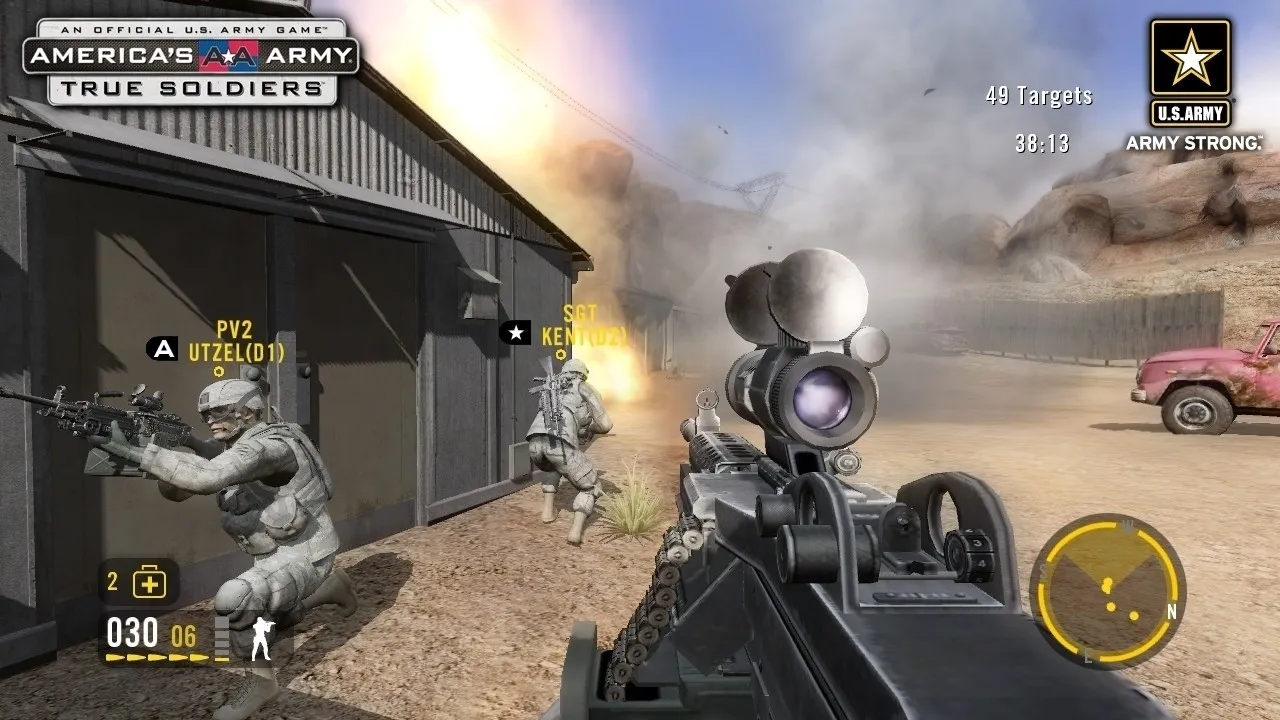
The most direct example of a government-sponsored game is *America’s Army*, released in 2002 and funded by the U.S. Army.
This was not a commercial project that happened to have a patriotic storyline. The game was created by a special unit of the U.S. Army, and its official purpose was to familiarize young people with military service and assist with recruitment.
On the U.S. Army’s official website, America’s Army is described as a digital model of the Army experience that can be used as a recruitment tool. Another U.S. Army publication explicitly described the project as both a recruitment and a PR tool.
Players were first asked to complete training, learn how to use weapons and provide medical care, and then participate in team operations.
The main propaganda messages of America’s Army were embedded directly in the rules:
- an American soldier is a professional;
- the Army operates strictly within the rules;
- military service is about teamwork, technology, and personal growth;
- an American soldier always sees himself as a hero, not an aggressor;
- the consequences of war for civilians are virtually never shown.
Even in multiplayer mode, each team saw themselves as American soldiers and their opponents as enemy combatants. This prevented situations where a player would openly control forces killing American soldiers.
In this case, the game’s propagandistic nature is not mere speculation: the U.S. Army itself recognized it as part of its communications and recruitment system.
Call of Duty: The American Hero and the Russian Enemy

Commercial games aren’t necessarily commissioned by the government, but they can also spread narratives that benefit states.
One of the most famous examples is the Call of Duty series, particularly the games in the Modern Warfare subseries. In these games, American and British special forces are typically portrayed as the main force holding back global chaos, while Russian military personnel, terrorists, or leaders of fictional countries often serve as the primary adversaries.
In the 2019 game Call of Duty: Modern Warfare, a location called “Highway of Death” appeared. The game claimed that Russian troops bombed people trying to flee the fictional country of Urzikstan.
The name directly echoed the real “Highway of Death” in Kuwait, where in 1991 a U.S.-led coalition air force attacked columns of Iraqi troops and transport vehicles. However, in the game’s storyline, the blame was shifted to Russia.
The message conveyed to the player is simple: Western intelligence agencies may act harshly, but ultimately save the world, while the Russian army systematically kills civilians and uses prohibited weapons.
This does not make the entire Call of Duty series government propaganda. Games often criticize politicians, intelligence agencies, and military leadership. However, the overall narrative often remains the same: an American or British soldier is the protagonist of the story, while residents of other countries become enemies, victims, or mere backdrops to his heroism.
Researchers have described this model as part of the “military-entertainment complex,” where the boundaries between the military, the defense industry, and popular culture are gradually blurring. An academic study of the Call of Duty series indicated that such games can foster acceptance of American militarism and the wars waged by the U.S. and its allies.
Glorious Mission: China Defends “Its” Islands
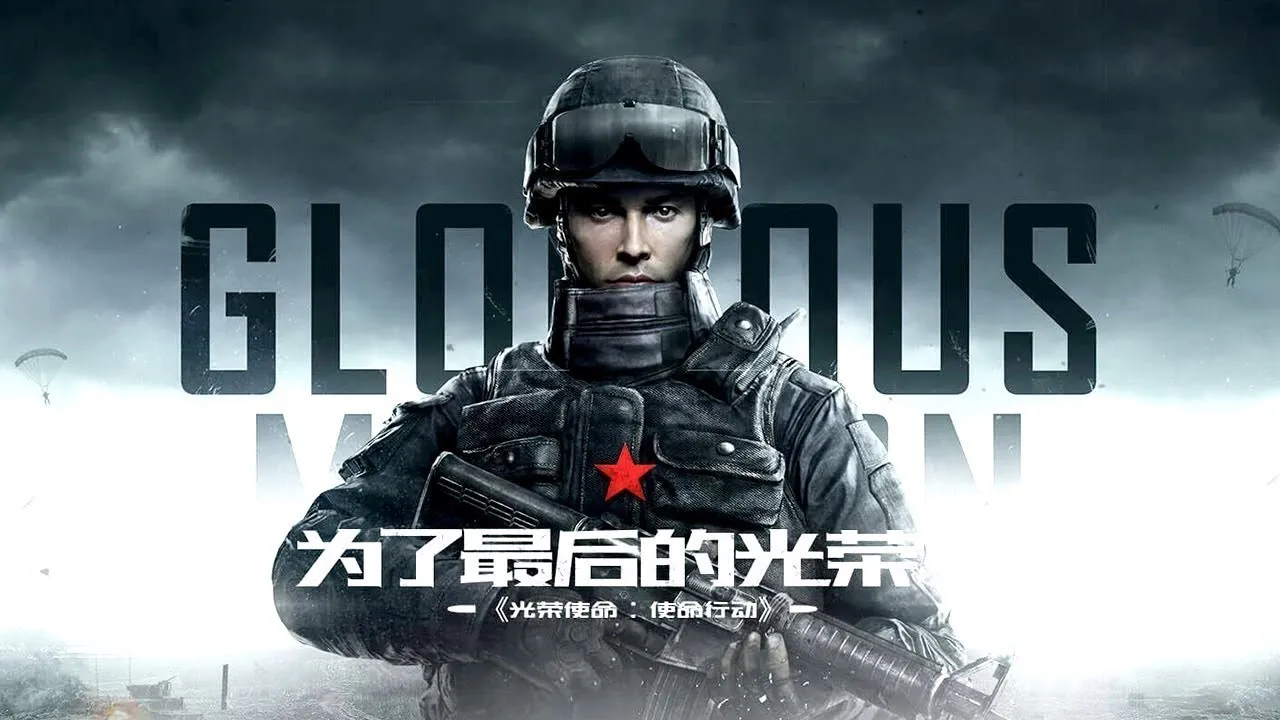
The Chinese game Glorious Mission was effectively a response to America’s Army. It was developed in collaboration with the People’s Liberation Army of China and was initially used for training military personnel, though a civilian version was later released.
The player controls a Chinese soldier, undergoes military training, and fights against foreign enemies. One of the most politicized parts of the game is the mission centered on the Diaoyu Islands, which Japan calls the Senkaku Islands.
A territorial dispute over these islands continues between Beijing and Tokyo. However, in the game, there is no dispute at all: the islands are unquestionably Chinese, and the Japanese side is portrayed as the aggressor.
Reports on Glorious Mission noted that representatives of the Chinese propaganda apparatus worked on its scenario, and the project was overseen by the People’s Liberation Army.
The game’s main themes:
- the Chinese army is modern, disciplined, and technologically advanced;
- China is merely defending its territory;
- the territorial status of the disputed islands is not up for debate;
- Japan and Western nations pose an external threat;
- Service in the People’s Liberation Army is prestigious and heroic.
The game does not explain the legal and historical complexity of the conflict to the player. It simply turns Beijing’s official position into a game rule.
“Smuta”: Russia Rewrites History Through State Funding
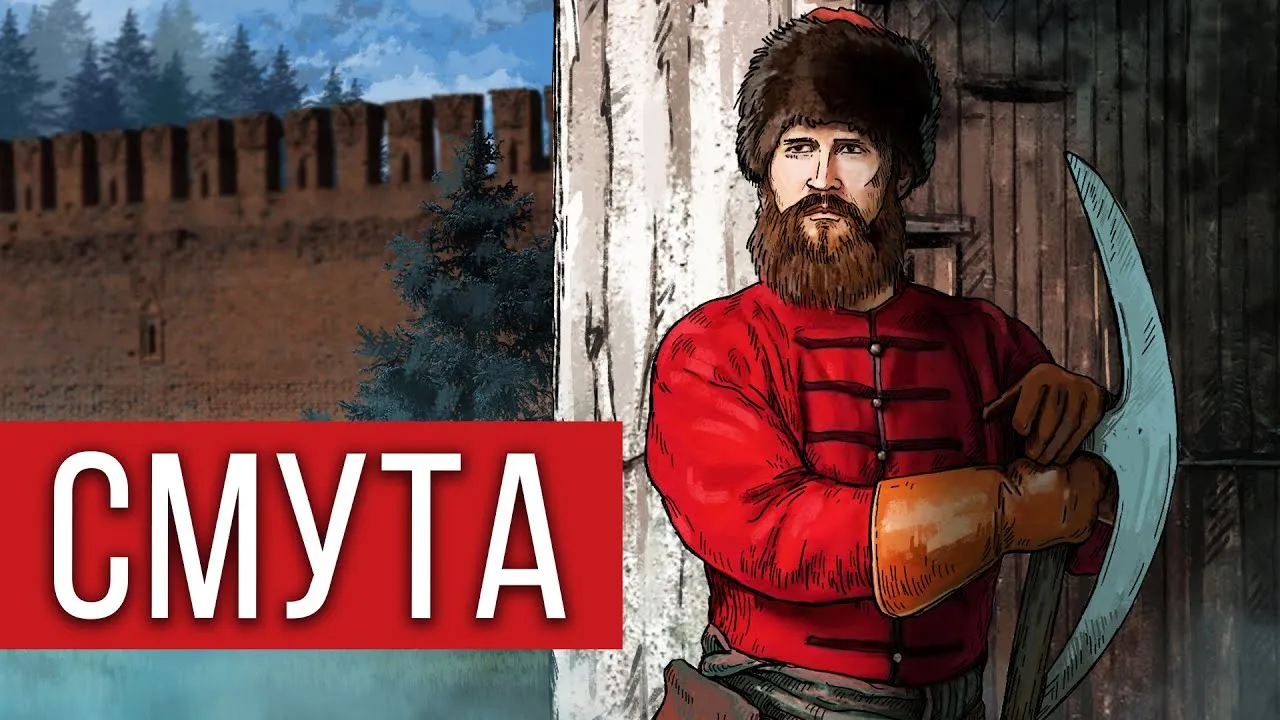
In 2024, the historical role-playing game “Smuta” was released in Russia, created with financial support from the state-funded Institute for Internet Development.
Approximately 490 million rubles in state funds were allocated for its development. The project was positioned as a major Russian historical game intended to spark young people’s interest in the nation’s past.
The plot transports the player to the Time of Troubles in the early 17th century. The main character faces off against Polish forces, mercenaries, and internal traitors.
The historical theme itself does not make the game propaganda. The issue lies in how it fits into Russia’s current state ideology.
The main narratives of “Smuta”:
- Russia is constantly under siege by the hostile West;
- external forces seek to destroy or divide the state;
- the internal opposition acts in the interests of foreigners;
- the country’s survival is possible only through unification around a strong, centralized government;
- Russia’s confrontation with Poland and the West is not a political conflict of a specific era, but rather an allegedly centuries-old historical pattern.
The European External Action Service, in its EUvsDisinfo project, identified “Smuta” as an example of propaganda disguised as a historical game and linked it to the Kremlin’s “besieged fortress” narrative.
Thus, 17th-century history is being used to justify 21st-century political narratives: the West is always the enemy, Russia is always the victim, and any internal dissent leads to the collapse of the state.
Squad 22: The Russian Invasion of Ukraine as a “Training Game”
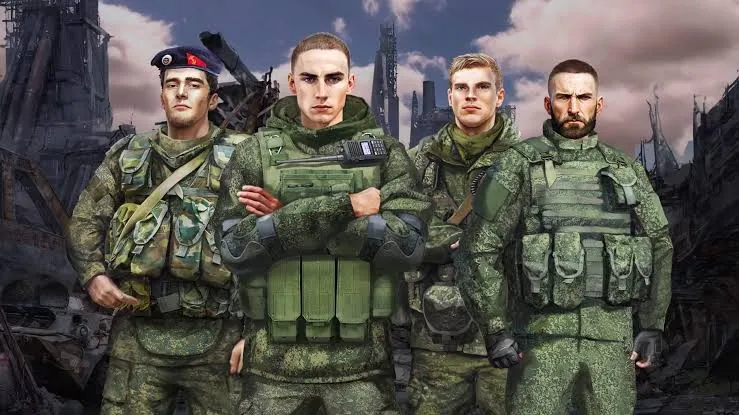
A much more straightforward example is the Russian game Squad 22: ZOV, released in 2025.
Its developers claim that the project was created based on the experiences of Russian veterans and active-duty military personnel. The game’s Steam page noted that the Russian military recommends it as a basic manual on infantry tactics for cadets and members of “Yunarmiya.”
The player commands Russian units in a war against Ukraine. The title itself uses the letter Z—one of the main symbols of the Russian invasion.
The game’s propaganda messages practically echo the Kremlin’s official rhetoric:
- Russian troops are not invading, but rather “liberating” territories;
- the Ukrainian side is portrayed exclusively as an enemy military force;
- the occupation of Ukrainian cities is framed as a tactical objective;
- the illegal war is portrayed as a normal and professional military operation;
- Russian soldiers are portrayed as defenders, regardless of the fact that they are operating on the territory of another state;
- young people are encouraged to view participation in the war as a prestigious military achievement.
The game virtually omits civilian casualties, destroyed Ukrainian cities, deportations, torture, and other consequences of the aggression. The war is stripped of its crimes and transformed into a series of tactical puzzles.
It is precisely this mechanic that normalizes aggression: the player thinks not about the legality of the invasion, but about how to properly position Russian soldiers and capture the next position.
Will EA Become a Mouthpiece for Saudi Arabia?
At this point, there is no evidence that, following the change in ownership, Electronic Arts will begin directly inserting Saudi propaganda into *Battlefield*, *The Sims*, or *EA Sports FC*.
The mere fact of state control over the company also does not mean that every new product will automatically become political propaganda.
However, ownership shapes strategic decisions. A controlling shareholder can influence management, budgets, personnel policies, partnerships, tournament locations, and the topics the company will try to avoid.
The situation is particularly sensitive with The Sims and BioWare projects, which have traditionally featured diverse characters, same-sex relationships, and stories about personal identity.
The concern is not that the new owner will publicly ban such content. A much more realistic scenario is that the company itself will begin to avoid topics that could create problems in Saudi Arabia or other conservative countries.
Video games are becoming just as important as movies and television
In the 20th century, governments fought for control over newspapers, radio stations, TV channels, and movie studios. In the 21st century, social media, streaming services, and video games have been added to this list.
A player can spend hundreds of hours in a virtual world. They don’t just see a political message—they actively perform actions that reinforce that message.
In *America’s Army*, they become the ideal American soldier. In *Glorious Mission*, they defend China’s claims to disputed islands. In *Smuta*, they save Russia from the West and internal traitors. In Squad 22: ZOV, they command occupation forces portrayed as liberators.

The most effective propaganda does not ask people to believe a certain thesis. It creates a world where that thesis is already the norm.
For Saudi Arabia, the acquisition of Electronic Arts could be a profitable long-term investment. EA owns strong brands, stable sports franchises, and a massive user base.
The Saudi sovereign wealth fund gains access to a company that shapes perceptions of soccer, war, family, heroism, and modern society. Together with soccer clubs, tournaments, and esports, EA becomes part of a vast system of soft power.
This doesn’t mean that the next *Battlefield* will be written by Saudi officials. But it does mean that one of the world’s largest gaming companies will now be dependent on the decisions of a fund that acts not only as an investor but also as a strategic tool of the state.


