

Since the beginning of 2026, the hryvnia has continued to lose value—and in September, the average exchange rate for the dollar approached the psychological threshold of 45 UAH, while that for the euro approached 52 UAH. To keep the exchange rate within these limits, the National Bank has been actively intervening in the market and has even stepped up its interventions.
However, the question arises as to how long the NBU will be able to meet the demand for foreign currency at current levels without restrictions, preventing a sharp devaluation of the hryvnia and ensuring economic predictability amid the war.
Find out what baseline scenarios the National Bank is preparing for the currency market, how high the dollar exchange rate could rise by the end of this year, and what economic experts are saying about this in this UA.News article.
The Cost of Stabilizing the Exchange Rate
To maintain a certain level of exchange rate stability, the NBU spends about $5 billion each month. In addition, it sells another $30–40 million daily on the over-the-counter market to purchase military equipment. In total, since the beginning of the year, the National Bank has spent over $35 billion to support the hryvnia’s exchange rate. Nearly the same amount was spent on direct interventions in the interbank market over the entire previous year.
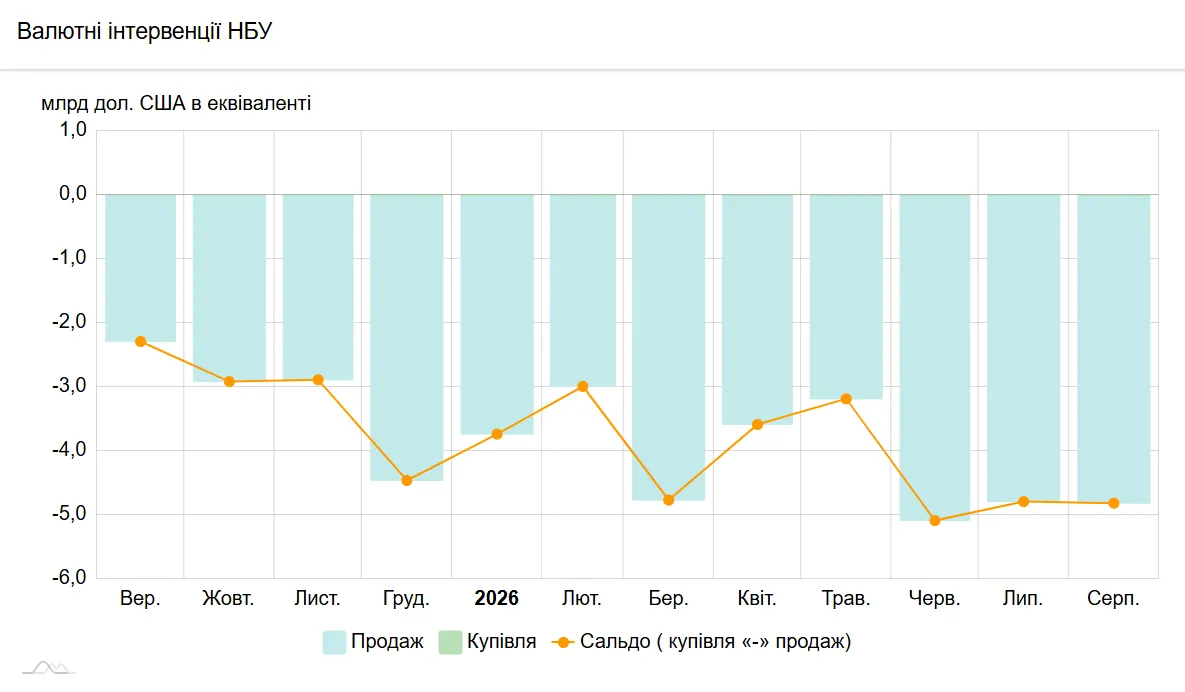
Data: NBU
At this cost—in the form of interventions—the National Bank maintains stable exchange rate dynamics and meets the demand for dollars, which is growing significantly. Trading volumes on the interbank market in September consistently exceeded $300 million and even approached $500 million. At the beginning of the month, on September 3, the highest volume on record was recorded at over $555 million (of which $531.13 million were U.S. dollars).
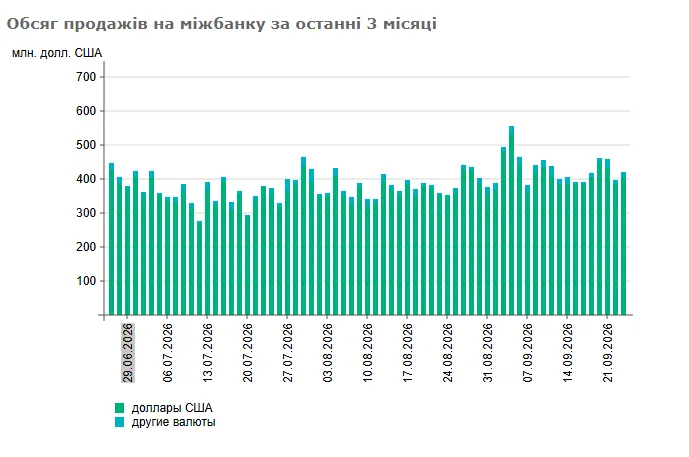
Data: Ministry
of Finance portal These large-scale injections are taking place despite the fact that, as of October 2023, the National Bank abandoned the rigid fixed exchange rate regime and transitioned to a managed floating exchange rate regime. It was expected that the hryvnia exchange rate would fluctuate based on supply and demand, with the NBU merely smoothing out peak market demands. Thus, even while increasing the volume of foreign exchange interventions, the regulator is allowing the hryvnia to weaken slightly.
Currently, the NBU has sufficient resources to balance the foreign exchange market, but they are not bottomless. If international aid is reduced, there will be no funds left to continue large-scale interventions. Statistics show the trend in the NBU’s expenditures. As of early September, Ukraine’s international reserves stood at approximately $48.7 billion, which is $2.5 billion, or 5%, less than a month earlier.
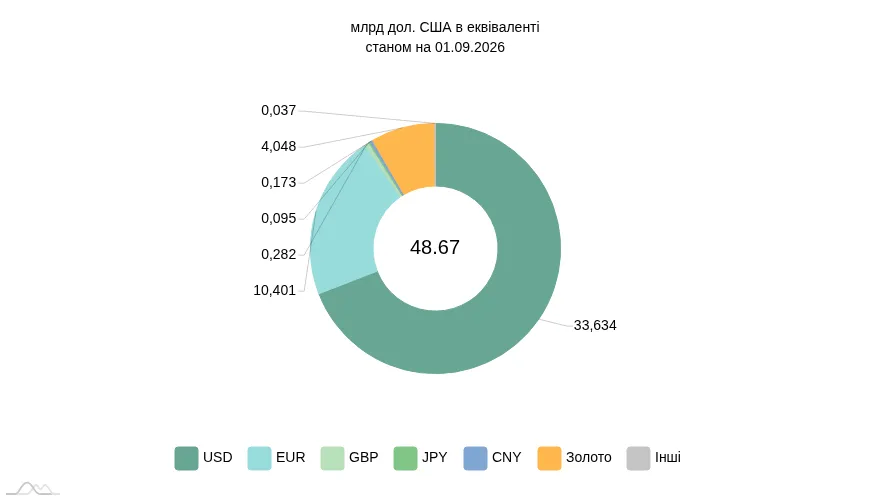
Data: NBU
Overall, amid inflationary pressure from oil prices and Russian attacks on infrastructure, the National Bank appears more prepared for a further weakening of the hryvnia.
This is also confirmed by the government’s macroeconomic forecasts, which project the dollar exchange rate at 48.3 UAH by the end of 2027. The average exchange rate for the entire coming year, according to the Cabinet of Ministers’ estimates, will be 47.1 UAH per dollar. Thus, by the end of 2027, the government expects the U.S. currency to appreciate by approximately 3.7 UAH in Ukraine.

Key factors putting pressure on the market
First and foremost, large-scale currency interventions—which have begun to exceed last year’s injections—are linked to Ukraine’s high trade deficit: pressure from imports is intensifying, while exports are critically limited due to closed ports.
Massive attacks on manufacturing facilities and warehouses are also reducing Ukrainian exports and foreign currency inflows. In particular, the Ministry of Agrarian Policy forecasts that by the end of the year, agricultural exports alone could decline by 30 million metric tons, resulting in a loss of up to $10 billion in revenue.
Direct losses to fixed assets and infrastructure are mounting as a result of Russian strikes. According to estimates by the Ministry of Economy, as of September 2026, these losses had reached nearly $10 billion. Under these conditions, businesses are forced to spend even more foreign currency on restoring damaged and destroyed facilities. Added to this are rising costs for electricity generation, logistics, insurance, and alternative supply routes.
The exchange rate is also affected by uncertainty regarding international aid to cover government expenditures. In 2026, Ukraine has already secured $31.3 billion in external financing. A significant portion of these funds came from the European Union and the International Monetary Fund. However, the projected flow of funds may slow down. According to the Center for Economic Strategy, the Verkhovna Rada needs to pass more than 40 bills by the end of the year to secure at least part of the funding for the budget. This would amount to only $14 billion of the $29.5 billion needed. Without international aid, it will not be possible to cover import costs, which will also weaken the hryvnia.
Expert Forecasts

Oleg Pendzin, Executive Director of the Economic Discussion Club
No one can say what the dollar exchange rate will be by the end of the year. If Ukraine continues to receive funding from international partners—which we have discussed repeatedly—this will help keep the exchange rate at a more or less predictable level. In that case, by the end of the year, it will remain within the range of 45.7–45.6 UAH per dollar and will not rise above that.
However, if funding does not materialize and we are forced to cover currency risks and conduct interventions on our own, expect trouble.
Regarding the decline in exports and the possible further growth in imports: The main problem is that our primary foreign exchange inflows do not come from exporters. The main source is macro-financial assistance from international partners.
The National Bank of Ukraine has sufficient foreign exchange reserves. The problem lies elsewhere—there is no clear understanding of how to finance social spending. If a situation arises where we have to intervene, it will cause the hryvnia exchange rate to plummet. Let’s hope there will be no need for that. For now, we can only wait and monitor the situation.
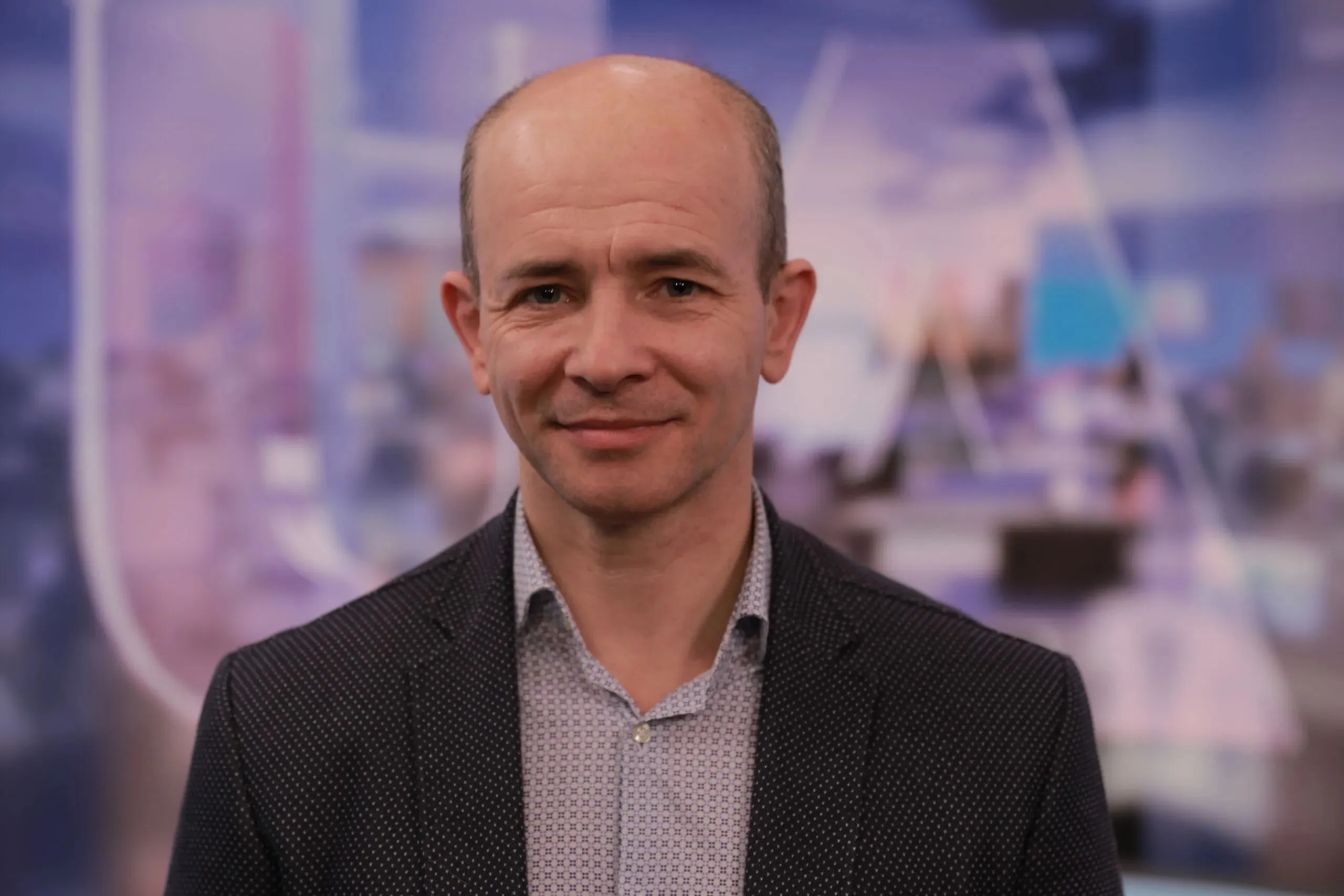
Boris Kushniruk, Chair of the Expert and Analytical Council of the Ukrainian Analytical Center
The hryvnia exchange rate depends entirely on the National Bank. Entirely. At the same time, the dollar-euro exchange rate can fluctuate on global markets, so we may experience fluctuations. In other words, our hryvnia exchange rate is pegged to the dollar; essentially, the National Bank controls this pair. And then, if the euro-to-dollar exchange rate changes, the euro may appreciate or depreciate depending on what’s happening in global markets.
When it comes specifically to the dollar, it is entirely dependent on the National Bank and its currency interventions. Therefore, the key question is what exactly the NBU plans to do with the exchange rate.
I have repeatedly emphasized—in fact, since 2022—that if the exchange rate depends on the National Bank, then it must declare and adjust it transparently. It shouldn’t refer to some market that doesn’t exist a priori in a situation where we import 50% more than we export. Accordingly, the exchange rate depends solely on what interventions the National Bank will carry out.
Interventions involving the dollar, again, reflect the lack of transparency in the National Bank’s actions. I’m not debating what the exchange rate should be. I’m talking about the very philosophy of currency policy. If the National Bank announces in advance that the hryvnia will depreciate over the course of the year—say, by 6%—then Ukrainians, knowing that the hryvnia will change in value by, for example, 6% over the year, can assess how advantageous it is to keep their funds in the national currency. If a deposit yields 10% per year and the expected devaluation is 6%, then you obviously stand to gain by keeping your savings in hryvnia.
But if a person doesn’t understand what the National Bank will do or how much the hryvnia might depreciate, what will they do? They’ll go buy foreign currency. With a transparent and predictable exchange rate policy, the exchange rate is likely to fluctuate much less. Consequently, demand for foreign currency will also decrease. Therefore, the issue primarily concerns the National Bank’s own policy.
In addition, there is a problem with the growing gap between exports and imports. And, unfortunately, this gap is becoming increasingly negative. Subjectively, the need for foreign currency is increasing. That is, there is an objective factor caused by the war and the growing trade deficit, but there are also opaque actions by the National Bank that are fueling demand for foreign currency.
If the exchange rate depends entirely on the National Bank, then any talk of a “market” is absurd. Half of all the currency on the market is currency sold by the National Bank. So how can we even speak of a market-determined exchange rate? Not even the government knows what the National Bank of Ukraine (NBU) will do with the exchange rate—let alone businesses and the general public. That is why both businesses and the general public are forced to buy foreign currency without understanding the National Bank’s actions.
I do not expect any sharp fluctuations in the exchange rate at this time. But I must note that it is the National Bank’s actions that are stimulating additional demand for foreign currency. We are effectively depleting our gold and foreign exchange reserves precisely because of the National Bank’s actions.




