
Oil prices are falling as tensions between the U.S. and Iran ease — Reuters
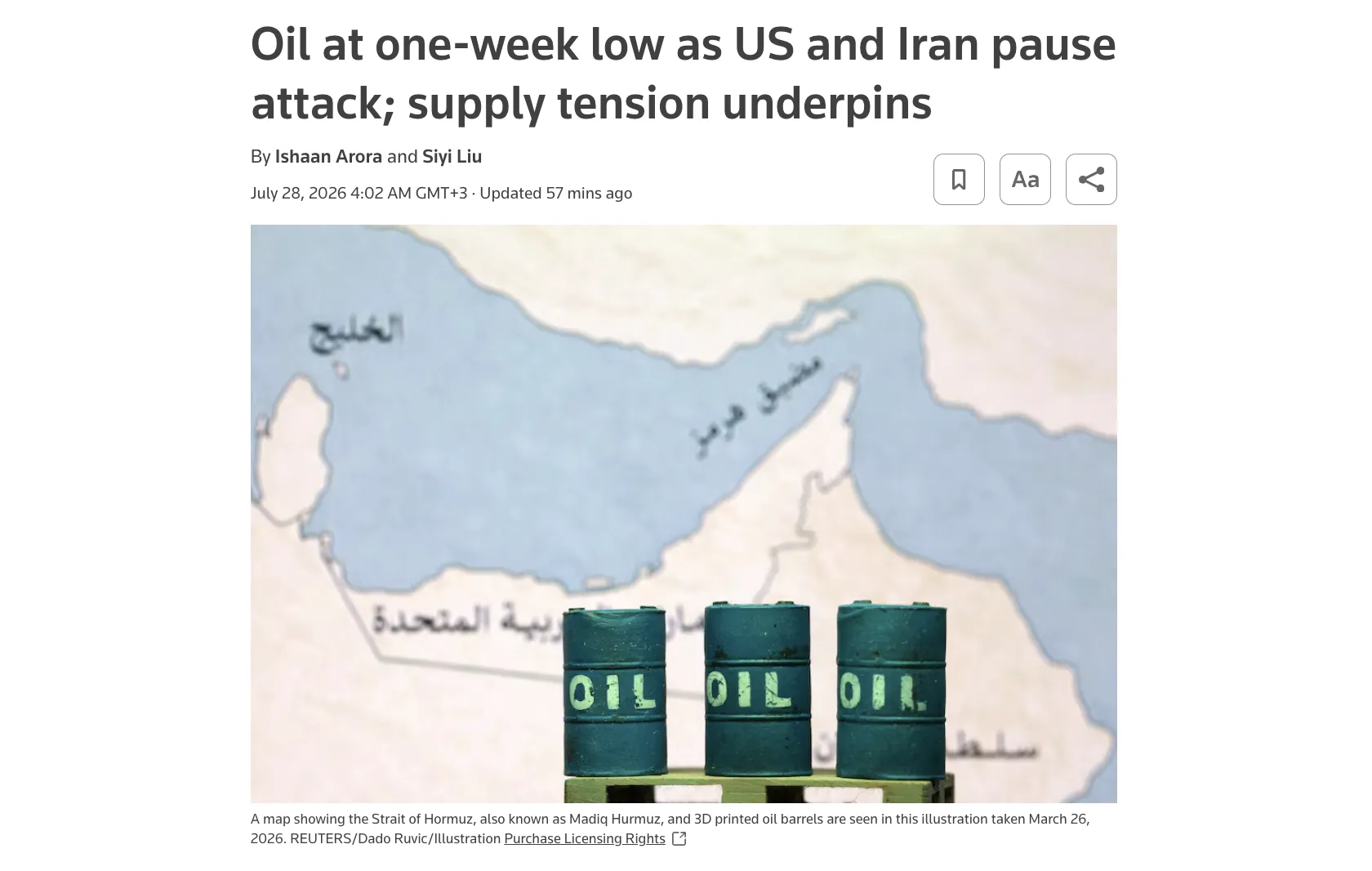
On July 28, global oil prices continued to decline amid expectations that the situation surrounding the conflict between the U.S. and Iran would stabilize. Markets reacted to signs of a possible resolution, which could positively impact the resumption of energy supplies and reduce risks to global trade.
Brent crude oil futures fell by $1.47, or 1.66%, to $86.89 per barrel. West Texas Intermediate (WTI) crude oil futures fell by $1.45, or 1.76%, to $81.16 per barrel. Both prices hit their lowest levels since July 20.
During the previous trading session, both benchmark crude grades lost about 8% of their value after the U.S. suspended its airstrike campaign against Iran over the weekend.
U.S. President Donald Trump said on Monday that the United States is negotiating with Iran and that there is a chance to resolve the situation. At the same time, he emphasized that the U.S. would resume strikes if the negotiations fail. Iran has made similar statements regarding retaliatory measures.
“For now, relief over the fact that a way out of the situation has been found has eased price pressure and reduced fears of Houthi attacks on Saudi oil infrastructure. At the same time, the situation remains extremely unstable,” noted IG analyst Tony Sycamore.
Appointed as foreign minister of Yemen’s internationally recognized government, which is supported by Saudi Arabia, Afra al-Zuba stated that the Yemeni Houthis seek to establish control over shipping in the Bab el-Mandeb Strait, similar to Iran’s influence over the Strait of Hormuz.
Marex analyst Edward Meir notes: “It is doubtful that the Houthis have the military capabilities to enforce a complete blockade, especially given that Saudi Arabia will launch powerful strikes against them. At the same time, there is no doubt that shipping traffic in the Red Sea and the Strait of Hormuz has decreased significantly. The main reason prices are not even higher is the drop in demand, primarily in Asia.”
In addition, oil prices were driven down by news that the Caspian Pipeline Consortium terminal on Russia’s Black Sea coast had resumed oil loading after a week-long shutdown caused by drone attacks.
However, analysts warned that the risks of supply disruptions spreading to the Red Sea remain high after Saudi Arabia shot down drones targeting oil facilities, particularly in Riyadh. Saudi authorities stated that the drones were launched from Iraq by Iranian-backed armed groups, and Saudi Arabia reserves the right to respond.
Analysts at Barclays noted that “flows through the Strait of Hormuz remain moderate.” According to their data, for the week ending July 24, net exports of crude oil and petroleum products through the strait averaged 2.9 million barrels per day, compared with 5.9 million barrels the previous week.
Source: Reuters
As a reminder, the war in the Persian Gulf threatens to cause a significant drop in Russia’s oil revenues.
Iraq suspended operations at its oil terminals following Iran’s attack on tankers.
Subsequently, the Iraqi government authorized the management of the Basra Oil Company to sign a memorandum of understanding with the Syrian Ministry of Oil for the construction of a new pipeline system. This project will connect Iraq’s oil-producing regions directly to global markets via Syrian ports on the Mediterranean Sea.


