

Air hubs in the Middle East are gradually resuming operations after days of suspended flights. Although regular services remain partially limited and adjusted, passenger traffic in the region is beginning to recover.
On April 8, Iraq’s Civil Aviation Authority announced the reopening of the country’s airspace and all airports. The day before, Qatar Airways operated 200 flights from Doha for the first time since the start of the conflict. Emirates is also gradually increasing its flight schedule, supporting a steady recovery of air travel. Passenger activity is particularly picking up in Abu Dhabi, UAE.
Restoring flights in the region is especially significant for communities and businesses in major hubs like Dubai, through which tens of millions of passengers transit each year.
UA.News spoke with Daria Pavlovska, owner of the Alvigo-Tour agency, who works directly with international flights, about how the travel industry is emerging from the chaos caused by the Iran conflict, how passenger flows have been rerouted, the challenges faced by travel managers, and what passengers should consider when planning their trips.

Current situation of flights in the Middle East, particularly in the UAE
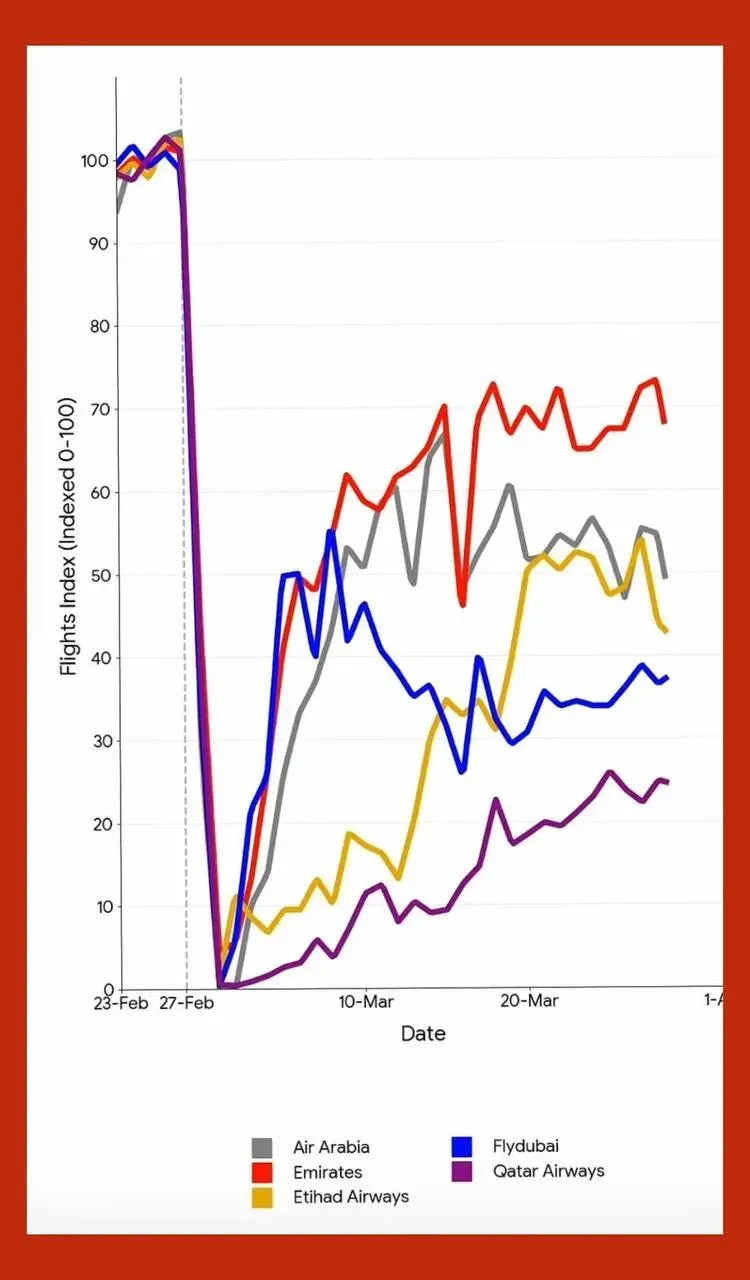
Daria Pavlovska: The situation is currently under relative control, with about 70% of flights operating. Emirates has recovered the fastest, now operating over 85% of its schedule.
Following the dramatic drop in traffic from February 28 to March 3, the region is now in a period of recovery. If this trend continues, the total decline in UAE airport traffic will not exceed 3–5%.
Impact of the security situation on passenger flows, especially tourism
Pavlovska: Passenger flows have shifted significantly. During the peak downturn, the main load was absorbed by Muscat International Airport in Oman, with an additional 144 flights per day — roughly 43,000 extra passengers. About 5,000 Indian nationals were brought to Oman to manage the surge, both in the city and at the airport.
The main logistics now run through Istanbul. Turkish airlines have raised ticket prices and expanded staff to handle the demand. Unfortunately, Qatar Airways had to cancel 12,000 flights. Gradual recovery is underway — yesterday, Qatar Airways operated 200 flights in a single day, the first since the conflict began.

Impact on travel managers and agencies
Pavlovska: The crisis has multiplied the workload for travel managers. Each passenger has a unique itinerary and individual needs, which significantly increases operational complexity.
About Alvigo-Tour
Pavlovska: On May 1, Alvigo-Tour will celebrate its 25th anniversary. We provide all services related to aviation — we call ourselves “aviation fairies.”

Advice for passengers navigating global logistics challenges
Pavlovska: I recommend booking through professional travel agencies rather than doing it yourself, especially for complex itineraries involving multiple airlines. Someone should be responsible for your trip — in force majeure situations, airlines cannot immediately assist all passengers, and that’s where your agency acts as a safety net.


