
Hangzhou in China combines technology and cultural heritage — Jerusalem Post
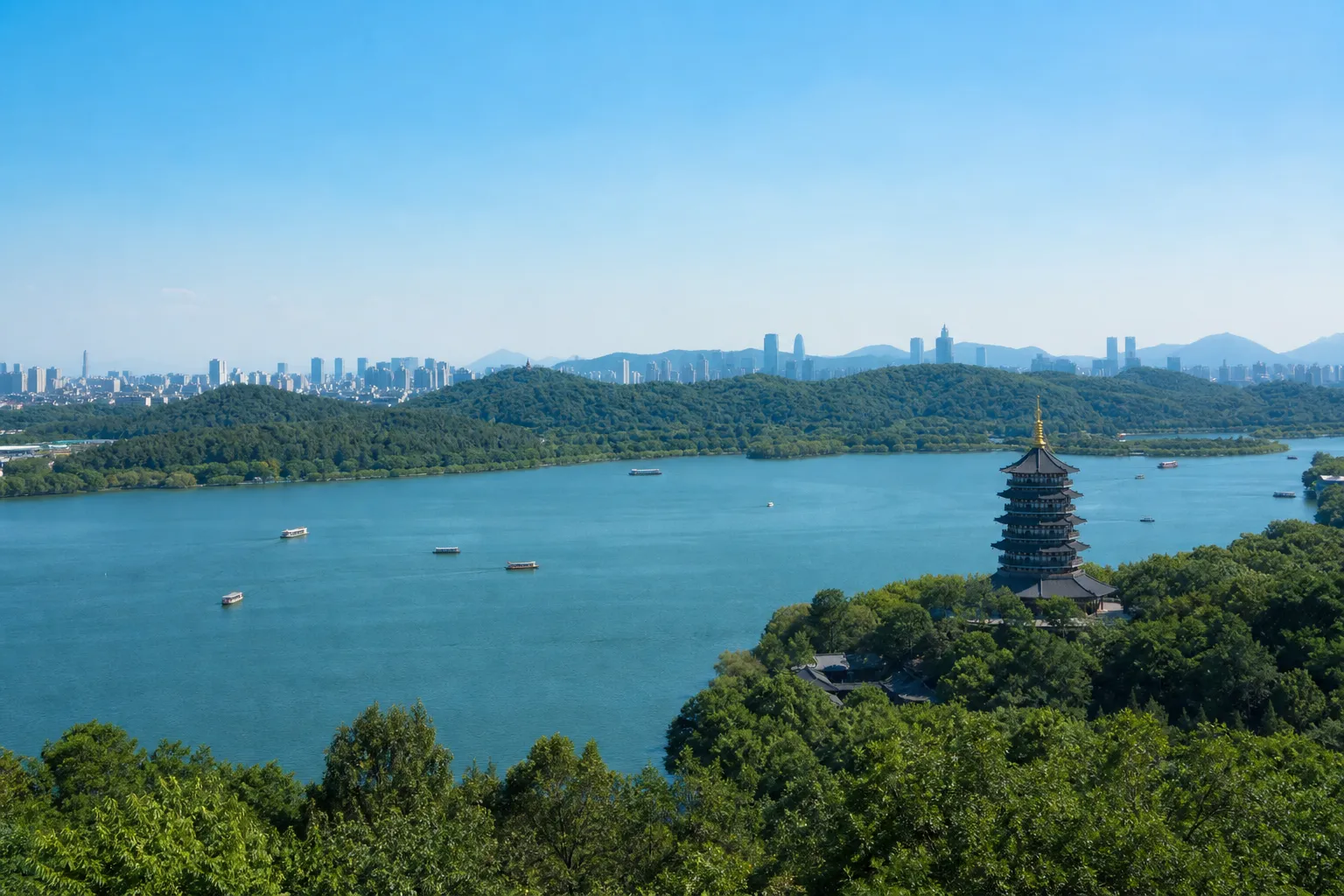
In the Chinese city of Hangzhou, technology companies, robotics and artificial intelligence systems are combined with historical landmarks and natural landscapes of Zhejiang province. This is stated in a Jerusalem Post report on a journey through the city and its surroundings.
With a population of about 13 million people, the publication calls Hangzhou one of China’s centers for technology investment and IT specialists. At the Wensan Future Technology Experience Center, visitors are shown robots, exoskeletons and artificial intelligence-based technologies.
Alibaba and digital services
Alibaba’s headquarters is located in Hangzhou. According to the publication, in 1999 Jack Ma and 17 of his friends created a small company that later became Alibaba. Today, the group has about 200,000 employees worldwide and a turnover of $140 billion.
At the headquarters, among other things, vending machines with facial recognition are used. The system opens the machine, records the selected goods, automatically debits money from a bank account and sends a receipt to the phone.
More current news is available on the UA.News Telegram channel Telegram.
Next to modern development is West Lake, where local residents practice tai chi and musicians perform in pavilions. Among the landmarks around the lake are the Broken Bridge, Leifeng Pagoda and the “Three Pools Mirroring the Moon” complex, whose image is featured on the reverse side of China’s one-yuan banknote.
Traditions and modernization of Zhejiang
In Zhejiang province, home to about 64 million people, tea, silk and ceramics have for centuries been important goods for export westward along the historic Silk Road. The Xin’an Hydropower Station also operates here, after whose construction the Thousand Islands Reservoir was formed.
The publication also describes Xiajiang village, which was turned into an example of rural modernization after state investment, and the canal town of Wuzhen north of Hangzhou. The historic part of Wuzhen was restored as part of a state project launched in the late 1990s. A modern congress center operates near the old town — a permanent venue for the World Internet Conference.




