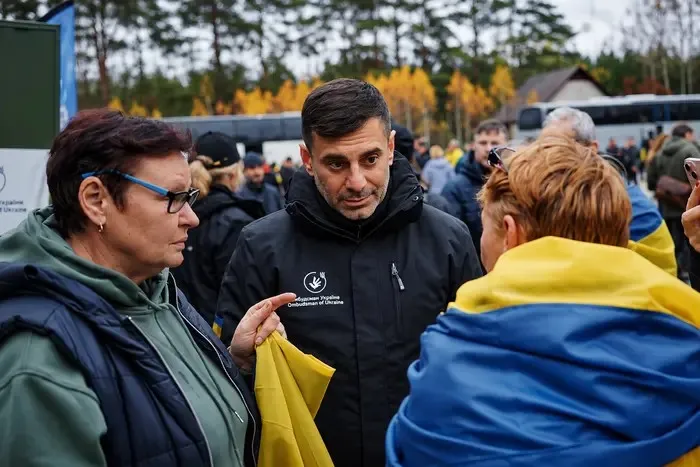
The disinformation campaign regarding Dmytro Lubinets’ “presidential ambitions” bears clear signs of a planned information operation, the initial launch of which took place through Russian information networks.
The
first rumors surfaced as early as November 2. At that time, former MP and traitor Volodymyr Oliynyk made this claim in a comment to NEWS.ru. The very next day (November 3), the narrative about Lubinets’ “presidential prospects” was picked up by news aggregators such as Life, Mail.ru, Viiskove Dilo, Rambler, OSN, Potok Media, and others. And by November 5 (the day of Lubinets’ meeting with Melania Trump in Washington), this topic had made its way into the Ukrainian infosphere via Russian relays (such as “The Woman with the Ponytail,” “The Whisperer,” and “The Resident”) into the Ukrainian infosphere. In Ukraine, these posts have already been picked up by a Russian-linked following on TikTok.
Hype-mongers from among the “useful idiots”—who traditionally peddle Russian narratives and seek out conspiracies and treason—joined the campaign. But the story didn’t end there.
There is an important detail: somehow, bloggers from several major Ukrainian media outlets were also spotted participating in the campaign against Lubinets. This suggests that the sources of the smear campaign may not be limited to Moscow.
For Russia, the motive is obvious: the humanitarian operation in Oleshky was a notable success for Ukraine, and Lubinets’ public interaction with Melania Trump ensured positive international coverage for Ukraine’s humanitarian efforts. This poses a problem for Russian propaganda, which it is attempting to neutralize by discrediting the participant himself.
However, we cannot rule out the possibility that this campaign was commissioned or facilitated by Ukrainian actors. Lubinets has made a highly visible international entry into the political arena, and certain domestic players may have felt that this “information capital” needed to be quickly devalued. The simplest way to do this is to push the narrative of his alleged presidential ambitions onto the public and link him to the “party of peace” or an American political project.
The paradox of this campaign is that Lubinets’ actual activities in no way lead to his political capital being exploited. Every day, the ombudsman risks his own reputation by maintaining direct working contacts with representatives of the opposing side in order to secure the return of people, the release of prisoners, and the resolution of humanitarian issues.
His position is vulnerable to criticism from the so-called “war party,” and for other political camps, he is not unconditionally “one of their own” either. Any elections are still a long way off, and today his work involves constantly balancing humanitarian outcomes, national interests, and enormous reputational risks.
Therefore, those who have decided to politically “sideline” Lubinets in this way may end up with the opposite result. Instead of diminishing his influence, they themselves have turned him into a figure in a nationwide news story, attributing to him influence, political resources, and international support that he has not publicly claimed. These critical bloggers have done their clients a disservice by turning the Ombudsman’s humanitarian work into the subject of a major political debate.
But there is a silver lining. These conspiracy theories are bringing the humanitarian discourse to the forefront of political discourse. People are beginning to follow the Ombudsman’s activities—his criticism of busykization and the lack of reform in mobilization policy, as well as his attacks on the inhuman bureaucracy that people face during wartime. This, in turn, may prompt administrative decisions that were not previously a priority for high-level officials.
Vitaliy KULYK, Director of the Center for Civil Society Studies