
This is the second consecutive personal mistake by NBU Governor Pyshnyy following record fines imposed on City24 and EasyPay
01 July 2026 19:30Recently, another round of public conflict erupted in the media between Andriy Pyshny, head of the National Bank of Ukraine, and Ihor Smiliansky, CEO of Ukrposhta. The NBU head was ultimately unable to push through Smelyanskiy’s dismissal as CEO of Ukrposhta via the Cabinet of Ministers.
The head of the national postal operator stated that he continues to perform his duties and even plans to sue the NBU—apparently with compelling arguments to back him up.
The conflict has reached an impasse, but it has unexpectedly brought to light another serious problem: in Ukraine, the independence of key regulators is often undermined by the “personal” motives of their leaders, casting doubt on the reputation of these government agencies. After all, the case involving the CEO of “Ukrposhta” is not the first in which the NBU leadership has undermined the logic and transparency of the regulator’s actions, likely in pursuit of its own personal interests. For more details, see the UA.News review.
Conflict of Interest Between NBU Governor Andriy Pyshnyy and Ukrposhta CEO Ihor Smilyansky
The conflict between NBU Governor Andriy Pyshnyy and Ukrposhta CEO Ihor Smelyanskyy has been ongoing for several years now. The surface-level issue of the dispute is said to be the Ukrposhta CEO’s ambition to create a postal bank. This, however, runs counter to the interests of the major state-owned banks.
It should be noted right away that Ukrposhta holds a license for financial payment services and is therefore subject to regulation by the NBU. At the same time, the state-owned company’s operations as a postal service provider are regulated by the National Commission for the State Regulation of Electronic Communications, Radio Frequency Spectrum, and Postal Services (NCC).
Consequently, the National Bank has repeatedly cited violations in the state postal operator’s financial activities. Over the past year, there has been a flurry of such complaints. Last December, the NBU stated that it had identified violations of key regulations in Ukrposhta’s operations and issued a written warning. Since the beginning of 2026, the NBU has imposed increasingly severe penalties:
In March—a fine of 255,000 UAH for violations related to the failure to submit information/documents and/or copies thereof, as requested in accordance with the requirements established by the National Bank, within the prescribed time limits.
In May—a fine of 1.7 million UAH for violations in the area of financial payment services related to ensuring the proper functioning of the corporate governance system, internal control system, and risk management.
In June—a fine of over 2.5 million UAH and a written warning for violations of requirements regarding payment transactions, acquiring, and handling documents containing confidential information of the payment service provider, etc.
At the same time, the National Bank announced the state-owned company’s financial inefficiency and its losses amounting to millions. They called for the formation of a fully-fledged supervisory board as soon as possible and accused Ihor Smilianskyi himself of incompetence. All of this was publicly stated by NBU Governor Andriy Pyshnyy.
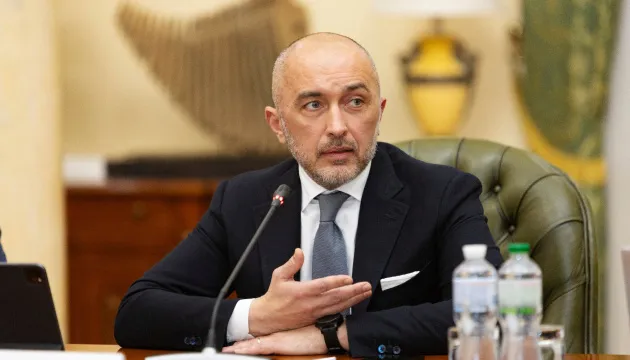
“The company has been in a deep corporate governance crisis for a long time. And this crisis is, unfortunately, increasingly depriving the company of its prospects for development. Ihor Smiliansky is, first and foremost, a consequence of this crisis,” Pyshnyy said in an interview with the media.
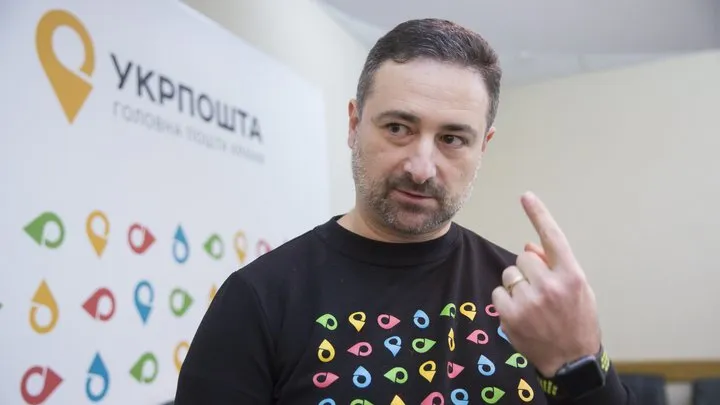
Commenting on Pyshnyy’s remarks, Ihor Smelyanskyy replied: “Andriy Hryhorovych, I am not a consequence, as you said; I am your verdict, as the president said.”
Earlier, the CEO of Ukrposhta complained about certain obstacles imposed on the state-owned company by the National Bank of Ukraine (NBU). In particular, he said, the NBU’s current regulations make it difficult to provide financial services to socially vulnerable groups: veterans, the elderly, and residents of regions where communication and electricity are periodically cut off due to shelling.
Personal grievances and the escalation of the conflict between NBU Governor Andriy Pyshnyy and Ukrposhta CEO Ihor Smilianskyi
On June 23, the National Bank officially stated that Igor Smiliansky, CEO of JSC “Ukrposhta,” did not meet “the professional suitability requirements established for the head of a financial payment services provider.” Formally, the decision on the advisability of his dismissal was made by the Committee on the Supervision and Regulation of Banking Activities and Oversight of Payment Infrastructure, which is responsible for monitoring, licensing, influencing banks, and supervising payment systems.
“The Committee concluded that he lacks a sufficient level of knowledge of legal requirements, as well as the understanding and experience necessary to properly apply the requirements of current legislation—including the regulatory acts of the National Bank— to the extent necessary for the proper performance of the duties entrusted to it… within five business days, the authorized body of JSC “UKRPOSHTA” must remove Ihor Smiliansky from the leadership of JSC “UKRPOSHTA,” and within the following two months, appoint a new head who meets the requirements for professional competence,” the NBU statement read.
The demand to dismiss Smiliansky sparked such a negative reaction that, a few days later, the National Bank published another statement—with a more detailed justification of its conclusion: “The facts indicate that Ukrposhta remains unprofitable: in 2025, the company reported an operating loss of over 400 million hryvnias, and the improvement in its financial results was achieved primarily through the sale of assets rather than its core operations, which does not indicate business sustainability. As early as the first quarter of 2026, the company again reported a loss.”
Meanwhile, the CEO of Ukrposhta commented on the NBU’s decision that he does not meet professional requirements: “What exactly are these professional requirements? I think everyone understands that I violated the main rule of Ukraine’s banking sector for 2023–2026: you must love and praise NBU Governor A.G. Pyshnyy to the heavens; otherwise, you cannot be a banker or work in the financial sector.”
Smiliansky called the demand for his dismissal “a settling of personal scores” on the part of the regulator’s head, Andriy Pyshny, who had publicly participated in information campaigns against “Ukrposhta.”
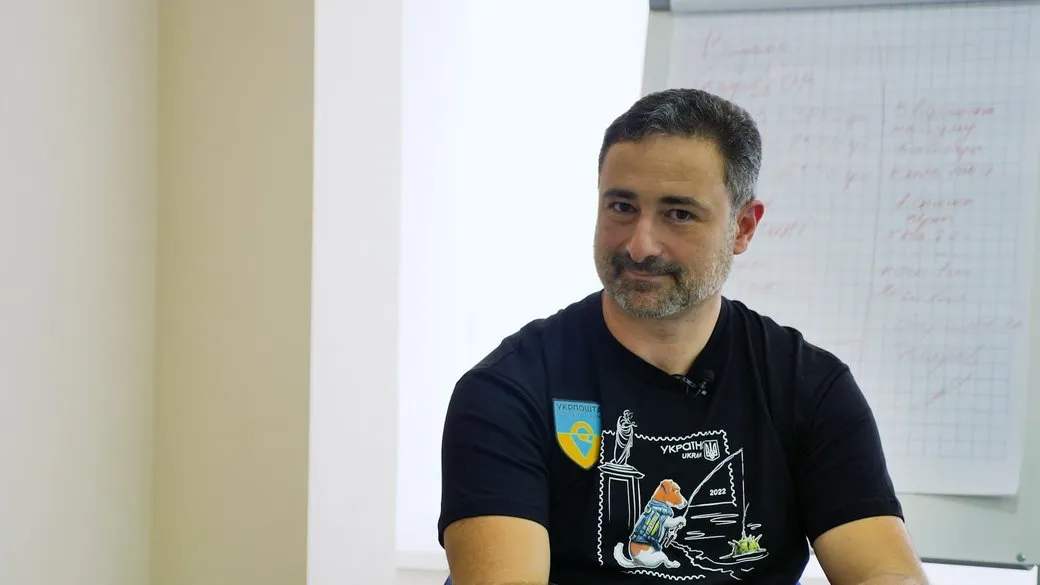
“Every year, when Ukrposhta comes close to establishing a postal bank, the NBU finds a way to prevent it. In the summer of 2025, when the Verkhovna Rada passed the law on financial inclusion banks and we were ready to establish a bank, a letter from A.G. Pyshnyy appeared alleging that Ukrposhta was in default. As for that default—I think everyone already understands what it’s about.
Now, with just a few days left before the law takes effect, and with Ukrposhta having over 2 billion hryvnias in equity and operating at a profit, the NBU has decided to take a more radical approach—to fire Smiliansky. As I understand it, the hope is that while the leadership transition is underway, the bank’s establishment will be put on hold, and the next head—if he is not “lenient” toward A.G. Pyshnyy, might not even be approved,” commented Ihor Smilianskyi on the NBU governor’s actions.
He also promised to challenge the NBU’s decision in court. Later, Smiliansky himself and the Ukrposhta press service reported that he continues to perform his duties in full, refuting rumors of possible changes in leadership.
“Igor Smiliansky, CEO of JSC ‘Ukrposhta’ (that’s me), continues to perform his duties in full in accordance with current legislation. JSC “Ukrposhta” is also operating as usual, taking into account the security situation, the consequences of shelling, and weather conditions. Regarding the company’s activities or its leadership, please rely exclusively on official statements from JSC “Ukrposhta,” Smiliansky wrote on his Telegram channel on July 1.
What’s Next in the Conflict Between Pyshny and Smiliansky
The filing of a lawsuit is unlikely to, in and of itself, influence the NBU’s decision on whether to dismiss the head of the postal operator. The Cabinet of Ministers may continue to ignore this recommendation, and Smiliansky will remain at the helm of the state-owned company. However, Andriy Pyshnyy may well intensify pressure on the CEO of “Ukrposhta” through NBU sanctions.
The National Bank has already stated that it will review its strategy for addressing the situation. Representatives of the regulator do not consider this turn of events unexpected and were prepared for resistance from the state-owned company’s management.
According to an anonymous high-ranking source at the NBU, the regulator is currently engaged in active dialogue with the government and the Ministry of Community and Territorial Development, which is a shareholder of Ukrposhta.
“The lack of a decision regarding Smiliansky’s resignation did not come as a surprise to us. We understood that such a decision might be made. At the same time, we are currently in dialogue with the government and the ministry and are discussing possible options for our next steps with them,” said the NBU source.
Among the potential measures being considered by the regulator, the top priority is issuing a second order, this time directed specifically at the relevant ministry. If this step also fails to yield results, the next step could be the suspension or complete revocation of Ukrposhta’s payment license, which would have extremely negative consequences for the national postal operator’s operations.
Representatives of the NBU are also hinting at upcoming legislative initiatives designed to prevent such disregard for the supervisory authority’s requirements in the future. They attribute the government’s lack of response to the previous directive to “the favor that Smelyanskiy enjoys among representatives of the Cabinet of Ministers.”
“This is an absolutely absurd situation that the NBU should never have gotten itself into…According to my information, the Cabinet of Ministers does not intend to proceed with this personnel decision. Consequently, we have a deadlock,” wrote People’s Deputy Yaroslav Zheleznyak on his Telegram channel.
“Over the course of 10 years leading Ukrposhta, Smiliansky has done a great deal to transform it from a massive Soviet-era structure into an institution similar to those in Europe. These are very complex changes on such a scale. And he succeeded,” noted one financial market expert familiar with the situation, highlighting the professionalism of Ukrposhta’s head. — Smiliansky wanted to create a postal bank, not to “get back” at Pyshnyy. He planned to give people inclusive access to financial services, especially in remote areas where there are no banks. That’s a whole other story.
That’s why I believe Pyshnyy is simply settling scores with Smelyanskiy. They’ve been at war for a long time; it’s a personal feud. In such cases, the question always arises: who are the judges? So many executives have been removed simply by being told they lack sufficient qualifications.
For example, Kateryna Rozhkova served as first deputy chair of the NBU for ten years. Does she have a good reputation? In my opinion, Rozhkova has many reputation issues. Nevertheless, over the years, she was the one deciding who was worthy of being a leader and who was not.
In my view, the National Bank is also significantly overstepping its authority in this situation. Very significantly.
If they don’t want to let Smelyanskiy establish a bank because of the IMF Memorandum’s requirement to reduce the share of state-owned banks, that’s still understandable. However, using personal motives for such decisions… In my opinion, this is a highly biased decision based on personal interests. I see nothing else behind this decision.
It’s clear that Smiliansky will go to court and may even win this case. But the court hearing won’t take place tomorrow. By the time all the appeals, court hearings, and cassation proceedings are over, a lot of time will have been lost. This could take at least a year, or even several years.
Even if the court rules in Smiliansky’s favor—and that is a possibility, given that courts often rule against the National Bank—he will still lose two years. During this time, he will be compensated for his salary from the state budget due to his unlawful removal. However, a lot can change over these two years, and it is unclear where Andriy Pyshnyy himself will end up.”
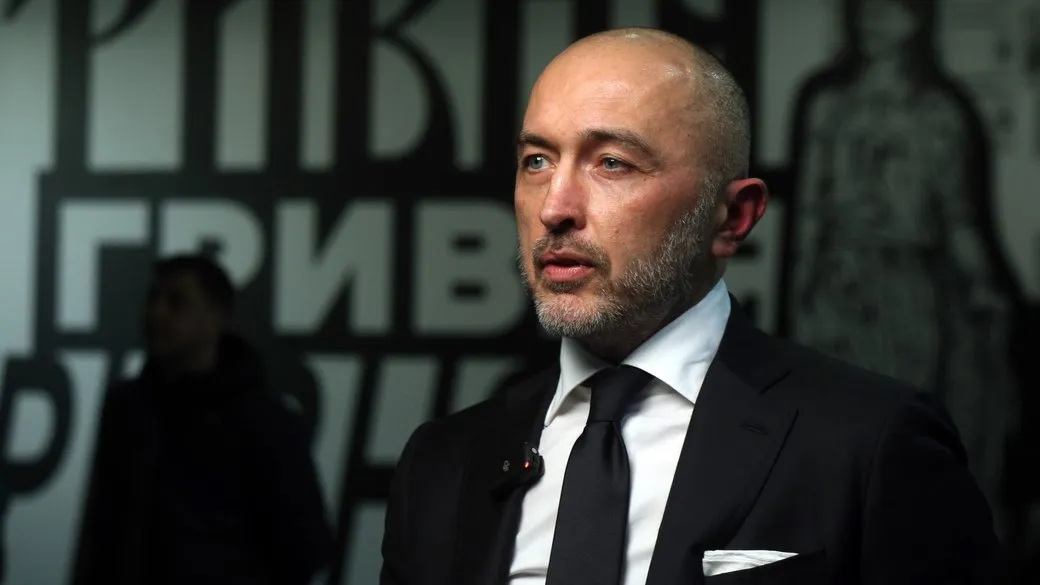
Other “collegial” decisions by the NBU attributed personally to Pyshnyy: the case of the fines imposed on EasyPay and City24
One such controversial NBU decision, which likely stems from Andriy Pyshnyy personally, was recently widely covered by Ukrainian media. It involved a record-breaking fine in Ukraine—135 million hryvnias imposed on EasyPay and City24. This case also raised numerous questions about the objectivity of the regulator’s actions.
According to the results of inspections conducted in May, the two largest payment terminal networks—EasyPay (FC “Kontraktovy Dom” LLC) and City24 (Swift Garant LLC)—were hit with massive fines: 135 million hryvnias each. The official reason was complex: “improper organization of primary financial monitoring.” Simply put, the National Bank believed that the companies were failing to adequately verify the origin of the funds passing through their terminals.
However, if we look at the technical nuances and market realities, the situation does not seem so clear-cut. It appears that the high-profile statements about the “fight against dirty cash” involving 270 million hryvnias may be part of a larger administrative and media game.
Could such harsh measures by the NBU indicate that the regulator is overstepping the bounds of normal supervision?
Before the fines were announced, the press actively circulated information alleging that these terminal networks were linked to businessman Timur Mindich and the high-profile “Midas” case. However, the actual facts suggest that there is most likely no legal or financial connection between EasyPay, City24, and the individuals involved in the investigations.
This whole story appears to have been built on conspiracy theories and the “six degrees of separation” principle.
The astronomical fines create the impression that the National Bank is always right. However, Ukrainian judicial practice shows that the regulator often loses to financial institutions when its inspectors rely on their own assumptions rather than the letter of the law.
Moreover, a 135-million fine for a non-banking company is effectively an attempt to cripple this business. This raises the question: who stands to gain from the scandal surrounding EasyPay and City24, and who might benefit from it?
After all, independent payment terminals generate a massive cash flow—according to expert estimates, about $1 billion per month. If these networks (which control over 70% of the market) were to shut down, people would not stop using the services. The money would simply end up in other hands.
For more details on the history of the record-breaking fines imposed on EasyPay and City24 and the political context surrounding this decision, read the separate article on UA.News.




