
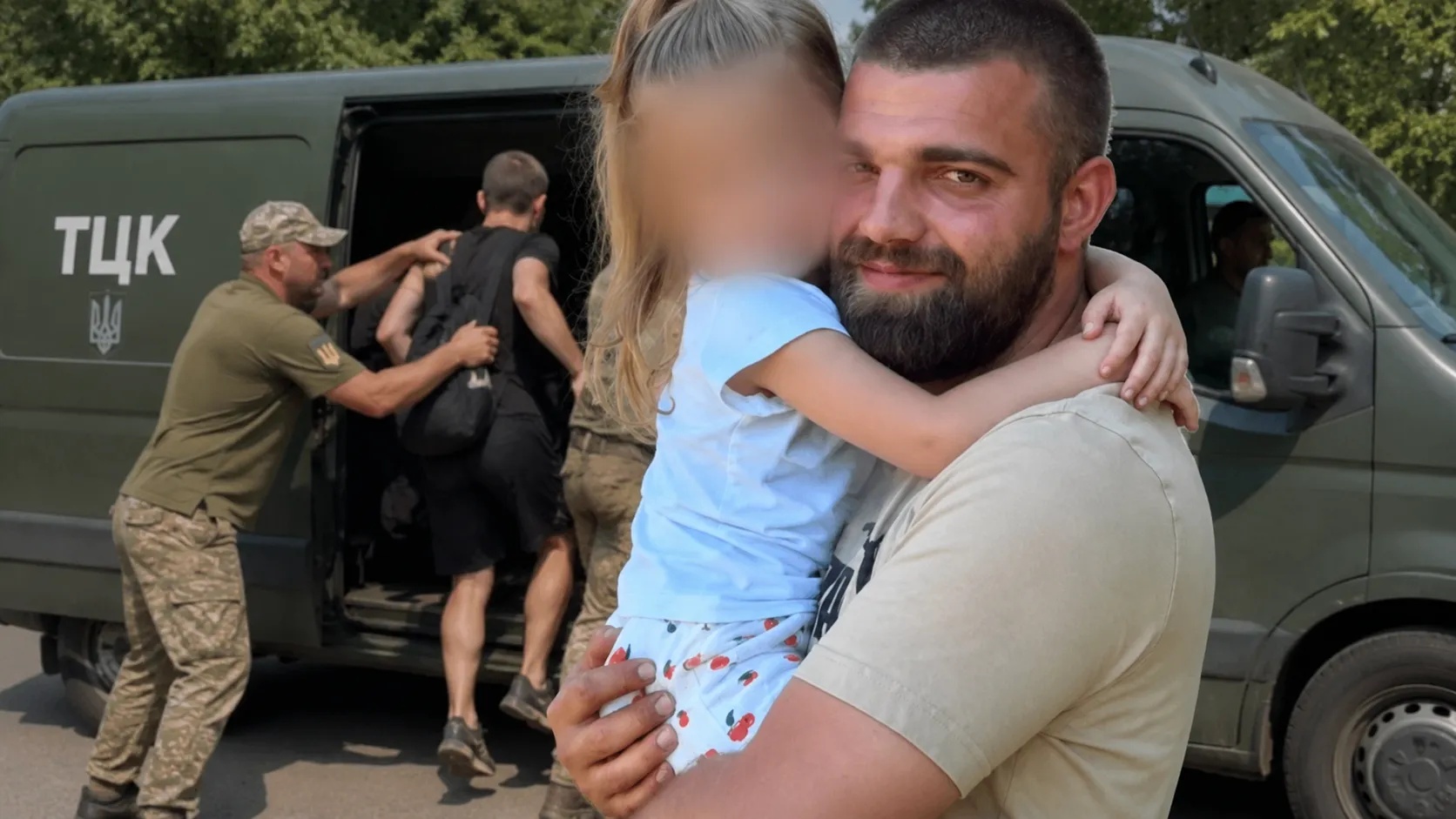
"It's none of our business where the child is": how the TCC explained the mobilization of a single father
06 July 2026 13:29Military mobilization commissions should not determine a child’s whereabouts when mobilizing a single father. The scandal in Kryvyi Rih involving the mobilization of a man raising his 5-year-old daughter on his own was discussed at a regular meeting of the TSK, chaired by People’s Deputy Oleksiy Honcharenko.
When asked why the TSK did not notify social services before taking the father away, Mykola Korolenko, head of the Pokrovsko-Ternivskyi District TSK and Social Services, shifted the blame onto the kindergarten director. In other words, TSK officials remove a person from society while knowing about the five-year-old child, but believe that “rescuing” her is the job of the kindergarten teacher and the police, because they “lack the authority.”
“The kindergarten director should have called 102 to contact child welfare authorities and report that the father had not picked up the child. We are not authorized to do so by law,” explained Mykola Korolenko.
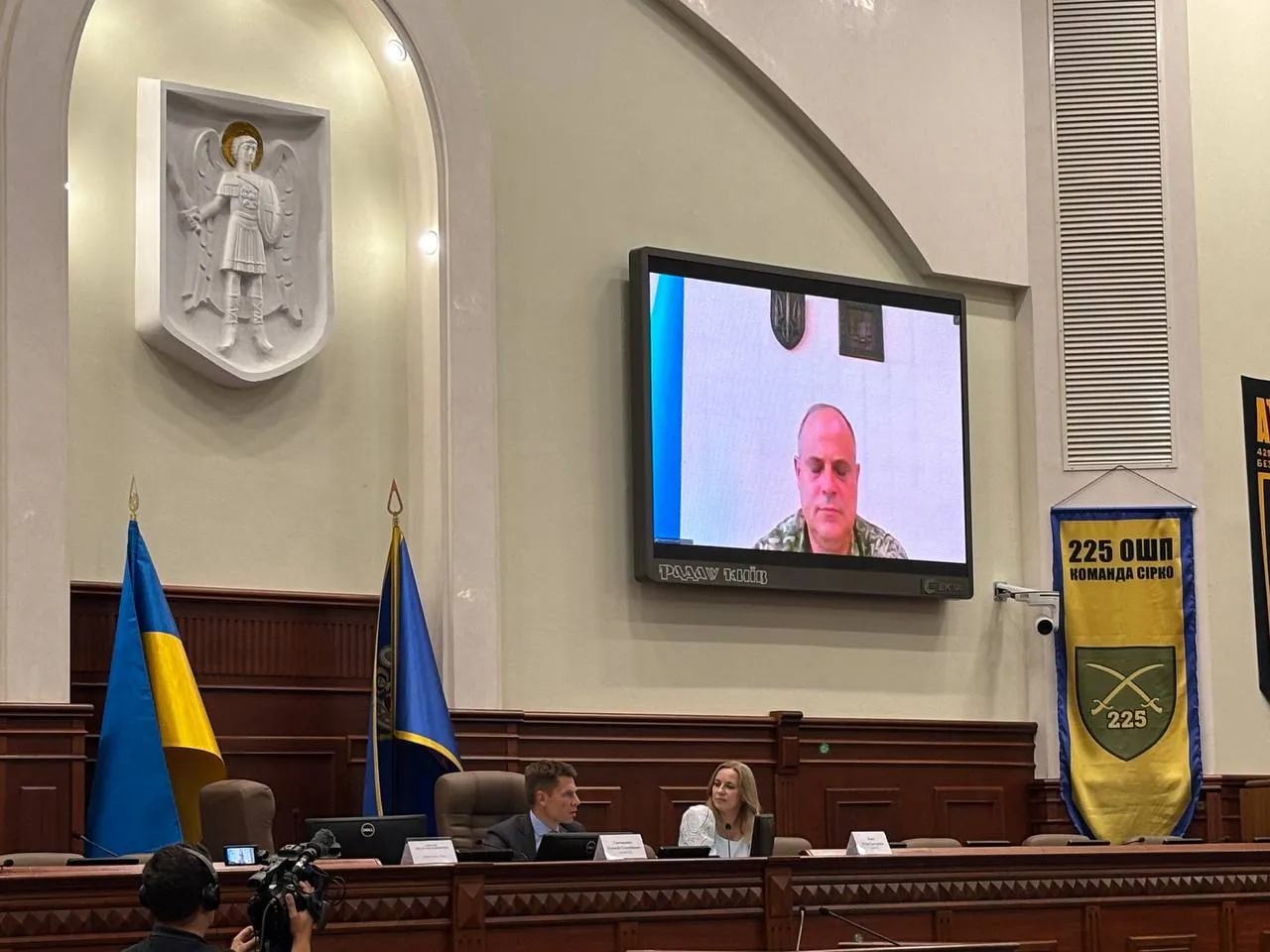
Mykola Korolenko’s testimony via video call
According to the head of the TCC, the agency is under no obligation whatsoever to concern itself with the fate of minors, since verifying the truthfulness of conscripts’ statements is “not their job.” They say that those subject to military service often make up stories about seriously ill relatives or having five children, so no one is going to take anyone at their word or launch an investigation. So this time, too, the TCC decided not to burden themselves with unnecessary phone calls, dismissing it all as standard “excuses” to avoid service.
“How are we supposed to know if there’s a child or not? He claims there is, but there have been numerous cases where conscripts claim they have sick parents, when in reality there’s no one. Or that they have five children, when in reality that’s not the case. The fact hasn’t been established. That’s why we’re saying that at that time, we didn’t know where this child was—whether she was at daycare or with her mother abroad. I don’t have the authority to establish this fact.”
The TCC knew about the five-year-old child from official documents
As it turned out during the meeting of the Temporary Investigative Commission, the Pokrovsko-Ternivskyi TCC was aware of the existence of the five-year-old girl, since her father had previously attempted to obtain a deferment through legal channels.
Although the man had officially submitted a complete set of documents through the Administrative Services Center after his divorce, the special commission denied his request on purely formal grounds and immediately issued a warrant for his arrest, citing his alleged failure to appear in response to a summons sent by mail. During questioning, Mykola Korolenko described in detail the circumstances of Kirill Bronov’s detention and effectively admitted that the single father’s personal file was already on his subordinates’ desk.
“Well, I’ll start by saying that Mr. Bronov is indeed registered with the Pokrovsko-Ternivskyi District Social Services Center. He applied once to request a deferral regarding the determination of whether he was raising his child on his own. Indeed, we received the relevant documents he submitted through the Administrative Services Center. The commission reviewed all the documents provided by this citizen and denied his request. This was because, at the time he submitted the documents, there were no supporting documents—specifically, a court decision establishing the fact that he was raising this child on his own. Prior to this, the citizen had been notified in accordance with established procedure via the “Ukrposhta” system, but he did not appear at the TCC. Consequently, the system automatically placed him on the wanted list,” summarized Mykola Korolenko.
How the TCC Sought a “Third Party” for a Five-Year-Old Girl
Thus, despite having in hand the court’s decision on the Bronovs’ divorce, official confirmation that the child lives with her father, as well as evidence that the mother has been abroad for over three years and is not physically involved in her daughter’s life, the commission at the TCC still denied the man’s request for a deferment. The reason turned out to be purely bureaucratic—the military registration and enlistment office was not satisfied with the court’s wording, since the operative part lacked a specific phrase regarding “independent support.”
Justifying the actions of the collegial body, the head of the Pokrovsk-Ternivsk Military Registration and Enlistment Office began quoting the Family Code regarding the equal responsibilities of parents and insisted that the fact that the child lives with her father “automatically implies nothing.”
“We have the Family Code, which states that parents must raise their children together, regardless of whether they are married or not,” Mykola Korolenko said, citing the law.
When asked directly by members of parliament about who the five-year-old child should stay with—given that the sole guardian was being drafted into the military and the mother was out of the country—the military commissar, in his response, still blamed the father. According to the military official, it was the father who should have taken steps sooner to get all his documents in order to obtain the status of a single father raising a child on his own. But he did not file a petition with the court until 2025, and in 2026, he presented the relevant document to the district Military Enlistment and Registration Office.
Moreover, the Military Registration and Enlistment Office did not even attempt to involve child welfare services to simply verify the actual situation in the family. Based on Korolenko’s statements, it appears that the Military Registration and Enlistment Office commission interpreted the court’s decision according to its own understanding: the fact that the father lives with his daughter while the mother is out of the country does not necessarily mean that he is raising her on his own—theoretically, some hypothetical “third party” could be doing so.
Mykola Korolenko, however, denied making any unilateral decisions, attributing everything to the verdict of the relevant commission:
“The commission, established by the district military administration to grant deferments to citizens, reviewed the case, examined the ruling, and determined that the court had not established the fact of independent child-rearing and support,” noted the head of the TCC.
The five-year-old child was not noticed outside the TCC
On the day Bronova was being hurriedly processed inside the military registration and enlistment office, a teacher rushed up to the building with a frightened child whom no one had picked up from the kindergarten that evening. However, the version of events provided by Military Commissar Mykola Korolenko came as quite a shock to those present: according to him, the military personnel were simply observing from the windows the “strange behavior” of the women and children, who had allegedly just come to stand on the sidelines, not speaking to anyone and waiting for something: “We don’t know why a person came. Maybe they were waiting for someone?”
But the teacher claimed that she approached the military personnel and explained why she had come. Oleksiy Goncharenko, the chair of the TSK, nevertheless tried to establish the details of the incident by reviewing the facility’s surveillance cameras and the body cameras of TSK employees. And it turned out that the Pokrovsk-Ternivsk Military Registration and Enlistment Office is an anomalous zone where surveillance cameras are set to live stream mode and no recordings are made at all—either outside or inside the building—because: “We don’t have the budget to purchase storage equipment. It requires a large capacity, and it’s expensive,” the military commissar stated.
“Let the kindergarten call the police”: The Territorial Recruitment Center considers a mobilized father to be a soldier, even though he is already at home with his child
Kirill Bronov immediately informed the military registration and enlistment office that his five-year-old daughter was currently at the kindergarten and there was no one to pick her up. But Military Commissioner Korolenko is certain: the TCC didn’t have to call anyone because “it has no authority.” He argued that if no one came to pick up the child, then the teachers should have called the police and child welfare services. Moreover, the head of the TCC let slip that they had previously granted deferments to nine or ten other fathers without issue, but in Bronov’s case, they decided to follow the rules strictly due to a “different” court ruling.
When the mobilized single father was brought to the 475th Regiment, the commander there immediately released Bronov to return home to his daughter.
“I am not responsible for the decisions made by the unit commander. The fact that he (Bronov—Ed.) is in the city of Kryvyi Rih—there was a video in the media showing him there with his child. But he has not reported to the relevant Military Registration and Enlistment Office to be registered for military service. Therefore, I do not have any information on where the father is currently located—whether at a military unit or at home. In our system, he is listed as a servicemember,” stated the head of the Military Registration and Enlistment Office.
12 Years in Office, an Internal Investigation, and Advice to Act “Like a Father”
During the TSK meeting, Mykola Korolenko, head of the Pokrovsk District Territorial Military Registration and Enlistment Office and the Kryvyi Rih Joint Staff, reported that he has headed the military registration office continuously since 2014—for over 12 years. He also confirmed that he holds combatant status, which he received after being deployed to the area of the anti-terrorist operation in 2014, where he was sent specifically as the head of the Territorial Recruitment Center.
At the same time, People’s Deputy Oleksiy Goncharenko stated that following the incident involving a child left behind at the kindergarten, the Territorial Recruitment Center should prepare for an internal investigation. According to him, a corresponding request will be submitted in the near future.
In closing, the MP addressed Korolenko with a personal recommendation. He urged the head of the Territorial Recruitment Center to, in such situations, first and foremost put himself in the shoes of the father of a five-year-old child, and only then make management decisions. In Goncharenko’s view, this approach should be the guiding principle in cases involving children’s rights and safety.


