
Defectors allege secret circle of Iranian security officials — Deutsche Welle
Two high-ranking defectors from Iran’s security structures said that a secret circle of officers allegedly plans killings and kidnappings of opponents of the regime inside and outside the country. As Deutsche Welle reports, journalists spoke for several months with a former commander of Iranian elite special forces, identified as Omid, and a former employee of Iran’s Ministry of Intelligence, Reza.
DW verified the identities of both men but is not disclosing details to protect them and their families. According to the outlet, Omid provided documents, photographs and videos concerning his training, a secret monitoring center and residential complexes for high-ranking security officials. The second source, through an intermediary, confirmed key details of his account. The publication notes that it cross-checked a significant part of the testimony against documents, photos, videos and expert comments.
Control and training of cadets
Omid said he joined the security structures at the age of 18 and that during training, cadets were under the regime’s control “day and night” — from military training to daily prayers and speeches. According to him, security personnel receive financial benefits, economic contracts and housing in closed complexes with their own schools, hospitals and mosques. At the same time, they are tightly controlled: their travel is restricted, their passports are confiscated, and prospective partners are vetted.
Saeid Golkar, a political scientist at the University of Tennessee, explained to DW that isolating security personnel from the rest of society helps the authorities intensify peer pressure and ideological indoctrination. In his assessment, this may also reduce reluctance to use force against civilians.
More current news is available on the UA.News Telegram channel Telegram.
Claims about protest-suppression centers
According to Omid and Reza, during protests in Tehran, senior officials from different structures gather in command centers, where they monitor surveillance camera feeds on large screens. They also claimed that drones, social media data, intercepted communications and plainclothes agents who can infiltrate protest groups are used.
The sources said that when police cannot suppress demonstrations, elite units of the Islamic Revolutionary Guard Corps and police are deployed. Human rights organizations have documented Iranian security forces’ use of automatic and semi-automatic weapons, including machine guns mounted on pickup trucks, during protests.
Prayer hall in Shahr-e Rey
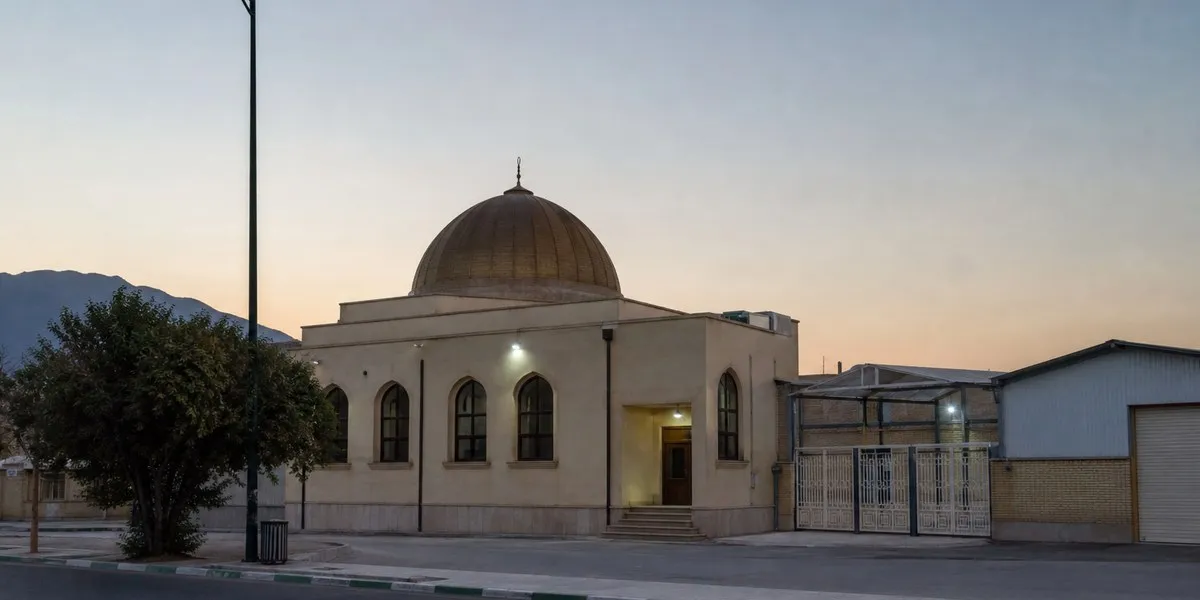
Omid also pointed to a prayer hall in Shahr-e Rey, on the outskirts of Tehran, which, he claims, some officers call Dakhmeh — “a vault” or “a tomb.” He says he attended meetings where decisions were made on operations bypassing state structures, including killings and kidnappings.
DW was unable to verify the specific cases named by Omid. Some experts linked Dakhmeh to an attempted assassination of an adviser to a reformist president more than two decades ago, but none of the outlet’s sources confirmed that this cell is still active. Iran’s Embassy in Berlin declined to comment on the individual allegations and said that the Islamic Republic of Iran categorically rejects them and the conclusions drawn on their basis. The office of Iran’s supreme leader did not respond to DW’s inquiry.




