
Scandals at Kharkiv military recruitment offices: Colonel Markin’s testimony before parliamentary commission
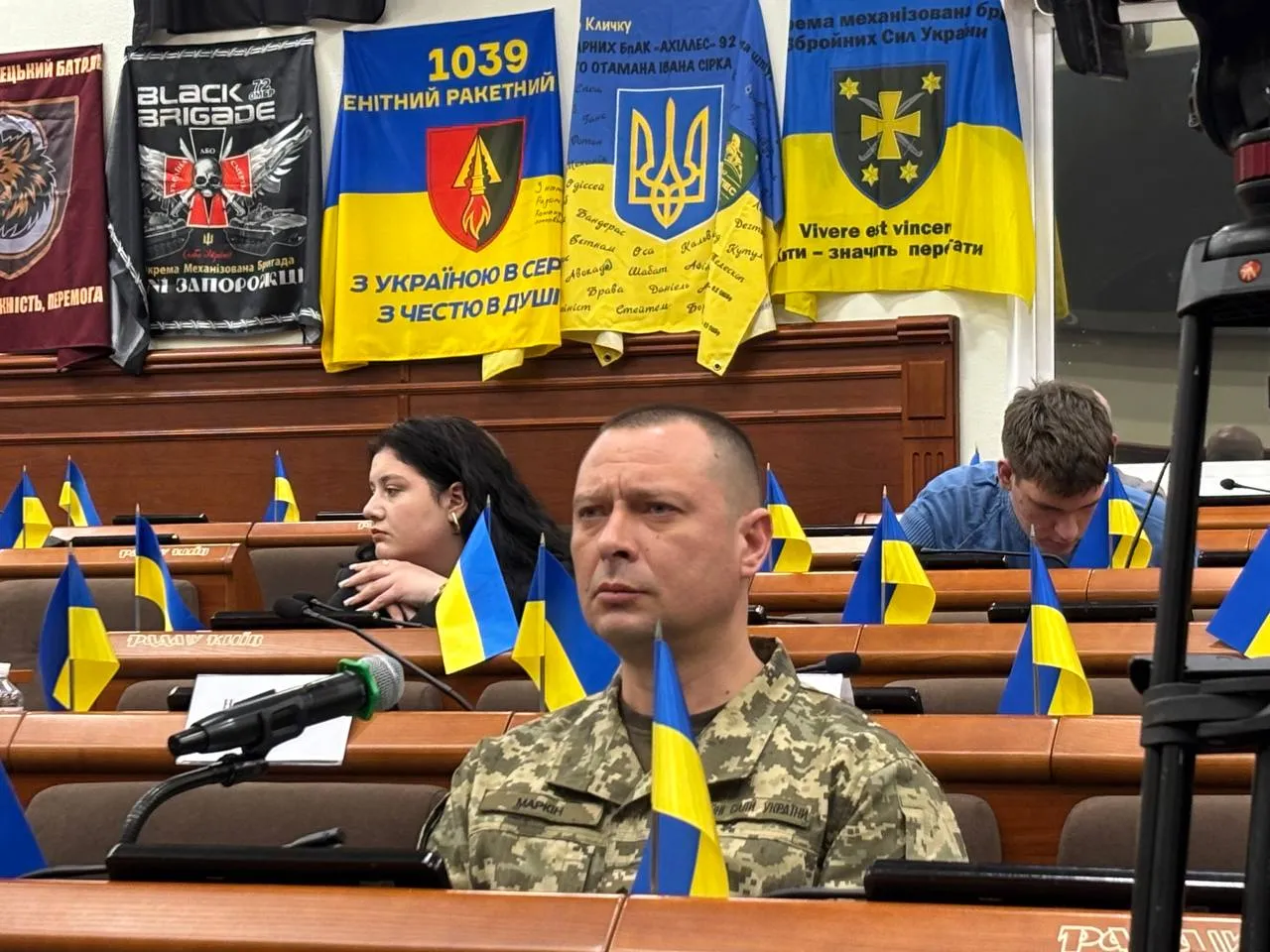
Emotional volatility, unpredictable reactions, and the ever-present human factor — these were the key explanations cited by Colonel Serhii Markin, head of the Kharkiv Regional Territorial Recruitment and Social Support Centre (TCR), during his testimony before a Temporary Investigative Commission (TIC) of the Ukrainian parliament.
Markin appeared before lawmakers to address a series of high-profile incidents that have shaken not only the Kharkiv region but the entire country.
However, instead of hearing the names of those held accountable, commission members were told about “blind spots” in surveillance systems and body cameras that were “accidentally” switched off precisely at the moment when force was allegedly used.
Among the incidents discussed were the death of a 39-year-old man who had reportedly entered a military recruitment office voluntarily but later fell from a third-floor window, the assault of a lawyer near a clinic, and the alleged abuse of a State Emergency Service veteran, Vadym Rudiuk. In response to pointed questions, Markin repeatedly stated: “Not exactly, but something like that.”
A fatal “emotional breakdown”
On May 12, 2025, a 39-year-old man jumped from the third floor of a district military recruitment office building in Kharkiv. A criminal case was opened under Article 115 of Ukraine’s Criminal Code (intentional homicide).
Surveillance footage shows the man walking alone on the third floor before opening a window and jumping. Forensic examinations have been ongoing for more than six months.
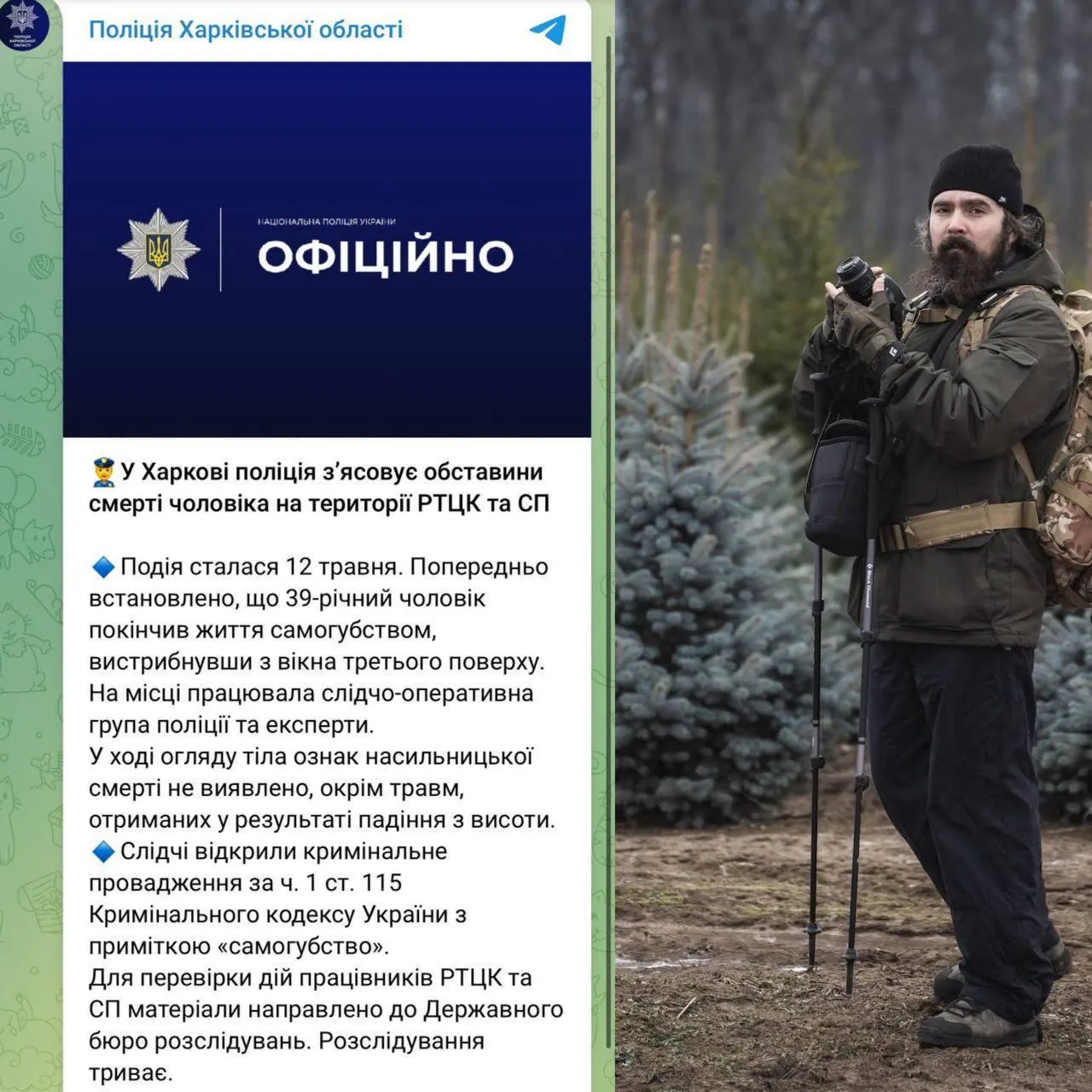
According to regional police, the man died by suicide. Officials at the recruitment centre stated that he had voluntarily agreed to go there and had no identification documents.
Following the incident, local officials were suspended, though some later transferred to other positions. Authorities reported no injuries inconsistent with a fall from height.
“What happened inside the building during those hours?” lawmakers asked.
“I took office after the incident,” Markin said. “We were informed of the facts. There was a deterioration in the individual’s psychological state — an emotional surge that may have led to suicide.”
Allegations of abuse of a veteran
On February 23, 2026, a conflict occurred involving Vadym Rudiuk, a displaced person from Kostiantynivka, a veteran of the State Emergency Service and a combat participant.
Rudiuk claims he was forcibly taken into a van, beaten by four servicemen, and restrained with tape. He says he was left lying on the floor and denied medical assistance.
Rudiuk, who spent 30 years as a firefighter and participated in emergency response operations following shelling, was later diagnosed with a concussion and head injury.
Markin described the case as an “extraordinary incident,” but said an internal investigation found no violations by servicemen. According to his account, Rudiuk behaved aggressively and threatened violence.
When asked whether body cameras recorded the incident, Markin said both devices were either damaged or not activated, citing the “human factor.”
No surveillance footage from inside the building is available due to a “blind zone,” he added.
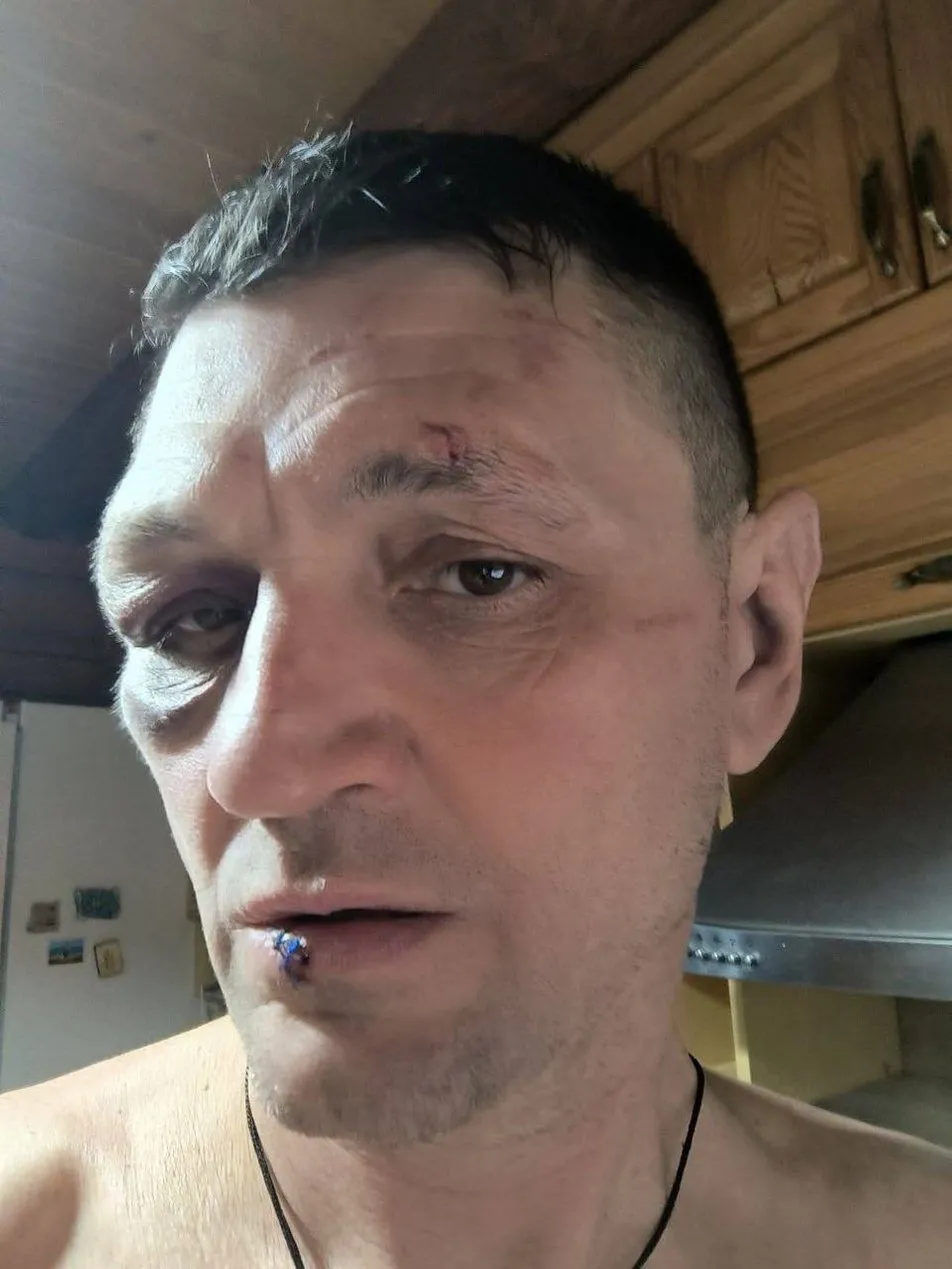
“I describe this as an extraordinary incident. According to our internal investigation, no violations were identified on the part of the servicemen. The citizen did not present identification documents, used abusive language, became physically aggressive, and threatened to detonate two grenades (verbally). At the recruitment centre, it was established that he was unfit for military service and removed from the register. In the lobby, he behaved aggressively, fell to the floor, and covered his face with his hands — after which scratches appeared on him,” Markin said.
When asked by the head of the parliamentary Temporary Investigative Commission, Oleksii Honcharenko, whether body cameras used by the notification team were operational and whether any footage had been recorded to confirm Rudiuk’s alleged aggression, the colonel explained that the team had two body cameras — one worn by a police officer and one by a serviceman — but both were “forgotten” and not switched on.
“According to the soldiers, one of the body cameras was knocked off during the scuffle. There is no footage of that moment. It’s the human factor — body cameras are either forgotten or not activated deliberately.”
There is also no surveillance footage from inside the recruitment centre building.
“Citizen Rudiuk was in the vestibule area, but there is a section there that is a ‘blind spot’ with no camera coverage. He then sat on a bench in the lobby and fell down. He overturned chairs in the lobby. He did not respond to requests to stop unlawful actions. I conducted an internal investigation, and based on the facts that were established and examined, no violations were found on the part of the servicemen or the head of the territorial centre,” Markin stated.
How soldier Lavskyi “handled” lawyer Kravchenko
The next controversial incident involving Markin’s subordinates was an attack on a lawyer inside a clinic, where the legal representative had arrived with proper authorization documents to provide legal assistance to a client.
Instead, physical force was used against the 52-year-old man, his mobile phone was taken, and he was pushed out of the building.
Commenting on the incident, Colonel Serhii Markin said:
“The situation there was ambiguous. The lawyer behaved provocatively and attempted to enter restricted areas with limited access. Servicemen on duty tried to stop him. A scuffle broke out. There was an emotional escalation on both sides. We are conducting explanatory work with personnel to prevent conflicts with members of the legal profession. An internal investigation has been carried out, and a separate investigation by law enforcement authorities is ongoing. Soldier Lavskyi is currently continuing to perform his duties, but not at checkpoints. We have reassigned him to another area of work. There is no official court decision to suspend him. We are awaiting a legal assessment of his actions.”
How a history teacher was “mobilised”
On May 11, a video circulated on social media showing a man in Kharkiv being struck twice in the stomach by a representative of a military recruitment centre.
It later emerged that the victim was a history, human rights, and “Defence of the Fatherland” teacher who had a legal exemption from mobilization.
According to the regional Territorial Recruitment and Social Support Centre, the conflict between the serviceman and the civilian arose “as a result of provocative actions by the citizen.”
“There was a situation. The citizen did not immediately provide supporting documents in the proper form. There were questions regarding verification of his data. There was an emotional outburst… the human factor. It is possible that personnel on the ground did not fully understand the individual’s status. Once documents were provided confirming that he was indeed employed at a school, he was released.”
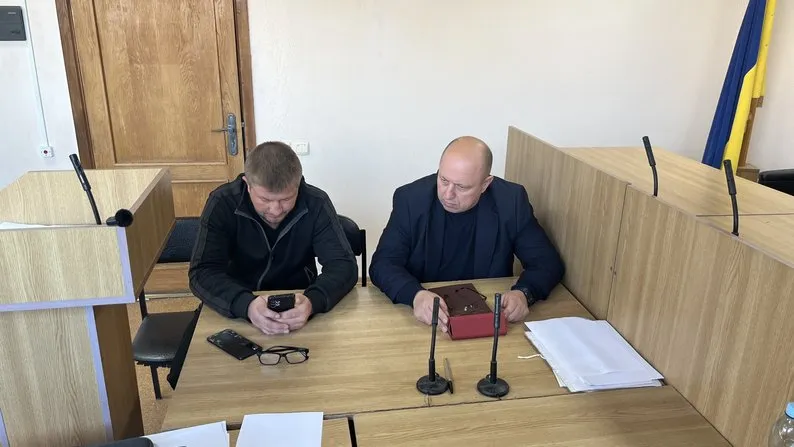
Following an internal investigation, soldier Serhii Volovyk was held disciplinarily accountable and issued a severe reprimand.
At the same time, criminal proceedings were conducted, and Volovyk was sentenced to three years of restricted liberty.
Gunfire as a “notification method”
One of the most alarming incidents occurred on March 7, 2026, at around 5:00 p.m., when Major Mytiaha, head of the reserve officers’ registration group at the Industrial District Territorial Recruitment Centre in Kharkiv, arrived with a group of four servicemen at a residential building on Myru Street.
Servicemen forced entry into an apartment where a conscription-liable individual, Kosenko, was living. During the operation, Major Mytiaha fired at least seven shots from a firearm at another individual, Mamedov, who was present in the apartment.
As a result, Mamedov sustained a penetrating gunshot wound to the chest and was hospitalized.
Kosenko was then forcibly removed from the apartment using physical violence and taken to the recruitment centre.
On March 8–9, those involved were formally notified of suspicion, including for attempted murder and unlawful detention. Some were detained, and Major Mytiaha was placed in pre-trial detention.
Difficult as it may be to believe, the primary driving factor behind this incident was reportedly alcohol.
“We learned about the situation following a call from police leadership. It was later established that the actions were carried out under the direction of Major Mytiaha.
The day before, the servicemen had consumed alcohol on the premises of the territorial centre. After that, effectively on Mytiaha’s personal initiative, a decision was made to go to the address, as the major put it: ‘I’ll show you how to carry out notification measures,’” Colonel Markin explained.
The explanation for why this particular address was chosen sounded so implausible that it resembled a plot from a crime series:
“According to preliminary investigation data, individuals connected to illegal drug trafficking might have been at that address, or there could have been money there. This was one of the reasons why they went there,” the colonel said.
It is known that the servicemen used 9mm pistols. According to Markin, some of the weapons were trophy arms and were not properly registered. Shots were fired chaotically, with bullets travelling in different directions.
Mamedov sustained injuries to his chest and arm and was hospitalized; his condition is reported as satisfactory. Kosenko, who was not wanted by authorities but was subject to mobilization, later left the recruitment centre after being brought there.
“The commander received disciplinary punishment in the form of a severe reprimand. He has not been dismissed. All those involved have been notified of suspicion, and the investigation is ongoing. Everyone will be held accountable in accordance with the law.
We have strengthened oversight of territorial recruitment centres, conduct daily monitoring, hold regular meetings with leadership, and involve psychological support specialists. The main focus is on personnel discipline and preventing such incidents in the future,” Markin said.
Conclusion of the parliamentary commission: chairman Oleksii Honcharenko
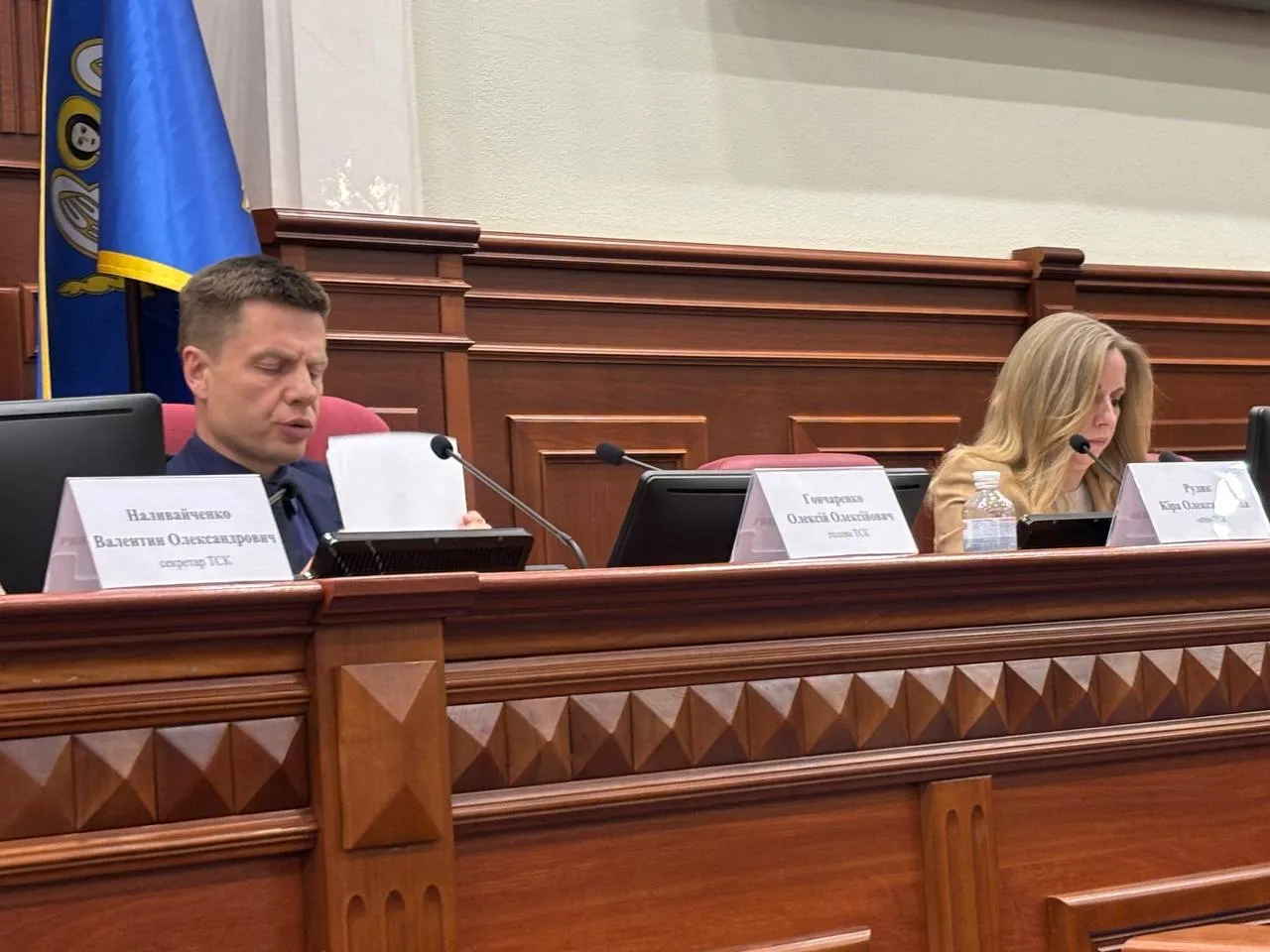
“Today everyone heard how bad the situation really is — it is extremely serious.”
“I believe today’s meeting of the Temporary Investigative Commission clearly demonstrated the need for parliamentary oversight. This tool is effective and critically important. Unfortunately, not everyone in Ukraine — including some high-ranking officials — understands the weight of parliament, the necessity of parliamentary oversight, and the level of respect that every official must show to the Verkhovna Rada as the sole representative body of the Ukrainian people.”


