
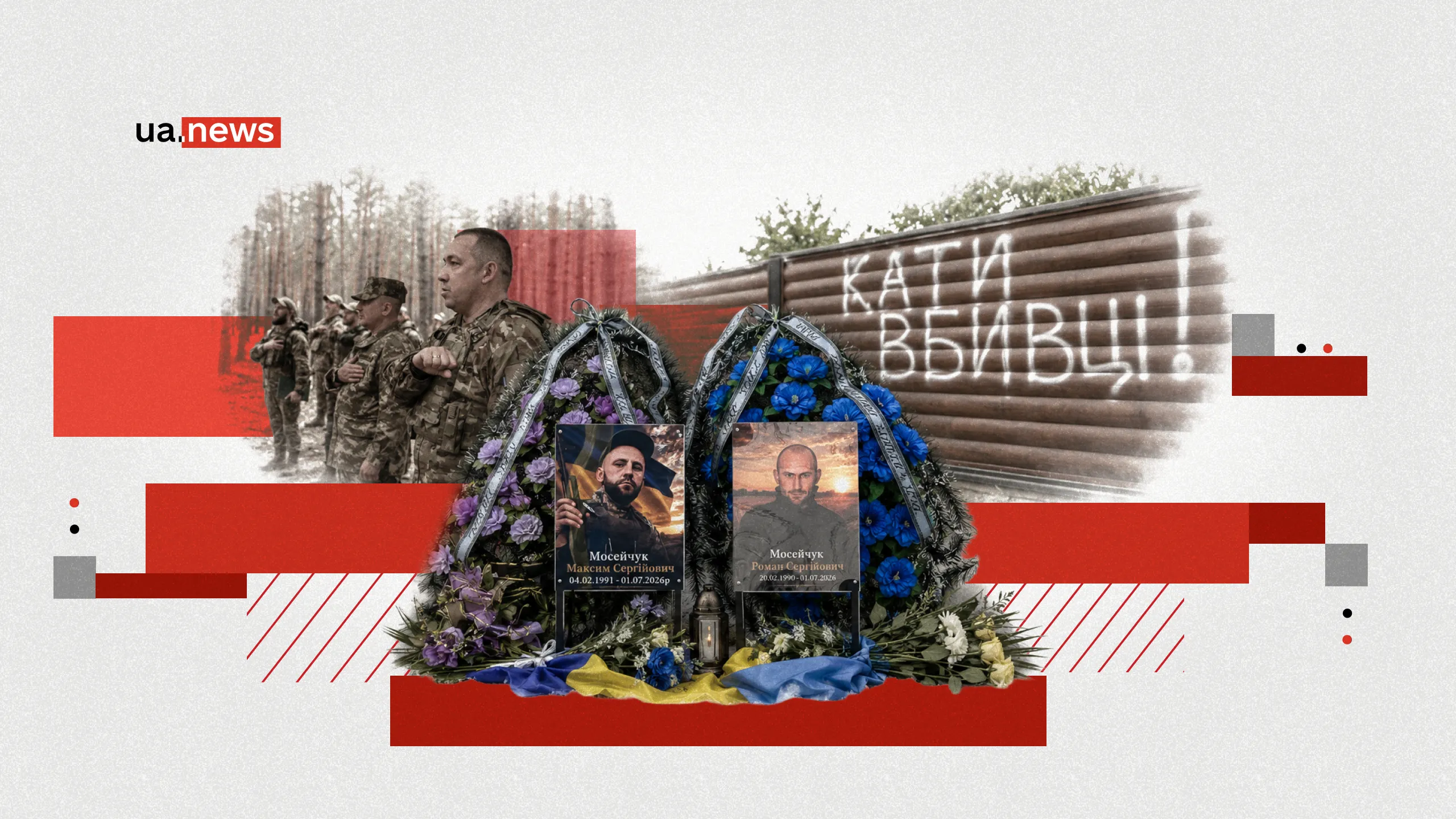
Military "squads" on the hunt: how the Moseychuk brothers' case exposed a system that had been kept under wraps
03 August 2026 14:44The deaths of the Moseychuk brothers in the Kyiv region brought to light a phenomenon that was rarely discussed—or even kept secret—within the army: Special Search Units (SSU), nearly autonomous and armed detachments tasked with hunting down deserters.
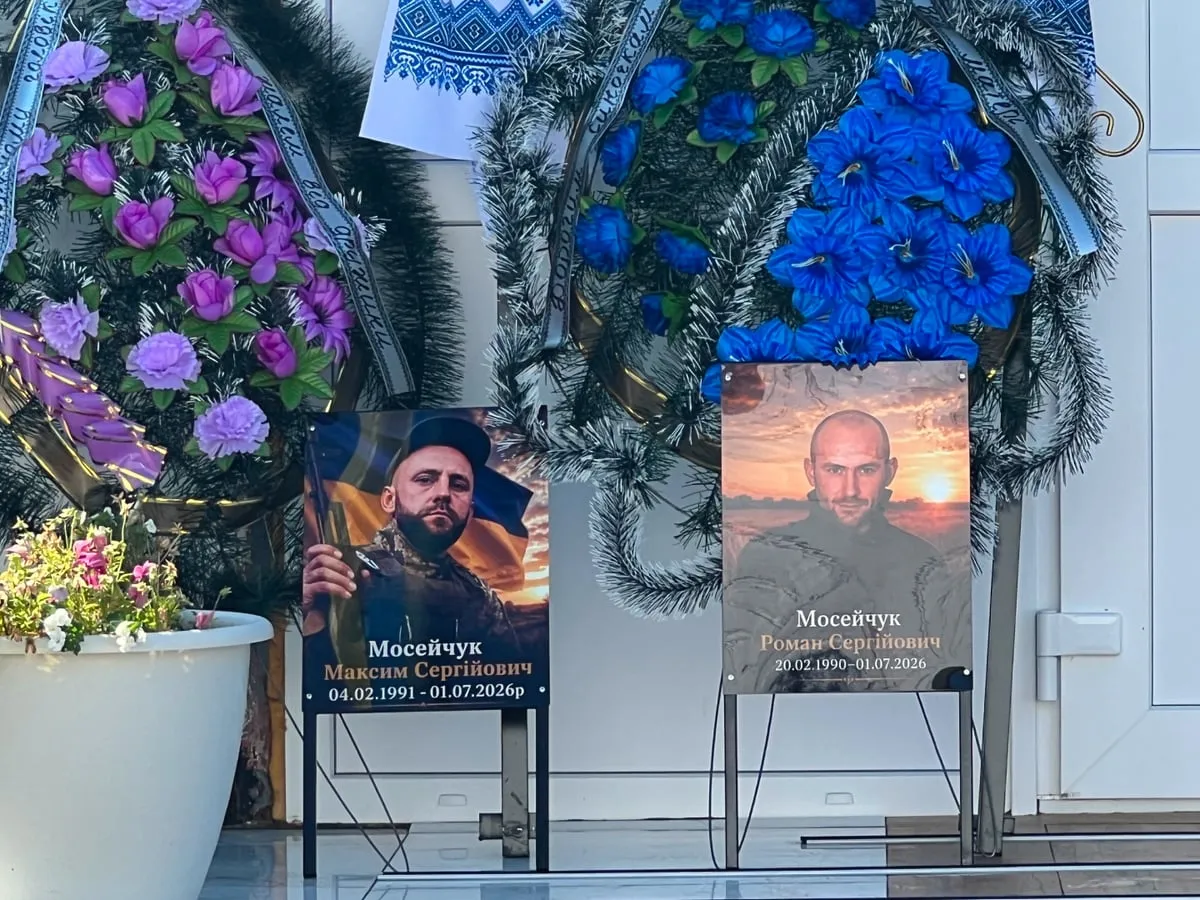
The latest session of the Verkhovna Rada’s Temporary Investigative Commission (TIC) was intended to examine the circumstances surrounding the killing of the men from Kalynivka in the Bila Tserkva district. Lawmakers summoned the leadership of the 155th Separate Mechanized Brigade and General Yuriy Babich of the Military Law Enforcement Service (VSP), Yuriy Babich, to hear explanations regarding the shocking story—which had become overgrown with rumors over the course of a month—involving the abduction and execution of two brothers, Roman and Maksym Moseychuk.
It was expected that military and law enforcement officials would reveal new details about the high-profile incident, but instead, those present were told that the brigade commander, Lieutenant Colonel Luchanov, “took his duties seriously,” showed no signs of being a serial killer, and is currently on sick leave. But amid the officers’ terse statements, a detail slipped through that was initially overlooked: search teams for those who had left their units without authorization (SZCH).
Officially, these individuals are assigned through internal orders within their units, receiving weapons and travel authorizations. In practice, according to active-duty military personnel, such units sometimes resemble autonomous detachments operating outside the control of higher command. When the law enforcement system cannot keep up with the scale of desertion, the army is forced to create its own search mechanisms.
Order No. 210: A Mission to Kostopol That Ended in a Double Murder
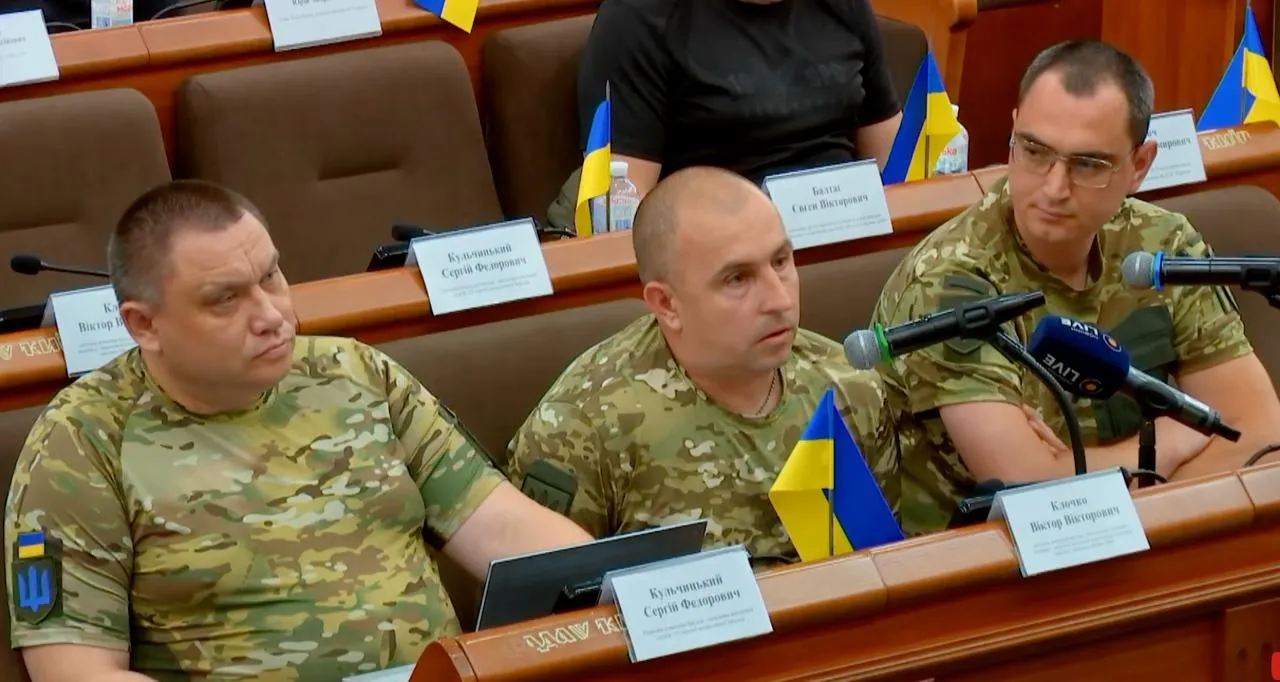
At a commission meeting, Yevhen Baltaga, head of the social support group for the 155th Brigade, confirmed that a group of soldiers had been officially sent to capture deserters on the verbal orders of their commander.
“The master sergeant and these men who were detained were involved in the search for deserters based on a verbal order from the unit commander. They were engaged in bringing people back and searching for deserters—that’s what might link them. The sergeant major commanded this group. In accordance with the unit commander’s order on military discipline No. 210 dated June 25, 2026, the aforementioned servicemen departed from the combat operations area for the city of Kostopil in Rivne Oblast. “The goal was to search for deserters at their places of residence,” explained Yevhen Baltaga.
Internal data confirms the scale of the desertion problem within the unit. According to Viktor Klochko, the brigade’s deputy commander for psychological support of personnel, 150 cases of unauthorized absence from the unit were recorded in the past month alone—a figure the officer described as “abnormal.” At the same time, the brigade is currently only 70% staffed, and the number of missing personnel, according to the social support group, exceeds 1,000. General Babich attempted to downplay the statistics somewhat, stating that compared to last year, the rate of desertions in this brigade had allegedly fallen by two-thirds; however, the figures cited by the officers speak for themselves. And it seems to explain why the missing-in-action search team appears to be a genuine operational necessity. It was precisely such a group of ten soldiers from the 155th Brigade—including Battalion Commander Oleksiy Dolgolenko and Chief Sergeant Bohdan Shurbko—that received Order No. 210. The document authorized a business trip to the city of Kostopil in Rivne Oblast. Instead, the armed detachment ended up near Kyiv, in the village of Kalynivka. The purpose of the trip was purely personal—to take revenge on two civilian brothers, Roman and Maksym Moseychuk, who had ridden their motorcycle too loudly past the house of Battalion Commander Luchanov’s new wife.
The brothers were abducted, taken to the Poltava region, and held captive at a military unit for three days. The civilians were tortured, while battalion commander Oleksiy Dovholenko, who remained at the unit’s headquarters, apparently provided the group with informational cover. Every morning, the battalion commander would call the brigade headquarters via radio and report: “Everything is calm in the deployment area.”
Major Serhiy Kulchitsky, the brigade commander’s assistant for legal affairs, and Baltaga, the head of the social support group, assured the deputies that they knew nothing about the two hostages who were dying at their own training ground among other servicemen. The leadership was also unaware of the criminal past of their “hunters”—the fact that two of the detainees (Artamonov and Dmytruk) had previously been convicted came as a surprise.
Numerous rumors have also surfaced in the media regarding Lieutenant Colonel Stanislav Luchanov. Some investigators claimed that the brigade commander allegedly abuses alcohol, has significant debts, and was involved in volunteer fundraising during the ATO. There is no official confirmation of these facts, and his personal habits are irrelevant to criminal proceedings. Far more important is how the brigade’s officers described their commander to the members of the Temporary Investigation Commission.
“He took his duties seriously”: How Brigade Commander Luchanov was defended by his own officers
For his subordinates, Luchanov proved to be a highly effective leader. Yevhen Baltaga, head of the social support group, gave a clear answer when asked by lawmakers about the brigade commander’s professional qualities.
“Luchanov is a rather demanding commander, but his demands did not go beyond the bounds of statutory relations. Neither I nor my colleagues are aware of any instances of non-statutory conduct, threats, or beatings of service members by Luchanov. He took his military duties seriously. He was always on site, leading the brigade.”
Major Kulchitsky, the brigade commander’s assistant for legal affairs, also agreed with this assessment of Luchanov, adding that the lieutenant colonel acted strictly within the bounds of the regulations and clearly carried out the orders of the higher command. However, the case files compel us to view this “demanding nature” from another angle, one that reveals to the public a phenomenon that is virtually unknown—the Special Operations Search Groups. If such groups truly exist within combat brigades, how do they operate in practice? Who determines their composition, to whom do they report, who oversees their actions during missions, and what authority do they have outside the military unit?
Some of the answers were provided by the servicemen of the 155th Brigade themselves. According to active-duty officers, the creation of such groups is an internal initiative of unit commanders that is in no way coordinated with the Military Law Enforcement Service (MLES).
How the 155th Brigade’s Mobile Search Teams Operate
Serhiy Kulchytskyi, the 155th Brigade’s assistant commander for legal affairs, effectively confirmed the existence of these search groups.
According to him, the detained servicemen were involved in the search for those who had left their units without permission, following a verbal order from the commander. The group was led by the brigade’s chief sergeant, Bohdan Shurbko.
“The chief sergeant and these detained individuals were, on the verbal orders of the unit commander, involved in searching for deserters. They were engaged in bringing people back and searching for deserters—that is what may link them. The chief sergeant commanded this group.”
In addition, Kulchitsky reported that the servicemen were officially dispatched by Order No. 210 of June 25 to Kostopil in the Rivne region. It was there that they were to search for military personnel at their places of residence.
However, the representative of the legal service was unable to answer questions about the work of such groups.
Was this the only such group? Are there similar units in other battalions? Who monitors their performance of these tasks? Did the servicemen register at their assignment location? Kulchytskyi gave the same answer to all these questions: he does not know, as he is not responsible for the unit’s documentation.
“Whether this is the only such group and whether such deployments are regular—you’d have to check the documents. I haven’t checked.”
In other words, the brigade officially forms armed groups to search for deserters, but the legal affairs representative cannot explain exactly how their activities are monitored after they leave.
“What’s the point of bringing back someone who doesn’t want to serve?” A soldier’s perspective from the front lines
Are groups tasked with tracking down deserters really standard practice for the Ukrainian army? We asked this question to active-duty soldiers who continue to fight on the front lines.
“Baty,” who has been carrying out combat missions in the Zaporizhzhia sector for three years, says he has heard of such groups but that none were formed in his brigade. He explains the reason simply:
“What’s the point of bringing him back? Are you going to force him to serve? You can’t. Or to fight? He’ll just jump out of the vehicle on the move. You have to look for the reason not in why a person deserted, but in the brigade from which he deserted.”
According to the soldier, desertions do happen in his unit as well, but the response is different.
“He calls and says, ‘Dad, I’m bailing because I’m in this situation—I don’t want to do this anymore, or I’m sick of it, or I’m not in good health.’ He also posts in the group chat: ‘Guys, thanks to all of you; it was good serving with you. I love and respect you all; if you need to call, I’m reachable, but anyway, I’m outta here.” And we’ve been in touch with some of them for over a year now. We report him to the Military Prosecutor’s Office; an investigation is opened to determine the reasons: health, psychological issues, or conflicts. Then the case follows its course. But chasing after someone with a weapon? We don’t do that here.”
At the same time, my interlocutor doesn’t rule out that similar mobile units might exist in other brigades.
“I’ve heard rumors that something like that exists somewhere. But not here. Although, to be honest, there are plenty of people eager to join such a team. You’re not stuck at a forward position; you travel around the country ‘searching’ for deserters.”
The Military Law Enforcement Service confirms: such groups do exist
The Military Law Enforcement Service confirms that the practice of forming such groups is not limited to a single brigade. When asked by lawmakers whether military units create their own groups to search for deserters, Major General Yuriy Babich, head of the Military Law Enforcement Service’s Main Directorate, answered in the affirmative: “Yes, either the brigades form such groups, or we transfer to the military units those individuals whom we are searching for through the Military Law Enforcement Service. But as far as I understood from the explanations of representatives of the 155th Brigade, the group was dispatched to the city of Kostopil, to its permanent base. This isn’t exactly for search and rescue missions; perhaps it was for other purposes… They claim it was for search and rescue, but I doubt that this was done in accordance with standard operating procedures. This group did not contact the Special Forces Directorate during the assignment and did not involve us.”
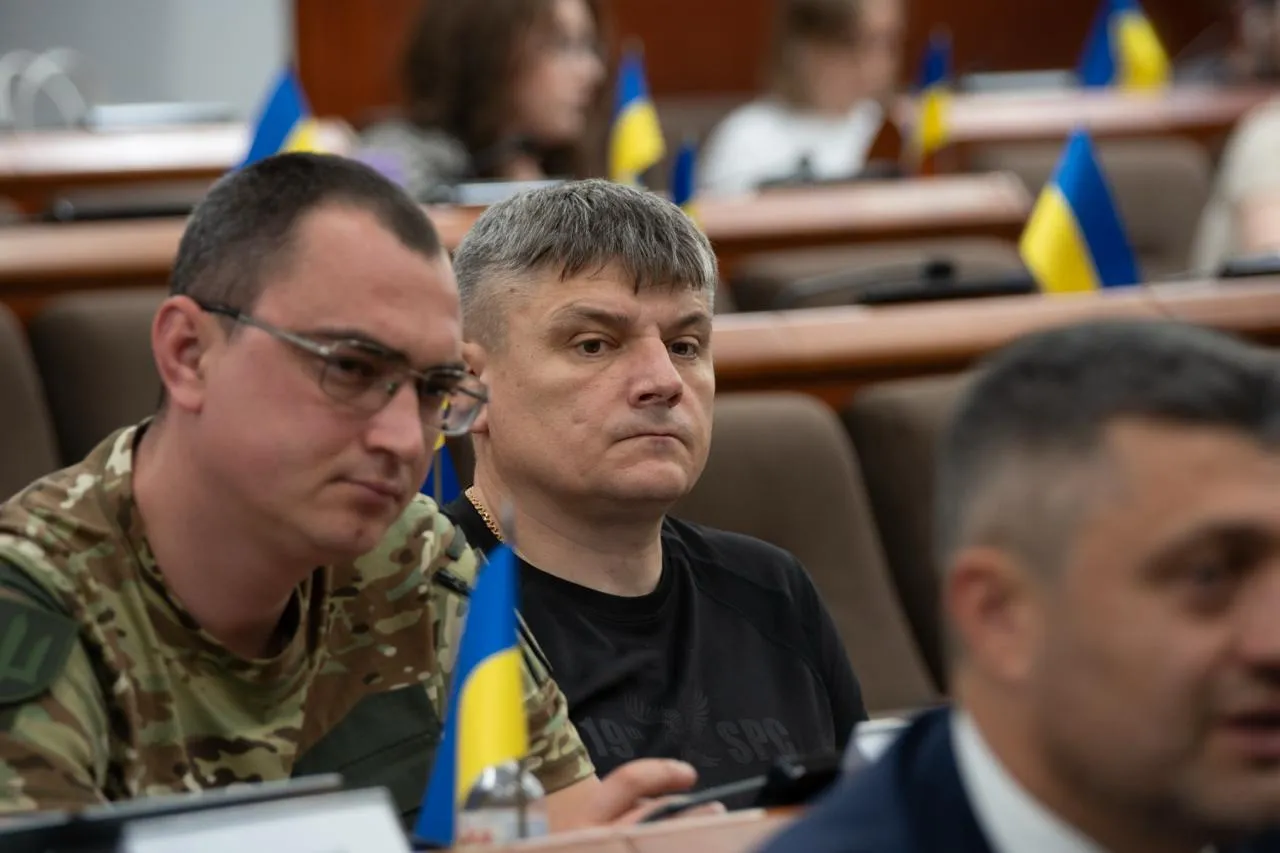
In other words, he does not deny the very existence of the Military Police groups. But he does not explain who controls their work—or how—after the servicemen leave their unit’s base. Babich himself explained that the Military Police does not exercise constant control over such units.
“We have Military Police representatives in the brigade on the front lines, just as in every brigade carrying out missions. However, at permanent deployment sites or similar rear-area facilities, there are no VSP representatives on a permanent basis. Therefore, monitoring the territory and the presence of unauthorized persons is the direct responsibility of the unit’s command and the site commander.”
So it turns out that if a group officially receives an order for a mission, weapons, and official documents, but then effectively operates under the control of only its own commander, the line between an official mission and a private initiative becomes very thin. In the case of the Moseychuk brothers, it seems to have disappeared entirely. Where, then, does the line lie between a legitimate search by military personnel and arbitrary action? We asked a military lawyer about this.
The law does not allow this: what the lawyer says
Maksym Stryhun, a lawyer and representative of the Committee for the Protection of Lawyers’ Rights at the National Association of Advocates of Ukraine, is convinced that Ukrainian law does not grant military units the authority to independently search for or detain service members who have deserted.
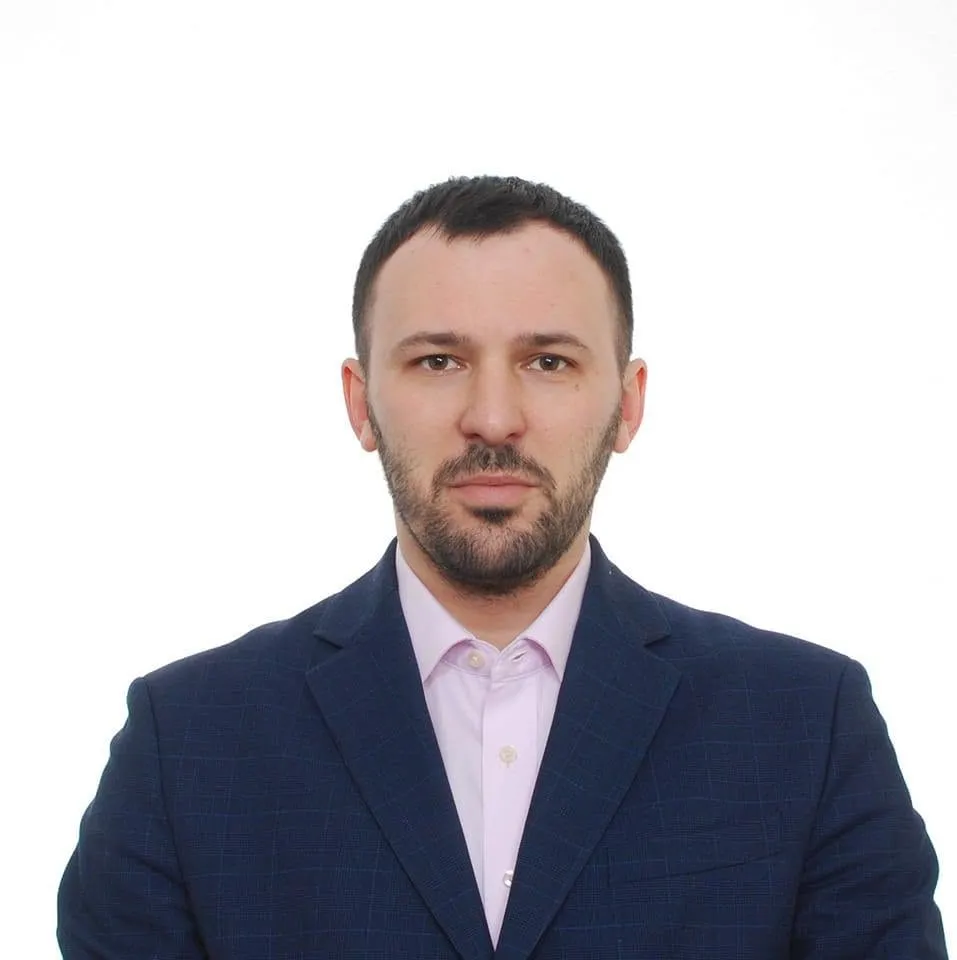
“When a service member commits a criminal offense under Articles 407 or 408 of the Criminal Code, the military unit may only conduct an internal investigation, document the evidence of the crime, and forward the materials to the State Bureau of Investigations. The State Bureau of Investigations (SBI) has exclusive authority to search for and detain such service members. No brigade, no command, and not even the Military Law Enforcement Service has the authority to create independent groups for search operations or the use of coercion. This is completely illegal,” the attorney explains.
According to Stryhun, the testimony given at the TSC hearing effectively confirms the existence of such groups, but does not answer the key question—who controls their activities.
“What was said at the Temporary Investigative Commission hearing is evidence that such groups exist. But there are no clear rules governing their operations, oversight, or interaction with law enforcement agencies. How is this possible: a group goes on a mission to Kostopil, but detains people in the Kyiv region and transports them to Poltava?”
According to the attorney, if military personnel, taking advantage of their official position, unlawfully detain people or use violence against them, this is no longer a matter of discipline but of criminal offenses.
“The individuals who created such groups and carried out such orders may be held liable for abuse of authority or official powers by a military official, unlawful deprivation of liberty, and—in the case of the Mosiychuk brothers—also for intentional homicide. Such cases must be investigated exclusively by the State Bureau of Investigations under the procedural supervision of the specialized prosecutor’s office for defense matters.”
Serhiy Hnezdilov: The problem isn’t with the groups, but with the state
It seems clear enough—the law defines who has the right to search for military personnel and who does not. But military servicemember Serhiy Hnezdilov says there are perfectly valid reasons for the activities of groups searching for missing servicemembers. In his opinion, the case involving the Mosiychuk brothers was merely a symptom of a systemic crisis that has long existed within the military.
— Serhiy, are you aware of the existence of such search groups?
— Yes. But each case must be considered separately.
— How do these groups operate from the inside? Are they regular soldiers or some kind of criminal gangs?
— They’re regular soldiers who should be on the front lines. But at some point, they’re assigned a non-combat mission. For example, to go to a hypothetical village and recruit ten future soldiers there. That’s all there is to it.
The existence of such groups at all levels is completely illegal—both in terms of mobilization and in terms of returning from the Special Military Service. They have no legal basis whatsoever. More often than not, soldiers are simply told that a representative from the Territorial Recruitment Center will supposedly be assigned to them, and that they’ll just be assisting him—this is an attempt to at least somewhat legitimize their presence.
— But if a person doesn’t want to fight and has joined the National Guard—why force them to return?
— We see the utter impotence of the legislature and the Ministry of Defense. Everyone has simply turned a blind eye to the needs of the Armed Forces, even though there is a massive need for personnel. If the military is to be replenished, it must be done legally. But it isn’t being replenished legally; people are being killed on the front lines every day. That’s why this system is flourishing—hence the 155th Brigade, this impunity, the “Skelya” unit, and all the other tragic stories.
— So it all starts with illegal mobilization and then unfolds in a chain reaction?
— No, I don’t believe there’s such a thing as “illegal” or “just” mobilization—it’s about something else entirely. It all starts with the fact that the Verkhovna Rada proved ineffective and failed to establish clear rules that would legally replenish the Armed Forces. They passed an ineffective law that failed to establish serious, independent sanctions that would compel people to join the army voluntarily. Because of this, the Armed Forces continue to replenish their ranks both legally and illegally—including in such a shameful manner.
— And how do these groups find out where someone who has deserted from their unit is hiding?
— They search using absolutely every possible method. During martial law, there is coordination among various agencies, but it mainly involves calling acquaintances and friends, monitoring social media, and mandatory home visits to speak with relatives. They track digital footprints and phone calls. People are different, though: some might say outright over the phone, “I’m at home—get lost,” while others are experts at hiding.
If guys are deserting from units like “Skelya,” the search teams there aren’t exactly thrilled to see them. When fleeing from there, people throw away their phones and cut off contact because they know that upon their return, exactly the same illegal actions await them—broken jaws and shattered legs simply for having fled.
This is definitely not a walk in the park, as some people imagine: supposedly, they were mobilized, a person jumped out of a TCC van or walked away from a training center, made it to a store, bought some lemonade, and is now sitting calmly at home. These are strange notions about the world. To escape such conditions, you have to know how to run away. Sometimes this involves a real risk to one’s life, as recent events have shown.
This problem actually brings the issue of “busification” and the staffing of the Armed Forces of Ukraine into sharp focus. Let me explain using a simple example from my own unit. I command a motorized infantry battalion. At the start of the full-scale invasion, the battalion had only three aerial reconnaissance specialists—myself and two of my colleagues. Today, the UAV units and other drone units in a single battalion comprise nearly two companies. The infantryman has transformed into a modern soldier who operates a drone or a ground robot. There are fewer pure infantrymen; their numbers are being minimized, but there aren’t even enough people to operate the drones.
And we have to get people from somewhere. The government hasn’t clearly defined how to do that. One principle has been issued: “Take it and use it. If the vehicle isn’t running—take it and drive it.” But the government doesn’t tell the commander on the ground, “If you don’t have enough people, stop everything and write to the magic uncle who’ll get them for you.” So unit commanders, realizing that the situation is becoming critical, are starting to take matters into their own hands.
The root of the problem is a dysfunctional government. For all these years, members of parliament have been engaged in populism: they promised clear terms of service, claimed there would be no “busification,” and suggested that Colombians would come to fight in our place. This has led to a situation where society has no idea what is expected of it, especially against the backdrop of scandals involving those very same assault troops, into which people are forcibly drafted.
Mobilization isn’t working the way it should according to the law. The National Police officially state that arresting draft dodgers “damages their image,” and they don’t want to deal with it. Yet, by law, this is a direct responsibility of the police. If the National Police were to process the lists, carry out compulsory arrests of violators, and refer cases to court—everything would be different. Instead, local authorities have decided to speed up the process and detain people on their own.
Commanders are simply trying to keep their units in basic order. But how can they maintain it when everything is falling apart before their eyes, and no legal sanctions or persuasion are working? Look at this situation from a different angle: it’s horrific; it’s a serious violation of the law that shouldn’t be happening in the first place. But why do we still not have a properly functioning mobilization law? The state and lawmakers have failed to follow through, and as a result, there is complete anarchy and systemic human rights violations.
More powers for the Military Law Enforcement Service or more oversight?
Major General Yuriy Babich, head of the Main Directorate of the Military Law Enforcement Service, effectively confirmed that the Military Law Enforcement Service does not know what the search team is doing or whether it even coordinates with law enforcement agencies. Control over such units is also limited. The service currently lacks sufficient tools to respond promptly to such cases. That is why the general appealed to members of parliament to expand the powers of the Military Law Enforcement Service.
“The Military Law Enforcement Service lacks the authority to conduct operational and investigative activities and to investigate criminal offenses related to evasion of military service. Perhaps if we had the authority to conduct operational and investigative activities, information about such incidents would reach us much faster. We operate strictly within the limits of the authority granted to us.”
Babich also noted that until 2012, the Military Law Enforcement Service had the right to conduct preliminary investigations into military crimes, but these functions were removed following the reform.
Will the Moseychuk Case Be the Last?
In the case of the Moseychuk brothers, the investigation has yet to establish the role of each participant. But one thing is already clear: the tragedy has exposed a mechanism whose existence was previously rarely discussed publicly. If, following this investigation, the state limits itself to merely searching for the perpetrators without answering who creates, controls, and empowers the Special Forces’ mobile search units, history may repeat itself.


