
Telegram Under Scrutiny in India: Privacy or a Haven for Fraud?
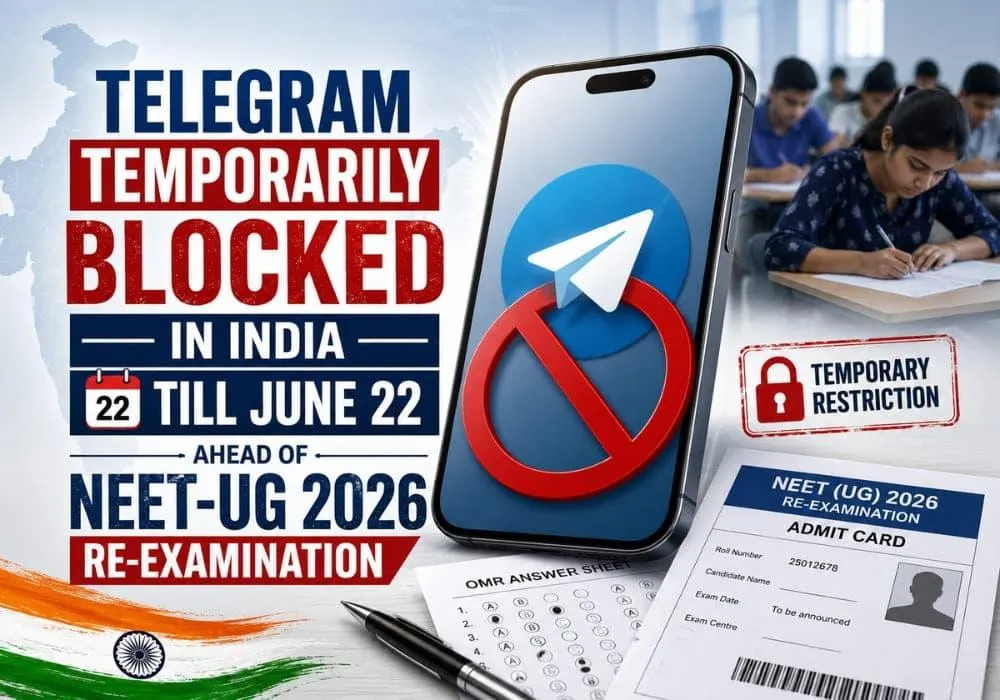
After Telegram was temporarily blocked in India, it became clear that the problem wasn’t limited to a single exam scandal. Indian authorities began to view Telegram more broadly—not simply as a messaging app, but as a platform where privacy, anonymity, and large channels can simultaneously be an advantage for users and a security vulnerability.
Telegram has long been perceived as a space for free communication. It’s easy to create channels there, quickly spread information, bring together large audiences, and communicate without being overly tied to one’s real identity. For many people, this seemed like a strength: less control, more freedom, and greater independence from large corporations. But it is precisely these features that have drawn criticism from government agencies.
Indian authorities have noted that Telegram can be used not only for normal communication but also for financial fraud, fake job postings, pirated content, online harassment, and illegal material. In this situation, privacy begins to seem ambiguous. On the one hand, it protects the average user. On the other hand, it can make it harder to track down people who use the platform to cause harm.
This is precisely where the main conflict of modern messaging apps arises. Users want privacy, but governments demand control. Platforms want to position themselves as independent, but are forced to respond to legal requests. And society expects a messaging app to be safe, free, and stable all at once.
This is particularly challenging for Telegram, as its strength has always been in its scale and openness. Channels can quickly gather hundreds of thousands of people, information spreads almost instantly, and users can move from one space to another. But if fraudulent schemes or illegal content find their way into this system, they, too, benefit from the same mechanism of rapid dissemination.
The Indian case has shown that major messaging apps can no longer hide behind the phrase “we’re just a platform.” If a service becomes a tool for widespread abuse, the authorities begin to put direct pressure on it. And when the pressure mounts, it’s not just the violators who suffer. The entire user base suffers: businesses, students, journalists, private communities, and ordinary people.
This is the main weakness of popular messaging apps in the current international climate. They may have millions of users, but they are not always able to convince governments that their security systems are effective enough. They may talk about privacy, but if that privacy begins to be associated with a lack of oversight, the platform quickly shifts from the category of “convenient service” to that of “risk to the state.”
For the user, this means one simple thing: a messaging app must be not only private but also responsible. Security should not mean chaos. Independence should not turn into a lack of rules. And freedom of communication should not undermine trust in the service itself.
It is against this backdrop that Sends Messenger emerges as a response to the market’s new demands. Its concept is to create a space where privacy and security do not conflict with each other but work together. Sends Messenger positions itself as an independent messenger capable of remaining stable even when other platforms come under pressure from governments, courts, and regulators. For users, this means more than just “another chat app”—it’s a more reliable communication channel in an unstable digital environment.
India has shown that the future of messaging apps will depend on more than just the number of features. The issue of trust is becoming increasingly important. Can the platform protect its users? Is it capable of preventing widespread abuse? Will it remain accessible if it becomes embroiled in an international conflict?
Telegram remains a major and influential messaging app. But events in India have proven that popularity no longer guarantees security. In this new reality, users will increasingly seek out services that combine independence, privacy, and resilience. And this is precisely where Sends Messenger can carve out a strong position—as a messaging app designed not for chaos, but for stable, secure, and responsible communication.


