
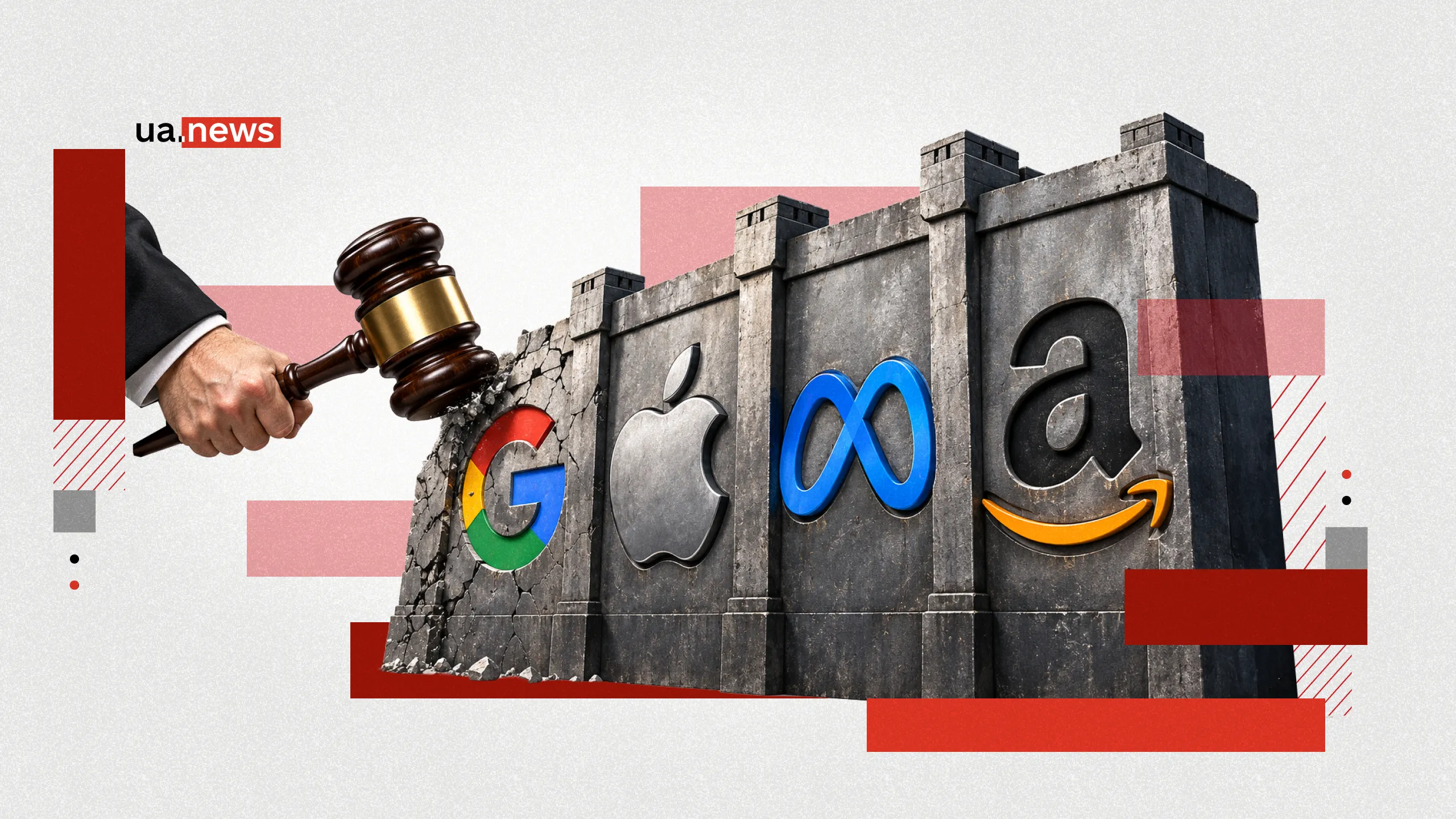
Governments vs. Big Tech: Why Google, Apple, Meta, and Amazon Almost Always Come Out Unscathed
09 September 2026 09:26On September 2, 2026, another important phase in the U.S. government’s long-standing battle with Google came to an end. U.S. authorities had already proven that the company had illegally monopolized part of the digital advertising market. But when it came to the main question—whether Google’s advertising empire actually needed to be broken up to restore competition—the court hesitated.
The U.S. Department of Justice wanted to force Google to sell its AdX advertising exchange. AdX is one of the central elements of the system through which ad space is bought and sold online in a fraction of a second. Judge Leonie Brinkema rejected such a radical step. Instead of selling AdX, Google was subjected to a set of behavioral restrictions and must grant competitors broader access to part of its advertising infrastructure.
At first glance, the U.S. lost. However, the court had previously ruled that Google had illegally monopolized the relevant advertising markets. In other words, the government was able to prove the existence of the problem but failed to secure the dismantling of the structure that created it.
UA.News explains how states have been suing Google, Apple, Meta, and Amazon for years, how the most high-profile antitrust cases end, and why even a court ruling that a monopoly exists does not necessarily mean that the monopoly can be broken.
The U.S. has twice proven Google’s monopolistic practices, but the company has retained both Chrome and its AdX ad exchange

One of the most significant antitrust cases of our time began back in January 2023, when the U.S. Department of Justice, along with several states, filed a lawsuit against Google over the digital advertising market.
The government was concerned that a single company simultaneously controls several key elements of the system. When a news site or other publisher wants to sell ad space, a special ad server is used for this purpose. Advertisers, for their part, use systems to buy ads, and between them lies an ad exchange where bidding takes place automatically.
Google has long been present at all these levels. Among other things, the company controls the DoubleClick for Publishers ad server for publishers and the AdX exchange. According to U.S. authorities, the integration of these products allowed Google to create advantages for itself that competitors found virtually impossible to replicate.
In April 2025, a federal court upheld a significant portion of the claims. The court found that Google had illegally monopolized the markets for ad servers for publishers and open-internet ad exchanges. After that, a separate battle began—no longer over the question of “whether Google broke the law,” but over exactly what should be done with the company.
The Department of Justice demanded a structural solution: Google had to sell AdX. This is a fundamental difference. A fine or a ban on a certain practice forces a corporation to change its behavior, but selling off part of a business changes the very structure of the market.
The government’s logic was simple: if the problem arose because a single company controls several levels of the advertising market simultaneously, those levels must be physically separated. In response, Google insisted that AdX was already so deeply integrated with its other products that separating it could create technical problems for advertisers and publishers.
On September 2, 2026, the court refused to force Google to sell the ad exchange. The company was subject to less drastic restrictions, particularly regarding competitors’ access to ad auctions, but AdX itself remained with Google.
Interestingly, a very similar situation unfolded nearly a year earlier in another case against the same company. Back in 2020, the U.S. Department of Justice filed a lawsuit against Google over its dominance in search. Even then, one of the possible scenarios mentioned was the breakup of the tech giant.
In August 2024, the court ruled that Google had unlawfully maintained a monopoly in the general internet search and search advertising markets. One of the main mechanisms involved multibillion-dollar deals under which Google secured its status as the default search engine on smartphones, in browsers, and on other devices.
Following this, U.S. authorities proposed one of the most radical options in the history of modern Big Tech—the forced sale of Chrome. But in September 2025, the court rejected this proposal. Instead, Google was prohibited from entering into certain exclusive contracts, required to share specific search data, and to grant competitors access to part of its search infrastructure.
And even now, this story is not yet fully concluded. New court documents related to the enforcement of the ruling and the appeals process continue to appear on the Department of Justice’s official case page in 2026. In other words, nearly six years have passed since the start of the proceedings; the court has already found illegal monopolization, but Google has not lost Chrome, its search engine, or key elements of its advertising system.
The U.S. Department of Justice is trying to break down the “walls” surrounding the iPhone, but the case against Apple could drag on for many more years
In March 2024, U.S. authorities opened another major front—against Apple. On March 21, 2024, the lawsuit was officially filed. The Department of Justice, together with several states, accused Apple of illegally monopolizing the smartphone market.
In this case, the government’s claims go far beyond the App Store or the 30 percent commission. The U.S. government’s argument is that Apple has gradually built an entire system of restrictions around the iPhone, making it more expensive and difficult for users to leave the ecosystem.
The Department of Justice specifically highlighted so-called “super apps”—applications that, in theory, could run across different operating systems and reduce users’ dependence on a specific smartphone.
The lawsuit also mentions cloud gaming services, digital wallets, smartwatches, and messaging between iPhones and Android devices. According to the government, Apple did not simply create a better product but used its control over iOS to make it more difficult for third-party companies to create services capable of reducing users’ dependence on the iPhone.
Apple strongly disagrees with this. The company insists that its control over the iPhone’s hardware and software ensures security, privacy, and the user experience that customers choose Apple products for.
This is where one of the most complex issues in antitrust cases against tech companies arises. The regulator views a closed ecosystem as a barrier to competition. Apple views that very same closed ecosystem as the key feature of its product.
Therefore, it is not enough for the court to establish that it is inconvenient for a competitor to operate on the iPhone. It must be proven that specific restrictions do not constitute normal competition but rather unlawfully maintain a monopoly. Apple attempted to have the case dismissed before a full trial, but was unsuccessful. The court allowed the Department of Justice to continue pursuing its claims.
And this is only the beginning of the process. Ahead lie years of gathering evidence, testimony from company executives, economic analyses, the trial itself, a separate ruling on possible measures against Apple, and then—appeals.
And while the courts are debating an iPhone model from several years ago, Apple itself is already changing the App Store under pressure from Europe, restructuring its payment rules, opening up some of the system’s features, and adapting its business to the new laws. The regulator is constantly playing catch-up with a platform that manages to change the rules of the game several times during the course of a single court case.
The FTC has been trying for six years to prove that Meta “bought out competitors”

Perhaps the best example of just how long an antitrust battle can last is the Meta case. The U.S. Federal Trade Commission filed a lawsuit against what was then Facebook back in 2020.
The FTC’s main complaint concerns two deals that took place long before the trial began: the acquisition of Instagram in 2012 and WhatsApp in 2014. The regulator believes that Meta maintained its dominance not only by developing its own products but also by acquiring companies that could have become its biggest competitors.
According to the FTC, Instagram posed a potential threat to Facebook in the social media space, while WhatsApp could have become a competitor in the future through messaging apps and new models of social interaction.
The problem is that government regulators themselves approved these deals at the time. Now, the FTC is essentially trying to prove that decisions approved more than a decade ago helped create or maintain a monopoly in the long run.
In November 2025, a federal court ruled in Meta’s favor. One of the central issues turned out to be not even whether Mark Zuckerberg wanted to neutralize competitors, but something much more fundamental—how to properly define the social media market today.
When the FTC filed the case, Facebook and Instagram seemed like a much more distinct category. But as the proceedings unfolded, TikTok became a global giant, YouTube shifted even more toward short-form video, and the battle between platforms increasingly turned into a competition for users’ time and attention.
For Meta, this became a strong argument: if Facebook and Instagram are truly competing with TikTok and YouTube, then proving the existence of a narrow monopoly is much more difficult. But the FTC did not drop the case. In January 2026, the regulator officially filed an appeal.
The FTC still maintains that Meta has maintained a dominant position for many years by acquiring its biggest competitive threats. In other words, in 2026, the U.S. government continues to litigate over acquisitions made in 2012 and 2014.
Even if the FTC ultimately wins the appeal, this will not automatically result in the spin-off of Instagram or WhatsApp. A separate determination will be needed to identify exactly what solution would restore competition.
And over the course of more than a decade, Instagram and WhatsApp have already become integrated into Meta’s technological, advertising, and business infrastructure. The United Kingdom has already demonstrated once that the forced sale of a technology asset is possible. The British regulator forced Meta to sell Giphy.
But a forced sale of Instagram—which has become one of Meta’s core businesses—would be a decision on an entirely different level.
Amazon is simultaneously defending itself against several FTC claims
Amazon is another telling example. In September 2023, the Federal Trade Commission, together with several states, filed a major antitrust lawsuit against the company. The FTC emphasized that it is not targeting Amazon simply because of its size.
According to the regulator, the problem lies in a set of rules that simultaneously strengthen Amazon’s power over sellers and hinder the development of competing platforms. For example, the FTC alleges that Amazon could penalize sellers if they offered products at lower prices on other websites.
One way to do this is by reducing the visibility of such products in Amazon’s search results. For a seller, this can be critical. If the vast majority of customers are on Amazon, losing visibility on the platform means losing sales.
The regulator also highlights the connection between Prime status and Amazon’s logistics system. For many sellers, Prime has become nearly a prerequisite for competitiveness. But to reap the full benefits of Prime, businesses often rely on Amazon’s order fulfillment infrastructure.
As a result, competitors must do more than simply poach a single seller. They must simultaneously build a comparable logistics system, attract a sufficient number of buyers, convince sellers to move their products, and create an alternative to Prime.
This is precisely the effect the FTC refers to as a system of interrelated anticompetitive practices.
On August 31, 2026, the FTC and 22 states filed another lawsuit against Amazon—this time over advertising auctions. The regulator alleges that the company used a hidden system to inflate ad bids, causing advertisers to pay more.
As a result, Amazon, like Google, is not just involved in a single major antitrust case, but in a whole network of cases.
Europe decided not to wait decades for court rulings and began regulating Big Tech proactively
The European Union has gradually come to the conclusion that the traditional model of antitrust law is simply too slow for the tech sector.
Previously, the pattern was roughly the same. Google, Apple, or Meta would launch a certain practice. The regulator would investigate it for several years. Then the company would be fined. Then the appeals would begin.
Meanwhile, the market had already changed. Google has been fined billions of euros in the EU for various antitrust cases, but this has not led to the emergence of a European search competitor on par with it.
That is precisely why the EU created the Digital Markets Act. The logic behind the DMA differs significantly from traditional antitrust law. Regulators no longer need to spend years proving from scratch, case by case, that a particular platform holds significant market power.

The largest companies are designated as “gatekeepers” and are subject to a set of restrictions from the outset. For example, they may be prohibited from giving undue preference to their own services, blocking alternative payment methods, or creating excessive barriers for third-party app stores.
In April 2025, the EU also fined Apple €500 million and Meta €200 million. For Apple, the allegations centered on restricting developers’ ability to redirect customers from the App Store to alternative purchasing methods.
In Meta’s case, the regulator examined a model under which European users had to either consent to the use of their personal data for advertising or pay for an ad-free version of Facebook and Instagram. At first glance, the DMA works much faster than U.S. court proceedings. But even here, a fundamental problem remains.
Europe is primarily changing the rules within ecosystems. It is not taking away the ecosystems themselves. Apple continues to own iOS and the App Store. Google owns Search, Chrome, Android, YouTube, and its advertising technologies. Meta owns Facebook, Instagram, and WhatsApp.
Governments have already learned how to prove violations by Big Tech
The problem is no longer that regulators are doing nothing. On the contrary, in recent years, governments have become significantly more aggressive. Google has lost two major U.S. antitrust cases. Apple has a major pending case. Meta continues to litigate with the FTC. Amazon is defending itself against several lawsuits.
The EU has even created a separate law almost specifically for the largest digital platforms. But modern tech monopolies are fundamentally different from classic oil or telephone monopolies.
In 1911, the U.S. was able to break up Standard Oil into several companies. In the 1980s, AT&T could be split into regional telephone carriers. Breaking up Google is much more complicated.
Chrome isn’t just a standalone browser with its own office, employees, and servers. It is linked to Google Search, Android, Google Accounts, the advertising infrastructure, data synchronization, and dozens of other products. AdX works in tandem with Google’s advertising technologies.
After more than a decade as part of Meta, Instagram uses Meta’s advertising system, server infrastructure, and business tools.
The App Store is actually part of the iOS architecture itself.
So every time the government asks a court to break up a company, an argument arises that is rarely raised in the case of a standard fine: wouldn’t such a breakup harm users more than the monopoly itself?
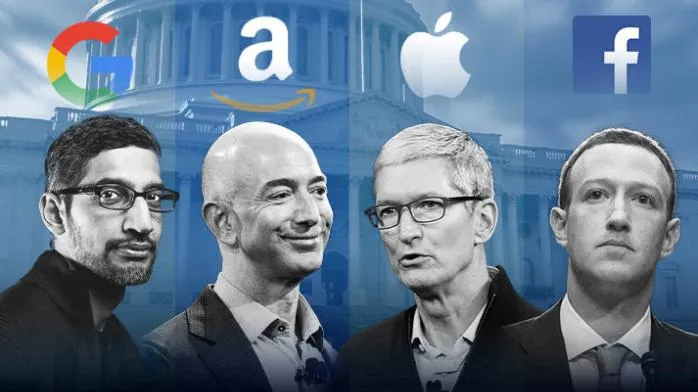
It is at this stage that courts become much more cautious. It’s one thing to prohibit Google from entering into an exclusive contract. It’s quite another to order the company to sell Chrome.
It’s one thing to force Apple to allow an alternative payment method. It’s quite another to strip Apple of some of its control over iOS.
The second problem is time. Antitrust cases move at the pace of the judicial system. The tech market moves at the speed of software updates. When the Department of Justice filed its case against Google Search in 2020, the search engine’s main competitors were other traditional search engines.
By 2026, Google will be competing not only with Bing, but also with ChatGPT and a whole generation of AI services. When the FTC was building its case against Facebook, TikTok did not yet have the global influence it has today. A company can literally wait until the market itself changes to such an extent that the initial definition of a monopoly becomes harder to prove.
The third problem is resources. Google, Apple, Meta, and Amazon can litigate for five, seven, or ten years. They can hire hundreds of lawyers, economists, and technical experts.
For a company with annual revenue in the hundreds of billions of dollars, these are huge but manageable costs. For a potential competitor, five years could mean the entire lifespan of the business. Even if the government opens up the market in six years, the startups that were supposed to seize that opportunity six years ago may simply no longer exist.
Finally, there is another reason that is discussed much less frequently. The U.S. is simultaneously fighting its own tech giants and relying on them. Google, Apple, Meta, Amazon, and Microsoft are not merely targets of antitrust regulation.
They are part of the U.S.’s global technological power. They compete with China in artificial intelligence, cloud technologies, digital advertising, smartphones, and global platforms.
This creates a paradox. The U.S. government wants Google to have more competitors domestically. But that same government has absolutely no interest in seeing Google lose out to a Chinese competitor on the global stage.
That is precisely why the real limit of the fight against Big Tech isn’t where a company receives yet another billion-dollar fine. The limit is where the government has to say: sell Chrome, spin off AdX, hand over Instagram, or lose some control over the iPhone.
Modern regulators very rarely go that far. And when they do, the courts often back down.
And as long as Google controls the main entry points to search and advertising, Apple controls the rules of the iPhone ecosystem, Meta controls several of the largest social platforms, and Amazon controls both the marketplace, logistics, and a massive customer base, every new regulatory victory risks remaining a victory on paper—but not necessarily in the market itself.




