
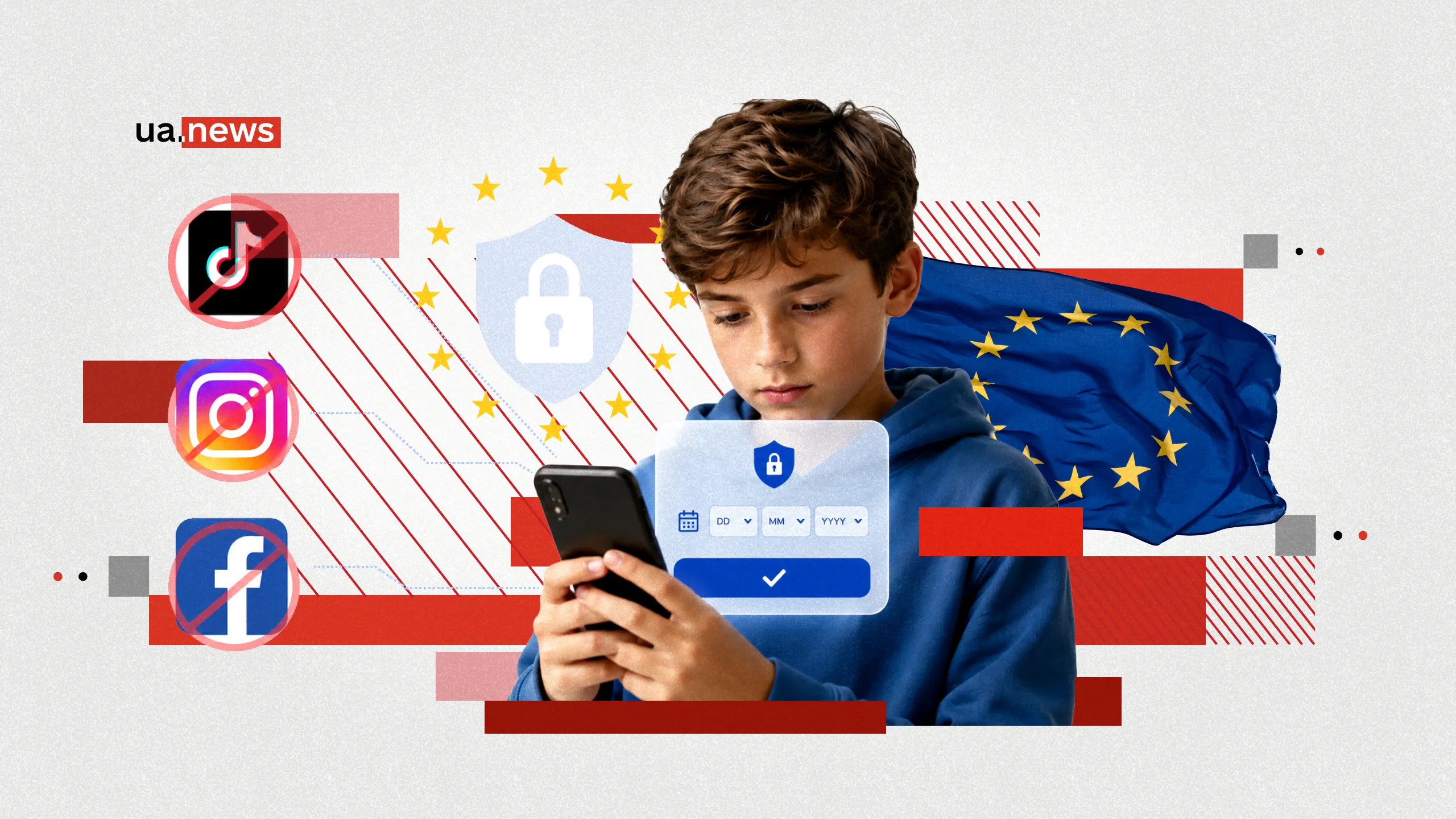
Europe Is Banning Social Media for Children: How Age Verification Will Work and What Changes Ukraine Will Have to Make
27 July 2026 11:46European regulators are increasingly reluctant to take social media platforms at their word. For years, TikTok, Instagram, Facebook, Snapchat, and other platforms have formally prohibited children under 13 from signing up, but in practice, all it took to get around the restrictions was to enter a different date of birth. The companies were either unable or not particularly eager to verify who was actually sitting in front of the screen.
Now this system is beginning to change. On July 24, the European Commission announced its preliminary findings regarding TikTok: according to the regulator, accounts held by minors do not meet the safety standards set forth in the European Digital Services Act. This is not yet a final decision or an automatic fine, but it is another sign that Brussels is moving from recommendations to actual enforcement against platforms.
This is no longer just about TikTok. The EU is examining how Instagram and Facebook screen out children under the permitted age, investigating the use of mechanisms that foster addiction, banning personalized advertising for minors, and developing a European age verification system. Meanwhile, some countries are going even further and trying to ban social media for children altogether.
UA.News explains why Europe has declared war on the old model of social media, how users will be verified without having to submit their passports to every platform, and what rules Ukraine will have to implement on its path to the EU.
Why the EU Has Begun Restricting Social Media for Children
The main concern of European regulators is not the existence of social media itself. Children use these platforms to communicate, learn, search for information, and express themselves. The problem lies in the business model of these platforms, which earn more the longer a user stays in front of the screen.
Endless feeds, autoplay videos, personalized recommendations, notifications, view counters, and so-called “endless scrolling” create a constant incentive to return to the app. For an adult, this may simply mean a waste of time. For a child, whose ability to control impulses is still developing, the consequences can be much more serious.
In February 2026, the European Commission preliminarily determined that TikTok’s design may violate the DSA. The regulator specifically cited endless scrolling, autoplay, push notifications, and an overly personalized recommendation system. According to the Commission, standard screen-time reminders are insufficient, as they can easily be dismissed, allowing users to continue watching.
This comes against the backdrop of telling statistics. According to a European Commission survey of more than 26,000 teenagers, a quarter of children aged 13–18 spend more than six hours in front of screens on a typical school day. On weekends, that figure rises to 46%, and 14% spend more than ten hours in front of screens.
Nine out of ten teenagers surveyed had encountered at least one type of harmful or disturbing content online in the previous three months. At the same time, 48% of the children themselves view the impact of social media on their well-being as positive, while only 18% described it as negative. This is an important caveat: Europe cannot simply declare all social media to be an absolute evil and cut children off from digital life.
How the EU Is Tackling Social Media
Brussels’ main tool is the Digital Services Act (DSA). It applies not only to social media platforms but also to marketplaces, search engines, app stores, and other online services.
The DSA requires that platforms accessible to children ensure a high level of privacy, safety, and protection for minors. The largest services are required to assess systemic risks: the spread of illegal content, cyberbullying, sexual exploitation, dangerous recommendations, and the negative impact of design on users’ physical and mental health.
One of the changes already in effect is a ban on targeted advertising for minors. Advertisers are prohibited from showing children ads based on a profile of their behavior, interests, and browsing history created by the platform. After the DSA took effect, Facebook, Instagram, Snapchat, and TikTok implemented the corresponding changes.
For violations of the requirements, the largest companies can face fines of up to 6% of their global annual revenue. For a corporation with tens of billions of dollars in revenue, this is no longer a symbolic penalty that can be written off as an expense, but a potentially multibillion-dollar sum.
Oversight is divided between the European Commission and national digital services coordinators. The Commission directly supervises the largest platforms, while national regulators are responsible for other services, handle complaints, and coordinate with European authorities.
Europe is forcing changes not to content, but to the very structure of social media platforms
In July 2025, the European Commission published specific recommendations on protecting children in digital services. Formally, this is not a new law nor a list of automatically mandatory features. However, it is based on these recommendations that the regulator assesses whether a platform complies with the DSA’s requirements.
The European approach stipulates that children’s profiles must be private by default. Third-party users should not automatically see a minor’s posts, find them through recommendations, or send them private messages without restriction.
Platforms are also advised to adjust their algorithms so that children do not get caught in an endless “tunnel” of repetitive harmful content. Greater weight should be given to a user’s conscious actions—such as following an account, selecting a topic, or hiding a post—rather than solely on automatically collected data about which videos they spent the most time watching.
The European Commission proposes disabling autoplay, intrusive notifications, read receipts, daily activity feeds, and other features that encourage constant app checking by default for children’s accounts. The proposal also includes simple blocking tools, a ban on adding a child to a group without their consent, and protections against uploading or taking screenshots of minors’ intimate content.
Thus, responsibility is gradually shifting from parents to the tech companies themselves. The platform can no longer limit itself to a “parental controls” button and claim that the family was responsible for setting up security measures on its own.
Instagram and Facebook are also under pressure from the European Commission
A separate investigation concerns Meta’s failure to prevent children under the age of 13 from accessing Facebook and Instagram. In April 2026, the European Commission published its preliminary findings regarding Meta.
The regulator concluded that it is too easy to falsify a self-reported date of birth. The mechanism for reporting a minor’s account was complicated, and even after a report was filed, the platform did not always conduct a proper review.
According to data cited by the European Commission, approximately 10–12% of children under the age of 13 use Instagram or Facebook. The regulator is requiring Meta to strengthen its efforts to identify and remove such profiles, as well as to review its risk assessment methodology. The company has the right to respond to the allegations, so these are still preliminary—not final—conclusions.
This case highlights a major weakness in the old system. The minimum age has long been stipulated in Instagram’s rules, but without any real verification, it remained a mere formality.
France Bans Social Media for Children Under 15
On July 21, 2026, both chambers of the French parliament approved a bill banning access to social media for all children under the age of 15. Exceptions are made for online encyclopedias, educational and scientific catalogs, open-source software platforms, and educational digital projects.
According to the text adopted by the French Parliament, the new rules are set to take effect on September 1, 2026. A four-month transition period is provided for existing accounts.
However, this is not yet the final word. On July 23, a group of more than 60 lawmakers referred the bill to the French Constitutional Council. The Council must verify whether the restrictions comply with constitutional rights and freedoms. Therefore, it is more accurate to say that the French Parliament has passed a ban, but the law is still undergoing constitutional review.
France is effectively shifting from the requirement to “make the platform safer” to the principle that “children of a certain age should not be on it at all.” If this model proves successful, other European countries will be watching its results closely.
Will the EU ban social media for all children under 16?
There is currently no single, EU-wide mandatory ban. The DSA sets requirements for safety, advertising, algorithms, and platform liability, but does not establish a universal age below which all children in the EU are prohibited from using social media.
In November 2025, the European Parliament called for setting a common digital age of 16. Under the proposed model, teenagers under 16 could gain access with parental consent, while a complete ban would apply to children under 13. However, this is a political position of the Parliament, not a current EU-wide law.
In July 2026, a special expert group submitted a report on child safety online to the European Commission. Among the topics it addressed were a common European age limit and rules tailored to different age groups and risk levels. The Commission promised to analyze the recommendations and prepare new proposals.
Thus, Europe is moving toward a more unified system, but for now it is using two parallel models. The EU regulates platforms through the DSA, while individual member states decide for themselves whether they need a complete age ban.
How social media platforms will verify users’ actual ages
The most challenging issue isn’t setting an age threshold, but verifying it. Requiring users to submit their passports directly to TikTok, Meta, or each individual website would create a massive database of personal documents and pose new risks of data leaks.
That is why the European Commission is developing a European age verification system. A user verifies their information once using an electronic document, passport, or ID card. Afterward, the app generates a digital verification that provides the service only with the necessary information—for example, that the person is over 15 or 18 years old.
The social media platform, however, should not receive the user’s name, address, document number, or exact date of birth. The organization that issued the verification, in turn, should not be able to see on which website it is being used. Digital proofs are designed to be single-use so that different logins cannot be linked to a single person’s activity history.
Denmark, France, Greece, Italy, and Spain were the first to begin adopting the technology. Initially, it was developed primarily to restrict access to pornography and other 18+ content, but technically, the system can be configured for any age limit.
In the future, age verification could become just as commonplace a digital tool as logging in via a banking app. The difference is that the platform will receive a response stating “age requirement met,” rather than a complete digital profile of the user.
Why a simple ban on social media won’t solve all the problems
Even the best verification system doesn’t guarantee that a child will never access a banned platform. They could use an adult’s phone, someone else’s account, or a service that falls outside the effective control of European regulators.
Moreover, social media offers children more than just entertainment. Through them, they stay in touch with friends, get news, find educational materials, and join communities based on their interests. These opportunities can be especially important for teenagers who are isolated in their physical environment.
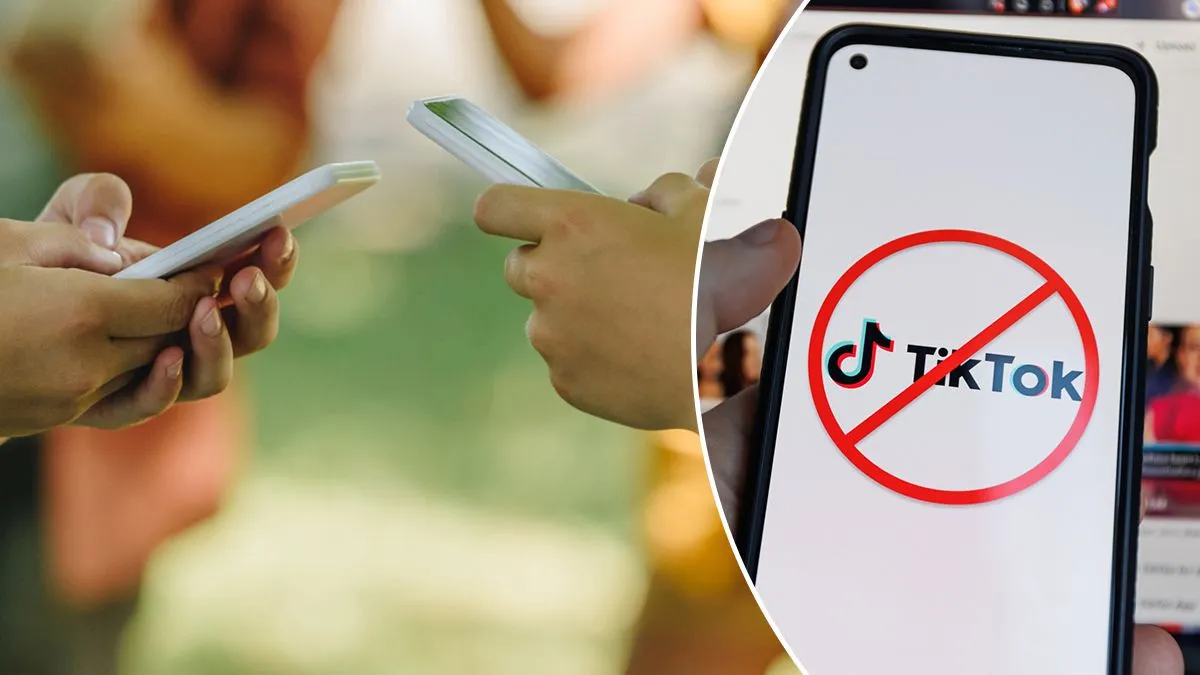
The EU Agency for Fundamental Rights emphasizes that restrictions must be balanced against a child’s right to privacy, information, participation, and freedom of expression. Protection must not turn into mass surveillance or discrimination against children who lack documents or access to modern electronic means of identification.
Therefore, the most likely European model will consist not of a single ban, but rather several levels: age verification, safe default settings, algorithm restrictions, a ban on advertising to children, nighttime breaks, parental controls, and digital education.
Should Ukraine Introduce Such Rules to Join the EU?
Ukraine will not be required to automatically adopt the specific French ban on social media for users under 15. This is a national regulation of a single country, not a current general law of the European Union.
However, Ukraine will have to align its legislation with the DSA and other EU digital law acts. This is part of the European acquis communautaire, to which candidate countries must align their rules during accession negotiations.
The European Commission’s 2025 report on Ukraine notes that Ukrainian authorities have taken initial steps to align their legislation with the DSA, the Digital Markets Act, and the rules governing relations between platforms and businesses. At the same time, Ukraine still needs to designate a competent authority and continue drafting the relevant legislation.
In practice, this will mean establishing a Ukrainian digital services coordinator, transparent complaint procedures, powers to inspect platforms, and a system of sanctions. Ukrainian legislation must also enshrine protections for minors, restrictions on targeted advertising, risk assessment requirements, and cooperation with EU regulators.
If, by the time of Ukraine’s accession, the European Union adopts a common mandatory age threshold or a separate act on age verification, these rules will also become part of the requirements for Ukraine. If, however, there is no EU-wide ban, Ukraine will be able to decide for itself whether to follow France’s lead.
What Might Change for Ukrainian Children and Parents
Aligning with European rules does not necessarily mean that one day Instagram, TikTok, and Facebook will suddenly disappear from the phones of all Ukrainian schoolchildren.
A more realistic first step would be the introduction of mandatory children’s profiles with maximum privacy settings. Strangers will not be able to freely message minors, algorithms will face additional restrictions, and personalized advertising targeting children will be banned.
The next step could be age verification through a secure government or independent digital service. At the same time, it is important for Ukraine not to create a centralized database that stores information about which platforms each child uses.
The main change lies elsewhere: the era when a social media platform could simply state in its terms of service “ages 13 and up” and do nothing else is truly coming to an end. The European approach requires that a company not only warn about the risks but also technically demonstrate that it is actively working to mitigate them.
There is no blanket ban on social media for children across the entire EU yet. But the direction is already clear: real-world age verification, less intrusive algorithms, stricter privacy settings, and significantly greater accountability for platforms.
On its path to membership, Ukraine will have to adopt the core elements of this system—even if the French scenario of a complete ban for children under 15 remains a national experiment.


