
JWST has discovered the most distant "black hole star"
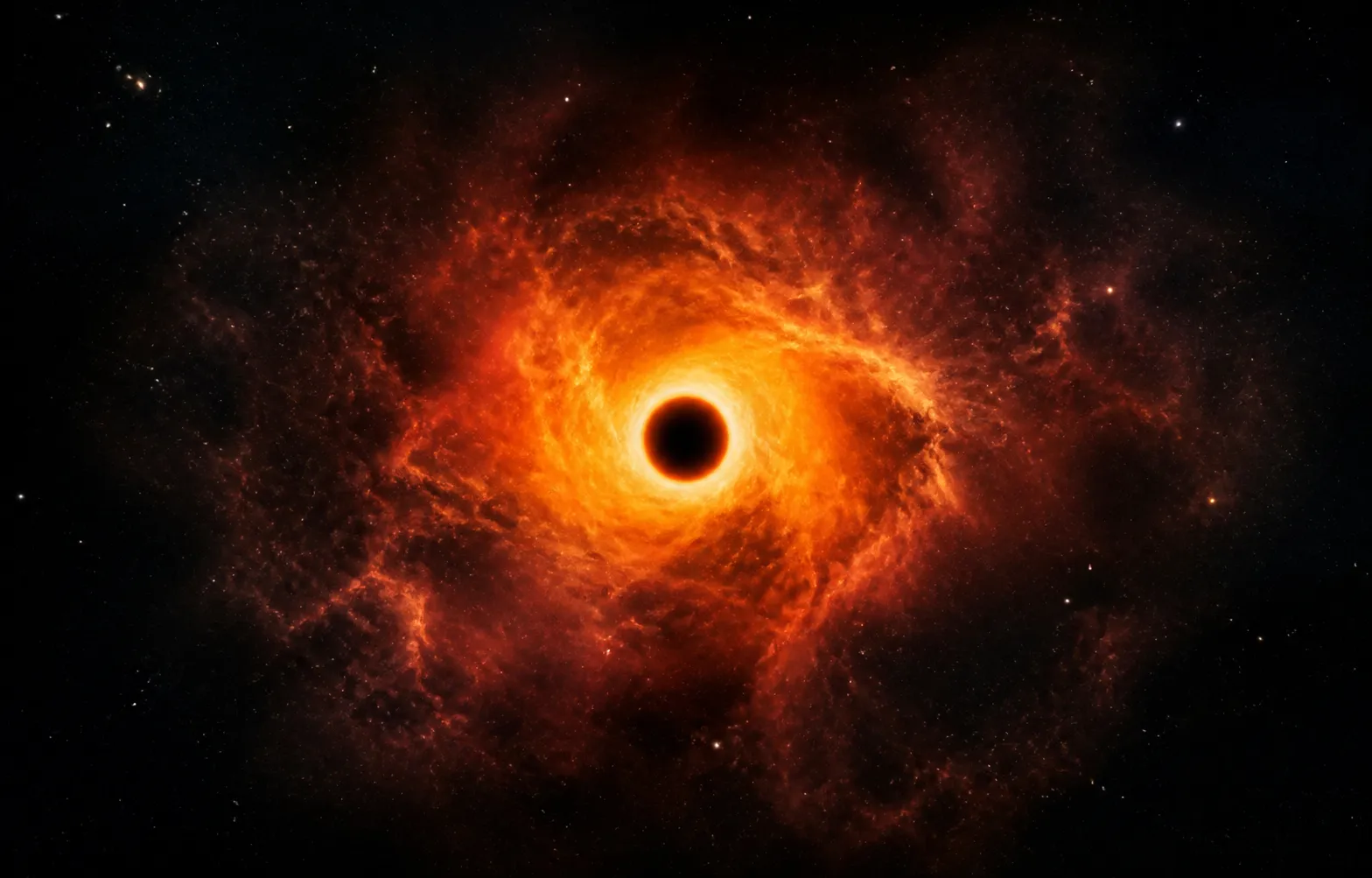
Using the James Webb Space Telescope, astronomers have discovered the most distant known “black hole star”—the object MoM-BH-1, which existed in the universe less than 660 million years after the Big Bang. According to Space.com, these observations may provide clues about the nature of the mysterious “little red dots” that the telescope detects in the early universe.
A “black hole star” is an object in which a black hole is surrounded by a large gas cloud. The gas hides the accretion—the fall of matter into the black hole—but the energy from this process causes the cloud to glow from within. The spectrum of such an object may resemble that of a cool red star, such as a red giant.
MoM-BH-1 was discovered as part of the Mirage or Miracle (MoM) observation program. The program focuses on objects that may turn out to be very distant galaxies with a redshift of approximately 10 or greater. Researchers consider MoM-BH-1 to be the most compelling example to date of a “naked” black hole star—an object that likely exists on its own rather than within a young galaxy.
For more breaking news, follow the UA.News Telegram channel.
MoM-BH-1 is located near a young galaxy with the same redshift. Scientists estimate that in about 100 million years, the object may collide with and merge into this galaxy. Simulations have shown that after such a merger, the galaxy’s spectrum would be similar to the spectra of known “little red dots.”
Researchers suggest that such objects, if they are hosted by similar galaxies, could be the central energy sources of early quasars. Observations of some “little red dots” at lower redshifts indicate that the gas envelope around the black hole is beginning to break down. This makes it possible to detect the black hole and the X-ray emission associated with accretion.




