
China's LandSpace Recovered a Stainless-Steel Booster After an Orbital Launch
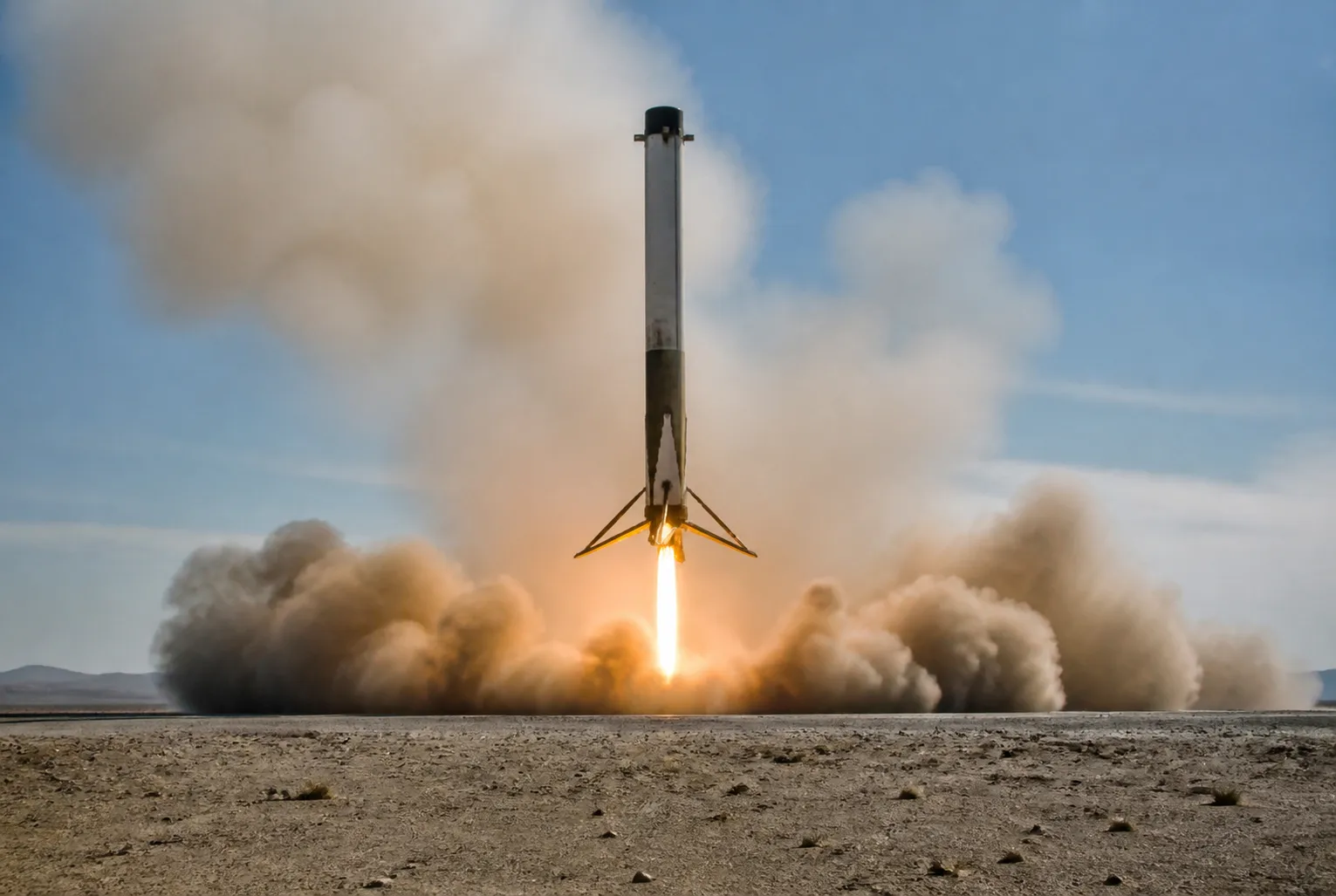
The Chinese commercial rocket company LandSpace successfully recovered the first stage of the Zhuque-3 rocket after placing a satellite into orbit. According to the South China Morning Post, the Zhuque-3 became China’s first commercial rocket to simultaneously reach orbit and recover its first stage. The publication also notes that this is the world’s first instance of a stainless-steel booster being recovered following an orbital launch.
The 66-meter-tall Zhuque-3, powered by liquid methane and oxygen, launched Wednesday morning from the Jiuquan Space Center in the Gobi Desert. According to the Chinese state news agency Xinhua, the rocket placed the Honghu-3 internet satellite into its intended orbit. Its first stage landed vertically at a landing site in Minqing County, Gansu Province—approximately 390 km southeast of the launch complex.
This was LandSpace’s second attempt to combine the Zhuque-3’s orbital flight with the return of the first stage. During the first launch in December, the second stage reached orbit, but the first stage exploded during the final stage of its controlled descent. Project manager Dai Zheng told CCTV at the time that the first-stage engine failed to reignite at an altitude of about 3 km, as required for landing.
For more breaking news, follow the UA.News Telegram channel.
Zhuque-3 became the second Chinese orbital rocket to demonstrate a first-stage return. The first was the state-owned Long March-10B: after its launch from Hainan Province in July, its first stage was captured by a large net on an offshore platform.
In a single-use configuration, the Long March-10B and Zhuque-3 are capable of delivering approximately 22 and 21 metric tons of payload to low Earth orbit, respectively. If the first stages are recovered, these figures are approximately 16 and 18 metric tons. Reusability of the rockets could be crucial for the deployment of China’s Guowang and Qianfan satellite networks, each of which plans to deploy more than 10,000 satellites for global broadband communications.
As noted by the SCMP, SpaceX’s Super Heavy booster is also made of stainless steel but is awaiting approval from the U.S. Federal Aviation Administration for Starship’s first flight with a booster return.


