
South Africa discusses protecting musicians’ authorship in the AI era — Daily Maverick
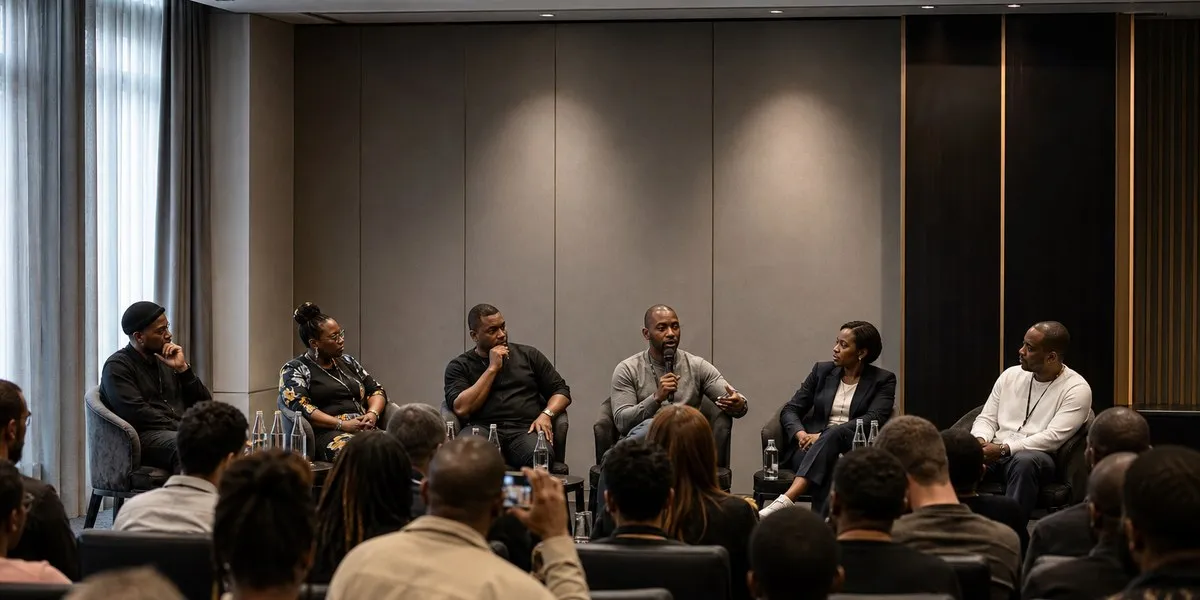
At the Creative Cnergy Policy and Investment Symposium in Sandton, South Africa, participants discussed how generative artificial intelligence is changing music creation and complicating issues of authorship, attribution and payments. As Daily Maverick reports, the discussion concerned whether people’s histories and contributions are being lost in works created with the help of AI.
Universal Music Group’s director of digital technology, Nick Berger, compared AI’s capabilities to the arrival of microwave ovens: they did not replace conventional cooking, but lowered the barrier to entry. He noted that a person without vocal or songwriting skills can sing into an AI tool and ask the system to reproduce a sound similar to Celine Dion’s voice.
Thousands of AI tracks every day
Intellectual property lawyer and Adams & Adams partner Stephen Hollis cited data from the French streaming platform Deezer. According to him, Deezer reported nearly 75,000 fully AI-generated tracks per day, accounting for about 44% of all uploads.
More current news is available on the UA.News Telegram channel Telegram.
Karabo Mayane, head of philosophy at Nelson Mandela University, said that printing and photography changed the distribution of creativity, while AI participates in the very creation of works. Social innovator Mbali Ndjomane also raised the issue of African users’ participation in the development of systems designed and trained predominantly in the West.
Attribution of human performances
Pfanani Lishivha, chief executive officer of the South African Music Performance Rights Association, gave a hypothetical example: one composition created by generative AI may consist of elements from up to 50 original songs. He described a possible combination of a guitar part from one recording, bass from another, a recognizable voice and drums by another performer.
According to Lishivha, the association is developing attribution technology to identify human performances in AI music and determine who should receive payments. Berger, for his part, named three conditions: consent, attribution and remuneration. Participants also mentioned the story of South African musician Solomon Linda, who recorded the song Mbube in 1939: it later evolved into Wimoweh and The Lion Sleeps Tonight, and Linda’s connection to its significant value was restored only after years of journalistic investigations and legal disputes.


