

"Our Strength Is Simplicity": Denis Galenko on Allpass.ai, AI, and the Future of KYC
14 August 2026 09:46Denis Galenko, a Ukrainian, began his career in finance, working in risk management and financial control, and later headed up the business controlling division—a function that helps businesses make strategic decisions based on P&L analysis, unit economics, and other financial metrics.
Later, Denis decided to create his own tech product. His first idea was a service designed to help Ukrainians save and invest more easily.
It was precisely the work on this fintech product that led the team to a completely different problem—remote customer identification. Banks were increasingly moving online, and during the COVID-19 pandemic, the need for fast digital onboarding only intensified. What started as supporting technology for their own app gradually became a separate business.
After the outbreak of full-scale war, the company effectively lost the Ukrainian market and was forced to refocus on international clients. Today, Allpass.ai works primarily with fintech, blockchain, and other regulated companies in Europe, the Middle East, and the U.S., and the team itself is spread across several countries.
UA.News spoke with Allpass.ai founder Denis Galenko about how an investment startup transformed into an international KYC/AML service, why the war forced the company to essentially start over, and whether digital KYC could one day completely replace the traditional passport.
From Corporate Finance to His Own Startup
Denis Galenko earned two degrees from Kyiv National Economic University—a master’s in international economic relations and a bachelor’s in law.
After college, he spent many years building his career at international corporations.
“I mostly started out in finance. It was risk management, financial control, and later I became the head of the business controlling division. Essentially, this is a function that helps businesses make strategic decisions based on P&L analysis, unit economics, and other financial metrics,” Galenko explained.
Eventually, he set his sights on building his own company. One of his first projects was an investment tool for Ukrainians.
At that time, the entrepreneur recalls, there were few opportunities for retail investors in Ukraine: most people either kept their money in bank deposits or simply kept their savings “under the mattress.”
But research into the potential audience led the team to a different conclusion.
“We realized that the real problem wasn’t that people lacked investment options. People didn’t have enough money to set aside. And the level of financial literacy back then was very low. Most of our respondents were saving whatever was left after all their expenses,” Galenko explained.
Because of this, we had to change the initial model.
Saver: A Startup Designed to Teach People How to Save Money
The next project was the Saver app. The idea behind it was to eliminate, as much as possible, the need to constantly make decisions about saving.
Users could set a short-term or long-term financial goal—for example, buying a smartphone, going on vacation, or saving for the future. The system was designed to automatically help users save money and select the appropriate financial instruments.
“We realized that people want to achieve their goals, not deal with the tools for achieving those goals,” explained Denis Galenko.
For short-term goals, this could involve automatically rounding up payments or setting aside a small portion of income. For long-term goals—deposits, ETFs, and other investment instruments.
By 2019, the team had already made significant progress in developing the product. However, to launch the financial service, it was easier to operate under an existing bank’s license rather than obtain one of their own.
It was precisely these negotiations with banks that ultimately changed the entire course of the company’s history.
How Bank Onboarding Led to KYC
When the team presented Saver to banks, one of the main questions was: exactly how would the new service identify users remotely?
The situation was further accelerated by COVID-19. Bank branches were closing, customers were increasingly moving online, and remote onboarding was no longer just a convenient option.
At that point, Saver already had its own basic KYC solution, which included facial and document scanning as well as automatic data matching.
“When the banks saw this, they said something like: ‘Let’s implement this solution for ourselves first, because we need it right now, and then we’ll figure out how to help Ukrainians save money,’” Galenko recalls.
So the team effectively shifted the focus of their work. According to the entrepreneur, they also encountered the conservatism of the traditional banking system at that time.
“If there’s even the slightest risk involved in implementing the technology or in the possibility that something might not meet the NBU’s requirements, banks are very cautious about taking any steps toward optimization,” said Denis Galenko.
The company implemented several projects in the Ukrainian financial market. But then a full-scale war broke out.
“We didn’t have a single client left in Ukraine.”
For the company, 2022 effectively meant having to start the business from scratch.
“When the war began, the market practically didn’t exist. We didn’t have a single client left in Ukraine,” Galenko said.
By that point, the startup had already secured grant funding from the Ukrainian Startup Fund and raised its first pre-seed round.
“We raised our first pre-seed round of about 100,000 euros. And then we found ourselves with virtually no clients,” said Denis Galenko.
Negotiations for further investments became significantly more difficult amid the war—investors saw enormous risks. It was then that the team decided to reposition the product.
The primary target audience was to be small regulated companies that need to comply with KYC and AML requirements but lack the budget, staff, and resources of large banks.
“We identified a problem faced by small regulated companies: they enter the market with little understanding of how KYC and AML work and lack the resources that banks have to get the entire process up and running,” explained Galenko.
The team managed to convince investors and raise an additional 250,000.
After that, the development of a full-fledged B2B SaaS platform began, allowing companies to manage compliance processes related to Know Your Customer (KYC), Anti-Money Laundering (AML), and Know Your Transaction (KYT).
The team also participated in a Mastercard program, which, according to Galenko, helped refine the product’s development direction. At the same time, the company underwent a rebranding and eventually became Allpass.ai.
From Two People to an International Distributed Team

Allpass.ai started with just two people.
“We started out as a duo—me and my co-founder, Viktor Plotnikov. My area of focus was fundraising, business development, sales, and finance. My co-founder handled product and development,” said Denis Galenko.
As funding increased, the team grew. At various times, it consisted of about 15 people, but the structure was constantly changing.
Before the full-scale war, the team worked primarily at UNIT.City in Kyiv. Now it is completely dispersed.
“Currently, the team is spread across several European countries: Ukraine, Poland, England, and Spain. Before that, we were mostly based at UNIT.City in Kyiv,” said Denis Galenko.
What Allpass.ai Actually Offers
Galenko emphasizes that KYC, AML, document scanning, facial recognition, and other tools should not be viewed as dozens of independent products. Allpass.ai is a single platform within which a client can assemble the process they need.
For example, facial recognition can be used solely to verify a user’s identity. If you add passport and identity verification, it becomes part of the KYC process.
“Everyone customizes it to suit their needs, but for the most part, our solution is used for the full KYC and AML process,” Galenko explained.
The platform allows users to verify documents and biometric data, match faces, confirm addresses, analyze IP addresses, VPNs, phone numbers, and email addresses, and conduct AML checks.
The key principle is to bring everything together in a single tool.
“You don’t have to connect different systems yourself, test how they work, and try to get them to work together. You already have everything in a single SaaS solution where, without any code, you can quickly select checks, automate processes, and customize everything to match your brand—and it really only takes a few minutes,” said Denis Galenko.
Who Uses Allpass.ai Today
The company’s main clients are currently fintech and blockchain businesses.
A particularly large number of clients operate in the cryptocurrency sector—these include wallets, exchanges, currency converters, and other companies operating under regulatory licenses.
“Historically, we’ve focused more on blockchain and fintech, which is why we have more blockchain clients,” said Galenko.
The company is also beginning to enter the iGaming market. According to the founder of Allpass.ai, this segment in particular has the potential to generate a very large volume of KYC checks.
“Market practice shows that iGaming clients can generate the largest volume because, according to their licenses, they are required to verify a very large number of users. But that’s not the case for us yet—we’re only gradually entering this segment,” explained Denis Galenko.
The company’s geographic reach is already almost entirely international.
“Right now, we probably don’t have any clients left in Ukraine. For the most part, it’s Europe, the Middle East, and a few clients in the U.S.,” said Galenko.
Among the publicly known partners and clients, he mentioned WhiteBIT and Piraeus.
“Among large organizations, we can name WhiteBIT and Piraeus. The rest of our clients are mostly niche players—specifically in the blockchain segment—so their names probably won’t mean much to the general public,” said Denis Galenko.
Proprietary Technology or Third-Party APIs
Allpass.ai uses a hybrid model. Part of the system is developed entirely in-house. The other part relies on external data and technology providers.
For example, it doesn’t make sense to build a global database of sanctions, PEPs, negative media, and other risk categories from scratch—there are already specialized providers of such data on the market.
“We work with a number of large organizations that provide us with these lists. We aggregate them and make them available to our users,” Galenko explained.
A similar approach is used for part of the transaction screening process. At the same time, the team developed the workflows, the logic for handling checks, data visualization, the front end, and the user experience entirely on its own.
“Everything related to the verification logic, workflow design, data visualization, user interaction, and the front end—which is seen by both business users and end users—is our own development. And that was probably the biggest chunk of work,” said Denis Galenko.
According to him, Allpass.ai essentially operates as a B2B2C model: the product is purchased by a business, but the actual process is carried out by that business’s customers.
AI has empowered both fraudsters and those who fight them
The emergence of mass-market generative AI has significantly transformed the digital identification industry. On the one hand, artificial intelligence helps KYC companies detect forgeries. On the other hand, it has made the tools of fraud much more accessible.
“AI is used for both malicious and beneficial purposes. Some try to use it to hack into systems, while others use it to prevent fraud. That’s exactly what we’re doing,” Galenko explained.
One of the biggest challenges has been deepfakes and the generation of forged documents.
“Whereas before you had to buy special software, search for tools on the dark web, and learn how to use them, now even a basic subscription to an LLM can help you create a fake passport,” said Denis Galenko.
In his opinion, there is no such thing as a completely unbreakable system.
“There’s no lock that can’t be picked. Throughout human history, there have been those who picked locks and those who then invented more complex locks,” Galenko noted.
That is precisely why KYC is designed as a series of sequential checks. If a fraudster bypasses one level, the system can record their behavior and use that information at the next stage.
“We’ve arrived at a model where one lock follows another. If you’ve broken the first one, we can already identify a certain pattern of behavior. And at the second level, we’ll likely see it,” explained Denis Galenko.
But it’s also impossible to make onboarding infinitely complicated.
“There’s always a fine line between making the process difficult to hack and, at the same time, easy to convert. No one wants to be vulnerable, but at the same time, everyone wants to onboard users very quickly,” said Galenko.
How Much Does KYC Cost, and What Does the Client Pay For?
The cost of a single verification consists of several components: server infrastructure, AI technologies, third-party APIs, and databases.
“The cost is determined by server capacity, AI, and third-party technologies. If we integrate external technology, there’s a cost associated with its use. A margin is added to that, and everything is sold as a single product,” explained Denis Galenko.
The basic Allpass.ai package costs $149 per month. However, according to the founder, features are not unlocked gradually based on a higher-priced plan.
“For $149, we immediately unlock all the services needed to meet compliance requirements. We don’t say, ‘If you want another complex check, pay extra,’” said Galenko.
Beyond that, the price depends on volume. The more users a business verifies, the more cost-effective each individual verification becomes.
“When a business starts to grow, its number of users increases, and, accordingly, it wants to reduce verification costs. Then we select a package that allows us to optimize the price per user as much as possible,” explained Denis Galenko.
Most new customers start with the smallest package.
“Everyone wants to check it out and give it a try. Of course, not everyone ends up growing their business: for some, the business model just didn’t work out. We bear some of the risk here because we handle onboarding, provide explanations, and guide the client every step of the way, but their own business might not succeed,” said Galenko.
The main competitive advantage is simplicity
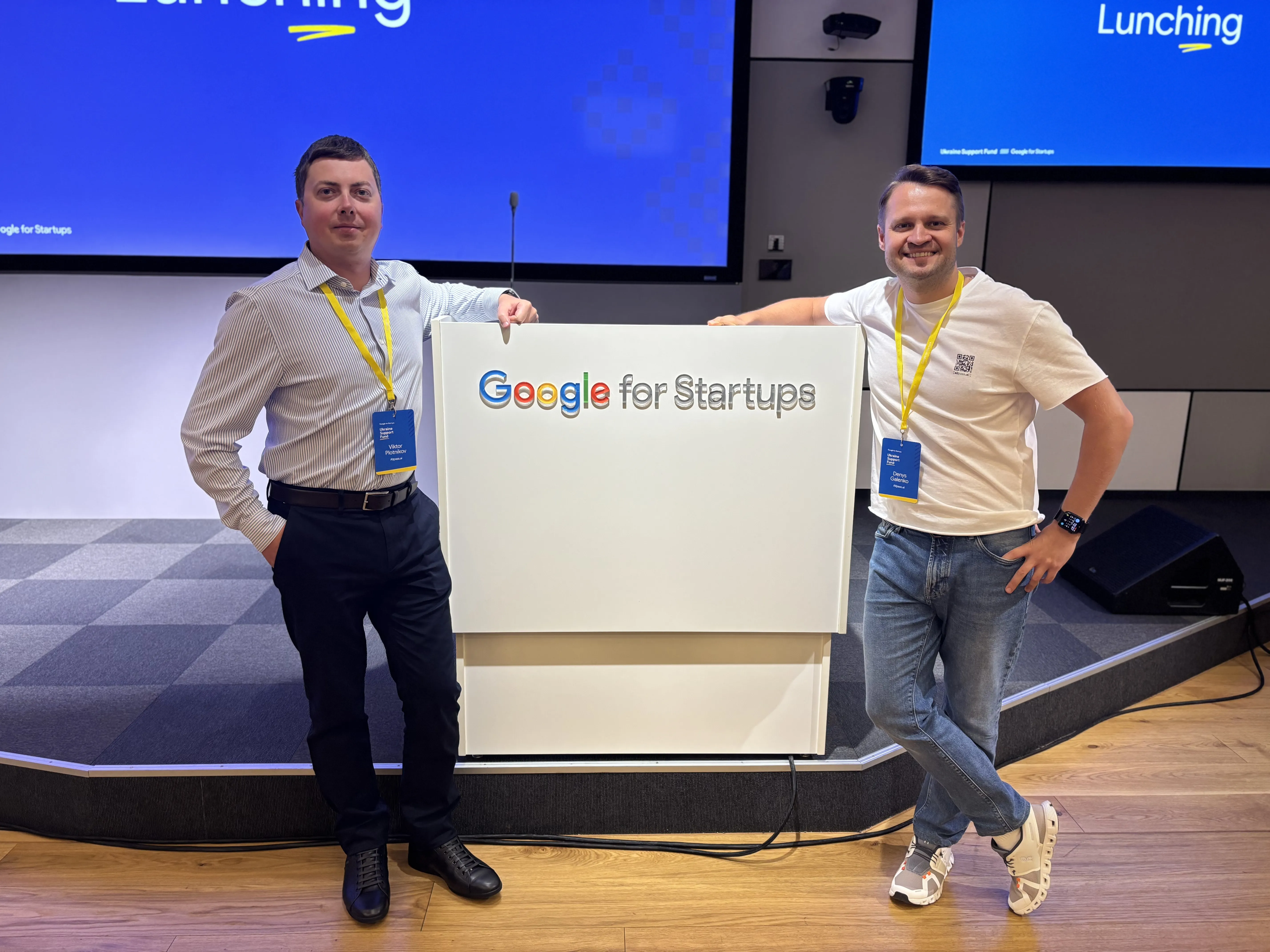
Galenko describes Allpass.ai’s main advantage as simply as possible.
“We want to be the simplest automated KYC and AML tool on the market. Regulated businesses can meet KYC requirements using our solution virtually from day one,” said Denis Galenko.
In his view, the main competition lies not only in the number of technologies, but also in how quickly and easily businesses can use them.
“Our competitive advantage is simplicity,” Galenko emphasized.
Who Is Responsible If the System Lets a Fraudster Through?
Even automated KYC does not mean that the final decision must always be made by a machine.
According to Galenko, different companies have different tolerance levels for risk, and regulators often require that a human review the final decision.
“After the system has processed the data, it must still be reviewed by an AML officer, a KYC officer, or another responsible person on the client’s side to approve the client. This is the basic model,” explained Denis Galenko.
Technically, a client can enable auto-approval, whereby a user is automatically approved if the system finds no issues.
But in that case, the business consciously assumes additional risk.
“We warn that the system will perform checks, but the client is responsible for the final decision. An officer must be involved in the process,” said Galenko.
Passport, Face, and Address: Where the Data Is Stored
KYC companies work with extremely sensitive information: passports, facial photos, addresses, and contact details.
According to Galenko, under the GDPR, Allpass.ai acts as a data processor.
“We process the data that end users provide to our clients and deliver the results to them. We do not use or sell this data in any way, nor do we intend to do so. All information provided by end users belongs to the data controller—that is, our clients,” said Denis Galenko.
The company uses Google Cloud for its technical infrastructure.
“In terms of data storage and processing, this takes place on Google Cloud. We don’t use any obscure solutions. Google Cloud, Amazon, and Microsoft Azure are among the leaders in cloud infrastructure and security today,” explained Galenko.
What Allpass.ai Aims to Become
Galenko does not define the company’s goal in terms of a specific number of verifications or clients.
The ambition is much broader—to make the Allpass.ai brand one of the first that small regulated companies think of when they need KYC and AML solutions.
“Our goal is to make Allpass.ai one of the first services that comes to mind when it comes to KYC and AML for small regulated companies. We want businesses to simply enter the market, and for our solution to already be among the obvious options for launch,” said Denis Galenko.
He acknowledges that achieving this will be challenging.
“This is a very ambitious goal because the KYC and AML market is highly competitive and has many strong players,” Galenko noted.
One KYC for life—convenient, but risky
Technologically, the next big step for the industry could be a reusable digital identity: a person verifies their passport, face, and identity once, and then uses this digital record at banks, crypto exchanges, and other services.
Galenko acknowledges that this model is convenient. But he also sees a serious risk in it.
“People don’t like having to go through KYC repeatedly. On the one hand, reusable KYC sounds great. But on the other hand, there’s a risk of losing control over personal data,” explained Denis Galenko.
If all data is stored in a single centralized location, one company or system gains too much power.
“Your personal data can be transferred, processed, stored, and analyzed without your knowledge. That’s why these things definitely need to be handled in a decentralized manner,” said Galenko.
In his opinion, no single company should have sole possession of a person’s complete digital identity.
“It shouldn’t be the case that all this data is held by just one entity. That’s too much responsibility and too many risks: data leaks, loss of control over the data. And if you’re blocked for some reason, you’ll immediately find yourself blocked everywhere,” said Denis Galenko.
Could Allpass.ai be sold one day?
Galenko makes no secret of the fact that the company does not rule out M&A in the future.
“If you look at the company’s ultimate path, it will either be acquired, grow independently, and one day go public, or, of course, shut down,” said Denis Galenko.
He does not yet consider an IPO a realistic scenario for Allpass.ai at its current scale. However, a strategic merger with a larger player is certainly a possibility.
“Of the three scenarios, we’re interested in two—growth and partnership. I don’t see the scale for an IPO yet, but we’re not ruling out a sale or a merger. If one plus one equals three in the end—that’s great,” concluded Denis Galenko.


