

OpenAI Could Spend More Than $280 Billion by 2030: Where Is All That Money Going?
22 September 2026 15:40Just a few years ago, OpenAI had to convince the world that ChatGPT was more than just a technological gimmick. Today, the situation has changed dramatically: the service is used by over a billion people per week, the company’s revenue is growing rapidly, but its expenses are rising even faster.
According to the Financial Times, between 2026 and 2030, OpenAI will need nearly $280 billion in additional funding to bridge the gap between its revenue and its massive development costs. At the same time, OpenAI is generating more and more revenue. The company expects its revenue to grow from approximately $36 billion in 2026 to $350 billion in 2030. In total, revenue over this period could reach about $840 billion.
However, the computing power and infrastructure required to run and develop the models alone could cost about $856 billion. As a result, OpenAI finds itself in an unusual situation: the more popular ChatGPT becomes and the more money it generates, the more the company has to spend to sustain that growth.
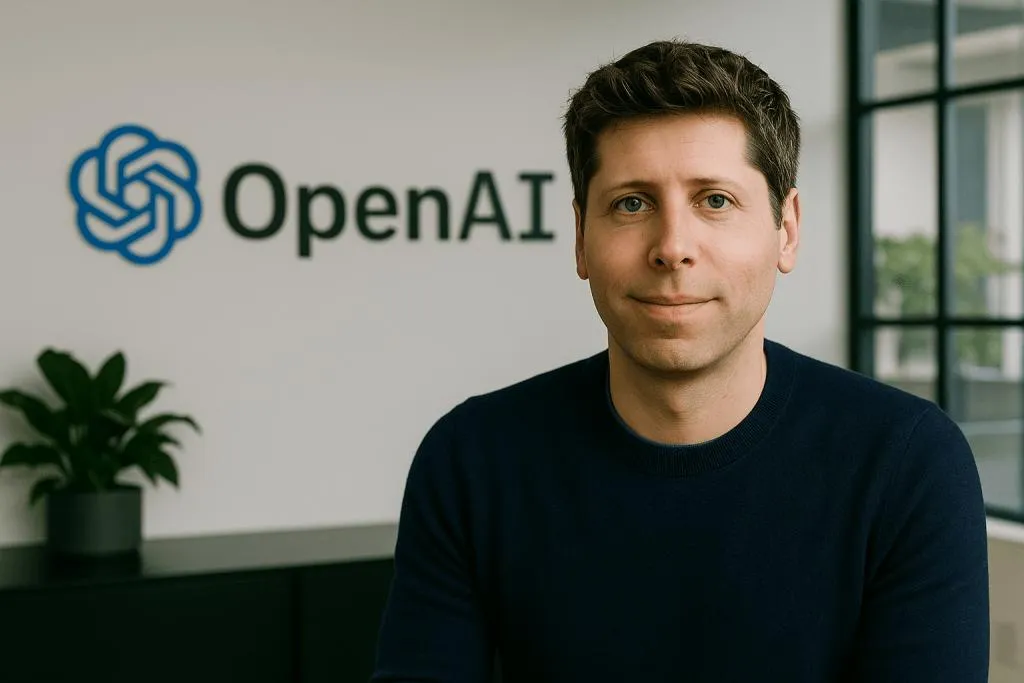
UA News explains why artificial intelligence has turned out to be such an expensive business, where OpenAI is spending hundreds of billions of dollars, and what Sam Altman is counting on as he makes one of the biggest bets in the modern tech industry.
ChatGPT is already generating billions, but it’s still not enough
The main reason for OpenAI’s massive expenses is quite simple: artificial intelligence isn’t just expensive to build—it’s also expensive to use on a daily basis. Once launched, a typical website or app can serve millions more users with a relatively small increase in costs.
With ChatGPT, things work a little differently. Every time a person sends a request, it must be processed by powerful servers equipped with expensive graphics processing units (GPUs). If a user asks the model to write a single sentence, it requires very few computations. But if ChatGPT analyzes a large document, generates program code, or “thinks” about a complex question for several minutes, the load increases dramatically.
And a huge number of such requests come in every day. According to OpenAI itself, ChatGPT already has over 1 billion active users per week. For comparison, as recently as 2025, that figure was only approaching 700 million.
And the company is actively seeking new ways to monetize this audience. OpenAI already generates revenue from paid ChatGPT subscriptions, enterprise plans, developer access to the API, and other services.
In 2026, advertising was added to the mix. In late August, OpenAI reported that in less than 200 days after its launch, ChatGPT Ads had reached an annual revenue run rate of approximately $1 billion. At first glance, this seems like a huge amount of money. But for OpenAI, a billion dollars is no longer such a large sum when compared to its future expenses.
The company needs more than just servers. It needs entire data center complexes, new power grids, cooling systems, hundreds of thousands of processors, and a massive amount of electricity. And the more popular ChatGPT becomes, the more of all this it will need.
Behind ChatGPT’s simple interface lie data centers worth hundreds of billions of dollars
To the user, ChatGPT looks as simple as possible. You open the website or app, type a query—and within a few seconds, you get a response. But the physical infrastructure behind that simple interface is less like a typical IT company and more like a massive industrial project.
Back in January 2025, OpenAI, together with SoftBank, Oracle, and other partners, announced the launch of Stargate. The stated goal of the project is to invest up to $500 billion in the development of artificial intelligence infrastructure in the U.S. over four years. The partners planned to start using the first $100 billion immediately.
In essence, this involves building an entire network of large data centers. In September 2025, OpenAI reported that, together with Oracle and SoftBank, it was already planning facilities with nearly 7 gigawatts of computing power. The company estimated the total investment in these facilities at more than $400 billion over three years. OpenAI explicitly stated that this would allow it to move closer to Stargate’s initial goal of $500 billion.
Later, the scale grew even larger. After adding a new project in Michigan, OpenAI announced that Stargate’s planned capacity had exceeded 8 gigawatts, and the investment total had reached $450 billion. One gigawatt alone is already a massive figure. For comparison, such capacity is typical of a large power plant.
And OpenAI needs several such gigawatts just for its data centers. In January 2026, the company, together with SoftBank, took another step forward. The partners announced a $1 billion investment in SB Energy, and OpenAI signed an agreement to use a 1.2-gigawatt data center.
That’s why the story of OpenAI today is no longer just about programmers, neural networks, and new versions of ChatGPT. It’s a story about land, power plants, cables, transformers, cooling systems, construction, and a huge number of Nvidia processors.
Why Can’t We Just Stop Building Data Centers?
A logical question might arise: if all of this is so expensive, why doesn’t OpenAI just slow down and wait until its revenue catches up with its expenses? The problem is that in the race for artificial intelligence, it’s not that easy to do so. You can’t build a large data center in a few months just because you suddenly need one.
First, you need to find land, secure a sufficient power supply, build the facility itself, install the equipment, and connect thousands or hundreds of thousands of processors. This can take years.
That’s why OpenAI is essentially forced to build infrastructure today for ChatGPT, which people will start using in a few years. The company is betting that demand will continue to grow very rapidly. If it doesn’t secure future capacity now, it may find itself in two or three years with plenty of customers but simply not enough servers to serve them.
But there’s an obvious risk in this model. OpenAI is spending enormous amounts of money today on a future that hasn’t arrived yet. The company estimates that in four years, it will be earning approximately $350 billion a year and that people and businesses will be using AI much more actively than they do now.

If this forecast comes true, today’s data centers could turn out to be a very profitable investment. If not—the company and its partners will be left with a huge amount of expensive equipment and debt. And there are already early signs that investors are beginning to take a closer look at this risk.
Who Is Actually Funding OpenAI
OpenAI cannot finance all these hundreds of billions of dollars solely through its own revenue. Therefore, the company is constantly attracting new investors, striking deals with major technology partners, and effectively building an entire financial ecosystem around itself.
According to the Financial Times, in March 2026, OpenAI raised approximately $122 billion in new capital. At that time, the company was valued at roughly $852 billion. This is one of the largest investments in the history of the private tech sector.
However, even that amount may not be enough. The FT estimates that at the current rate of spending, OpenAI’s funds may last only until around 2028. Therefore, the company is already thinking about the next rounds of funding, which could potentially raise its valuation above $1.2 trillion.
Japan’s SoftBank remains one of OpenAI’s key investors. And its example clearly illustrates the scale of the current race. On September 21, Reuters reported that SoftBank plans to raise about $11 billion through a bond sale.
A significant portion of this money is needed for a new investment in OpenAI. In other words, one of the largest investors is essentially borrowing billions itself in order to then invest them in a company that will spend these funds on servers, data centers, and computing power.
The situation is similar with Oracle. The company is actively building infrastructure for the AI market and taking on large debt obligations. For example, Reuters reported on approximately $18 billion in loans related to Oracle’s large data center in New Mexico, which is being built to support infrastructure linked to OpenAI.
Investors have already begun to scrutinize such debt more closely. The logic is simple: if OpenAI continues to grow rapidly, the data centers will be fully utilized, and all these investments will generate revenue. But if the pace of the AI boom slows down, problems could arise not only for OpenAI itself.
Its partners, banks, data center owners, energy companies, and equipment manufacturers could all be affected. As a result, OpenAI is gradually becoming so large that its financial problems could impact not just one company, but a significant portion of the entire tech sector.
For this to pay off, ChatGPT needs to become much more than just a chatbot
Nearly $280 billion in potential negative cash flow sounds like an unbelievable figure. But OpenAI is taking this risk not just so that people can ask ChatGPT questions or have it rewrite an email.
The company’s stakes are much higher. OpenAI expects that artificial intelligence will gradually become part of virtually all digital work. The model will have to do more than just answer questions.
It will be able to work independently with documents, create programs, search for information, analyze data, manage advertising campaigns, assist companies with sales, and perform tasks that currently require hours of human labor.
This is where a potentially massive market emerges. If a business is willing to pay an employee thousands of dollars a month for a specific job, then an AI service that can perform at least part of that work for hundreds of dollars already looks very different from a standard $20 ChatGPT subscription.

And OpenAI is, in fact, building its infrastructure with this scenario in mind. The problem is that no one knows yet how quickly it will become a reality. Competition hasn’t gone anywhere either.
Google is developing Gemini, Anthropic is working on Claude, Meta is betting on its own models, and Chinese companies are increasingly offering significantly cheaper solutions. Because of this, OpenAI can’t simply keep raising prices.
On the contrary, it has to simultaneously invest hundreds of billions in new infrastructure, improve its models, and ensure that competitors don’t offer users something cheaper.
That’s why the current situation seems paradoxical. OpenAI already has over a billion weekly users, its annual revenue is in the tens of billions of dollars, and investors are willing to value the company at nearly a trillion.
But that’s still not enough. For the current investment to pay off, OpenAI needs to become more than just a successful tech company. It needs to become one of the world’s largest businesses.
And the key question for OpenAI now is not whether people need artificial intelligence. The company has already received the answer to that question. Now it needs to prove that it can generate enough revenue from it to pay for all the infrastructure currently being built for it.




