
April 24, 2026: Holidays, Name Days, and Traditions
April 24 marks several international observances, including International Youth Solidarity Day, Laboratory Animal Welfare Day, Meningitis Awareness Day, Multilateralism and Diplomacy for Peace Day, and Anti-Vivisection Day.
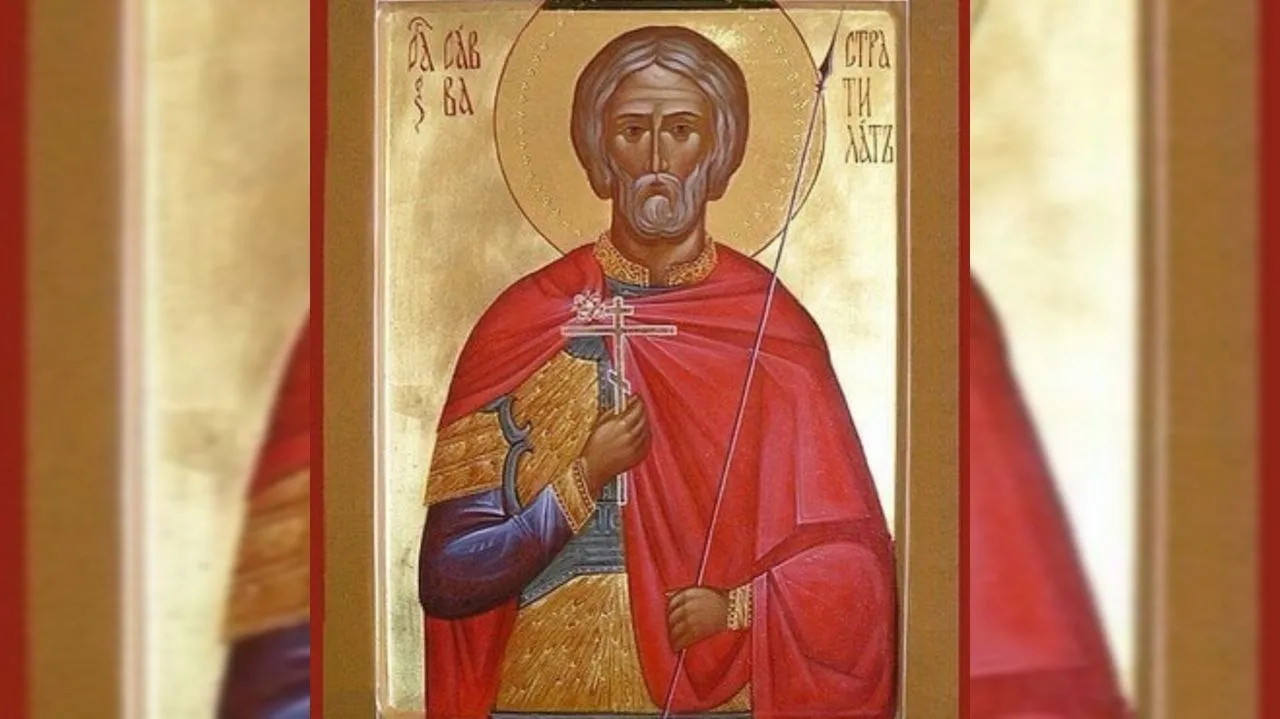
In the church calendar, this day honors the martyr Sava Stratilates.
International Youth Solidarity Day: established in 1957 by a decision of the World Federation of Democratic Youth to draw the attention of government bodies, society, and the media to the problems facing young people.
World Day for the Protection of Laboratory Animals: This day marks the birthday of Lord Hugh Dowding, a British activist who opposed the use of animals in scientific research. The main goal of the holiday is to draw attention to the issue of animal exploitation in laboratories and the need to find alternative research methods.
International Meningitis Day: Meningitis is a disease that affects the spinal cord and brain, capable of causing severe consequences, disability, and sometimes even death. About 90% of meningitis cases are associated with infections caused by viruses or bacteria. The most common pathogens are enteroviruses (viral meningitis) and pneumococci and meningococci (bacterial meningitis). These microorganisms spread through saliva and microdroplets released during conversation, sneezing, or coughing.
International Day of Multilateralism and Diplomacy for Peace: Multilateralism is a form of organizing international relations in which each country can benefit from cooperation with all other partners. This principle is particularly important when peace is threatened: a multilateral approach allows states to mount a collective response to aggression. The principle of collective security is based precisely on this approach: if one country is attacked, the others commit to defending it. Multilateralism is key to conflict prevention and peaceful conflict resolution.
International Day Against Vivisection: Vivisection is the practice of performing surgical operations on live animals for the purpose of studying bodily functions. This day aims to raise awareness worldwide about issues related to cruel experiments on animals. It also serves as a reminder that breeding and transporting animals for such purposes is unacceptable.
Today, various countries around the world are observing:
- Armenia – Day of Remembrance for the Victims of the Armenian Genocide
- France – Day of Remembrance for the Victims of the Armenian Genocide
- Gambia – Republic Day
- Niger – National Reconciliation Day
- Nepal – Democracy Day
- Zambia – Children’s Day
On this day in history:
- 1479 BCE — Thutmose III ascended the throne of Egypt, although actual power was increasingly shifting into the hands of Hatshepsut.
- 1184 BC — According to the chronologies of Eratosthenes and Apollodorus of Athens, on this day Greek warriors managed to infiltrate Troy using the Trojan Horse.
- 1333 — Coronation of Casimir III the Great and his wife Aldona at Wawel Cathedral in Kraków.
- 1521 — Juan de Padilla, leader of the Spanish aristocracy’s rebellion against Emperor Charles V, was executed in Spain.
- 1547 — In the decisive battle of the Schmalkaldic War near Mühlberg, papal forces led by Charles V of Habsburg defeated the armies of the Schmalkaldic League of Protestants and captured their leader, John Frederick I, Elector of Saxony.
- 1558 — Mary I, Queen of Scotland, married the Dauphin of France, François; the solemn ceremony took place at Notre Dame de Paris.
- 1585 — Cardinal Felice Peretti di Montalto was elected Pope Sixtus V.
- 1617 — On the Louvre Bridge, by order of King Louis XIII, the de facto ruler of France, Marquis de Concini, was assassinated.
- 1646 — The Uzhhorod Church Union was concluded.
- 1648 — Four regimental Cossack regiments defected to Bohdan Khmelnytsky.
- 1671 — Stepan Razin, leader of the Don Cossack rebellion, was captured in Kagalnik.
- 1682 — (April 14, Old Style) In the Pustozersk prison (now Arkhangelsk Oblast), Archpriest Avvakum and other Old Believer leaders were burned at the stake in an earthen hut. Avvakum had protested against Nikon’s church reforms. The famous adherent of “ancient piety” wrote his own hagiography—a brilliant work that describes life in Russia at that time.
- 1704 — The Boston News-Letter, the first regular newspaper of the U.S. colonial period, began publication in Boston.
- 1723 — The Bernese authorities executed Swiss national hero and separatist leader Jean Davel.
- 1771 — The coast of the Japanese island of Ishigaki was struck by an 85-meter-high tsunami.
- 1793 — Catherine II issued a decree establishing an Orthodox diocese in Right-Bank Ukraine.
- 1794 — Tadeusz Kościuszko’s troops defeated Russian forces at the Battle of Raclavice.
- 1800 — The U.S. Library of Congress was founded by President John Adams, who allocated $5,000 for the purchase of books.
- 1833 — Sparkling water was patented in the United States.
- 1846 — The Mexican-American War began.
- 1867 — The Turkestan General-Governorship was established. General K. P. Kaufman was appointed governor.
- 1872 — Following the eruption of Mount Vesuvius, lava flows destroyed two villages, killing about 25 people.
- 1877 — Russia declared war on the Ottoman Empire.
- 1884 — Namibia was declared a German colony.
- 1884 — Greenwich was designated as the location of the Prime Meridian.
- 1891 — Italy abolished party-list elections.
- 1895 — Joshua Slocum began the world’s first solo circumnavigation of the globe.
- 1897 — In Rome, the unemployed Pietro Accardo attempted to stab King Umberto I of Italy with a dagger.
- 1898 — Spain declared war on the United States, rejecting an ultimatum to withdraw its troops from Cuba.
- 1900 — Sigmund Freud’s seminal work, *The Interpretation of Dreams*, was published.
- 1909 — For the first time, a cinematographer took a flight in an airplane. This took place in Sant’Ocello, near Rome. Wilbur Wright took him on board his biplane as a passenger.
- 1915 — The Ottoman authorities began mass arrests and deportations of the Armenian intelligentsia in Constantinople. This day would later become a day of remembrance for the victims of the Armenian Genocide.
- 1916 — The start of the Irish “Easter Rising” against British rule.
- 1918 — The American Expeditionary Force landed in Murmansk.
- 1918 — At a secret meeting with the German army command, General Pavlo Skoropadskyi agreed on German support for the overthrow of the Central Rada.
- 1918 — The Crimean Group of the UNR Army captured Simferopol in battle.
- 1919 — The Soviet government was overthrown in Lithuania.
- 1919 — The Art Gallery of Toronto was established.
- 1920 — The governments of Poland and the UNR signed an agreement on military aid.
- 1921 — German Foreign Minister Walter Rathenau was assassinated by terrorists.
- 1926 — The Soviet-German Treaty of Friendship and Neutrality was signed.
- 1927 — The first international exhibition of models of interplanetary spacecraft, mechanisms, instruments, and historical materials opened in Moscow (it lasted for two months).
- 1940 — Great Britain begins the evacuation of its troops from Greece. Over the course of six days, more than 50,000 military personnel left the country, while weapons, equipment, and aircraft were abandoned.
- 1946 — The first flights of the MiG-9 (test pilot A. N. Grinchik) and Yak-15 (M. I. Ivanov) jet aircraft.
- 1949 — The Taras Shevchenko Literary and Art Museum was officially opened in Kyiv.
- 1949 — Restrictions on the sale of candy, which had been introduced during the war, were lifted in England.
- 1950 — Transjordan was renamed the Hashemite Kingdom of Jordan.
- 1952 — Oil from the province of Alberta (Canada) arrived via pipeline in Ontario for the first time.
- 1953 — Queen Elizabeth II of England knighted Winston Churchill.
- 1954 — A court in Bratislava sentenced Gustav Husák, former head of the Slovak Communist Party (and future head of Communist Czechoslovakia), to life imprisonment.
- 1955 — The Bandung Conference of 29 “non-aligned” states, which condemned colonialism, racism, and the Cold War between the U.S. and the USSR, concluded.
- 1955 — Iraq and Turkey signed an agreement on cooperation in the field of security and defense (the so-called “Baghdad Pact”). That same year, the United Kingdom, Iran, and Pakistan joined the pact.
- 1957 — At a State Council meeting in the PRC, Mao Zedong stated: “There is no need to read many books.”
- 1962 — The first trans-Pacific television broadcast from the Pacific coast to the Atlantic coast took place in the U.S. — a television signal from California was transmitted via the first experimental television satellite, “Eco-1,” and received in Massachusetts.
- 1964 — In South Vietnam, guerrillas nearly shot down a plane carrying U.S. General William Westmoreland, wounding six people on board.
- 1965 — Armenia observed the Day of Remembrance for the Victims of the Armenian Genocide in the Ottoman Empire (1915–1923) for the first time.
- 1965 — U.S. troops intervened in the Dominican Republic.
- 1967 — In Greece, the “Black Colonels” junta banned the wearing of miniskirts.
- 1967 — Vladimir Komarov died during the return of the Soyuz-1 spacecraft to Earth. Authorities concealed this fact for 13 hours.
- 1968 — Mauritius became a member of the UN.
- 1970 — The PRC launched its first artificial Earth satellite, “Dong Fang Hong 1.”
- 1970 — The Gambia, which gained independence from Great Britain in 1965, was proclaimed a republic.
- 1974 — Guillaume, the personal aide to West German Chancellor Willy Brandt, was arrested after it was revealed he was an officer in the East German Ministry for State Security. Two weeks later, Brandt voluntarily resigned.
- 1975 — The British government decided to purchase a controlling stake in the automobile company “British Leyland Motors.”
- 1975 — The Baader-Meinhof terrorist group carried out a bombing at the West German embassy in Stockholm.
- 1981 — IBM unveiled its first personal computer.
- 1981 — The U.S. lifted the embargo on grain exports to the USSR.
- 1983 — Following the election results, the Socialist Party of Austria (SPA) lost its absolute majority in parliament, forcing Socialist Federal Chancellor Bruno Kreisky to resign. His successor, Fred Zinowatz, formed a coalition government between the SPÖ and the national-liberal Freedom Party of Austria.
- 1984 — In San Francisco, Apple announced its Apple II portable computer, weighing 6 kilograms and the size of a suitcase.
- 1985 — The Supreme Court of Canada ruled that Sunday shopping was legal.
- 1986 — The Philippine ferry “Dona Josefa” sank, killing 194 people.
- 1987 — In the Persian Gulf, the U.S. Navy used dolphins for military purposes for the first time in the world.
- 1990 — The Hubble Space Telescope was launched into Earth’s orbit.
- 1992 — The Federal Republic of Yugoslavia (Serbia and Montenegro) was established.
- 1993 — IRA militants carried out a bombing in the Bishopsgate area (London), causing significant damage.
- 1996 — The Palestinian National Council voted to remove from the Palestine Liberation Organization’s (PLO) charter provisions calling for armed struggle against Israel until its complete destruction as a state.
- 1997 — The United States became the 75th country to ratify the international treaty banning chemical weapons, signed in 1993 by 164 countries; it required signatories to destroy all existing stockpiles of such weapons and industrial facilities for their production by 2007.
- 1997 — The lower house of the Japanese parliament voted to allow heart transplants to be performed in the country.
- 1998 — NATO issued an ultimatum to Yugoslavia demanding the withdrawal of troops from Kosovo.
- 1999 — At a meeting in Washington, the NATO Council adopted a new strategic concept allowing the use of the alliance’s armed forces to prevent human rights violations anywhere in Europe.
- 2000 — Off Cape Tarkhankut, an anti-ship cruise missile launched from a Russian coastal installation struck the Ukrainian motor ship “Pavlo Vereshchagin,” which had entered the Black Sea Fleet’s live-fire exercise zone.
- 2000 — A technical malfunction occurred at a nuclear reactor in Japan.
- 2004 — The U.S. lifted economic sanctions imposed on Libya 18 years earlier. This was a form of reward for the Libyan leadership’s decision to abandon the development of weapons of mass destruction.
- 2004 — Vitali Klitschko defeated Corrie Sanders to win the vacant WBC super heavyweight world boxing title.
- 2005 — The inauguration of Pope Benedict XVI.
- 2006 — Terrorist attacks were carried out in the Egyptian resort of Dahab.
Today’s Church Holiday:
Today, April 24, believers celebrate the day of remembrance of the martyr Sava Stratilates. Sava was a Roman military commander—a stratilates, meaning commander of an army. Of Scythian origin, he was noted not only for his military valor but also for his deep faith in Christ. His righteous life and aid to the needy earned him respect among the soldiers, many of whom also converted to Christianity under his influence.
Omens:
- Sunny—summer will be dry.
- Rain or drizzle—a bountiful summer.
- Thunder can be heard—a fertile year is coming.
- A lot of dew in the morning—summer will be bountiful with fruit.
- Strong wind — a stormy May.
Traditions:
- Sava Stratilat—patron saint of the military; on this Orthodox holiday, people pray to the saint today, asking him to strengthen their spirit and help them endure life’s hardships.
Today is the name day for:
Valentin, Innokenty, Leonty, Luke, Nicholas, Alexey, Sergey, and Elizabeth.


