
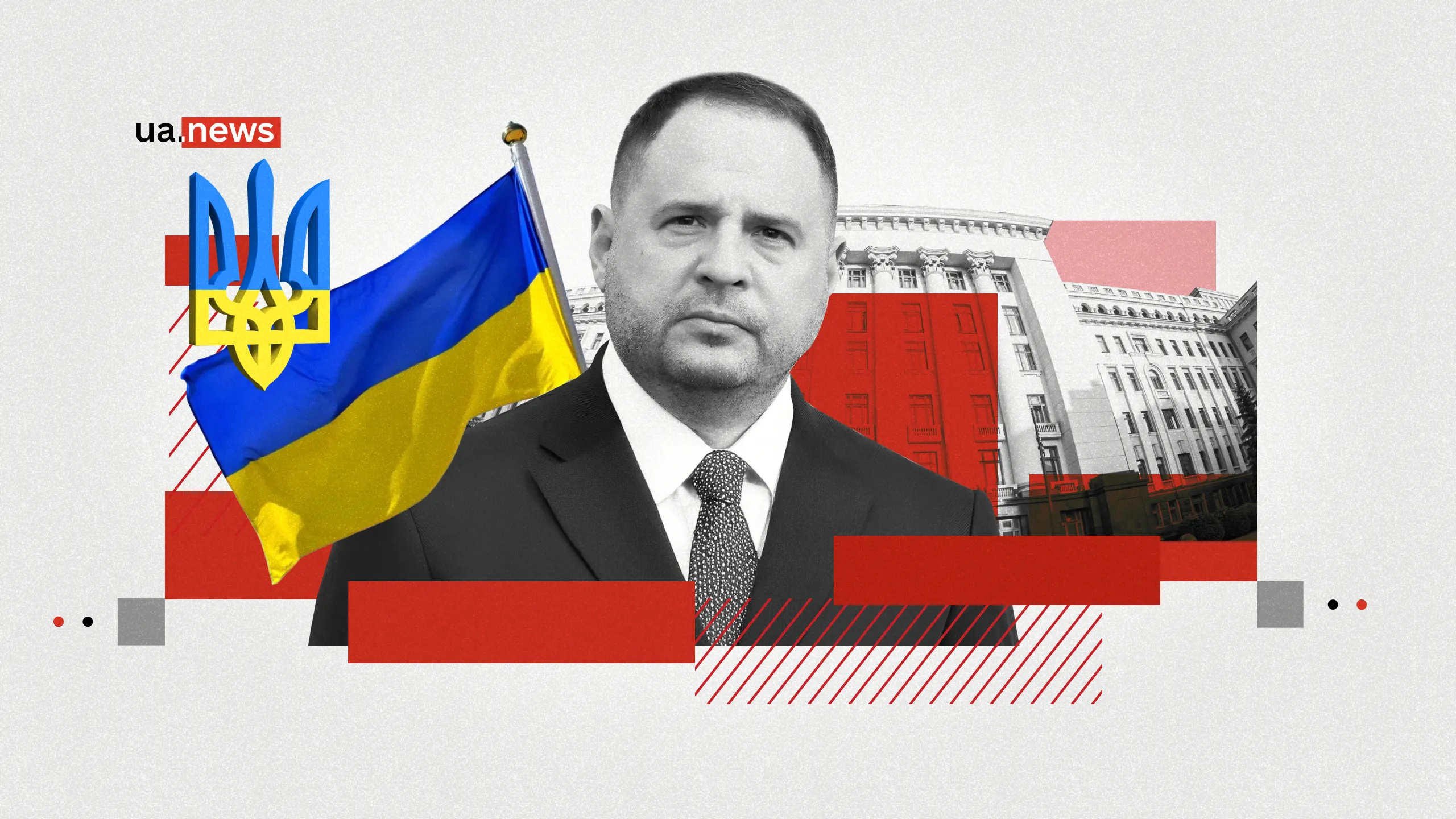
Andriy Yermak held the position of Head of the President's Office from February 2020 — 5 years, 9 months and 17 days. During this time, he became one of the most influential and controversial figures in modern Ukrainian politics. His activities, especially after the start of the full-scale invasion by the Russian Federation, led to a radical transformation of the Ukrainian executive branch. The Office of the President, which according to the Constitution is purely an administrative body (in fact, it is simply the presidential chancellery, paperwork — and that's it), has turned into a centralised political, diplomatic and security headquarters, consolidating an unprecedented amount of power.
Western journalists and experts often characterised Yermak's role as unprecedented, emphasising that although he ‘is not the president, he often acts like one.’ This definition summed up the general perception: the head of the OP had the same, and in some cases even greater, influence than Volodymyr Zelenskyy himself.
The Yermak phenomenon symbolises a super-personalised model of governance. This concentration of power outside the constitutional framework came at a price. It became the root cause of systemic institutional risks, creating a ‘shadow government’ in the OP and undermining democratic and constitutional mechanisms. Ultimately, it was these risks that manifested themselves through the corruption scandal involving ‘Mindich's tapes’ and internal political conflicts, which ultimately led to his resignation.
According to insider information from the OP obtained by UA.News, President Zelensky has blocked Yermak on all messaging apps and forbidden his closest associates from having any contact with him. There is also unconfirmed information that the State Border Service of Ukraine has received a special letter prohibiting Yermak from leaving Ukraine, just in case.
So who was Andriy Yermak for Ukraine's political system, and what legacy did he leave to the state? For more details, see the article UA.News.
Architect of the entire vertical structure: what Andriy Yermak did
Under Andriy Yermak's leadership, the Office of the President became the main decision-making centre in the country, effectively duplicating and sometimes completely subordinating the functions of the Cabinet of Ministers and other central executive bodies. This meant that personnel policy, which is a key lever for governing the state, was taken out of the control of the relevant ministries and parliament and concentrated entirely in the hands of the head of the Presidential Office. According to Western media reports, this management scheme ensured that all branches of government would be loyal to Bankova Street — or even directly controlled by it.
The concentration of power was indeed very significant. Although Yermak himself repeatedly claimed that the OP only coordinated state policy and interaction between different branches of government, in practice this ‘coordination’ was characterised by rigid and centralised management, which extended to the most important areas, including the economic bloc and defence issues.
The unprecedented concentration of power in the hands of one person (and outside the scope of existing legislation) created an institutional vacuum. At the start of the war, when rapid decision-making was critically important, such a vertical structure may have seemed illegal, but at least it was effective during the ‘state of emergency.’ However, in this case, removing Yermak from office would have threatened a systemic crisis of governance. Although temporarily justified by the crisis, this personification of power contradicted the principles of democracy and created a fundamental imbalance, which was particularly critical for a state that had requested Western assistance to protect democratic values from the aggression of a neighbouring dictatorship.
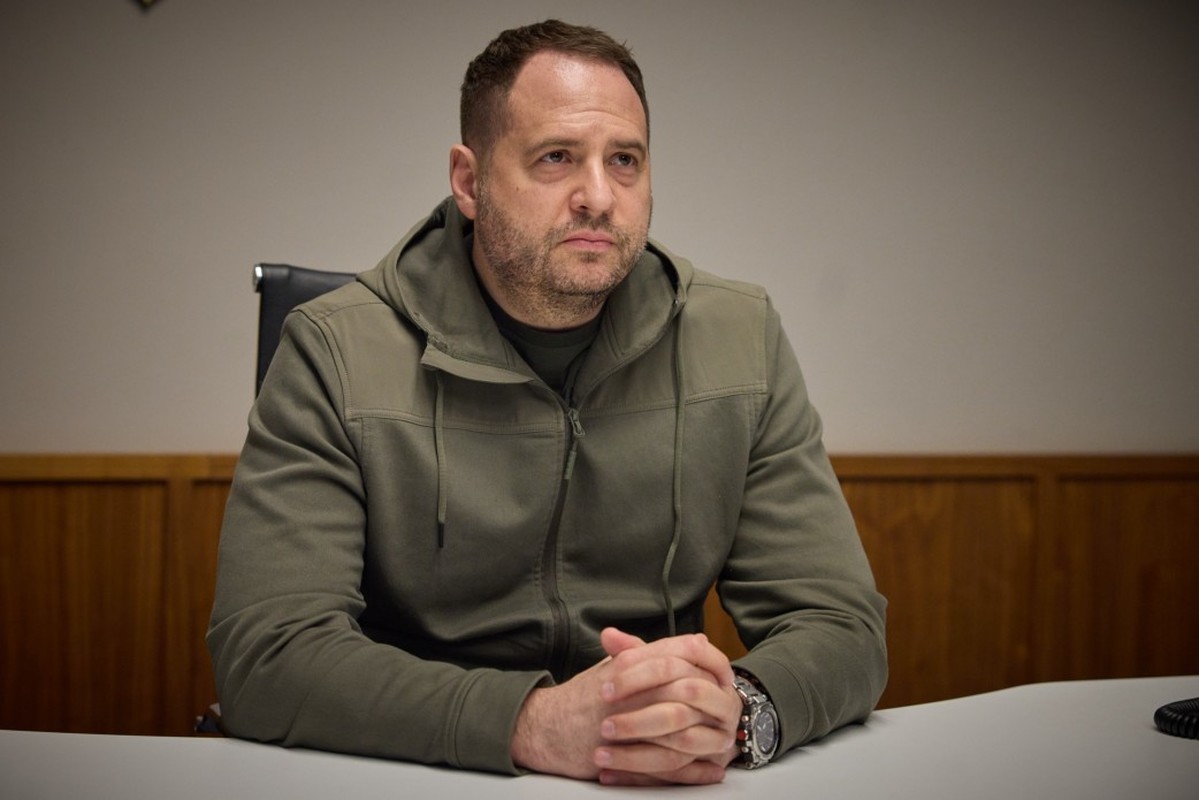
In the context of a full-scale war, Andriy Yermak became not only the second, but sometimes even the first person in the country — he also became a key negotiator and the informal face of Ukrainian diplomacy. He was directly involved in managing such vital processes as the exchange of prisoners with the Russian Federation, the return of abducted Ukrainian children, the conclusion of the ‘grain agreement,’ communication with the United States... These successes strengthened Yermak's position as an indispensable crisis manager alongside the president.
In addition to diplomacy, Yermak was also the initiator of the centralisation of information security functions. In 2021, on the instructions of the president, the Centre for Countering Disinformation (CCD) was created on the basis of the National Security and Defence Council. This step was presented as a necessity for coordinated efforts against hybrid warfare and disinformation. However, critics noted that in this way, the authorities may be monopolising the information field for their own purposes. The creation of this centre greatly expanded the OP's tools for controlling internal and external information narratives, in particular through the mechanism of sanctions.
In summary, Andriy Yermak's activities were remarkably complex and intense. This proves that he performed functions that went far beyond the powers of a chief of staff, turning the OP and its head into a key ‘hub’ through which literally all critical state decisions passed.

From omnipotence to crisis
Despite some foreign policy successes and initial effectiveness at the beginning of the war, this situation could not last forever and did not suit many people within Ukraine. Ultimately, the internal activities of the OP faced an acute crisis caused by a large-scale corruption scandal — the NABU operation ‘Midas’ and the ‘Mindich tapes’ made public in this context. It got to the point where anti-corruption investigators even searched the home of Andriy Yermak himself. It seems that this was the last straw and ultimately became the formal reason for his resignation.
The Midas investigation, which started as a case of financial corruption that is, unfortunately, commonplace in Ukraine, quickly escalated into a systemic threat to the very statehood during the war. This case only emphasises what any political science student knows: hyper-centralised power only seems effective in the moment, but in the long run it always creates risks and leads to crises. It is no coincidence that even dictators in Ancient Rome were elected collegially, and for a very short and legally defined term. Absolute power is never absolutely eternal.
Some experts have repeatedly referred to Ukraine after 2019 and especially after 2022 as an ‘office-presidential republic,’ hinting at the super-important, system-forming role of the head of the OP in these processes. Until the scandal surrounding the ‘Mindich tapes,’ Andriy Yermak quite skilfully performed the function of a ‘lightning rod’ for the president, accumulating the lion's share of negativity from an active society. However, this strategy eventually exhausted itself, and the head of state had to take a clearly difficult step — dismissing Yermak. It seems that this was a consolidated demand both internally and externally.
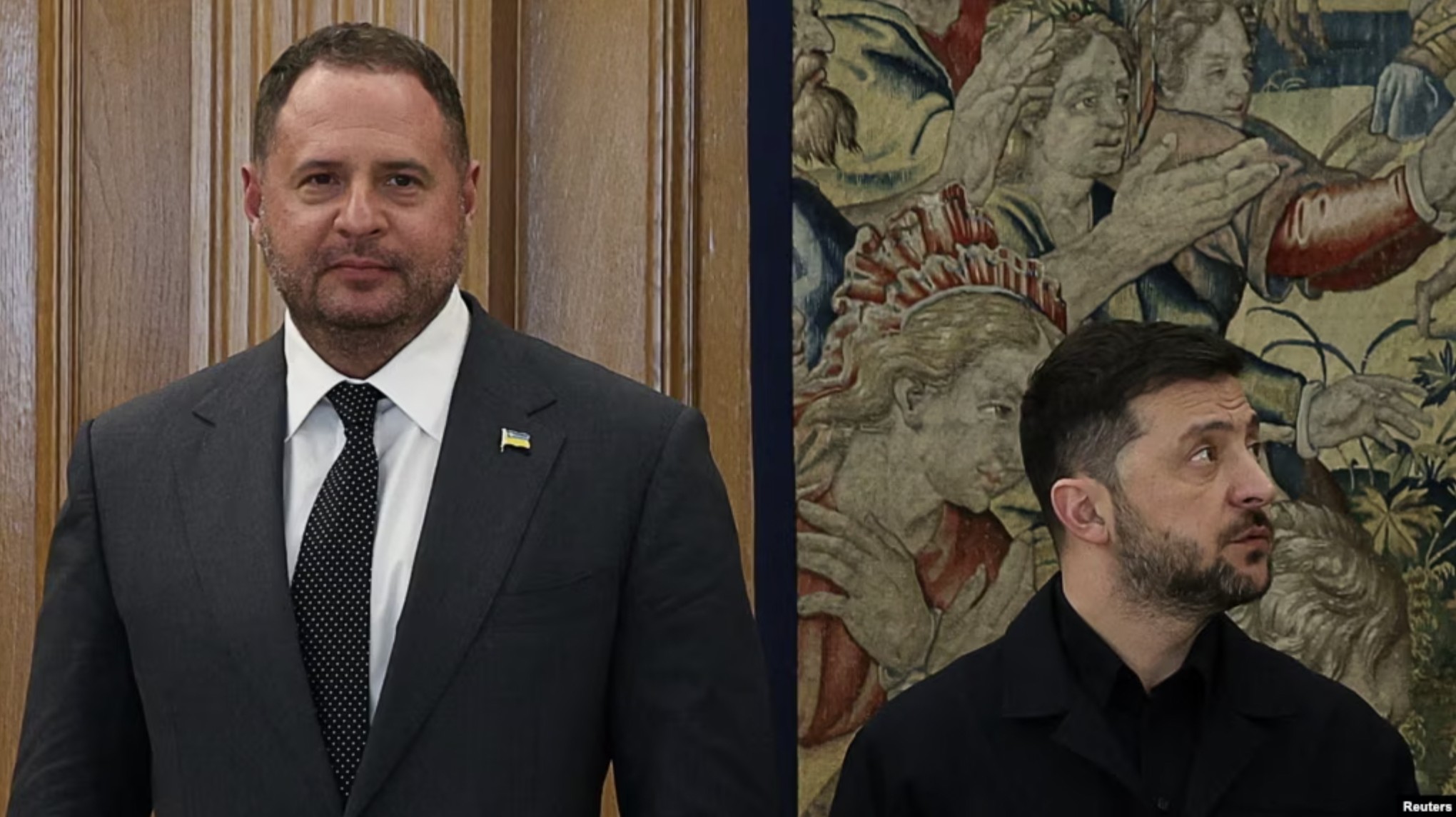
Yermak's political legacy and the power vacuum
Yermak's dismissal was inevitable, as everything came together in a ‘perfect storm’: intense internal and external pressure, and the Midas criminal case. The key risk factor was the real threat of changing the procedural status of the OP head from witness to suspect. In such circumstances, the president had no choice but to distance himself from Yermak. It was only a matter of time before the OP had to be radically reformatted.
The most important aspect of Yermak's political legacy is not his achievements (which objectively took place) or failures (of which there were more) — it lies in creating a critical dependence of the entire state structure on literally one person. His removal is not the end, but only the beginning of a deep crisis for the president himself. Yermak was the centralising figure who held together the institutions he himself had weakened, and now, without him, the head of state will have a very difficult time.
The removal of the architect of the entire extraordinary vertical structure opens an era of political uncertainty. This could lead to the decentralisation of power, provoke an internal struggle for control over the vacated centres of influence and financial flows, and cause temporary administrative paralysis of the system — at least until a new head of the Presidential Administration is appointed. However, whoever is appointed to this position, he is unlikely to become a ‘second Yermak’ — Yermak was one of a kind.
However, despite all the risks, the political consequences of the resignation of the head of the OP and pressure from society, internal actors and Western partners are creating a necessary impetus for the restoration of the independence of constitutional authorities. This is an excellent opportunity for Ukraine to strengthen institutional stability, decentralise power and reform the political system.
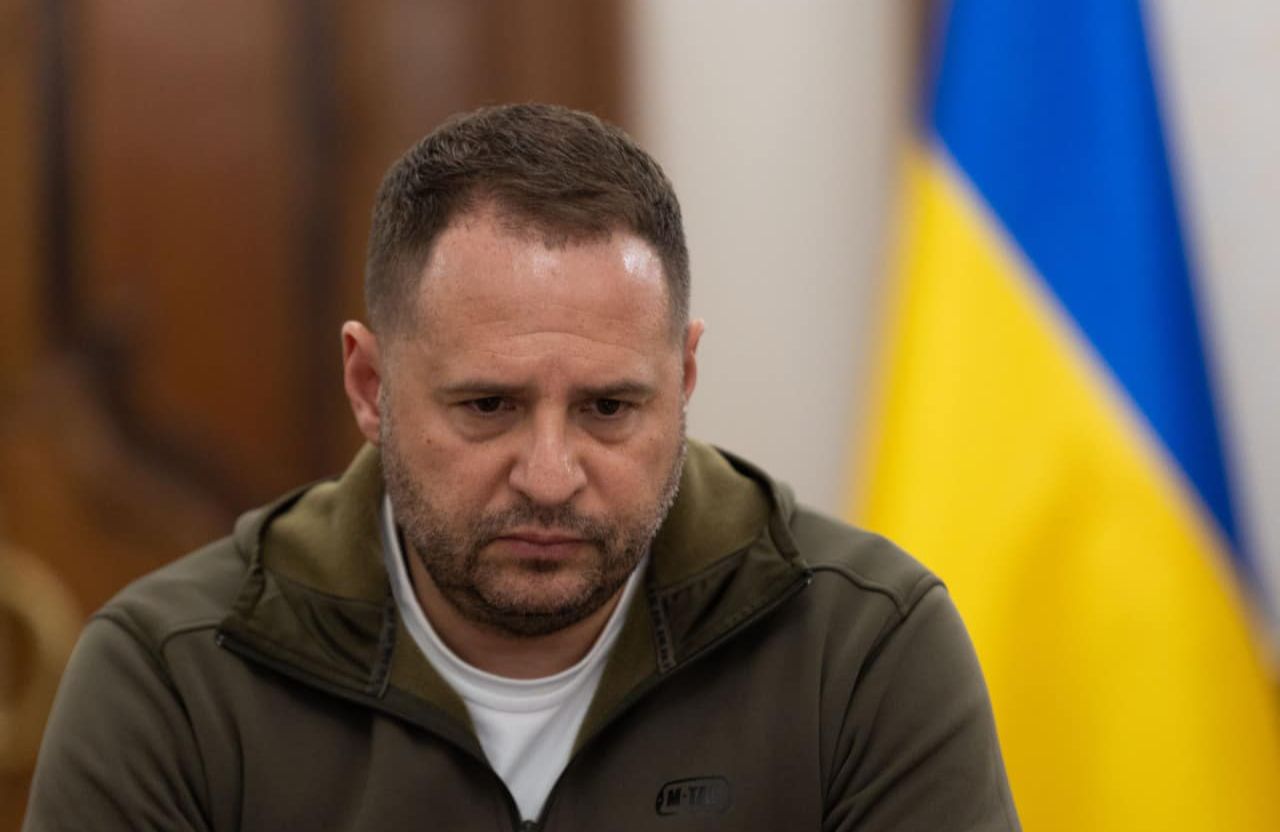
Expert opinions
Political scientist and director of the Institute of World Policy Yevhen Magda reminds us that Andriy Yermak is the person who has headed the presidential office for the longest period of time in Ukraine's recent history.
"In other words, he has been in charge for over 5.5 years and has become a symbol of the “office-presidential republic”: a model of governance that has developed in Ukraine. Andriy Yermak's role in this model is very interesting because he formally had no powers, but Volodymyr Zelenskyy delegated a significant part of these powers to him. This created a corresponding political format, where Andriy Yermak was effectively like Andriy the Almighty — a person who could decide everything not only in the presidential vertical, because in the conditions of martial law, the president's powers became much greater... It is interesting to look at his resignation, because in 2019 Volodymyr Zelenskyy came to power as a ‘new face’ with a completely ‘Teflon’ image, and he could criticise politicians as he pleased. With Yermak's resignation, this Teflon, which is already badly scratched, is completely peeling off Zelenskyy's image. And he will, I would say, be in a tight spot," comments the political scientist.
However, according to Magda, the president has a chance. He needs to expand the circle of people who are involved in shaping state policy and working to strengthen Ukraine's position. If he does not do this, it will be extremely difficult for him.
"We will end the war in any case, at least we will live to see the end of the war with President Volodymyr Zelensky. But I have no doubt that the question of holding elections will arise immediately after the war ends. As for Andriy Yermak and his future, I think it will be very interesting. Let's wait and see if he will be charged. And then we will see what his career will be like. How he will be able to function without Volodymyr Zelenskyy's influence. How independent he really is,"Yevhen Magda concluded.
Political scientist and head of the Third Sector Centre, Andriy Zolotaryov, is confident that Yermak has been quite adept at fulfilling his mission all this time. He absorbed all the negativity surrounding Bankova Street. This allowed the president to avoid protests for some time, because the negativity associated with the head of Bankova Street was transferred to Yermak.
"But now, in connection with the criminal case surrounding Mindichgate, this negativity has spilled over onto Volodymyr Oleksandrovych. And in fact, we have a situation where the majority of MPs... are against Yermak. And if it weren't for that situation, it would have been possible to keep the head of the office in his place for some time. But now everything has come together: external pressure and the criminal case. The situation may change after the searches, as may Andriy Borysovych's procedural status from witness to suspect. All people who are familiar with our law enforcement system know this very well. And in such circumstances, there is nothing else to do but to distance oneself from the person who was said to be working as president in Andriy Borysovych's office," Zolotaryov believes.
According to the expert, after Yermak's resignation, problems may begin for the head of state himself.

People who know the inner workings of Bankova understand very well that Zelensky will follow Yermak after a certain period of time. And under what circumstances and conditions is a secondary question. But it will be very difficult for him to hold on without a figure like Andriy Borisovich Yermak at his side,’ said Andriy Zolotaryov.
In summary, Andriy Yermak was the chief architect and central figure of the extraordinary presidential vertical apparatus, which for a time did indeed ensure speed and efficiency in crisis management, especially on the diplomatic and military fronts. However, the price of this short-lived efficiency was institutional degradation and a completely unacceptable super-concentration of power.
The President's Office became the de facto centre of state power, completely ignoring democratic mechanisms and, most importantly, creating conditions for systemic and large-scale corruption, which ultimately led to a serious crisis for Zelenskyy himself.
Yermak's political legacy remains highly ambiguous. It is possible that law enforcement agencies will soon have serious questions for the former head of the Presidential Office.
His removal does not solve systemic problems, but only opens a new phase of fierce political struggle. However, Yermak's departure also provides an opportunity for Ukraine to carry out structural transformation: to decentralise power, strengthen the independence of anti-corruption and other regulatory bodies, and restore the trust of international partners and its own society.
The future of governance in Ukraine after Yermak should focus not on finding a new centralising ‘super manager,’ but on restoring the stability and full functionality of constitutional institutions.


