
Ukraine must begin preparing now for the return of millions of veterans to civilian life. The most effective and comfortable way to do this is by supporting veteran-owned businesses. After all, many of the defenders are people who were previously involved in entrepreneurship or acquired management skills on the front lines.
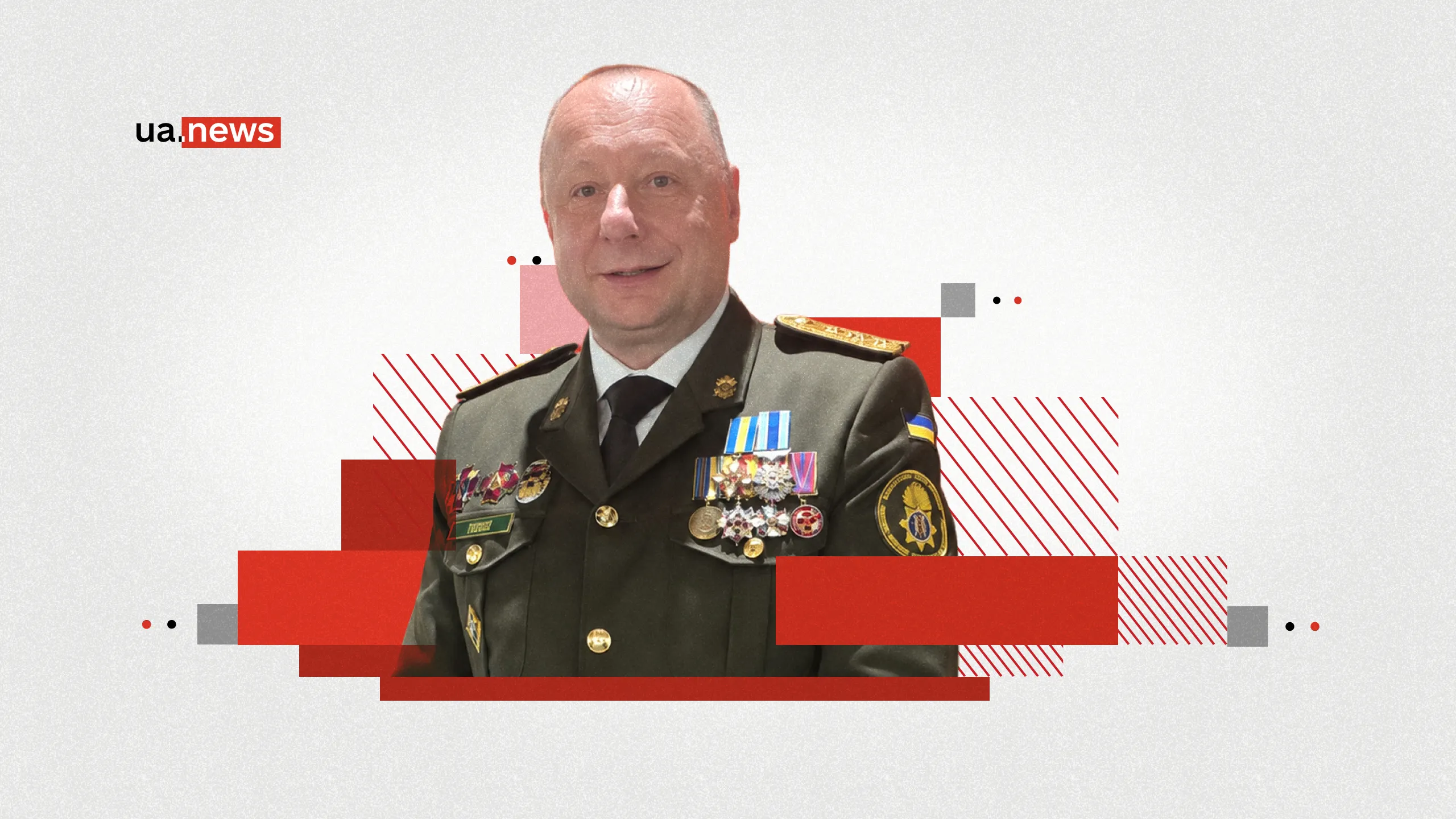
“Financial support for veteran-owned businesses should be a matter of national security, but so far it remains merely a call to action, and we’re feeling the effects of that,” says Serhiy Poznyak, a veteran, chairman of the Association of Entrepreneurs and Veterans of Ukraine, founder of the FinStream and Cronvest projects, and the initiator of the issuance of veteran bonds.
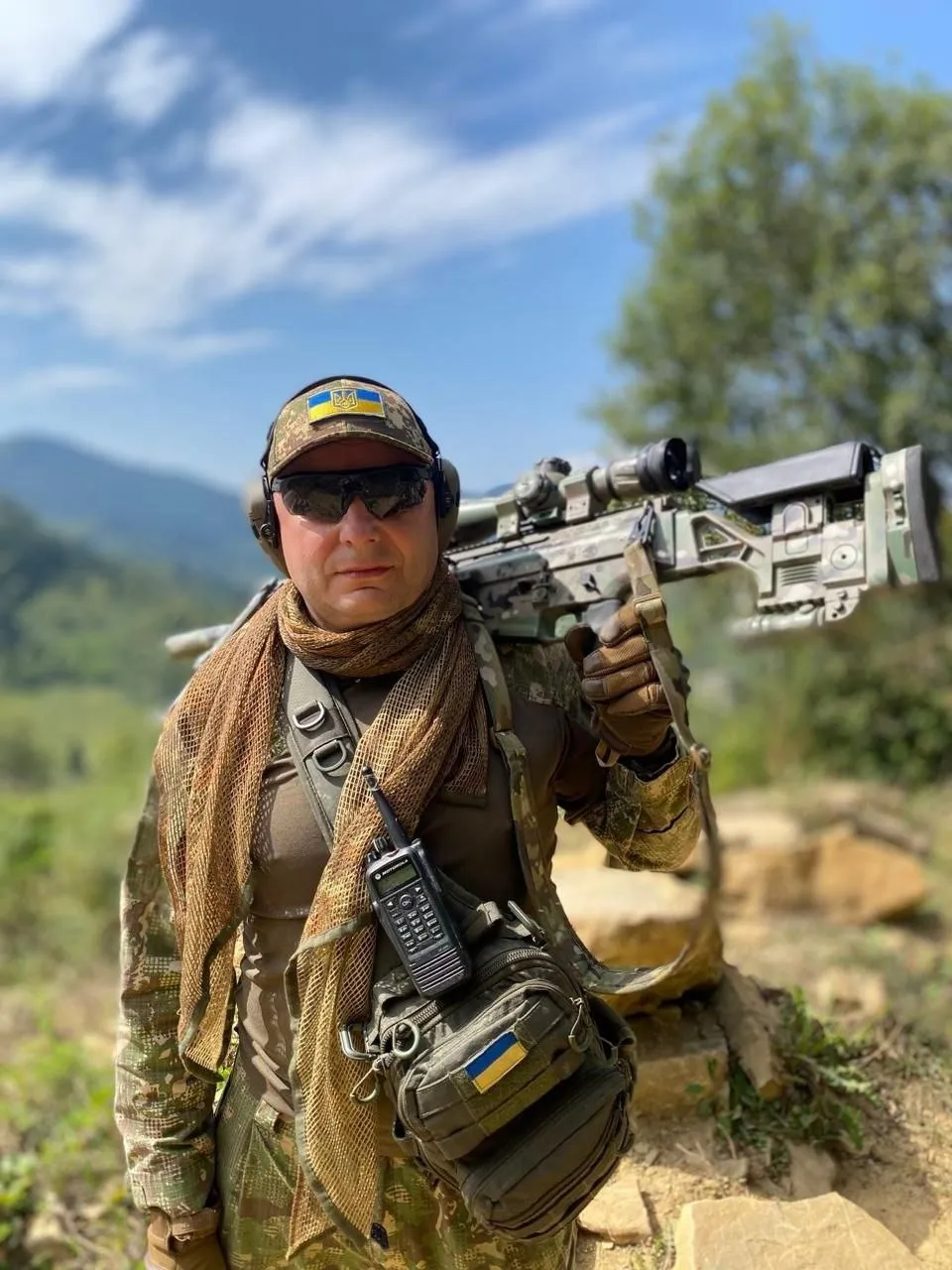
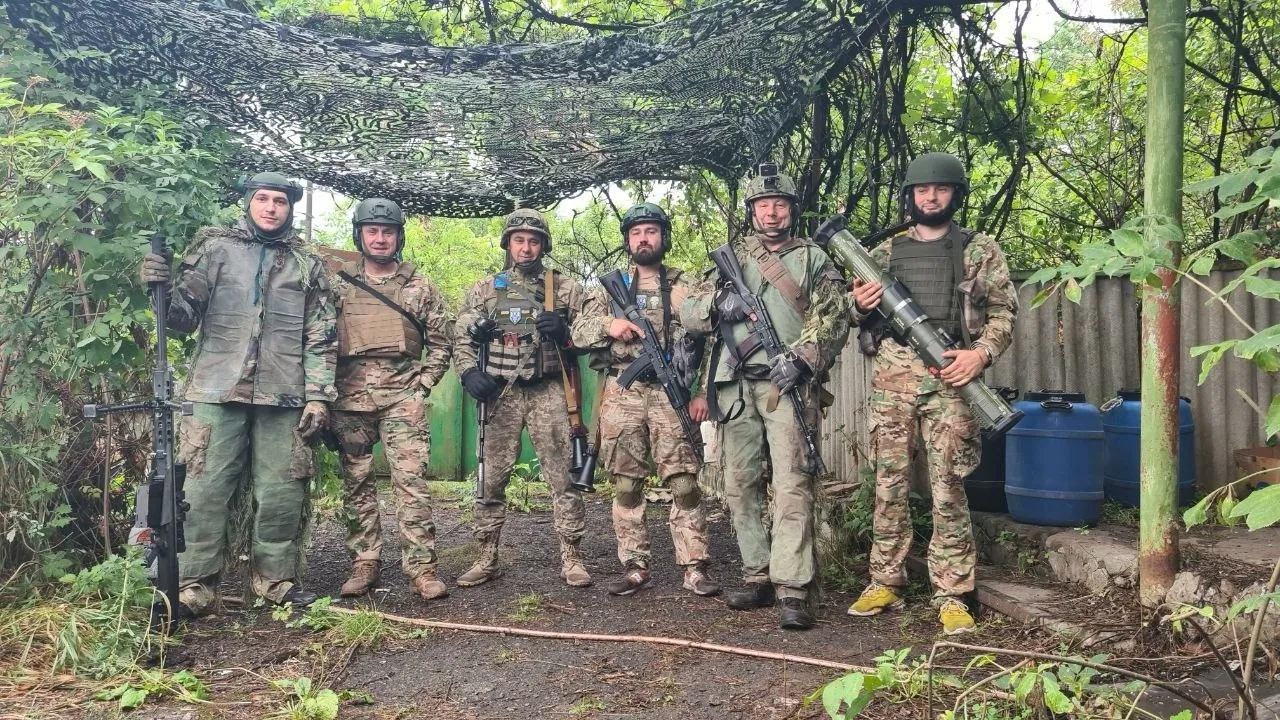
He participated in combat operations during the ATO (2014–2016) and the full-scale war that began on February 24, 2022. In November 2022, he was seriously wounded near Kreminna during fighting in the Serebryansky Forest. After rehabilitation, starting in November 2023, he continued to carry out combat missions in eastern Ukraine, commanding a platoon of special-purpose snipers. Since returning from the front lines, he has been involved in veterans’ initiatives and has been developing his own financial and investment business, which has been in the market for nearly 26 years.
In an interview with UA.News, Serhiy Poznyak explains how business helps him adapt after the war, how often banks deny loans to veteran-owned businesses, and why indifference to this problem could cost the state dearly. Below are his direct quotes.
Veterans’
Return and National Security
For me, the number one priority is ensuring that veteran-owned companies have access to capital. This is a problem for veteran-owned businesses. We need to prepare for the fact that there will be a great many veterans in Ukraine. We know this for certain because we’ve studied the issue. Annual studies—not only ours, but also those conducted by the Ukrainian Veterans Fund and the Ministry of Veterans Affairs—show that entrepreneurs constitute the largest group among active-duty military personnel.
And without internal security, we can forget about overall national security as well. Because weak countries are usually the ones that get attacked, and I don’t want war to happen again. I don’t want gangs of people with skills like mine running rampant in Ukraine. And I know what my skills are. I don’t want to have to defend my family with a weapon in my hands.
That’s why I’m focusing on two main goals. The first is a broader one. I want to live in a normal country where it’s safe to go outside. Because for several years now, my children have been forced to hide from shelling under the stairs. Two or three times a week, they sit, sleep, and wake up under the stairs. They go to kindergarten—and there, too, they go down into the shelter. I don’t want them to have to hide even from those who used to defend them on the front lines.
All the international experts I’ve spoken with personally—who have experience helping even smaller numbers of veterans return than we have—including members of Congress and members of the House of Lords — say: “Serhiy, if you don’t ensure these people have a dignified return to civilian life and the comfort they need so they don’t feel like a marginalized part of society, then be prepared for the consequences.” That’s why I’m working on this. For me, it’s a priority.
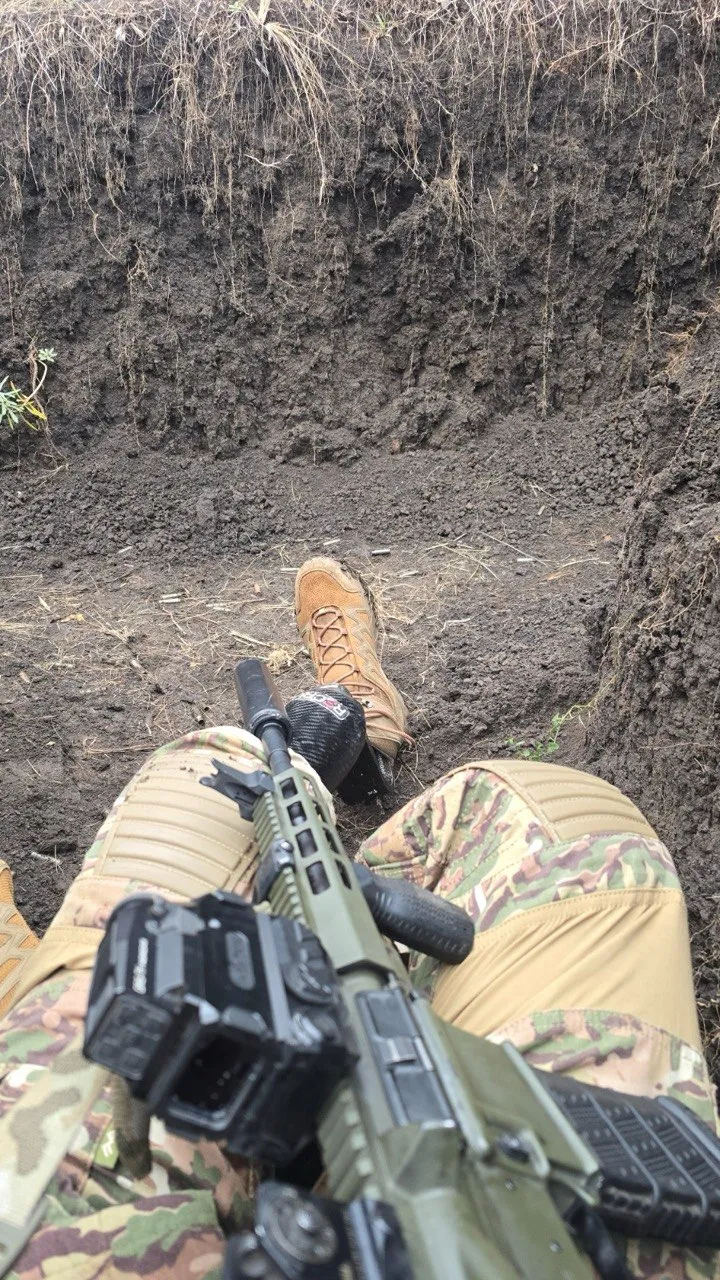
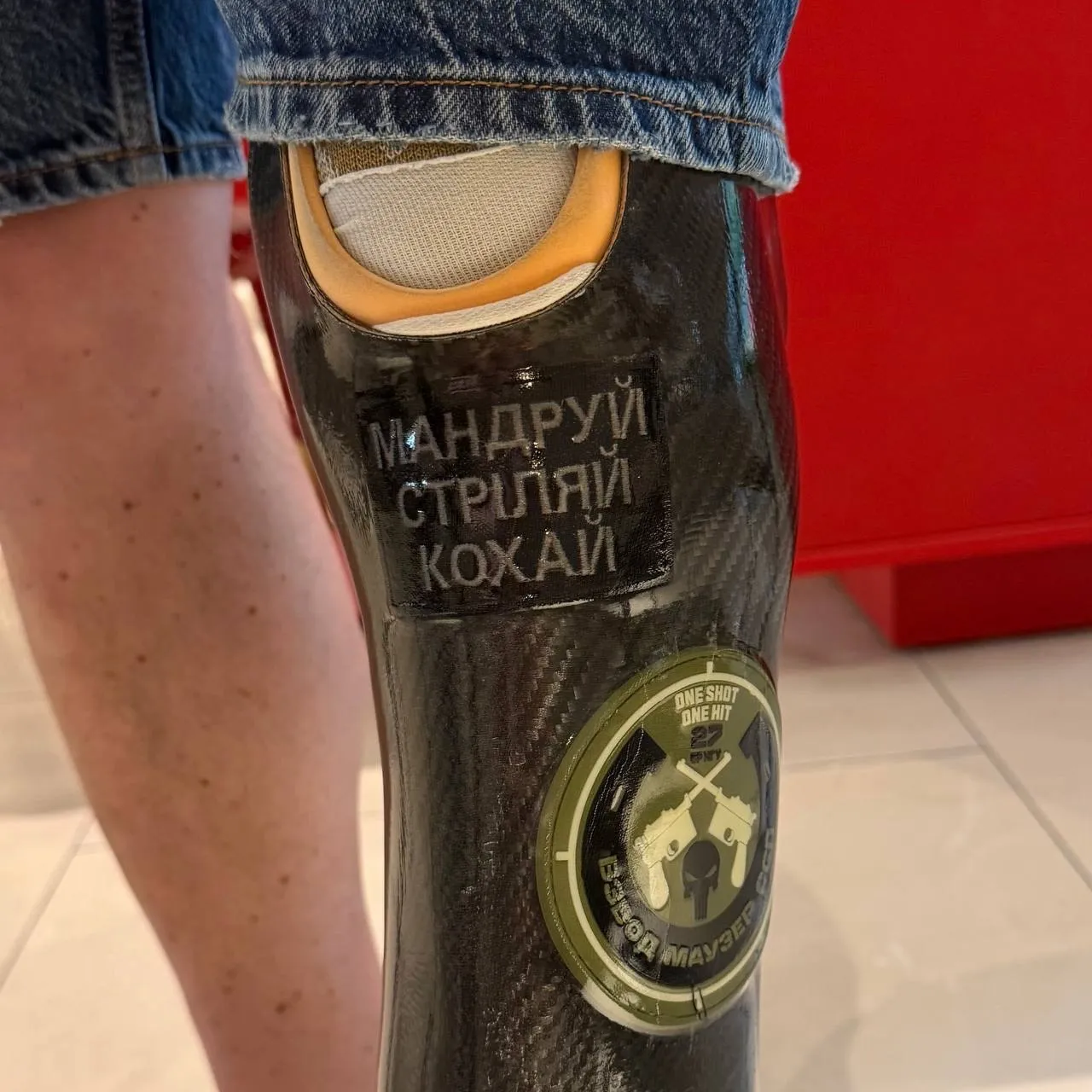
Photo: Serhiy Poznyak lost part of his left leg on the front lines after stepping on an anti-personnel mine
Unfair Competition and the Aftermath of War
Another priority is, of course, my business. I returned from the war. My company has actually survived and is growing only because my fellow members of the CEO Club Ukraine created an effective board of directors and a supervisory board for FinStream, the first veteran-run financial service
Earlier, we published a joint letter from the Association of Ukrainian Banks (AUB) and the Association of Veteran Entrepreneurs of Ukraine addressed to financial services market participants—the 30 largest banks. We called on them to join us and support veteran-run financial services and veteran entrepreneurship.
We are witnessing unfair competition and the deliberate takeover of segments previously served by military entrepreneurs who are now defending the country, allowing their competitors to seize these niches.
FinStream
, a financial service for veterans
Our business model is simple. We operate the first veteran-focused financial service, consisting of a veteran investment fund and a financial company. It operates under the brand of the investment fund and the Association of Entrepreneurs and Veterans of Ukraine, which currently includes over a thousand veteran-owned businesses.
We have a strong corporate governance structure within the financial service. Our board includes veterans and members of the CEO Club. It’s truly an all-star lineup. Everyone says: “Your board of directors is worth 10 times more than the company itself.” Indeed, our Supervisory Board includes well-known businesspeople: Yuriy Pivovarov, CEO of the Kyiv International Economic Forum (KIEF); Oleksandr Pitenko, who served as CEO of Fozzy Group for 15 years (he now runs his own business), financier Serhiy Zhuykov—currently an active-duty military officer and formerly the director of Blackshield Capital (a large fund managing about a billion dollars)—as well as Mykhailo Fedorenko, a former top official at the National Bank. In other words, all our top positions are filled. And so are our areas of focus.
We offer veterans preferential terms: 15% plus one. Unfortunately, we cannot go below the base rate. Therefore, veterans receive a rate of 15% per annum. The businesses we support are very successful—we’ve already issued over 200 million UAH to veteran-owned companies. These projects are highly successful.
The Value of Veteran Bonds
Veteran bonds are unique in their philosophy of partnership. We don’t take money “forever.” Veterans stand on equal footing with major civilian businesses, such as Vodafone, OTP Bank, and Ajax. They become partners. Veterans don’t fundraise; they don’t beg for money they’ll never pay back. We repay the loans with a small interest rate. But this is the least that civilian entrepreneurship can do to compensate for the irreparable losses suffered by veterans: time, health, limbs, families, and sometimes—their lives.
This project gives veterans the opportunity not only to receive funding but also to collaborate and form partnerships with major civilian companies. This involves communication, mentoring, sharing experiences, addressing common challenges, and working together. We organize events at the CEO Club, where investors and veteran-owned businesses—both large and small—often gather.
Success Stories
We have some really impressive success stories where investors put in half a million or 600,000 dollars and earned a 30% return in dollars within 11 months. In my opinion, that’s an amazing result! Yes, there are certain risks. But we’ve already reviewed this project and are funding it. We say: “This is definitely going to work!” And it does work.
It’s the construction company “Alatyr Invest” from the Rivne region, which builds residential complexes. We financed the construction with 107 million hryvnias and attracted an additional 800,000 dollars in funding. Several such residential complexes have already been built.
Another successful project is “Pizza Veterano.” We’ve been funding them since 2015—we were the first to provide them with funding. By the way, there are also well-known civil projects we’re working on. For example, we’re funding Voda.UA and the “Promprylad. Renovation” innovation center in Ivano-Frankivsk. Until we provided funding to the project’s founder and CEO, Yuriy Filyuk, no one wanted to support it because there were unredeemed corporate rights involved. We could go on listing landmark projects that weren’t initially included but later really took off thanks to funding from the veteran-run financial service FinStream
Commercial Banks and Lending to Veterans
Right now, “veteran” is a stigmatizing status and a risk factor—certainly when it comes to getting a loan. Many young men and women who apply for loans are immediately advised by civilian financial institutions and banks: “It’s better not to mention that you have UBD status.”
I work on a parliamentary working group that deals with financing for combatants. Civilian market representatives say: “Listen, a veteran is OR-1—that is, part of the operational reserve. This means they’re the first to go to the front lines. As sad as it is, they end up dying, and we can’t get our money back.” Civilian financial institutions don’t want to take risks or deal with military personnel. So far, they don’t know how to handle this problem.
The U
.S.
Experience
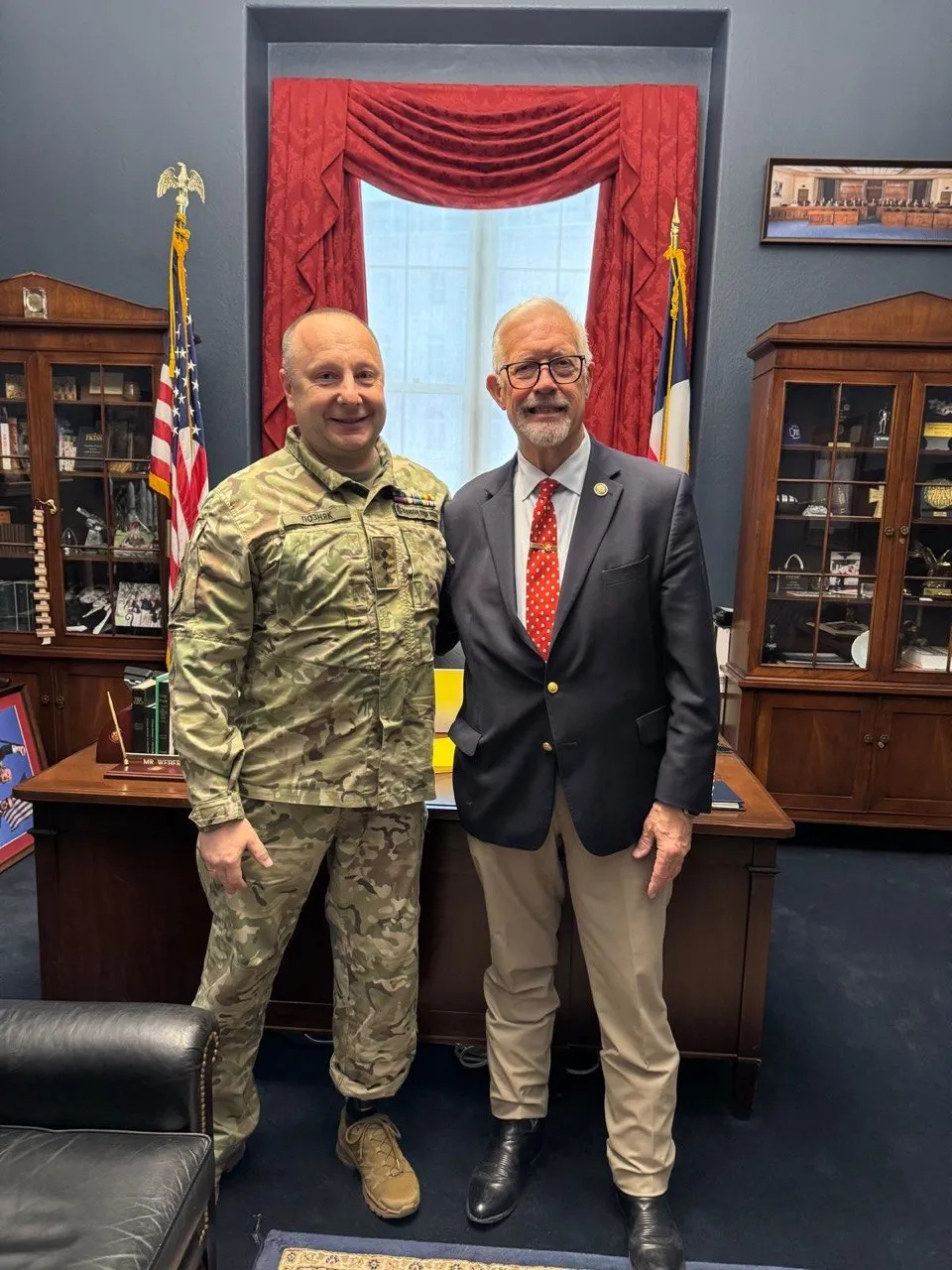
We have a partnership with the United States of America. First, large American companies know from their own experience the challenges veterans face in reintegrating into civilian life. Second, they’ve already recognized that veterans and active-duty service members are a very promising demographic. One-third of the American Forbes list consists of West Point graduates.
In the U.S., 31 out of 46 presidents were combat veterans. After the Vietnam War, 70% of the U.S. Congress held combat veteran status. They are now seeing a new wave of politicians with military backgrounds who served in Iraq and Afghanistan.
Most people think that being part of the elite is about privileges, but in reality, it’s about responsibility. Those who are ready to take on responsibility are ready to be part of a true elite. It is precisely veterans who give the country the opportunity to form true elites—ones who won’t be “skimming off the top,” who have already proven their sense of responsibility with weapons in hand while defending the country.
Partnership with Azstar Business Management
We have partnerships with American companies, such as Azstar Business Management Company. It is an official federal contractor for U.S. government agencies, including the Pentagon. They manufacture and supply fuels and lubricants. Their 150 trucks serve the Pentagon’s logistical needs. They are also involved in drone manufacturing. Currently, they are working in the energy sector and are participating in the implementation of the mineral agreement between the U.S. and Ukraine.
Thanks to our collaboration and their partnership with Ukraine, an agreement has been reached regarding internships for our specialists. The first 27 people—our young men and women—have departed for Siemens Energy, a contractor, through Azstar Business Management Company. At the Siemens plant in the U.S., they will learn to operate the latest generation of gas and oil production equipment.
So, if equipment is supplied through cooperation with major American companies as part of this “mineral agreement” between Ukraine and the U.S., we will already have trained specialists ready. They will be able to properly transport, install, and connect this equipment, as well as maintain it so that it operates without disruptions.
By the way, we didn’t make exceptions just for veterans. Anyone with the right profession and qualifications could also go for training. This benefits everyone. It benefits the country to have specialists who can train others. It also benefits American businesses—there will be specialists in Ukraine who are knowledgeable about the latest equipment. For the specialists themselves, it means jobs and new knowledge in skilled manufacturing.
All of this is thanks to veteran entrepreneurship, which Ukraine’s financial system currently ignores entirely. We have to carry out these projects not because of, but in spite of the circumstances. What we’re able to achieve requires incredible effort. Can you imagine what results we could achieve if we had even a little support?
Cooperation with Government Officials
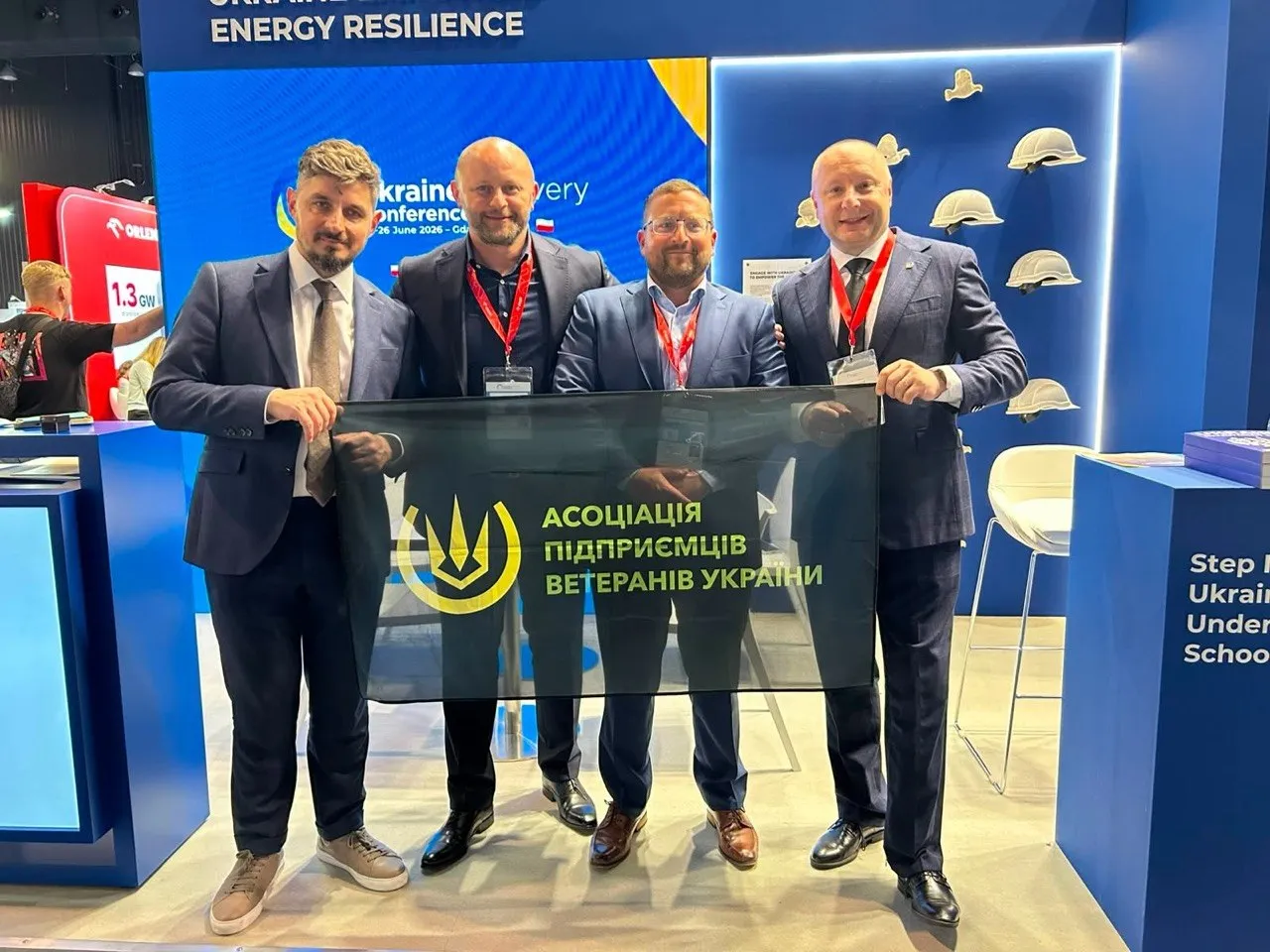
At the Ukraine Reconstruction Conference (URC 2026) in Gdańsk, we signed a Memorandum on Support for Ukraine’s Energy Infrastructure. The parties to the agreement were Azstar Business Management, Cobey Inc., the Ministry of Veterans Affairs, and the Association of Entrepreneurs and Veterans of Ukraine, which I represented.
I am very grateful to former Minister Natalia Kalmykova and regret that she was not included in the new government. To be honest, she worked to the very limits of her strength. Although we had disagreements with her earlier, we later began to collaborate very effectively.
Under the agreements signed in Gdańsk, we can collaborate with the Ministry to involve veterans in the energy sector. We have everything we need to do this: cooperation with the Ministry and the state-owned companies of the Naftogaz Group. I’d also like to thank Serhiy Koretskyi—a friend of mine since our days at KMBS—who is deeply committed to supporting veterans. Thanks to him, many initiatives have emerged to support veterans in the energy sector.
We’re currently refining the work we’ve done with Natalia Kalmykova, and then we’ll move forward. I hope the new minister, Vitaliy Kim, will get up to speed and also deliver results.
We have a great story involving the head of the National Bank of Ukraine. We have his understanding and support for the veterans’ financial service and for the veterans’ track. Not everything works out, but I see steps being taken in this direction. I know that Andriy Pyshnyy is making efforts to ensure that veterans’ companies receive additional funding.
A narrow view of veteran-owned businesses: just craft coffee shops and the defense
industry
Unfortunately, when passing the law on veteran entrepreneurship, some lawmakers—even heads of parliamentary committees—stated: “Encourage veterans to set up large-scale production? They don’t have the brains for that! They’re not capable of doing it!” That’s what the lawmakers said. I heard it myself.
Veteran Entrepreneurship in the Regions
The situation in the regions is dire. In Kyiv, it’s still more or less manageable. Anywhere other than Kyiv or Poltava (where Taras Lelyukh and the Business Association of Defenders of Ukraine are actively working), the rest of the regions have no access to capital. We’ve now opened offices in Ivano-Frankivsk, Cherkasy, and Vinnytsia. We’ll see how things go there.
All in all, receiving about 200,000 in grant funds is good. But sometimes it’s worse to get them than not to get them at all. Because without these funds, an entrepreneur won’t even start the project. But with them, they think, “I’ll find more money somewhere later!” That’s not how it works. Underfunding a project is one of the most common causes of bankruptcy.
Employment
Issues
Veteran-owned businesses also create jobs based on the “one of our own” principle. This means that the “us vs. them” distinction has already been overcome. I talk to owners of large businesses who are crying out, “Serhiy, what should we do? Our HR departments don’t want to hire veterans: they don’t know what to do with them, how to communicate with them, or how to avoid violating their rights.”
Sometimes it leads to conflicts. For example, a veteran got a job as a lathe operator at a factory. The shop foreman rushes in and orders everyone to leave the shop and go to the showers because a TCC inspection team is on its way. The veteran refused and continued working. Later, the director summoned him and said that 10,000 UAH would be deducted from his salary—money that had to be paid to “resolve the issue” with the TCC so they wouldn’t enter the shop floor.
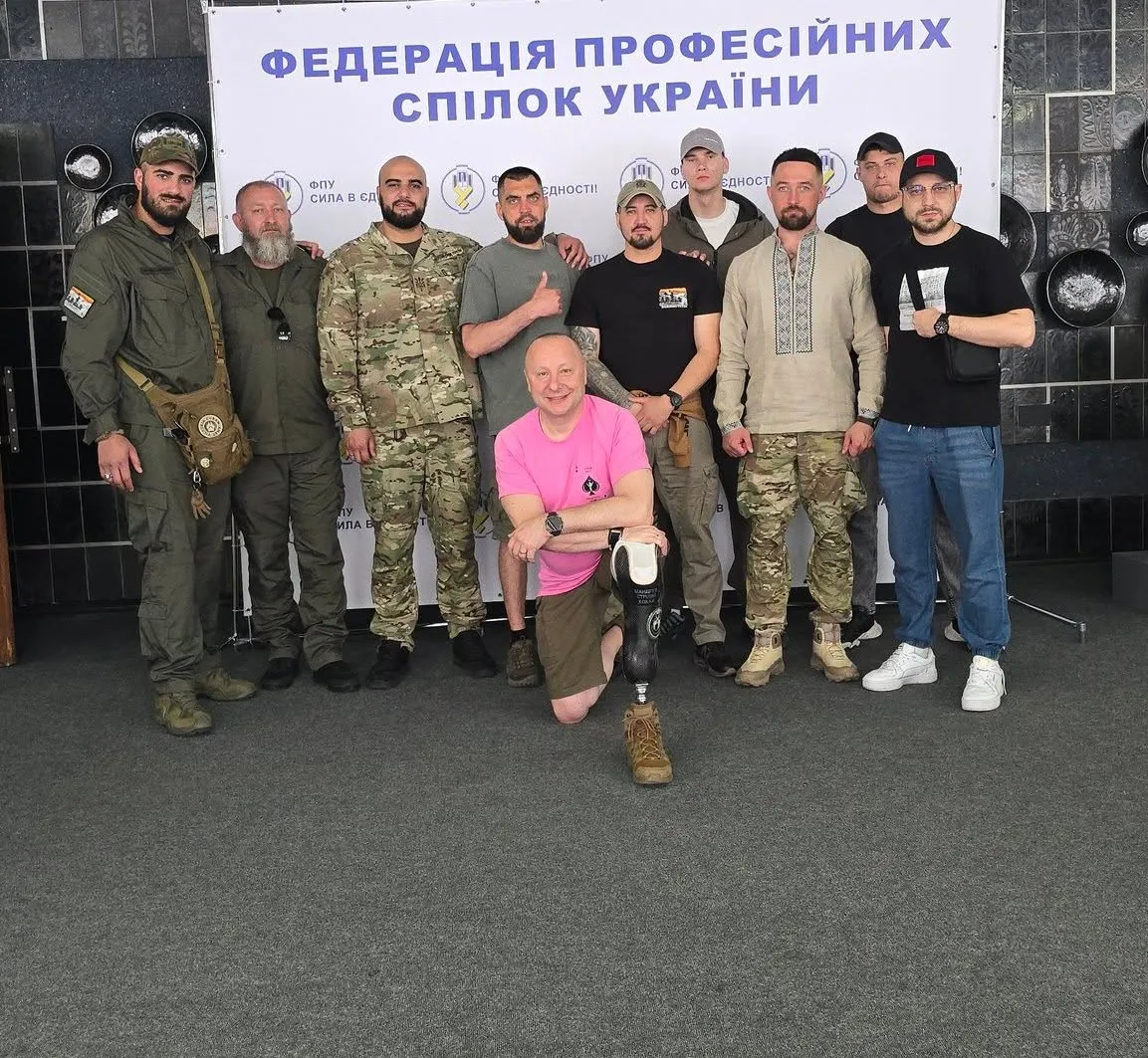
We’ve managed to build a pipeline for veteran employment. To do this, we collaborate very effectively with the Federation of Trade Unions of Ukraine, led by our colleague Serhiy Byzov, who is also a veteran. Typically, about 200 participants enroll in each cohort of the first-level training program at the Association of Entrepreneurs and Veterans. However, only 70–80 people complete the course. Those who successfully complete the training receive certificates and realize that they can become entrepreneurs in the future. For the other 120, it becomes clear that running a business is no walk in the park—it’s not all sunshine and roses. They enter the labor market, which involves unionization of workers. That is why we collaborate with the Federation of Trade Unions. Our shared philosophy is that without business, there will be no jobs, and without jobs and workers, there will be no business at all. Three principles are key: attention, respect, and understanding. It is essential to support the creation and development of financial infrastructure for veterans. As international experience shows, the global problem of veterans’ companies’ access to financing can be solved in only one way—through veteran-focused financial services, such as ours. Our example shows that this is practically the only way forward today. If banks are afraid, unwilling, or fail to see the opportunities, we’re willing to take on those risks. As practice shows—quite successfully. If you don’t want to deal with this—give us the money. We’ll figure it out. We’ll create jobs, establish veteran-owned companies, and hire people who’ve returned from the front lines—and civilian financial institutions won’t be scared off by this. Right now, the situation looks like this: veterans are publicly shown great respect, but only so that they aren’t actually supported. It sounds something like this: “You fought, you defended us—well done. We respect and honor you; here’s a chocolate bar—and don’t stick your neck out.” A few days ago, we raised this issue at a roundtable at the Kyiv Regional State Administration, where we discussed the ethics of interacting with veterans. Although few people speak openly about it. Even Ivan Dobrovolsky, Deputy Head of the Kyiv Regional State Administration for Veterans’ Affairs, was the one who called for an end to this cynical approach toward veterans. Photo: Serhiy Poznyak during combat operations We have no other choice. Ukraine has no other option but to build a veteran-centered economy. [blockquote_with_author name="We will become a nation of veterans. We already have 2 million veterans on the registry. Another million will return—making it three million. If we include the families of the fallen and the veterans themselves, the total will be 4 million people. Approximately 20% of them will become entrepreneurs: currently, that figure is already at 13%. And this number will grow to 800,000 active and able-bodied individuals. That’s a very large number of people.
A Shared Philosophy with Labor Unions
A candid look at the attitude of civilian financial institutions
Returning to Civilian Life Through Entrepreneurship
We have no choice but to start supporting them now. Otherwise, they could easily drift to the dark side. We’ll simply come to our senses then. We’re already starting to see the light a little. I can already sense the tension at roundtable discussions dedicated to veterans.
The main reason for this tension is that everyone understands the situation, but no one is taking action. Everyone understands, sees, and is aware of the situation. But when you come and suggest, “Please buy veteran bonds,” the banking sector tells you, “No, we have reserves, bureaucracy…”
Or, for example, the insurance market, where participants report that their business has doubled since 2022 during the war, yet they have no money for veterans’ bonds. Some say outright, “We won’t provide funding because we believe the risks aren’t justified.”
Funding from Postwar Reconstruction
Funds
We’re currently exploring the possibility of compensation through reparations from the sale of sanctioned assets. We’ve begun researching this avenue.
As for reconstruction funds, they are essential for developing and supporting veteran-owned businesses and engaging veterans in entrepreneurship.
I simply know what states a person can reach after rotation, after leaving the combat zone. Especially after being discharged, especially after being wounded. So I’ll say that all sorts of thoughts cross one’s mind. Suicide is perhaps the easiest thing that comes to mind. You can drive yourself crazy if you have nothing to do. And there have been cases. Many of them.
Domestic
Resources
Our country has financial resources and a successful model for our service that can be developed and scaled up.
If these issues are brought to light, the focus will shift from personal enrichment to national and personal security. I firmly believe that veteran-owned and civilian companies have great potential for collaboration. For example, we have a very cool collaboration with the CEO Club, which has officially and seriously begun funding educational programs for veterans. Overall, we have a successful example of partnership with civilian business communities. Ukrainian veterans are achieving very impressive results. And support for them is a matter of external and internal national security.
Read also:
How industrial parks are becoming a growth engine for Ukrainian industry: Olena Podolska, co-founder of PB Energy Consulting, explains


