
Crimea Without Power, Strikes Against Russia, and Military Reforms: What Vladimir Orlov Had to Say
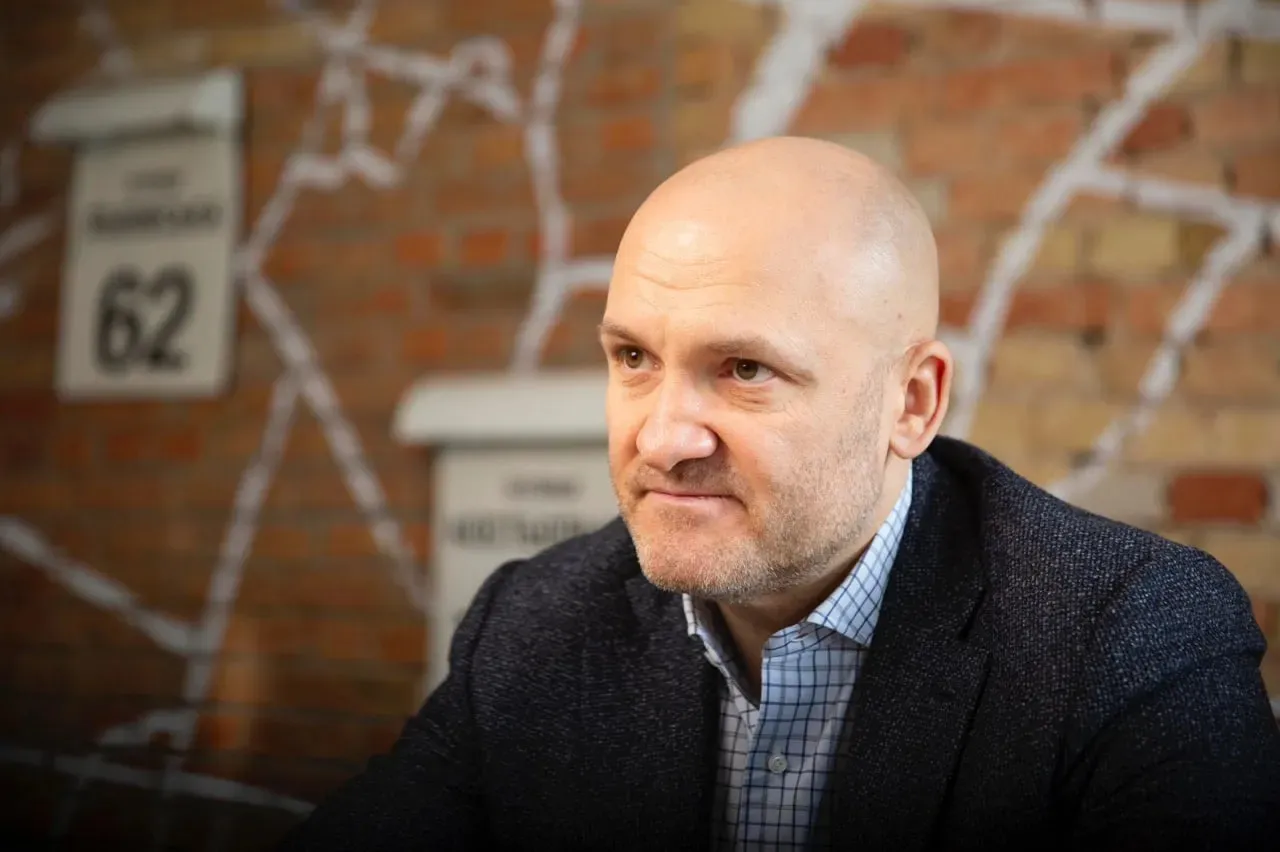
Volodymyr Orlov presented a new overview of the main events of the past few days. The focus was on the situation in occupied Crimea, attacks on Russian oil refineries, the government’s economic plans, military reform, and high-profile issues surrounding anti-corruption agencies.
One of the first topics was the power supply problems in the temporarily occupied Crimea. According to Orlov, rolling blackouts have already been implemented on the peninsula. “Every three hours, the power will go out in Alushta, Dzhankoy, and other cities,” he noted.
Orlov pointed out that the problems currently facing occupied Crimea increasingly resemble the consequences of the policies Russia imposed on the peninsula following the occupation. He specifically highlighted Ukrainian strikes against the Russian oil refining industry. According to him, in recent months, the Ukrainian Armed Forces have been systematically attacking Russian fuel infrastructure facilities.
He recalled that in the last two months alone, dozens of facilities have been hit, and the Moscow oil refinery in Kapotnya was struck twice in a single week. According to Orlov, the consequences of such attacks are already being felt in many regions of Russia. “More than fifty regions are facing a gasoline shortage,” he noted.
Orlov also drew attention to reports of restrictions on the sale of certain goods in Crimea. According to him, some towns are imposing purchase limits on flour, pasta, and canned goods.
Another important topic was the government’s new budget forecast for the coming years. Orlov emphasized that the Cabinet of Ministers has outlined two scenarios for how events might unfold—one assuming the war ends and one assuming it does not.
According to the forecast, the minimum wage could exceed 9,500 hryvnias in 2027 and reach 11,000 hryvnias in 2029. The forecast also includes a projection for the dollar exchange rate, which could exceed 50 hryvnias by the end of the period. “It’s good that there’s planning for several years ahead. But the most honest part of the document is the inclusion of two scenarios,” Orlov noted.
A significant portion of the broadcast was devoted to the announced reform of the Ukrainian army. He recalled that the Ministry of Defense had presented a mechanism for the gradual demobilization of military personnel who have been serving since 2022 or earlier.
The main criteria will be length of service and the number of days spent in combat. At the same time, the pace of demobilization will depend on the situation at the front.
A new pay system was also announced as part of the reform. According to the figures provided, the average monthly pay for an infantryman could be around 300,000 hryvnias, with a maximum of up to 460,000. “Millions of families have been waiting for these decisions. But again, there is one condition—the situation on the front lines,” Orlov emphasized.
The topic of Belarus was not overlooked either. Orlov recalled President Volodymyr Zelenskyy’s statement regarding equipment on Belarusian territory, which, according to Ukraine, could be used to direct Russian strikes.
According to Orlov, the Belarusian government has not yet responded to this demand. “We’re talking about specific infrastructure that the aggressor is using to attack Ukrainians,” he stressed. The final segment of the broadcast was devoted to the work of anti-corruption agencies and several high-profile cases.
In particular, Orlov drew attention to the case of former Supreme Court Chief Justice Vsevolod Knyazev and his plea deal with investigators. In his view, the public still has questions regarding the circumstances of the case, the number of individuals implicated, and the terms of the agreements reached. He also commented on the discovery of technical surveillance devices in the apartment of one of the NABU detectives. “In a situation where various law enforcement agencies have been at war with one another for years, this seems more like a consequence of that war than a sensational revelation,” he said.
Separately, Orlov raised the issue of jurisdictional authority over this case and the role of the Prosecutor General’s Office in determining which agency should conduct the investigation. At the end of the broadcast, he also drew attention to issues related to the activities of NABU Director Semen Kryvonos, emphasizing the need for transparent answers to all questions of public importance.
Summing up the episode, Volodymyr Orlov noted that the country continues to live under wartime conditions, where every decision—from the economy to defense—directly depends on events at the front and the security situation. “The anti-corruption system loves to ask questions of others but really hates it when questions start being asked of it,” Orlov concluded. He made these remarks on the UA News channel.
In Russia, the rate of recruiting new military personnel to wage war in Ukraine is rapidly declining, which is beginning to trigger a systemic crisis within the country. Despite an aggressive advertising campaign on billboards and social media, promises of fast-track citizenship, and significant financial incentives—including lump-sum payments of up to $80,000 and debt forgiveness of up to $140,000—the number of people willing to sign contracts has dropped significantly.
In Russia, students are being forced to sign contracts with the Ministry of Defense — ABC.


