
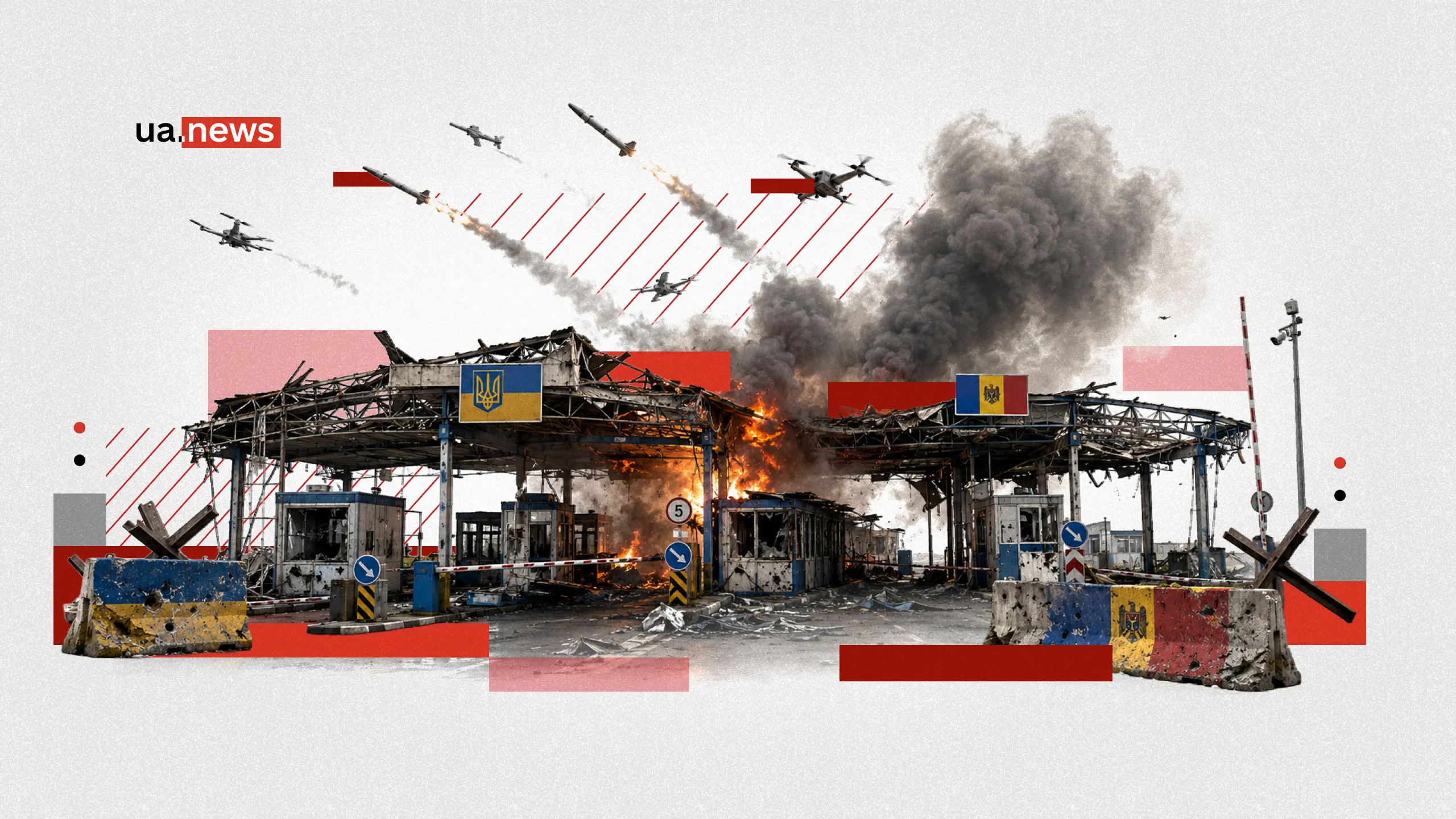
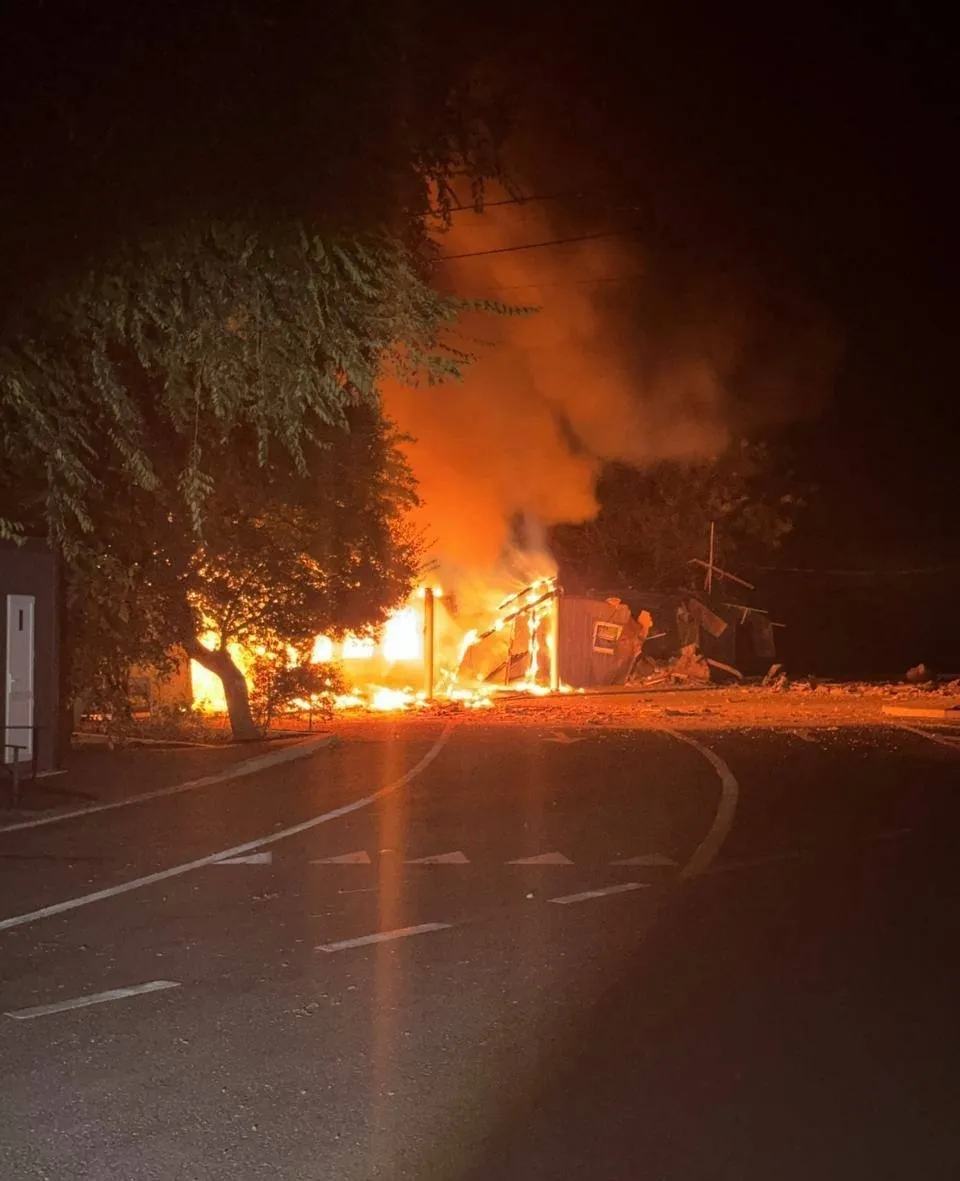
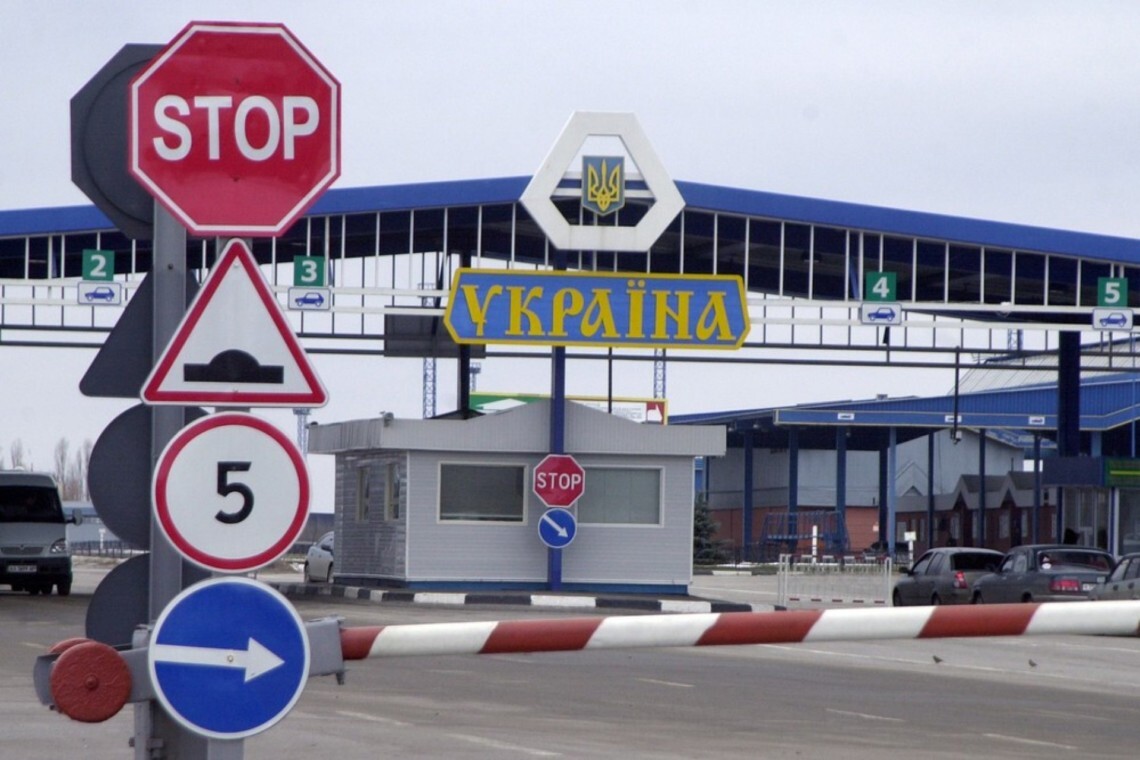
In recent days, for the first time in more than four and a half years of full-scale war, the Russian army has launched a series of strikes against international border crossings on Ukraine’s western border. These include the “Reni” and “Tabaky” checkpoints, which were attacked consecutively on August 20–21. Subsequently, on the night of August 25, the Russians struck the “Vulcanesti” checkpoint.
All three facilities are located on the Ukrainian-Moldovan border. Although the strikes targeted exclusively Ukrainian infrastructure at the checkpoints, the very fact of an attack on an international border crossing marks a new reality that takes the war to yet another (and yet another) dangerous level. Furthermore, given that this is already the third strike in a few days, there are quite compelling reasons to speak of a pattern to these attacks.
Until now, the western borders—and especially the border crossing points themselves—were considered among the safest places in the country. Now that illusion has been shattered. Why is Russia targeting border checkpoints, what is the essence of this new tactic, and will the enemy limit its actions exclusively to Moldova? UA.News political analyst Mykyta Trachuk, together with experts, examined the issue.
What Happened at the Border Checkpoints and Why Is This Considered a Systematic Pattern?
Formally, strikes on border checkpoints can be interpreted as attacks on border infrastructure facilities. But from the perspective of international law and security, the situation is much more complex. After all, a border checkpoint is a zone of shared responsibility between two states. A strike on it—even if it hits only the Ukrainian side—automatically poses a threat to the territory of the neighboring country.
In the case of Moldova, the Russians appear to have deliberately chosen this tactic: striking exclusively on the Ukrainian side, minimizing the risk of a direct hit on Moldovan territory. It’s a cunning calculation: to demonstrate strength and a certain degree of “ruthlessness,” but without giving cause for escalation or accusations of attacking a neighboring country.
However, when viewed collectively, the three attacks no longer appear to be a coincidence. This is a pattern and a kind of “test” of a new tactic. Russia deliberately chose the border with Moldova—a country that is a member of neither the EU nor NATO—for this “test.” This is fundamentally important. The Kremlin has not yet dared to challenge the borders with Romania or Poland, since that would involve direct military contact with Alliance territory. In contrast, checkpoints on the border with Moldova appear to be a convenient target for Moscow: Chisinau cannot do anything about it, even if it wanted to.
If such attacks continue—and Ukrainian experts are openly discussing the likelihood of this—it will mean that Russia is deliberately expanding the scope of its economic pressure. After all, the key reason for these attacks lies precisely in the economic sphere.
The Economic Front: Why Target the Border
The most obvious explanation is a desire to make life difficult for civilians crossing the border. But if we look at the situation more broadly, it becomes clear that there is a much more global objective at play.
For over a month now, Russia has been blocking Ukrainian maritime exports—a key channel for shipping grain, metals, and other products. At the same time, the enemy is systematically attacking river infrastructure along the Danube, attempting to disable Danube ports and transshipment terminals. What’s left? Road and rail transport.
That is precisely why Ukrzaliznytsia’s facilities have been under constant attack for quite some time. Russian missiles and drones regularly strike traction substations, rail tracks, depots, logistics hubs, regular trains, and commuter trains, among other targets. The logic is simple: to deprive Ukraine of the ability to export and import goods, to cripple the economy, and to force businesses and the state to operate under conditions of a permanent logistics crisis.
Attacks on road border crossings are yet another step in the same direction. If the ports are blocked, the railways are under constant fire, and now even the road crossings on the western border are becoming dangerous, Ukraine finds itself in a situation of near-total trade isolation.
This is not only a military tactic but also a specific component of an economic war of attrition. The Kremlin is trying to demonstrate that none of Ukraine’s channels of communication with the outside world are safe (in a sense, unfortunately, this is indeed the case). Attacks on border checkpoints are not about destroying military infrastructure but about creating an atmosphere of total uncertainty for businesses, carriers, exporters, and importers. Every truck waiting in line at the border, every closed checkpoint, means lost money, broken contracts, higher logistics costs, and so on. And that is exactly what Russia is aiming for.
In addition, of course, we must not forget the purely military objectives. Defensive logistics for the Ukrainian Armed Forces (UAF) pass through the western borders: weapons, ammunition, dual-use goods, and so on are sent to us from Europe. Moscow, of course, seeks to cut off this entire flow. In this way, a comprehensive strategy of both economic and military pressure on Ukraine is being implemented.
Will the Kremlin Succeed?
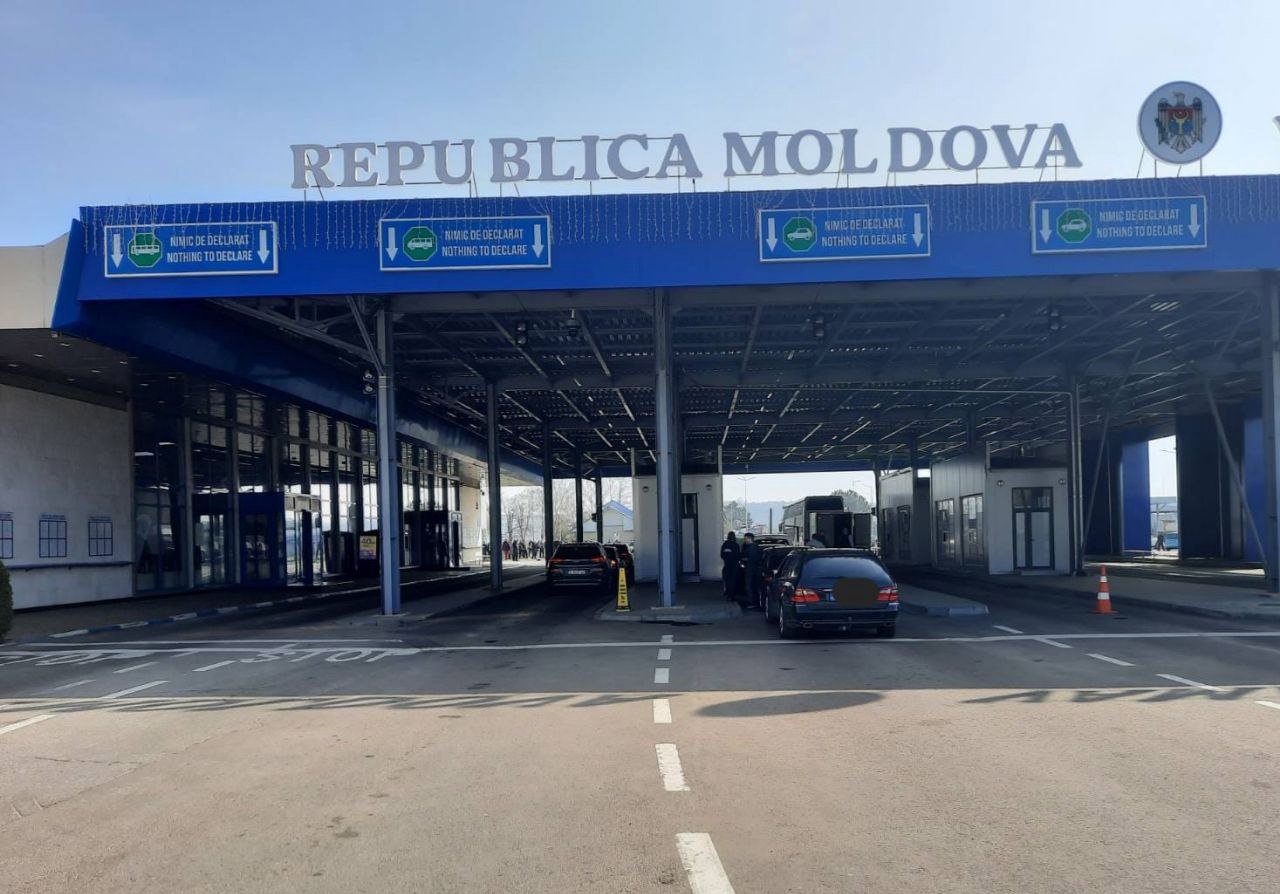
Despite the gravity of the situation, it is important to assess Russia’s prospects objectively. Yes, the strikes on three checkpoints along the border with Moldova set a precedent that cannot be ignored. Two of them have already resumed operations, demonstrating the Ukrainian side’s ability to respond quickly to damage.
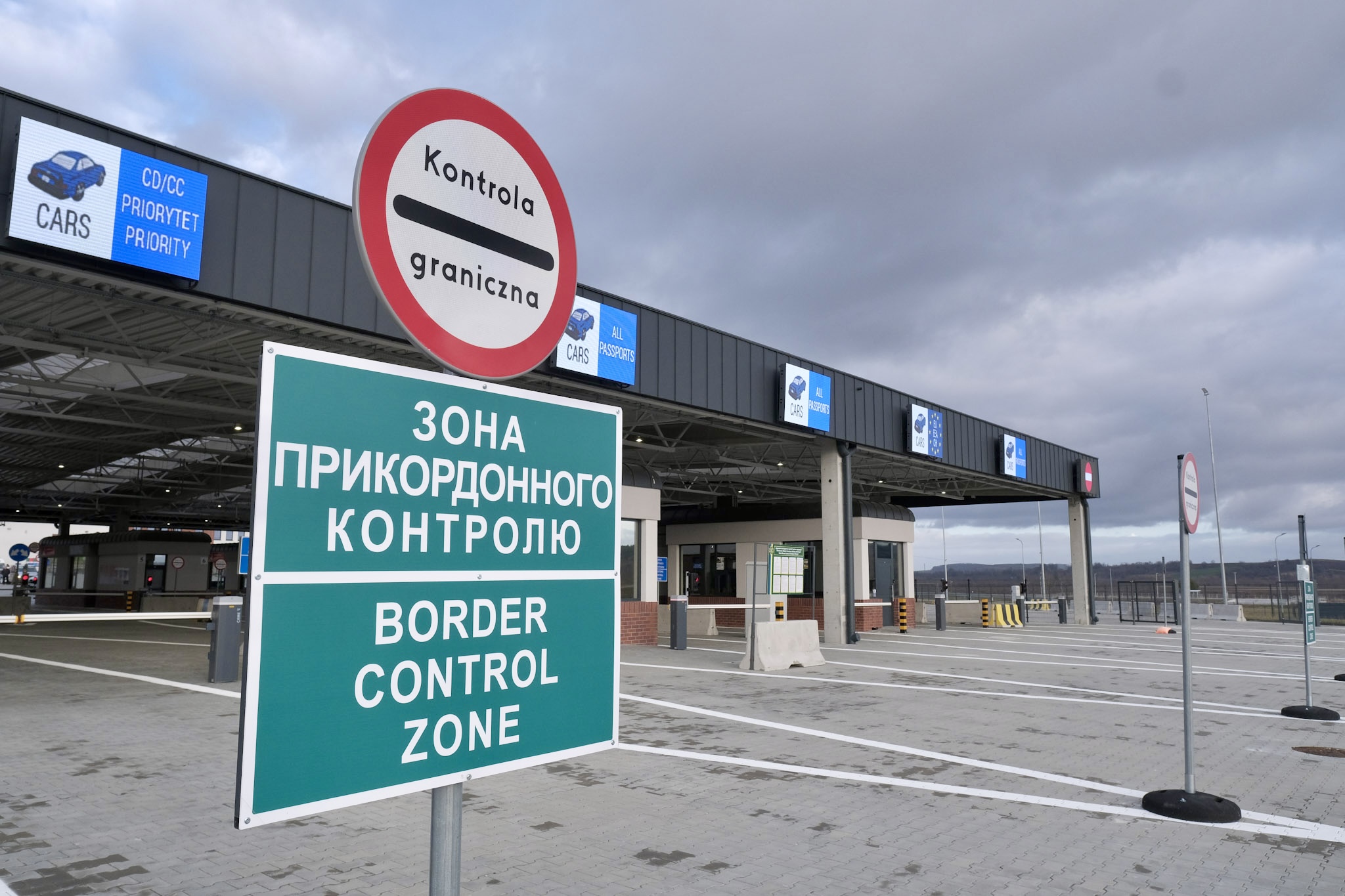
But the main issue is the scale of the problem. There are about 75 checkpoints of various types operating on Ukraine’s western borders: road, rail, pedestrian, mixed, and so on. The vast majority of them are located on the border with NATO countries—Poland, Romania, Slovakia, and Hungary. To completely disable this infrastructure, Russia would need hundreds of precision strikes. And every such strike along the border with a NATO country is playing with fire.
A strike on the territory of a NATO country, or the wounding or even death of a Polish or Romanian border guard (who are, in fact, official military personnel), could provoke an unexpected response. The Kremlin clearly understands this. Therefore, a scenario in which Russia would begin mass bombing of border crossings with Poland or Romania currently seems unlikely—at least in the near future. For now, the targets clearly remain the border crossings with “defenseless” Moldova.
However, the possibility of further escalation should not be completely ruled out. The Russian military machine tends to gradually raise the stakes. If Moscow deems the “Moldovan test” a success, and the international response is not harsh enough (which is most likely the case), then it cannot be ruled out that the next step will be strikes on specific targets along the borders with Romania or Poland.
This would be a logical continuation of the same strategy: first, test the reaction in a relatively safe area, and then gradually expand the area of impact. However, Moscow will most likely still try to attack exclusively Ukrainian border checkpoint infrastructure, without targeting facilities belonging to European countries.
Expert
Opinions
Oleg Starikov, a military expert at the UIP and retired SBU colonel, believes that we are dealing with a planned operation by the Russian Federation that will rapidly gain momentum in the near future.
“All available intelligence indicators—not only on the front lines but also in the political life of the Russian Federation—show that the Kremlin has made a final decision to continue the war until all the objectives set at the start of the invasion are achieved. On the front lines in the tactical zone, the Kremlin first carried out a combat encirclement, followed by an operational encirclement, thereby achieving certain results. This tactic was then applied to operational fronts: Pokrovsk, Myrnohrad, and the Sloviansk-Kramatorsk metropolitan area. As for the strategic operation itself, the Russians began taking actions to blockade rail, road, and maritime transport in the Black Sea. They are targeting not only the Odesa Steamship Company but also the Danube Flotilla. The next phase is a shift to land-based operations: cutting Ukraine off from its overland logistics routes along the western border.
They are starting in the south, from Moldova, and will then move northward. The plan is thus to cut off the entire land border connecting Ukraine with its European partners. This is how the Russians intend to resolve the situation along the front lines, ensuring that Western partners cannot supply Ukraine with weapons and various other goods. I think all of this will happen quickly. The land blockade will most likely be in place by late September or early October. And yes, we should expect attacks at all checkpoints. But the greatest threat is to the major checkpoints: rail, road, and so on. The question is: how will Western partners react? They won’t. They’ll talk about it and then calm down. The most they’ll do is react in the media, and nothing more,” Oleg Starikov is convinced.
Military expert Oleg Zhdanov says that Russia wants to cut off the supply of equipment and weapons to Ukraine at any cost. It’s vital for them. That’s why they’re starting to strike checkpoints on the western borders.
“Look at Bilhorod-Dnistrovskyi: almost all of the logistics infrastructure there has been destroyed. When we rerouted it through other checkpoints, they started attacking those checkpoints… I think the Russians will continue moving north along the border, attacking border crossings with other countries. But it’s worth noting that there are many border crossings, and Russian intelligence isn’t just sitting around doing nothing. Not all of the nearly one hundred checkpoints will be attacked. Only those where the main flow of goods passes—that’s where the attacks will take place. At some small road checkpoints, trucks carrying weapons won’t be able to get through; there will be a collapse there. It’s unlikely we should expect strikes there. Most likely, they’ll target specific checkpoints and launch pinpoint strikes against them,” says Oleg Zhdanov.
In
summary, the attacks on border crossing points with Moldova are not just another episode of the war, but yet another warning sign. Russia is demonstrating that it is prepared to escalate its attempts at economic strangulation and military pressure on Ukraine, turning even those facilities that until recently were considered entirely safe into targets. The main goal is not so much to destroy a specific checkpoint as it is to create an atmosphere of total danger for the entire border and logistics infrastructure. This is a blow to the economy, to the Armed Forces of Ukraine, to businesses, to people who need to cross the border, and so on.
However, it is still too early to speak of Ukraine’s complete land isolation. The western border consists of nearly a hundred border crossing points. The risk of an accidental attack on Alliance territory is a deterrent that the Kremlin is unlikely to ignore—at least for now.
At the same time, the border with Moldova remains a vulnerable point, and it is there that further attacks are most likely to occur. The authorities and international partners should start thinking now about how to protect this section of the border and prevent a complete land blockade of Ukraine.


