
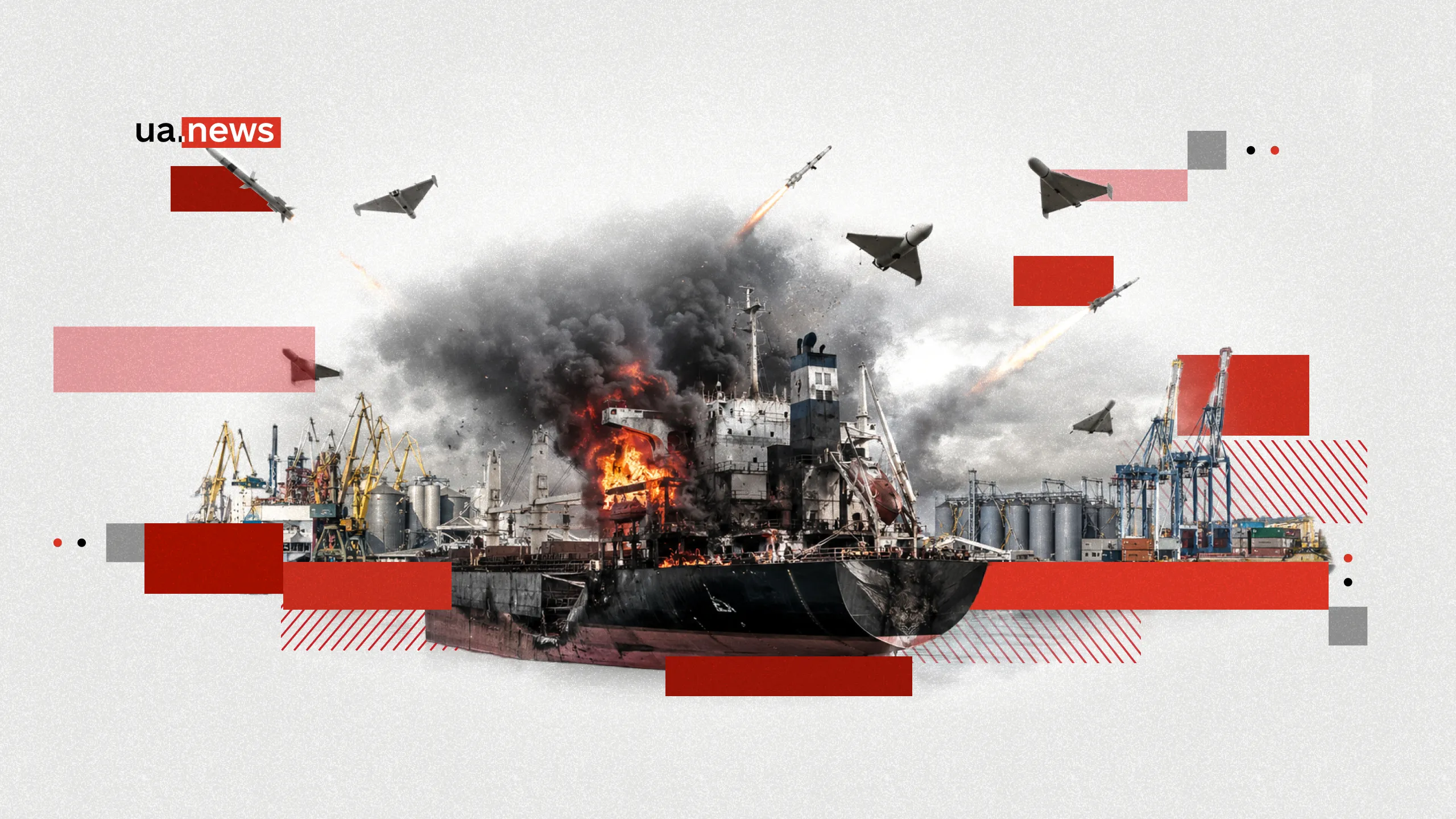
As of July 24, 2026, the Ukrainian economy has crossed yet another extremely dangerous threshold. For several days in a row now, the waters around the Black Sea ports of the Odesa metropolitan area (known as “Greater Odesa”) have remained completely empty. Not a single ship, whether for loading or unloading, dares to enter Ukrainian territorial waters in the Black Sea.
Unfortunately, this is neither a temporary delay nor a logistical glitch. We are talking about a complete halt to maritime trade, which provided the lion’s share of the country’s foreign exchange earnings. In effect, this is an immediate cutoff of oxygen for the export-oriented raw materials model, on which the budget is still barely hanging on. Unlike the situation at the start of the full-scale war, the current collapse is the result of an escalation that has been rapidly intensifying in recent times, and has already become a new economic reality that threatens far deeper upheavals than just another round of rising food prices.
What is happening around Ukraine’s Black Sea ports, what are the risks, and what should be done in such a situation? UA.News political analyst Mykyta Trachuk, together with experts, examined the issue.
From Escalation to Trade Paralysis: What Happened to the Black Sea Ports
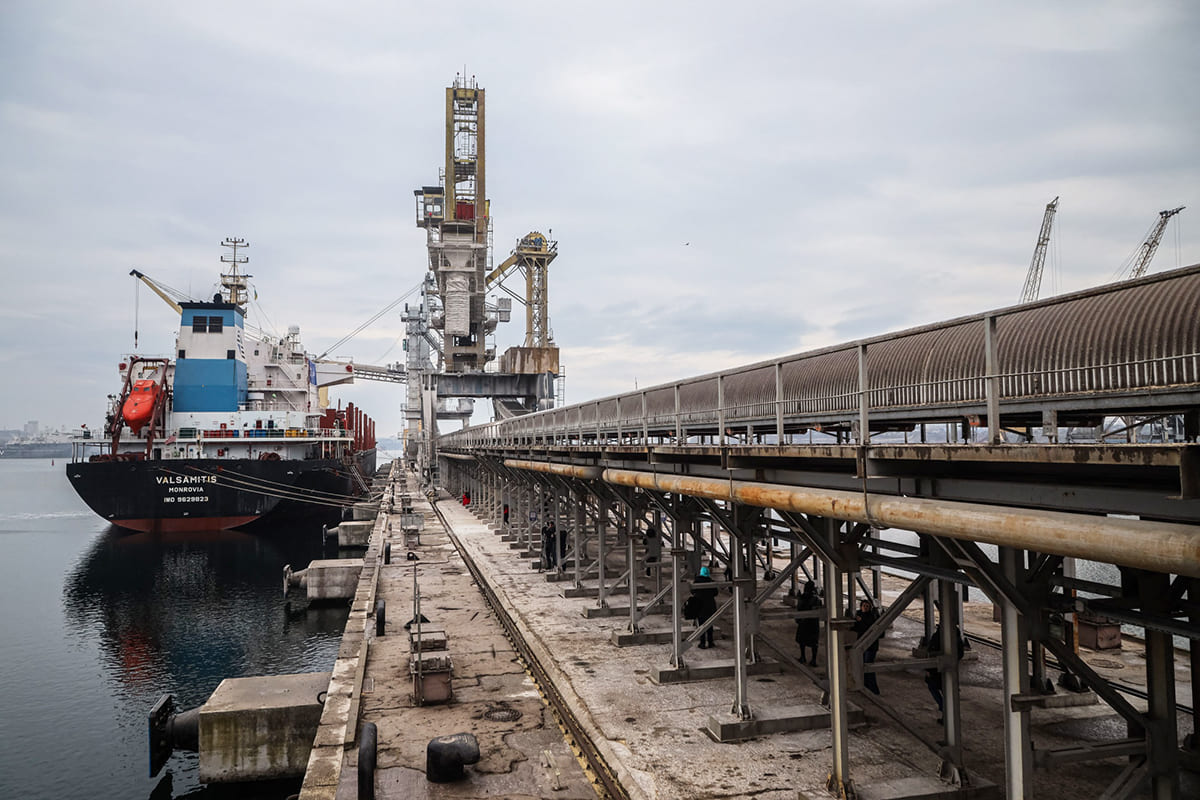
Just a few weeks ago, the situation at sea, while extremely tense, still seemed somewhat under control. Despite constant Russian attacks, the ports of “Greater Odesa”—Pivdennyi, Odesa, and Chornomorsk—continued to receive at least three or four ships per day. This was a critically important flow that allowed for the sale of surplus crops and ensured at least some level of imports of equipment, fuel, and consumer goods.
However, a subsequent shift in military tactics led to an irreversible chain reaction. The intensification of Ukrainian forces’ strikes against Russian vessels in the Azov-Black Sea basin provoked a furious retaliatory response. Russia sharply shifted its targeting priorities, redirecting fire from purely port infrastructure to civilian vessels bound for Ukraine.
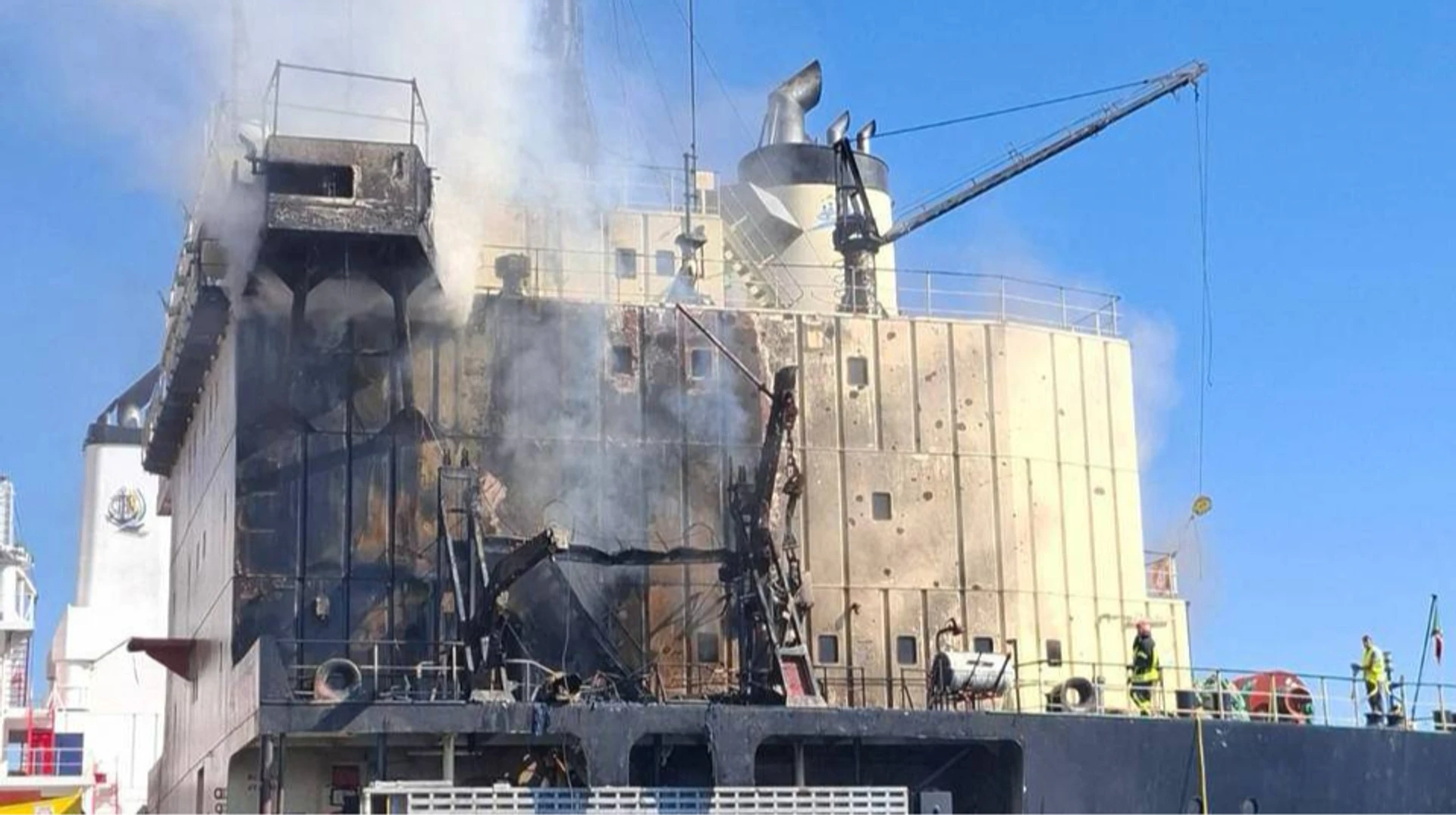
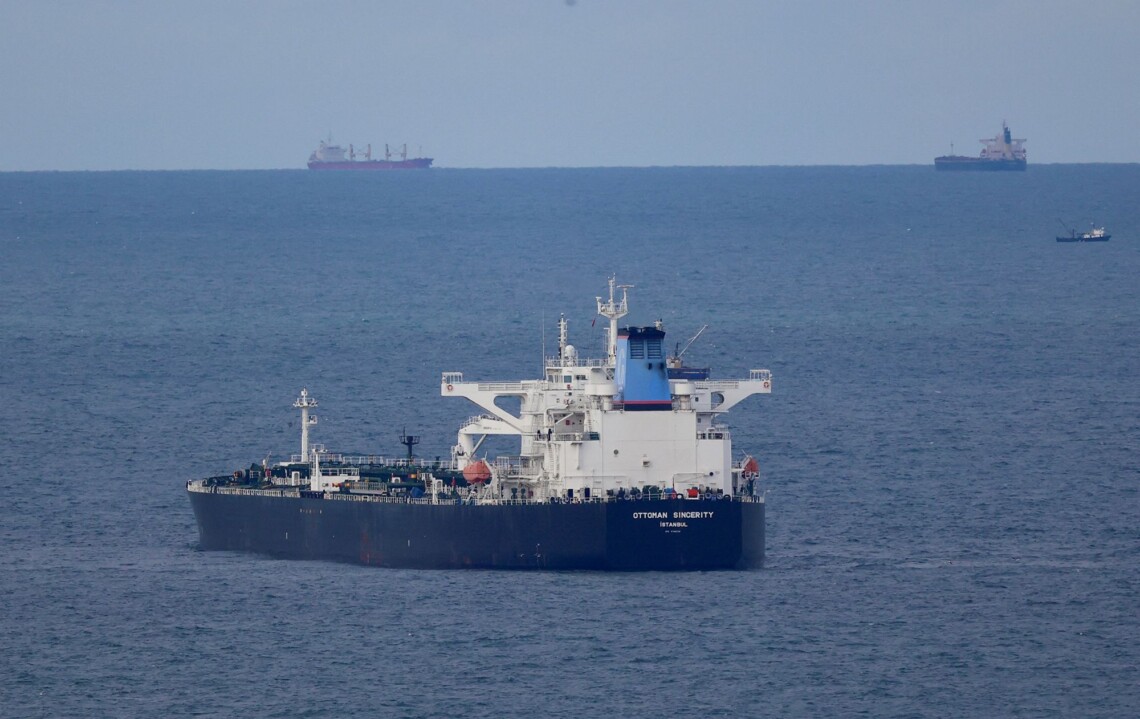
As a result, shipowners faced widespread damage to foreign dry cargo vessels. The final straw was an attack on an Indian ship, which resulted in the deaths of crew members. Following this, Maersk, the world’s largest container carrier, announced a temporary suspension of all operations on the Ukrainian route. Thus, a “lull” began on July 22: for the third day in a row, there has been no maritime traffic toward Ukrainian terminals.
To understand the depth of the problem, it’s worth looking at the raw figures for ocean freight. Commercial shipping is a world of cold, hard calculations. Ever since Russian troops began deliberately targeting civilian merchant ships, military risk insurance rates have skyrocketed five (!) times. This means that the cost of calling at a Ukrainian port is no longer economically viable. Shipowners find themselves in a situation where they are risking not only their vessels but also the lives of their crews. In response, crews have begun demanding hazard pay, ranging up to double or triple their regular wages. This further inflates operating costs.
The Ukrainian government, of course, acts as a guarantor for grain buyers, insuring them against supply disruptions at the level of intergovernmental agreements. But for the carrier itself, there is effectively no state insurance provided. Private businesses are unwilling and unable to assume responsibility for the potential loss of a vessel worth tens of millions of dollars at the bottom of the Black Sea.

Not Just Grain: The Import Trap and the Rising Cost of Living
Usually, when people talk about port blockades, the focus is on agricultural exports. However, the paralysis of maritime transport also deals a devastating blow to the reverse flow of goods—imports.
Not only have grain-carrying vessels stopped arriving, but so have container ships carrying industrial goods, machinery, electronics, and auto parts. Until now, the sea route had been the cheapest and highest-volume supply channel. Now that channel is blocked. Cargo flows from China, Turkey, and other Asian countries—which formed the backbone of the consumer market—are now forced to seek alternative routes.
Import logistics are now only possible via Danube ports or by road from EU countries. In both cases, this will lead to a significant increase in the cost of the final product. Danube terminals have limited throughput capacity and inferior infrastructure for handling complex container shipments. As for road transport, the cost of delivering a single container from a European port to Kyiv is several times higher than sea freight.
This will inevitably hit Ukrainians’ wallets. In the coming months, we may well see a wave of price increases across the entire spectrum of goods: from construction materials to auto parts. The auto parts sector will be particularly vulnerable, as the vast majority of items are imported, and delivery times were previously precise down to the day. Now we must prepare for product shortages and rising prices due to the need to maintain excess inventory amid logistical challenges.
But the most tragic impact of the suspension of shipping will, of course, be felt in the agricultural sector. Eighty percent of all Ukrainian exports passed through the ports of Odesa and Pivdennyi, and grain is a key commodity here. Unlike iron ore, which can simply be left in a quarry, or metal, which can be stored in warehouses, grain is essentially a living organism—a product that requires specific storage conditions and quickly loses its profitability due to fluctuations in global prices. The problem is compounded by the openly hostile stance of some neighboring EU countries, which have blocked the transit of Ukrainian agricultural products through their territories.
As a result, the logistical burden on farmers is skyrocketing. Every unnecessary transshipment means not only a loss of precious time but also additional costs that come directly out of the producer’s pocket.
Budget Shortfall and Currency Loss
The consequences of the “days of silence” at sea should be assessed not only in terms of physical volumes but also from a macroeconomic perspective. The halt in exports through Black Sea ports means a direct reduction in critically needed foreign exchange earnings. According to various estimates, the loss of one-third of grain transshipment capacity in the Odesa region could reduce foreign exchange earnings from agricultural exports by approximately $900 million per month. If we’re talking about a complete halt to shipping, this figure is just the tip of the iceberg, as losses from exports of ore, metal, oil, and other products must be added to it.
This creates an additional, colossal hole in the state budget, which is already traditionally teetering on the brink and remains in deficit. Until now, it has been possible to patch this hole through direct funding from European partners and international financial institutions. However, with each passing month of the war, donor fatigue is growing. The process of allocating new tranches is becoming increasingly complex, accompanied by bureaucratic delays and internal debates within EU countries.
If the Black Sea blockade drags on for months, Ukraine will face a situation where budget needs will rise due to the necessity of maintaining defense capabilities, while export revenues will fall. The gap could prove critical. This poses risks to exchange rate stability (with exchange rates already rising steadily), makes it impossible to increase imports of necessary equipment, and exacerbates dependence on external funding.
With Black Sea ports closed, many are pinning their hopes on the Danube terminals. Indeed, Reni and Izmail have proven their effectiveness as alternative routes. But the Danube will by no means be able to save Ukrainian exports in their entirety. The throughput capacity of river ports and the depth of the channel physically limit tonnage. Furthermore, the logistics loop still ends at Constanta, which is itself overloaded with Romanian and Serbian grain. And most importantly—there is an extremely high risk that Russia, having achieved tactical success in completely halting shipping near Odesa, will shift its attention to the Danube infrastructure (it has done so before).
This would no longer be merely a logistical crisis, but a transportation catastrophe that would completely isolate the country from maritime trade, forcing all cargo traffic through the bottleneck of rail and road crossings at the western border.
Expert
Opinions
Economist Oleksiy Kushch notes: Russia has already calculated the losses to the agricultural sector resulting from the suspension of shipping through the Sea of Azov: a reduction of 1.5 million metric tons in wheat exports. In monetary terms, this amounts to up to $350 million.
“What’s important for us to note is that the Russian government has begun compensating agricultural companies for 90% of the costs of transporting grain to other ports by rail. This is because, against the backdrop of the crisis at the ports of Odesa and the Danube, our government planned in August… to raise rail tariffs for agribusinesses by 30%. This is clearly illogical under current conditions: Ukrainian exporters will have to transport grain not to Odesa, but to Poland and Romania by rail. Rising logistics costs, coupled with the absence of a state program for processing agricultural raw materials domestically, could push Ukrainian farmers into a crisis—which would be extremely unfortunate given the rising grain prices on global markets. “And the grain still has to be transported to those markets,” the expert says.
Political scientist and director of the “Third Sector” Center, Andriy Zolotaryov, emphasizes that over the past month, Ukrainian “middle strikers” have effectively halted shipping in the Sea of Azov. It would be hard not to expect retaliatory strikes—given that even without the Black Sea Fleet, Russia has the capability to launch ballistic missile and drone strikes on the ports of Odesa and Chornomorsk from the territory of Crimea. That’s exactly how things unfolded.
“In recent days, ships have been constantly burning in Odesa. The Russians have moved beyond simply striking port infrastructure and have begun targeting ships entering ports that are of critical importance to Ukraine. And the ports of Odesa have no alternatives; their throughput capacity exceeds 50 million metric tons of cargo. In fact, for us, this is a window to the world through which Ukraine exports its manufactured goods—primarily agricultural products—and through which all necessary imports come in. And it’s clear that when merchant ships are targeted, insurance premiums skyrocket, and shipowners simply halt operations. This has already been stated by the newly appointed Minister of Agriculture, Taras Vysotsky—that shipping has effectively come to a standstill.
This poses enormous risks for Ukraine’s agricultural sector. Ukraine may lose a significant portion of its foreign exchange earnings from exports. In this situation, there are only two options: either radically strengthen air defense at ports and in port and coastal areas, or seek some compromise solutions, such as a “grain corridor,” as was done in 2022. Today, however, we are in a phase of escalating hostilities, and there are very few signs that the situation will improve in the near future. “Therefore, the entire domestic economy will very soon feel the consequences of the blockade of Ukraine’s most vital ports,” Andriy Zolotaryov asserts.
In
summary, the halt in the movement of merchant ships to Ukrainian ports is a very important and critical moment that marks a new (yet another) level of escalation in the war. The enemy is acting cold-bloodedly and, unfortunately for Ukraine, entirely rationally: The Kremlin has learned from previous years and realized that destroying a single dry-cargo ship has a greater impact than destroying docks, as it immediately frightens all global players. Fear, multiplied by sky-high insurance premiums and actual human casualties, “shuts down” Ukrainian ports faster than any shelling.
The situation is currently critical, as its consequences are far-reaching. The paralysis of exports hits the exchange rate and the budget, destroying the agricultural sector’s liquidity. The paralysis of imports triggers a chain reaction of rising prices and shortages in the retail sector. The contraction of the grain market renders farmers’ work meaningless, as they simply won’t know what to do with their harvest.
If the blockade drags on, it will become a true test of resilience for the country’s entire economic system, requiring the state to make not only military but also unprecedented diplomatic and economic decisions to unblock the “Black Sea gateway.”


