
Security is solely the state’s responsibility, and plans for the future must be long-term. However, reality has forced Ukrainians to rethink the basic rules of survival. How do you plan your work when the planning horizon has narrowed to a single evening? Why is the government failing to communicate effectively with its own citizens, and how can a powerful civil society be transformed from an opposition force into an ally?
There will be no immediate relief once the acute phase of the war in Ukraine ends; a new series of difficult challenges will begin: unemployment amid a labor shortage, and the reintegration of veterans into regions that lack any infrastructure. Is the state ready for this, and why is it finally time for it to learn to acknowledge its own mistakes?
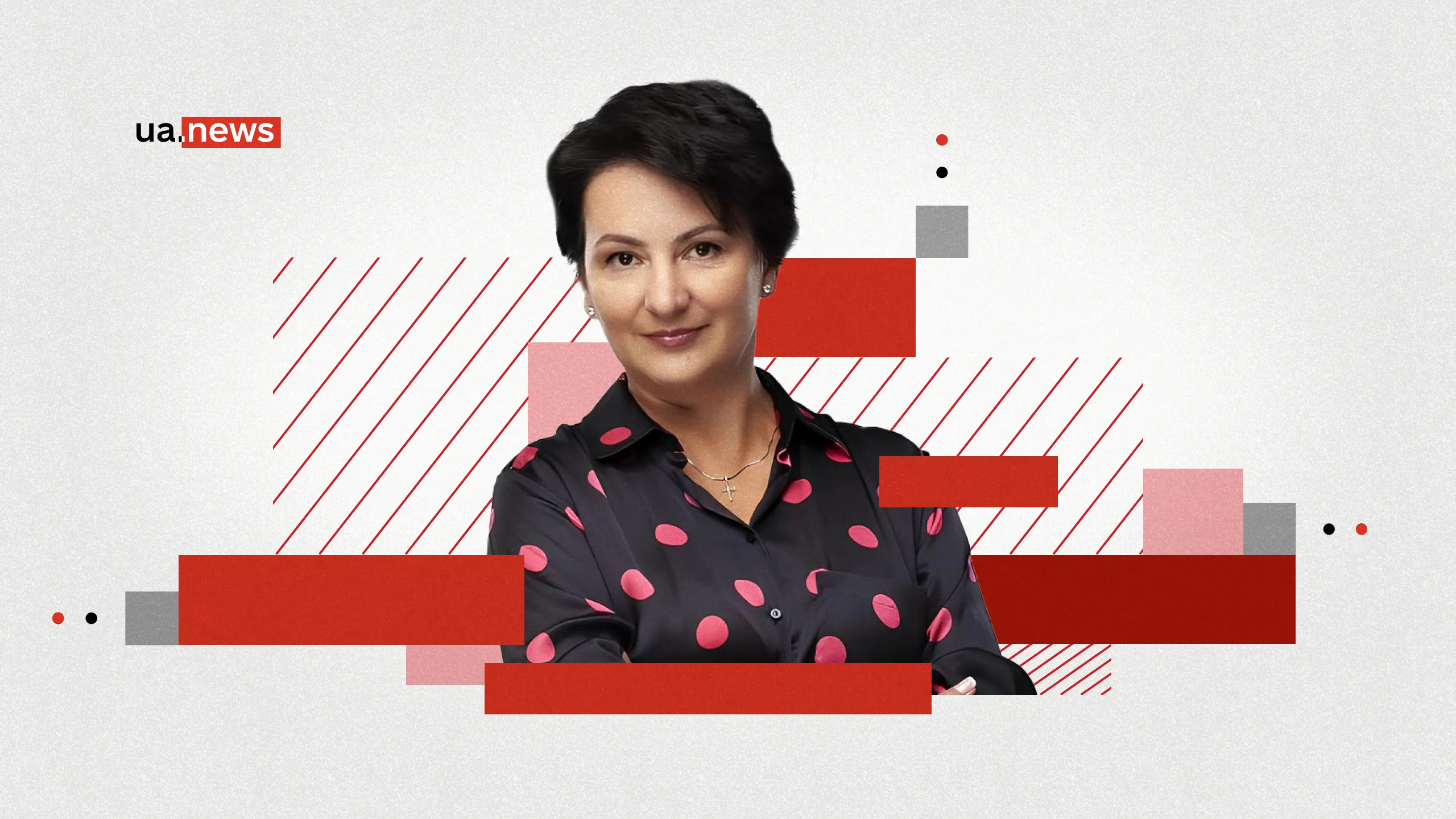
Olena Sukmanova, a lawyer, visiting professor at Warsaw SAN University, and president of the “Safe Ukraine 2030” security foundation, debunks myths about reconstruction, explains why foreign investors are afraid to enter Ukraine, and explains how to make decisions based on intuition and calculation in times of absolute uncertainty.
We discuss a new culture of security, war risk insurance for small and medium-sized businesses, and the challenges that await us after the active phase of the war. Below are Olena Sukmanova’s direct remarks.
On the “New Culture of Security” and the End of the “Straw Legs” Era
Security is a basic human need, as Maslow’s hierarchy of needs demonstrates. However, for many years we lived under the assumption that security was a given and that it was exclusively the responsibility of the state. Starting in 2014, first Ukraine and later all of Europe realized that peace is not a constant, and that the old security architecture rests on “straw legs.” Our foundation was established in response to the need to build a new security architecture, and we created the core program “A New Culture of Security.”
What makes it innovative is that security is no longer viewed as a closed, strictly vertical state secret. We have demonstrated that it can be democratic. We have seen how business and civil society are capable of making a tremendous contribution to it through ad-hoc (situational) partnerships.
In the realm of civil security, a volunteer movement, territorial defense units, and local self-organization mobilized instantly. In the economic sphere, the business community demonstrated incredible adaptability. When I speak in Europe and explain that factories in Ukraine were repurposed or relocated in 4–8 weeks, people there simply cannot believe that such a thing is possible. And when it comes to information security, we’ve become leaders. Today we’re living in the midst of cognitive warfare, and a new culture of security requires that the security component be naturally integrated into all spheres: from kindergarten to the civil service.
On Crisis Situations and Adaptive Thinking Instead of Templates
When we hear about yet another high-profile incident involving shooters in Kyiv and elsewhere, it becomes clear: neither the public nor even law enforcement officials always know how to respond to a terrorist threat or other similar crisis. We’re not setting out to reform the law enforcement system—it has its own protocols. We’re talking about preparing the rest of society. This idea can be scaled up both at the level of a national program and at the level of local communities, and we’re currently developing a concept for such training.
Together with professional instructors who train the best security guards and military personnel, we considered: exactly who needs to be trained? At first, we thought about children, but children graduate from school, and the knowledge isn’t institutionalized. Therefore, we need to train teachers—through hands-on, not online, courses—so they can integrate this into their curricula.
But the main question is: what exactly should we teach? Not just templates. I really like the example my colleague cited from a textbook by a military instructor who served in Syria and Afghanistan. He described different ways to change a car tire: in the desert, in a swamp, under fire, or surrounded by civilians. Each time, it’s a different procedure. No child or teacher can memorize hundreds of such instructions. That’s why we need to teach not dry rules, but adaptive crisis thinking. The world is changing, and threats will constantly evolve: 30 years ago there were no cyberattacks, 50 years ago there was no phone fraud, and today we have millions of weapons in circulation, rapid technological advancement, AI, and the unpredictable mental state of people. Threats will not disappear, so the security component must become part of every process.
Exporting Ukrainian Security Solutions and Lessons from the Budapest Memorandum
It seems that Ukraine has already partially become an exporter of global security solutions on the international stage. Thanks to their energy and creativity, Ukrainians are doing incredible things, but our main problem is that we hardly systematize this experience at all. We need to learn how to package it into an institutional product that can be presented to the world.
A striking example is our “Community Security Passports” project, which we are now beginning to pilot in the Zhytomyr and Poltava regions. This is a methodology for assessing community safety (a kind of preparation for a subsequent self-assessment), which includes logistics, critical infrastructure, crime rates, demographic conditions, warning systems, and more. The logical conclusion will be the preparation of a risk matrix and a safety passport, which must be integrated into the community’s internal policies. This is necessary both for the community itself and for future investors who wish to participate in the region’s recovery. The Baltic states and Poland have already shown great interest in this experience.
If we can institutionalize our unique experience, we will be able to position ourselves advantageously on the foreign policy stage. In 1992, we simply handed over our nuclear warheads and received the Budapest Memorandum, which failed to deliver. Now, by sharing our security solutions with the world, we must receive something in return.
On Hybrid Threats and the State’s Major Mistakes
When it comes to the areas of security that are currently most vulnerable, the most threatening are hybrid threats directed inward at society: radicalization, conflicts, and distrust of government institutions. The main tool here is information, and this is an area where we need to work very seriously. Unfortunately, most of our specialized organizations are currently focused solely on fact-checking and media literacy. However, we have virtually no system for forecasting information risks or for risk management. We are currently trying to bring together experts in information security, researchers, and technology companies working with Big Data to create such a system and propose it to the government.
In general, the government today underestimates two things: the need to systematize experience and the importance of a sustainable partnership with civil society and the business sector. That is precisely why the central focus of our Foundation’s programs is the creation and institutionalization of a public-private-civil society partnership. These security risks will persist for at least another one or two generations. Under such conditions, the government is forced to be strong—and at times authoritarian—to make unpopular decisions and to implement special regulations. But the state’s main task is not to turn the business and civil sectors into opponents, but to transform them into allies so that solutions can be developed collaboratively.
This year, the Foundation developed and launched the “TRUSTA” (Transparency, Resilience, Unity, Security, Trust, and Action), which contains seven specific commitments (information security and cognitive resilience, scaling up “security passports,” a foreign investment screening system, institutionalizing security partnerships at the legislative level, etc.). Civil society leaders, business associations, certain ministries, central and local government bodies, and international organizations have already joined this initiative. When decisions are developed collaboratively, no civil society organization will later come out crying foul over betrayal or human rights violations. Is the state ready for this? Not always. Unfortunately, the attitude that “We can handle everything here on our own because we know better” still often prevails within state institutions. But in today’s world, no one can claim to know exactly what’s best. Therefore, the only way forward is partnership in pursuit of common goals.
Cognitive Dissonance in Communication and the Only Path to Trust
There is no magic pill that would instantly make people think differently and abandon the notion that “the government hasn’t done anything for me.” But there are two clear areas where efforts should be focused. The first is communication policy. People often say at bus stops or in stores that nothing has been done, simply because they lack information and don’t visit official websites. Those who come into contact with actual programs, such as “eOselya,” transparency in administrative services, and so on, see real changes.
The second area is the government’s ability to acknowledge its mistakes. Historically, government communication has been more focused on justifying itself or showing how well things are going, rather than honestly saying, “Yes, we were wrong here.” This creates cognitive dissonance. Citizens hear from all media outlets that we have almost achieved the rule of law and implemented great European integration reforms. They sincerely believe this, but the next day they find themselves needing to file a routine civil lawsuit—and end up in a system where the courts are completely overburdened and cases drag on for years. Or they send a request to a ministry and, instead of a clear and understandable response, receive three pages of quotations, starting with the Constitution. This is a genuine systemic problem. Naturally, after such an experience, people do not feel protected.
To earn the trust of a specific person, we shouldn’t expect citizens to take that first step. Everyone has their own life, their own everyday problems—“charity begins at home.” It is the state’s responsibility to take that first step through small, daily decisions.
Moreover, Ukraine has an incredibly strong civil society. These people are already doing tremendous work, and the government’s task is not to turn them into bitter opponents, but to make them our allies. This is precisely what sets our foundation apart from the average civil society organization. We don’t engage in populist spectacles in our “own little bubble,” because that won’t get us anywhere. We implement systemic programs in collaboration with government stakeholders—we have signed memorandums of understanding with virtually all key agencies in the security sector. Only through this sometimes very difficult but joint search for a middle ground, together with civil society, can we build trust step by step.
Insuring against military risks and defending the country on the international stage
Setting aside the obvious shortage of personnel, our post-war reconstruction depends entirely on two fundamental challenges: external financing and the inflow of investment. But foreign businesses say, “We’re ready to come in once the acute phase of the war is over.” However, we all understand that even when it ends, no one can guarantee that it won’t resume in a year or two. Moreover, foreign companies currently cannot even send their specialists to Ukraine because there is no basic insurance mechanism in place.
Therefore, our main practical tool and driving force is war risk insurance. This is a challenge not only for Ukraine but for the entire international community. There are already some examples involving large projects, but this mechanism needs to be developed so that it becomes accessible not only to multinational giants but at least to the average investor.
The second risk is establishing transparent rules of the game. Last year, at a meeting, foreign investors told us directly: “We don’t understand your system; you have excessive discretion on the part of local governments, corruption, and non-European legislation.” I responded as a lawyer: “No, you simply don’t know our system. We have sound legislation, and from a construction or investment perspective, we can structure a project so that it looks better than a European one.”
To prove this, our foundation prepared a comprehensive report. We analyzed five real reconstruction projects in different regions (ranging from large-scale programs to direct municipal partnerships, such as the one between Denmark and Mykolaiv) and honestly laid out the facts: where the risks lie and how to overcome them, where procedures lack transparency and how to make them transparent, and how to at least partially mitigate security risks. We presented these monitoring tools at a meeting of the Reconstruction Alliance of the European Parliament’s Committee of the Regions. When we travel to Europe, I always say: I haven’t been a government representative for a long time and can afford to say whatever I want, but I will never say anything bad about Ukraine. This is something our entire society needs to learn—to represent and defend the country’s unity to the outside world
Planning in the Face of Chaos and the 70% Readiness Rule
We’ve already gotten used to living in a state of absolute uncertainty, where you don’t know what will happen tonight—we have no other choice. If someone in our office seriously utters the word “long-term,” everyone starts laughing. We’ve learned to take small steps and make decisions on the spot.
Based on my observations, in crisis situations, decisions are made based on three factors: rational facts, personal experience (where you’ve already gotten burned), and intuition. And the vast majority of decisions are intuitive. While large corporations are used to going through five rounds of discussions and approvals, here everything is decided “right here, right now.” Today, it’s much more important to be 70% ready and get started immediately than to wait a month for 100% readiness. In that month, everything could change so much that your ideal product simply won’t be needed by anyone. Don’t wait for complete calm and absolute certainty. The main thing is to take action.
The Illusions of My College Years and the Intricacy of the “Social Contract”
Looking back on my professional career, what has surprised me most recently is how much I now enjoy working on security projects. After all, my entire career—starting in the 1990s—has been in the legal field.
And if we look at the bigger picture, every law student studies the theory of the state and law, specifically Jean-Jacques Rousseau’s theory of the social contract. To put it simply: people come together, establish the rules by which they will live, and agree to abide by them. As a student, I used to think, “Pfft, what’s so hard about that? These are obvious, basic things.” And it wasn’t until after 20 years of practice that I realized just how incredibly difficult it is. It’s almost impossible!
Even within a single corporation, it’s hard to find a solution that satisfies everyone—and then ensure it’s implemented. And when you’re working with parliament, the government, and the business community, trying to reconcile this web of conflicting interests… It’s this complexity of the art of negotiation that impresses me the most. It’s as if everyone around you is smart, but everyone has their own agenda. I’ve learned to work with this: you just do your absolute best in any given situation.
Four Causes of the Postwar Crisis and the Phenomenon of Ukrainian Solidarity
Historians and criminologists often cite the surge in crime following World War II and warn that a similar phase awaits us. In the security sector, these risks are well known; they are not new. We are indeed facing a serious deterioration in the crime situation, and there are four clear reasons for this.
The first is paradoxical unemployment. We face a strange situation: on the one hand, a catastrophic brain drain; on the other, a shortage of jobs in certain regions. The second is the enormous number of unregulated weapons in circulation. Third is the return of veterans. After a conditional truce or ceasefire, this will be a massive process. We must honestly acknowledge that their mental state (whether you call it PTSD or not) will, to put it mildly, be very different from that of those who remained behind the lines. The fourth factor is the military’s immense disappointment and distrust of the civilian government. They are currently holding the line on the front thanks to their internal solidarity and camaraderie: “We need to defend the country, and then we’ll figure everything out.”
The law enforcement system must be fully prepared for this explosive mix. The business community must also prepare for the reintegration of veterans. We recently held a major event on this topic, and I told the attendees frankly: “The big businesses gathered here can afford corporate psychologists and specialized workplaces. But when a veteran returns to a remote regional center, none of that exists there.” Creating infrastructure for veteran-owned businesses and businesses run by internally displaced persons (IDPs) is now a direct and immediate task for the state—a separate startup cluster.
Add to this the constant, chronic risk of renewed hostilities, which will put pressure on investment, and the dire demographic problem—the outflow of young people, especially young men, who leave to study abroad and settle there.
The only thing keeping us afloat is our phenomenal unity. Of course, it can’t remain at the same emotional intensity all the time—it works like any emotion. This is our distinctly Ukrainian mentality: in the face of a direct threat, we instantly become a single monolith, even though in peacetime we might quarrel over anything. The main thing is not to destroy this monolith from within.


