
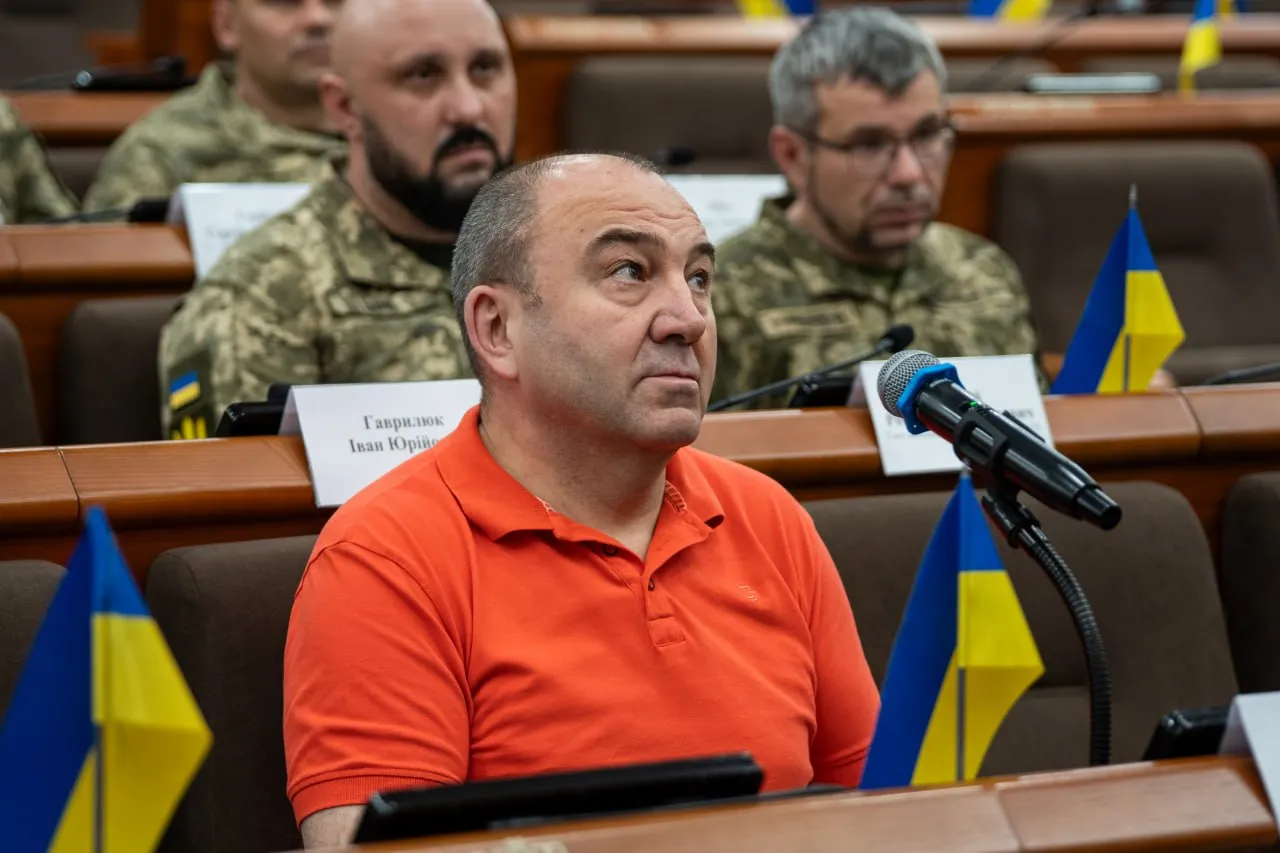
“The Ministry of Defense wasted a year and a half before realizing that robots, not people, should be fighting on the front lines,” said former Deputy Minister of Defense General Ivan Gavryliuk at a meeting of the Temporary Investigative Commission chaired by Oleksiy Honcharenko.
According to the former official, as early as June 2024, under his leadership, the first robotic stronghold equipped with ground combat systems was created and successfully tested. However, the then-leadership of the Ministry of Defense, headed by Rustem Umerov, “put the brakes on the project.”
“We only woke up a year and a half later, when the need for the RPC became critical,” the general stated, adding that it was precisely due to the systematic disregard of his innovative initiatives and behind-the-scenes accusations that he was forced to resign.
Ivan Gavryliuk was appointed Deputy Minister of Defense in October 2023. His main task in the position was the development of military-technical policy.
“At that time, the Department of Military-Technical Policy, which fell under my direct authority, was responsible for procuring weapons and military equipment to meet the needs of the Armed Forces of Ukraine.”
His reassignment as First Deputy Minister of Defense took place in May 2024. According to General Gavryliuk, this was done to organize operational management within the Ministry of Defense. The newly appointed First Deputy’s area of responsibility was the logistical support of the Armed Forces of Ukraine.
To this end, the Center for Logistics Support of the Armed Forces of Ukraine (later renamed the Coordination Center) was established. Its primary task was to ensure the timely provision of the necessary equipment to the Armed Forces of Ukraine in coordination with all stakeholders, including the General Staff and other agencies.
How Shabunin and Kalenyuk Saved American Billions
It came as a surprise to the TSC members to learn of the participation of civil society activists in closed-door meetings at the Ministry of Defense. At critical moments, the ministry called upon the leaders of the “Anti-Corruption Action Center,” Vitaliy Shabunin and Daria Kalenyuk, for assistance. Gavryliuk recalled at least two such meetings. Defense Minister Rustam Umerov personally summoned them there and chaired these meetings.
They gathered because of a serious problem: at the end of the summer, Ukraine faced the threat of losing a massive $5 billion aid package from the U.S. Shabunin and Kalenyuk acted as consultants: they analyzed the risks and advised officials to urgently step up the work of our embassy in the U.S. and establish closer ties with the U.S. Army Command in Europe to ensure the funds were not lost.
Was Shabunin himself serving in the Armed Forces of Ukraine at that time? General Gavryliuk explained that he did not keep track of other people’s lives, but Vitaliy Shabunin did attend meetings at the Ministry of Defense in civilian clothes, not in military uniform.
Accused of embezzling funds for weapons: why Gavryliuk actually left
In the spring of 2025, Ivan Gavryliuk was dismissed from his post. According to the general, the then-minister, Rustem Umerov, publicly accused his deputy of corruption in front of numerous witnesses.
This happened on April 2, 2025, at a large meeting attended by top leadership: deputy ministers, the Chief of the General Staff, and the heads of the Ministry of Strategic Industries.
“At this meeting, the defense minister publicly stated that there were allegedly ‘rumors’ that General Gavrilyuk, together with Colonel Busel, were embezzling funds intended for weapons procurement,” Gavrilyuk said.
The accusation, made without any evidence, was a severe blow to the career military officer.
“This baseless accusation, voiced in the presence of my colleagues, was the main reason for my decision to leave the ministry. Unlike civilians, military personnel are taught a keen sense of personal dignity and honor during their training. This remark humiliated my honor, so I could not continue working under the leadership of Rustem Enverovich,” the former deputy explained.
There was no investigation or even a conversation afterward—the minister simply threw the remark out there, and Gavrilyuk submitted his resignation the very next morning.
“No, there were no questions or requests to explain the situation. It was simply thrown ‘into the air.’ After the meeting, on the morning of April 3, I went to see him and personally submitted my resignation. I didn’t bother to sort things out face-to-face: when such information is thrown out publicly in front of everyone, there’s no point in that anymore,” the general concluded.
According to him, Umerov accepted the report without further ado, and just two weeks later, on April 18, the Cabinet of Ministers officially voted to accept Gavrilyuk’s resignation.
“Let it slide”: how the Ministry of Defense wasted a year and a half and why the general wasn’t included in Fedorov’s “young team”
The general admitted that there was no open conflict between him and Umerov, but relations had long been strained. The main reason was that Umerov did not like that the experienced general managed his own department independently and did not allow ministerial aides to influence decisions.
Because of this, the ministry began blocking Gavrilyuk’s important military ideas. The state lost the most in combat operations. The general said that as early as the summer of 2024, he had shown the leadership a ready-to-use robotic stronghold that could save the lives of our soldiers on the front lines.
“I had been insisting on the immediate development of this initiative since 2024 so as not to waste time. My own authority wasn’t enough to scale it up, and the ministry simply ‘put the brakes on the project.’ As a result, we lost a year and a half before the government finally recognized that robots, not people, should be fighting,” the general stated.
The same fate befell his idea to create a special council under the Ministry of Defense that would focus on military innovation. The regulations and decision on its creation were signed, but the minister never actually implemented the decision.
He didn’t fit into Fedorov’s “young team” due to his age
In early 2026, Mykhailo Fedorov took the position of defense minister. At that time, Gavryliuk was asked to step down from the post of first deputy to a regular deputy, because Fedorov had brought his own man from the Ministry of Digital Transformation—Oleksiy Vyskub. The general did not argue and continued to work, but by May 2026, he was asked to leave entirely. The reason turned out to be purely political.
“On May 18 (Monday), Minister Fedorov summoned me. He noted that he had no complaints about my work—everything was fine—but they were forming ‘their own, young team,’ a concept into which I didn’t fit,” Gavryliuk recounted the conversation with the minister.
At the same time, officials didn’t even look for a replacement—they simply distributed Gavryliuk’s workload among the other deputies who remained at the ministry.
However, having unique experience as first deputy under as many as three different ministers, General Gavryliuk declined the offer from TSC Chair Oleksiy Honcharenko to provide important advice to the Rada or address the public directly.
“The Verkhovna Rada has specialized committees. If the need arises, I will provide them with an official report,” the general cut him off.


