
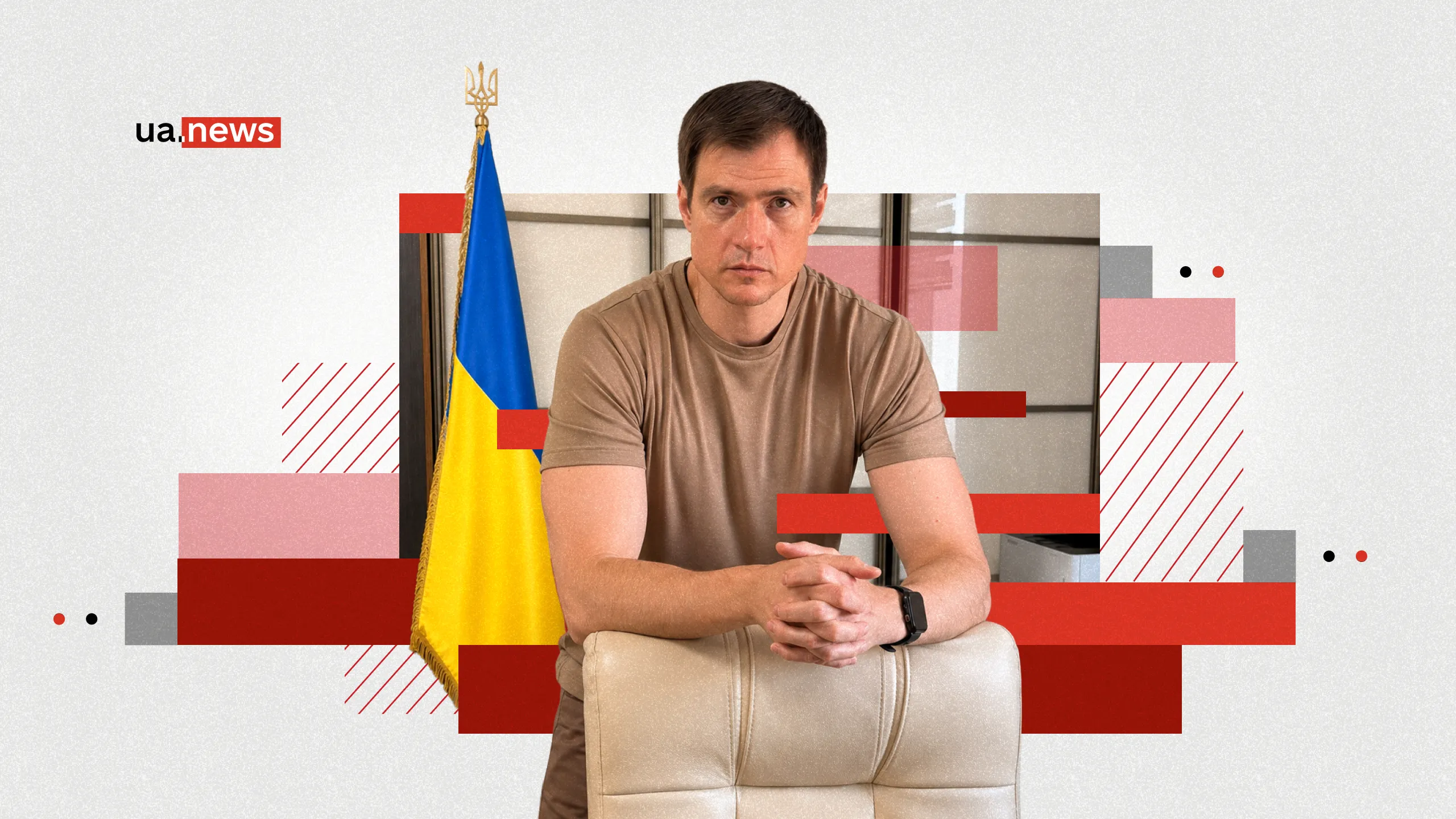
Odessa is undergoing a major overhaul of its advertising market: the number of large-scale structures is being cut in half, and modern digital screens are appearing, featuring not only commercial ads but also socially important initiatives such as “A Minute of Silence.” At the same time, revenue for the city budget is increasing.
Amid these constructive changes, local public groups are reporting an intensification of information attacks and even direct threats against Igor Slyusarenko, head of the Odessa City Council’s Advertising Department. According to him, the pressure has been ongoing since early 2025 and has become systematic in recent months.
The UA.News editorial team spoke with Igor Slyusarenko about who is trying to remove him from office and why, as well as about the reform of the outdoor advertising system and the increase in revenue for the Odesa city budget.
What are the specific characteristics of the advertising market in Odesa, what is its scale, and to what extent is the smooth operation of this sector an important part of the city’s economy, especially now—during the war?
Igor Slyusarenko: The advertising market in Odesa consists of about 40 major players and is a vital component of the city’s economy.
Before the reform, it was significantly oversaturated: the city had over 3,500 large-scale advertising structures, a significant portion of which had been installed under comprehensive plans approved more than 15 years ago. This gradually led to economic imbalance: the structures became unprofitable, price dumping intensified, and city rates remained virtually unchanged for years.
After the outbreak of full-scale war, the situation became even more complicated—businesses sharply cut their advertising budgets, and some campaigns were effectively put on hold.
Therefore, our task today is not simply to regulate outdoor advertising, but to create an economically sound and modern market: fewer structures, higher quality, clear rules for businesses, and greater returns for the city budget.
What are the main functions currently assigned to the Advertising Department? What results has your team achieved in recent years?
Ihor Slyusarenko: The main task of the Advertising Department is to regulate the city’s advertising space, establish transparent rules for market participants, monitor compliance with those rules, and ensure revenue for the Odesa budget. And the results here can be measured in concrete figures.
Another area of focus is monitoring compliance with urban beautification regulations and the legality of advertising placement in accordance with Article 152 of the Code of Administrative Offenses. Based on the results of the first half of the year, the Department ranked first in this area.
Tell us about the project to optimize large-scale advertising structures in the city and other systemic changes. What city needs do they address?
Ihor Slyusarenko: Over the years of full-scale war, we—together with market participants—have managed to effectively overhaul the outdoor advertising system.
We agreed to reduce the number of large-scale structures by 50%, replace outdated media with modern European formats, reduce their sizes, and gradually transition from print advertising to digital.
The old comprehensive plans were scrapped. Together with advertising companies, we developed and approved 25 new plans that call for half as many structures and allow for their conversion to digital format without unnecessary red tape.
And all of this has been achieved despite significant restrictions. Since 2023, following the inclusion of Odesa’s historic center on the UNESCO World Heritage List, restrictions have been in place within the protected zone on the issuance of new permits for outdoor advertising. In other words, we are simultaneously reducing the number of structures, modernizing the market, increasing its financial returns for the city, and continuing the reform. Bringing this reform to its logical conclusion is one of our main tasks today. Local social media groups are actively discussing the tense situation surrounding you and your team, mentioning various incidents and forms of pressure. What is really going on? Ihor Slyusarenko: In my opinion, the situation escalated precisely when the advertising market—despite a 50% reduction in the number of structures—began to recover, operate steadily, and generate significantly higher revenues for the city. Certain forces have become interested in gaining control over this market and using it, in particular, to advance their own political goals. [blockquote_with_author name="This may sound immodest, but for many advertising companies, my position today serves as a guarantee that market reform and downsizing will proceed proportionally, transparently, and according to the same rules for everyone. Obviously, this is precisely why my position as a leader does not suit everyone.
There were many forms of pressure. High-level executives were often drawn into this process; in my opinion, they either received distorted or incomplete information or may have had their own vested interests. I cannot currently assert the latter as an established fact.
How long has this pressure been going on?
Ihor Slyusarenko: The pressure itself began back in January 2025. And since February 2026, in my opinion, it has entered a new phase—with the systematic use of the administrative apparatus’s capabilities.
I am also currently receiving unconfirmed information about possible attempts to involve law enforcement agencies in this matter and the preparation of certain provocations. I cannot confirm that this information is accurate, but given previous events, we must take this scenario into account as well.
Furthermore, according to information we are currently verifying, agreements may have been reached with certain bloggers and Telegram channel administrators to launch, at considerable expense, an information campaign against me and my family—on Telegram channels and social media.
We are properly documenting everything we can.
Is the incident in February 2025, when you were brutally beaten, related to the current events? How did that case end?
Ihor Slyusarenko: The incident in February 2025, which I consider an attempt on my life, is, in my opinion, directly linked to the current events.
I cannot disclose any further details at this time, as the investigation is ongoing.
My attorneys and legal advisors are aware of the situation and have a clear plan of action to respond to any possible actions taken against me and my family.
The time will come when all the circumstances of this story will be made known to the public. And everyone whose involvement in these dirty dealings is established must be held accountable in accordance with the law.
And we will achieve this.
How would you comment on the role of certain civil society organizations that are demanding an official investigation into you? Are you aware of such a request?
Ihor Slyusarenko: Yes, I am aware of such requests.
According to the information we have—some of which has already been documented—certain civil society organizations may have been used by a party interested in my dismissal as part of a broader scheme.
The logic behind this, according to our information, may have been simple: formulate allegations, initiate an internal investigation, form a commission, use its findings to dismiss me, and then appoint a person under their control. One of our interlocutors put it this way: “And then let him take it to court.”
What can you say about the allegations raised by these NGOs?
Ihor Slyusarenko: As for the allegations themselves—over the six years I’ve been working here, there have been quite a few similar complaints, and they’ve been sent to various authorities. These matters have been investigated repeatedly by the relevant agencies, including the National Agency for Corruption Prevention (NAZK), and no violations were found.
And what’s telling is that for many people within the city council, what’s happening has long been obvious.
That’s why I’m certain: they’re not looking for violations here, but rather a formal pretext.
And in the near future, I think we’ll be able to present our readers with concrete facts. Proceedings against me have already been initiated on several fronts, and we’re closely monitoring their progress.
What exactly are your opponents trying to achieve right now? For example, there’s talk in Telegram channels about a redistribution of the advertising market in Odesa.
Ihor Slyusarenko: This is already more than just speculation. Some of the information we have has already been documented. But from a legal standpoint, I don’t want to present theories as established facts.
Our assessment at this stage is as follows: to remove me from office, appoint a puppet, gain the ability to reshape the advertising market to serve the interests of a specific group, and influence the distribution of public service announcements—particularly those related to military topics— deciding who gets airtime and who doesn’t.
The extent to which this version corresponds to reality must be determined by the facts and, if necessary, by the competent authorities. Some of the information has already been documented, and we are also recording new developments.
Therefore, those who may be involved in carrying out such a scenario should be fully aware of the legal consequences of their every action.
Everything that is properly substantiated will, in due course, be made public and submitted for legal review.
Do you know who might have an interest in removing you from office?
Ihor Slyusarenko: Yes, I have an idea of who might be behind these developments. But at this stage, for certain reasons, I do not consider it appropriate to name names publicly.
I’ll say only this: the relevant information and materials have been documented. If the pressure continues or intensifies, I reserve the right to make them public. Under any circumstances, my lawyers and close family members have access to these materials.
I’m not making any claims, but I’ll quote a excerpt from my latest Facebook post:
I’m not accusing anyone, nor am I claiming that this is exactly how things are unfolding. But there is one telling detail: according to the information I’ve received, one of the officials involved in these processes himself cites other individuals as the source of the relevant instructions. Whether this is true or an attempt to shift responsibility away from himself—I cannot say for certain today.
There’s also a rather strange coincidence: an official at the city council changes, and this person—in an “acting” capacity—begins overseeing the advertising sector—and almost simultaneously, the active phase of attempts to remove me from office begins.
At the same time, internal intrigues, information attacks, attempts at discrediting me, the spread of false information, administrative pressure, and other actions began—all of which I perceive as elements of a single, systematic campaign.
Perhaps it’s just a coincidence.
In due time, the facts will reveal who played what role in this story.
How do you plan to proceed from here?
Ihor Slyusarenko: I’m not clinging to my seat, and I don’t measure my future by a single position.
But I have a commitment to the advertising companies that trusted us and, during the war, voluntarily agreed to effectively cut their business by 50% and participated in implementing this reform at their own expense. My task is to bring the reform to its logical conclusion and not allow the results of our team’s and the entire market’s many years of work to be destroyed by someone’s political ambitions or private interests.
Once this project is completed and the commitments we’ve made are fulfilled, nothing will keep me or my team here. We will move on.
I understand the balance of power: our opponents may have administrative resources, significant funds, connections, and influence over certain institutions. Therefore, I cannot guarantee that we will be allowed to peacefully complete what we have started. Given what has already happened and the threats we’ve received, I’m not ruling out any scenario.
What might this whole dangerous situation mean for the city and the local community of Odesa?
Ihor Slyusarenko: This situation has long since been about more than just me. For Odesa, the issue is much broader: Can the city have clear and uniform rules for business, or can a successful market be reallocated at any moment to serve someone’s interests? This is a matter of business confidence in the city, the budget, and the governance system itself.
That’s why I’m not dramatizing things. I’m simply documenting everything that’s happening. Step by step.
We’ll see what happens next. A “mask show”? A new smear campaign with yet another crude story along the lines of “he’s on someone’s payroll”? New “compromising evidence”? The fulfillment of threats already made—even to the point of physical intimidation? Perhaps we’ll hear about some completely absurd “Russian connection.”
We’ll see.
The main thing is that no one later says that none of this happened, that no one knew anything, and that it all happened “by accident.”
We’ll do everything in our power. As for the rest, the people of Odesa, society, and the law will be the ones to judge.


