
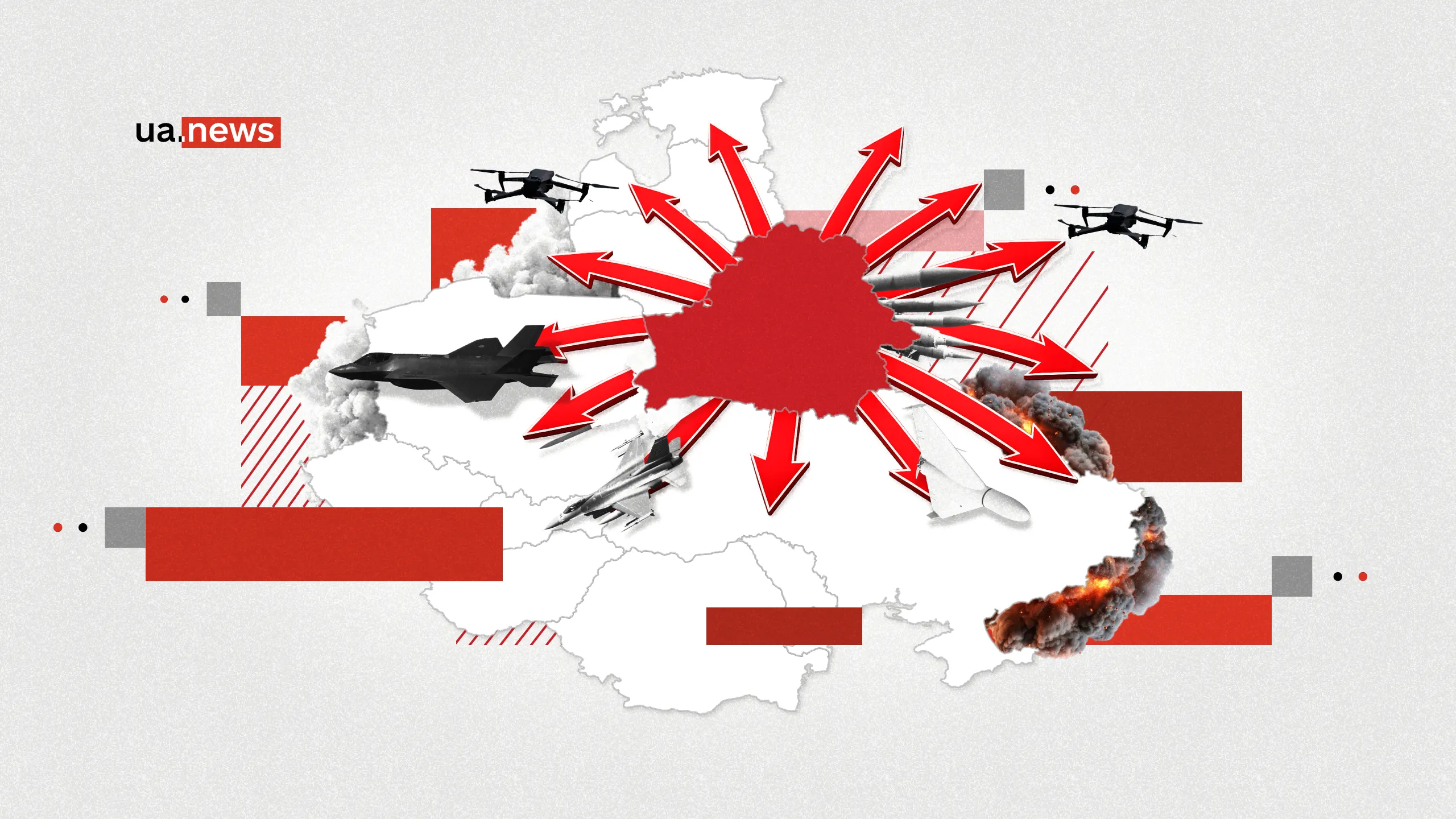
Recently, Ukrainian President Volodymyr Zelenskyy warned of a new threat originating from Belarus. Specifically, he referred to the deployment of specialized UAV control stations in that country. While the world’s attention was previously focused mainly on missile arsenals and military bases, the agenda now includes a far more flexible, mobile, and harder-to-track instrument of war: remote-controlled drone systems.
Recent events confirm this alarming trend. Incidents involving drones intruding into Polish airspace in September 2025 are most likely linked to Belarus’s military activity. All of this is shaping a fundamentally new threat landscape, where Minsk acts not merely as a loyal ally and satellite of Moscow, but as a crucial element of the infrastructure of a new hybrid war.
What is meant by the term “UAV control station”? How does this threaten Ukraine and Europe? How does Lukashenko’s regime maneuver between Russia and the West, simultaneously reaping benefits from both sides? UA.News political analyst Mykyta Trachuk, together with experts, examined the issue.
What are drone control stations and how are they changing the rules of the game
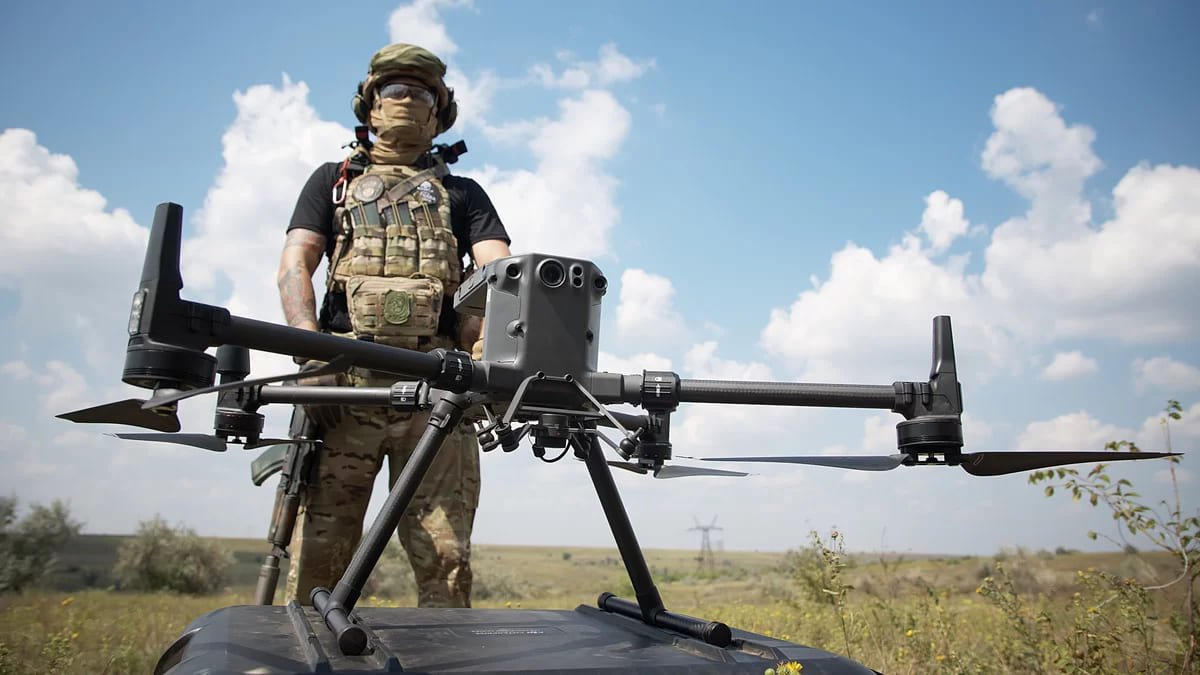
In modern military conflicts, drones have long ceased to be merely weapons. They have become part of a complex system where control plays a decisive role. Control stations are both the “brain” and the “nerves” of such a system. They include satellite antennas, mobile command posts, repeaters, camouflaged equipment, and field communication centers. Some are permanently stationed at military bases, while others are constantly on the move, hiding in forests or even among civilian facilities.
Their main task is to ensure reliable communication between the operator and the drone over hundreds of kilometers or more. And it is precisely this capability that makes them particularly dangerous when such stations are located near the borders with the EU or Ukraine. In such a case, the operator can physically be deep in the rear, while the drone carries out a combat mission on the territory of another state.
The most alarming aspect is that this configuration makes it nearly impossible to quickly determine exactly where the drone was launched from. This creates ideal conditions for “false flag” operations: one can stage a provocation and then wash one’s hands of it—claiming, “It wasn’t us; prove it.” However, it is perfectly clear that in a classic scenario, if the station is located near the Lithuanian or Polish border, the likelihood that the UAV operators are working specifically from the Belarusian side is extremely high.
Moreover, in recent years, Belarus has been actively integrating into Russia’s military structure. This applies to military bases, the training and medical care of Russian occupiers, electronic warfare systems, drone control, and so on. Thus, in effect, the territory of the neighboring republic has long since become an operational base for the Russian Federation’s army, equipped with everything necessary to wage a potential air war in the western and southern directions.
The Belarusian Bridgehead: From 2022 to the Present
After February 2022, the perception of Belarus in Europe—and especially in Ukraine—changed once and for all. Tank columns heading toward Kyiv, missile strikes, and the redeployment of Russian troops—all of this took place, in part, through Belarusian territory. Documentary evidence, videos, eyewitness accounts, and reports from international organizations—these things have transformed the very public image of Belarus. From a mere post-Soviet autocracy, the state has become a source of a very real military threat.
Today, Belarus is not just a neighboring country, but a full-fledged component of Russian military logistics. Joint exercises, deployed Russian units, constant tension and provocations along the borders with Poland and Lithuania—all of this creates instability and forces the diversion of resources to a potentially dangerous direction.
And starting in 2025, a new dimension has emerged—the threat of UAVs from Belarus. Incidents in September of that year in Poland, when drones entered the NATO country from Belarus among other directions, demonstrated: pressure can now be exerted not only through loud statements or military maneuvers, but also through swarms of drones that are difficult to shoot down, difficult to identify, and even harder to track and prove that they flew in from a specific location.
The deployment of UAV control stations in Belarus is part of a broader hybrid strategy. Its goal is not so much to deliver an immediate strike as it is to keep neighbors in a state of constant tension, forcing them to spend resources on defense, search for culprits, doubt their own capabilities, and become anxious, among other things.
For Europe, this represents a new level of risk. A conventional army is, at least, fairly predictable. But drones controlled from a mobile station are already a tool for sudden, targeted sabotage, reconnaissance, and psychological pressure. And most importantly, Minsk can always claim non-involvement, and proving otherwise will be quite difficult. The most vulnerable in such a situation, aside from Ukraine’s northern flank, are the border regions of Poland and the Baltic states (particularly Lithuania).
The political aspect adds to the complexity. Belarus is formally an independent and sovereign state, although all key military decisions are made in close coordination with the Kremlin. For international law, this is a gray area, and responsibility in a strictly legal sense is very much blurred in such a case.

Minsk’s Double Game: How Lukashenko Balances Between Washington and Moscow
Over 32 years of uninterrupted rule, Alexander Lukashenko has honed the art of maneuvering to a level that is hard to compare to anything else. Today, this style is particularly evident. On the one hand, the regime in Minsk is making broad gestures toward the U.S., demonstrating a willingness to engage in dialogue. It has also secured the lifting of sanctions on potash fertilizers and certain banks, and is trying to convince Washington that it can be useful, and so on. The American side, for its part, is happy to ease restrictions, viewing this as a tool of influence.
On the other hand, in parallel with these overtures toward the West, Lukashenko is deepening the military alliance with Russia. Russian tactical nuclear weapons have already been deployed on Belarusian soil, joint military training centers are operational, and now infrastructure is being created to control strike drones that can be used against both Ukraine and EU countries. All of this is not so much Minsk’s independent policy as it is part of Russia’s military strategy, in which Belarus is assigned the role of a springboard.
This duality allows Lukashenko to extract benefits from both sides. From Russia—financial injections, cheap energy, and military guarantees (without which his regime would hardly have lasted long). From the U.S.—easing of sanctions pressure, which allows him to sustain an economy suffering losses due to the war and international isolation.
This is classic “multi-vectorism” à la Lukashenko: blurring responsibility, reserving the freedom to escalate at the right moment, and then, depending on the situation, playing the role of either a peacemaker-sovereign or a loyal Kremlin ally. And while the West once again tries to figure out which of these personas is real, the infrastructure for waging war on Belarusian territory continues to expand.
Expert Opinions
Military expert and retired U.S. Navy Captain Harry Tabach commented on the situation surrounding Belarus to UA.News as follows.
“Regarding the deployment of drone control stations in Belarus and their potential threat to Ukraine and Europe—these are not yet facts. More precisely: it is a mix of facts, assumptions, and controversial claims. It is difficult to comment on this, and prophecies are out of place here. And anyway: isn’t Ukraine part of Europe? Well, as for what Europe is capable of militarily, we’ve long been convinced of that over the past four years, and it’s now being confirmed in the war with Iran. As for the thaw in relations between the United States and the Republic of Belarus—the point here is that Belarus will thus distance itself from Russia and move closer to the U.S. Or at the very least, it will be neutral. Yes, this has not yet been fully achieved. However, Trump has already changed a great deal in relations with those who have been close to Moscow for years,” Harry Tabakh is convinced.
Military expert Oleg Zhdanov also sees no contradiction in the fact that Belarus, on the one hand, is establishing relations with the U.S., and on the other, is pandering to Russia.
“As for Lukashenko maneuvering between Russia and the U.S.—it all makes perfect sense. Trump is on Russia’s side, and Lukashenko is accordingly. There are no contradictions here. Look at the latest round of negotiations: the U.S. is putting renewed pressure on us to cede territories. So the logic behind this is absolutely clear. I think that, in a sense, Trump still doesn’t trust Putin, and therefore wants to find a person who is more level-headed and less entangled in political squabbles and scandals to serve as a mediator.
As for the specific placement of UAV control stations—discussions about this began back in January. Even then, it was reported that the Russians were deploying these stations along the border. They allow for the online control of “suicide drones.” In addition, they are beginning to build mesh networks, which significantly increase the range of the repeaters. Any drone within a repeater’s range connects other drones to itself and becomes a repeater itself. This creates a network system over a fairly long distance. And this is especially evident when a drone hits moving targets. That’s where 100% manual online control comes into play. “I believe Ukraine should declare these stations legitimate targets for the Armed Forces of Ukraine. Even though they are located on Belarusian territory. Formally, Belarus is not participating in the war, yes, but everyone understands the situation perfectly well. So for us, these stations are a huge problem, especially for the northern and western regions,” noted Oleg Zhdanov.
In summary, the deployment of drone control stations on Belarusian territory should be viewed as a signal of a transition to a new phase of potential escalation, where the focus is on strengthening weaponry, the mobility of strike assets, stealth, and testing the reactions of neighbors.
History reminds us: 2022 was only four years ago. And even then, Belarus was used as a springboard for a full-scale invasion of Ukraine. Today’s expansion of drone infrastructure indicates that a repeat of the aggression is entirely possible, but now with new technological capabilities and an even greater range of destruction. In other words, the threat posed by drones is no longer limited to the front lines in Ukraine but is becoming a pan-European challenge.
To avoid a situation where every new “unknown drone” triggers pan-European panic, we must strengthen air defense systems, ensure joint monitoring, and—most importantly!—stop viewing Belarus as a minor player, a comical “potato dictatorship.” This is a completely false perception of the republic and its role in Russia’s global confrontation with the West.


