
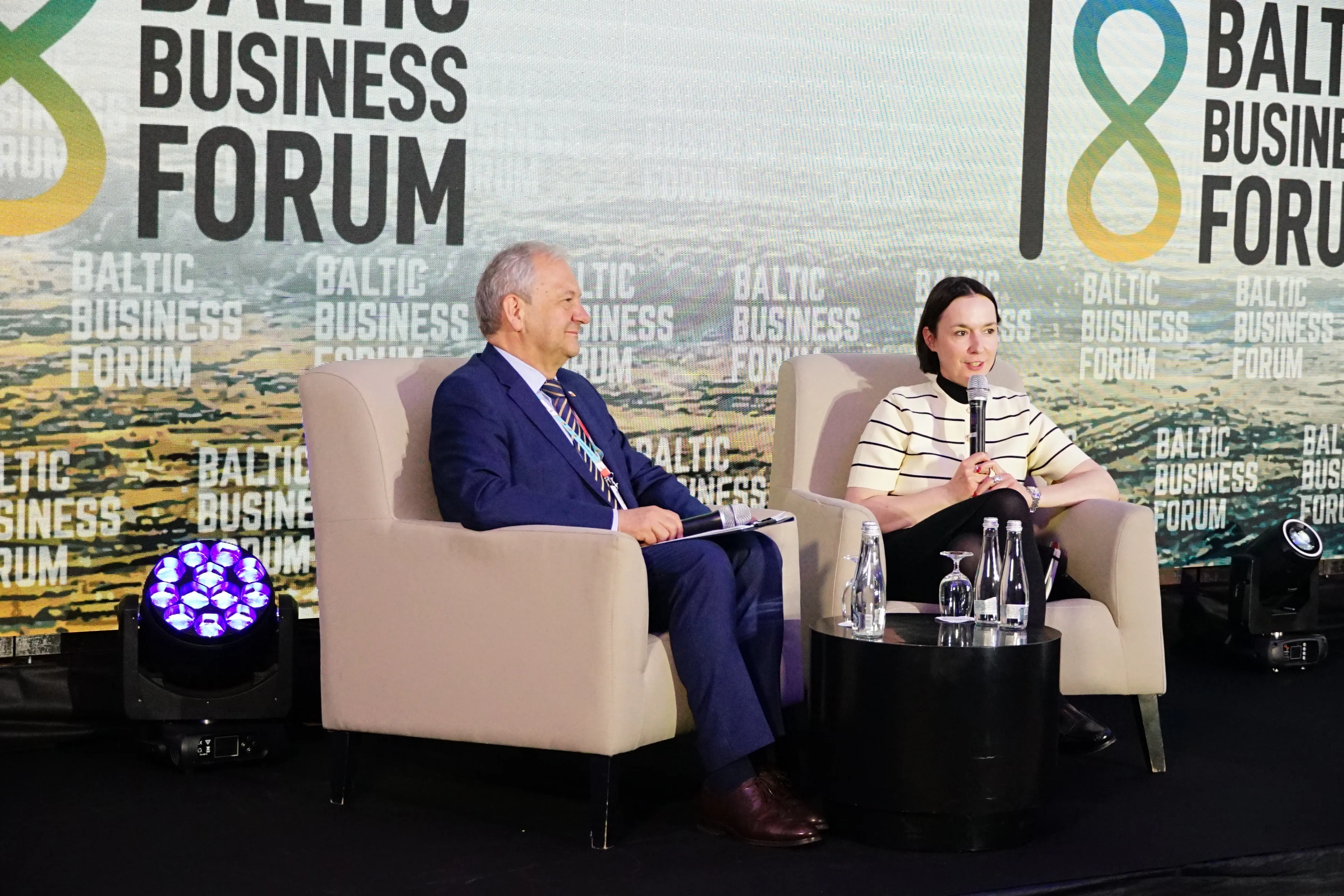
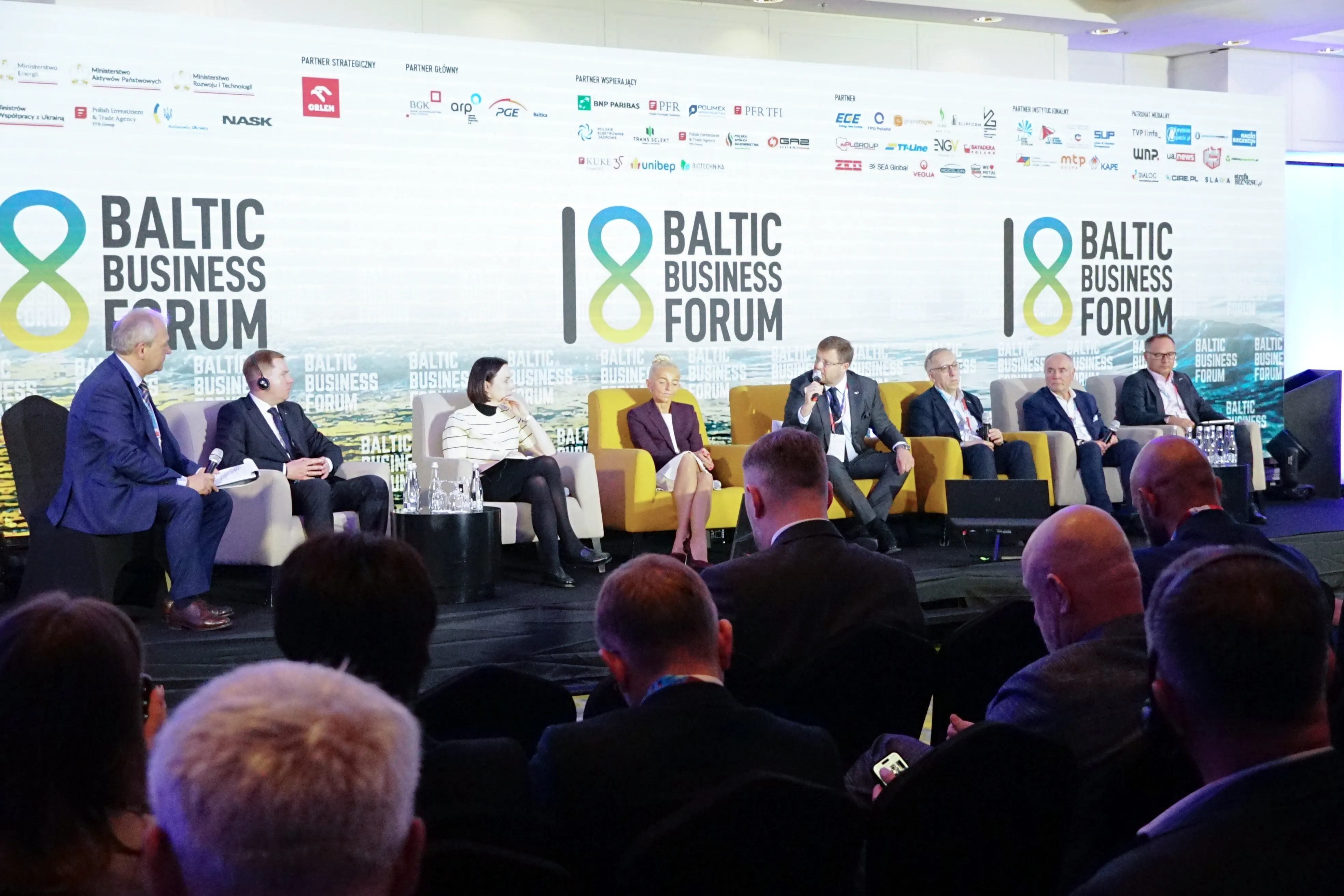
Energy security, hybrid threats from Russia, Ukraine’s reconstruction, and integration into the European Union were the key topics of the 18th Baltic Business Forum, which was recently held in the port city of Świnoujście in northern Poland. One of the keynote speakers at this international gathering was Dariusz Szymczyha, First Vice President of the Polish-Ukrainian Chamber of Commerce (PUIG).
UA.News spoke with him about why Poland views support for Ukraine as an investment in its own security, what financing tools are available to businesses during the war, and why Ukraine’s resilience has become a subject of study for European partners.
Based on your observations, what sentiments and expectations currently prevail in business and government circles in Poland, Ukraine, and the Baltic states?
Dariusz Szymczycha: At the turn of the 1920s and 1930s, a song emerged in Poland—still popular today—with the lyrics: “Sea, our sea, we will faithfully guard you; we have orders to hold you, or to lie down on the seabed with honor.” After World War II, it seemed like a sentimental, albeit patriotic, song sung around a campfire. After February 24, 2022, Poland and the countries of the Baltic region realized that the Baltic Sea is a theater of hybrid war. We realized that the energy and telecommunications infrastructure we have installed on the seabed of the Baltic Sea is under threat from Russia and needs protection. The situation was also changed by Finland and Sweden’s accession to NATO. With admiration and attention, we are watching as Ukraine, effectively deprived of its own fleet, has blocked the Russian fleet in the Black Sea.
What topics were discussed most actively during the Baltic Business Forum?
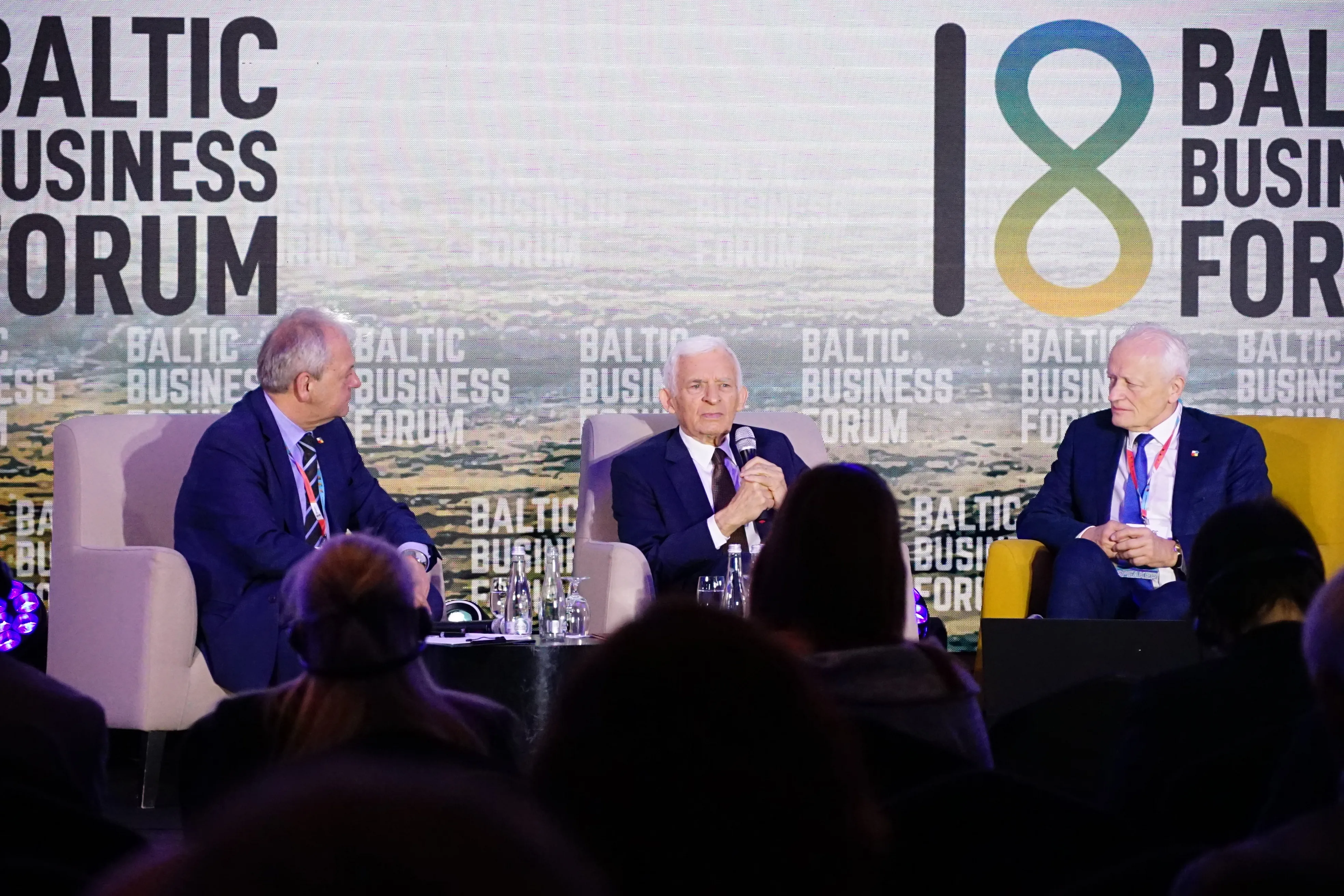
Dariusz Szymczycha: First, energy security, which can be achieved through the diversification of supply sources, increasing the share of renewable energy in the national energy mix, and through deeper international cooperation. With the participation of the BBF’s guest of honor, former Polish Prime Minister and President of the European Parliament Professor Jerzy Buzek, we highlighted the Polish “Energy Union” initiative. Thanks to this initiative, the European Union increased the number of energy interconnectors between member states, introduced mandatory gas reserves, and established principles of energy solidarity.
Second, we wanted to learn from our Ukrainian guests—representatives of the government, local authorities, and the business community—how they ensured the supply of electricity and energy to cities and businesses following Russian attacks. People talk about “Ukraine’s resilience,” but how is it achieved? We want to learn from you the methods for responding to crises and emergencies.
Third, we discussed Ukraine’s future, the reconstruction that must lead to modernization, and financial support instruments for Ukraine and for Polish entrepreneurs who trade and invest in Ukraine. We discussed Ukraine’s European perspective—the difficult path to European Union membership—and we, as Poles, can share our experience and assist you.
We are now witnessing a new phase of the war, an escalation of terror against the civilian population and the destruction of the Ukrainian economy, as well as Russia’s hybrid attacks against NATO countries. To what extent has the strategy of Polish-Ukrainian economic cooperation changed in these new realities?
Dariusz Szymczycha: Trade volumes between Poland and Ukraine are growing. In 2021, it amounted to $10.5 billion, and by 2025, it will reach at least $15 billion. In the first quarter of this year, Polish exports to Ukraine increased by 13%.
Just as after February 24, 2022, the Polish Ambassador to Ukraine, Bartosz Cichocki, was one of the few to remain in Kyiv, so too is Polish business staying now.
Please keep in mind that Polish businesses have access to unique and effective support tools offered by Bank Gospodarstwa Krajowego, KUKE, and PZU. These include loans and insurance, particularly against military risks.
Ukraine’s energy sector has likely suffered the most from the shelling. To what extent are European partners willing to participate in its reconstruction? And in what format can such reconstruction take place during the war, when the risks of destruction are very high?
Dariusz Szymczycha: We have long been assisting in the ongoing reconstruction of Ukraine’s energy sector. The Energy Community, an organization established by the European Union, has been collecting financial resources and energy equipment since 2022 and delivering them to Ukraine. For example, this year a thermal power plant was transported from Lithuania to Ukraine. Poland handled the logistics of the transport. A number of countries are providing Ukraine with grants for specific purposes in energy recovery. Electricity and gas interconnectors are of great importance, as they allow us to support Ukraine during difficult times. Finally, we must not forget about the Ukraine Facility, an EU program for Ukraine. Its second component, for which Bank Gospodarstwa Krajowego is the lead financial operator, provides preferential loans for investments in the energy sector. The maximum amount of a preferential loan is 50 million euros, which is a significant sum for renewable energy projects.
To what extent is Europe prepared to address the economic challenges arising from the energy crisis caused by Russian aggression and the war in the Middle East?
Dariuszym Szimczycha: We are facing these challenges, although it is neither simple nor cheap. For example, the Polish government has reduced the excise tax and VAT on fuel, as the war with Iran has caused a sharp rise in oil prices. Fortunately, in Poland’s case, we did not rely exclusively on this supply route.
What energy projects are Polish companies currently investing in?
Dariusz Szymczycha: Wind energy—in 2024, the value of investments by private and state-owned companies in onshore and offshore wind energy in Poland amounted to nearly $80 billion.
Which Polish companies are still operating in Ukraine as of 2026? And in which sectors?
Dariusz Szymczycha: I can confidently say that over 1,000 companies with Polish capital are still operating in Ukraine, so I won’t be able to list them all. I’ll give a few examples. In the banking sector: KredoBank. In the construction sector: Unibep and B-Act. In the IT sector: Future Processing Ukraine and Euvic. In the TSL sector: Laude Smart Intermodal and Polish Forwarding Company. In the defense sector: WB Electronics. Building materials: Cersanit, Fakro, Barlinek, Aluprof. And so on, and so on…
What specific financial support instruments are currently available for Polish companies operating in Ukraine?
Dariusz Szymczycha: That’s a topic for a separate interview. Discussing banking and insurance products requires time and precision. I refer those interested to Bank Gospodarstwa Krajowego (which has a representative office in Kyiv), to KUKE, and to PZU Ukraine. All information regarding support is collected and disseminated through Team Poland for Ukraine via a dedicated information platform.
You previously emphasized that during a full-scale war, one should take a realistic approach to attracting investment. First and foremost, we must support those who started a business in Ukraine before the war, stayed here, and continue to work, showing great solidarity with Ukrainians. Do you see understanding and support for this from the Ukrainian government?
Dariuszy Szimczycha: During the war, the government has limited scope for action, mainly in financial terms. Therefore, it is difficult to expect incentives, bonuses, or grants, as funds must be directed toward defense. Polish entrepreneurs in Ukraine are aware of the situation and know that, first and foremost, they must rely on themselves. I haven’t heard any criticism directed at the Ukrainian government. When a problem arises, they can turn to the Ukrainian Business Ombudsman, the Polish Embassy, and, finally, the office of the Polish-Ukrainian Chamber of Commerce in Kyiv at 4 Khoriva Street. We will help!
How do you assess the European integration of Ukrainian business and the economy as a whole? What obstacles on this path do you consider the most significant, and how can they be overcome?
Dariuszy Szimczyha: I understand the expectations and hopes associated with European integration, and I support Ukraine’s ambitions in this regard. However, I want to say that it is not enough to simply harmonize national legislation with European Union standards. These quality standards and operational procedures must become part of the reality of business and administration. It is also important to recognize that war damage and Ukraine’s budget deficit do not facilitate compliance with, for example, environmental or quality standards. And the European Union, as we have seen in Poland, is not only about tangible financial support but also about setting high standards.


