
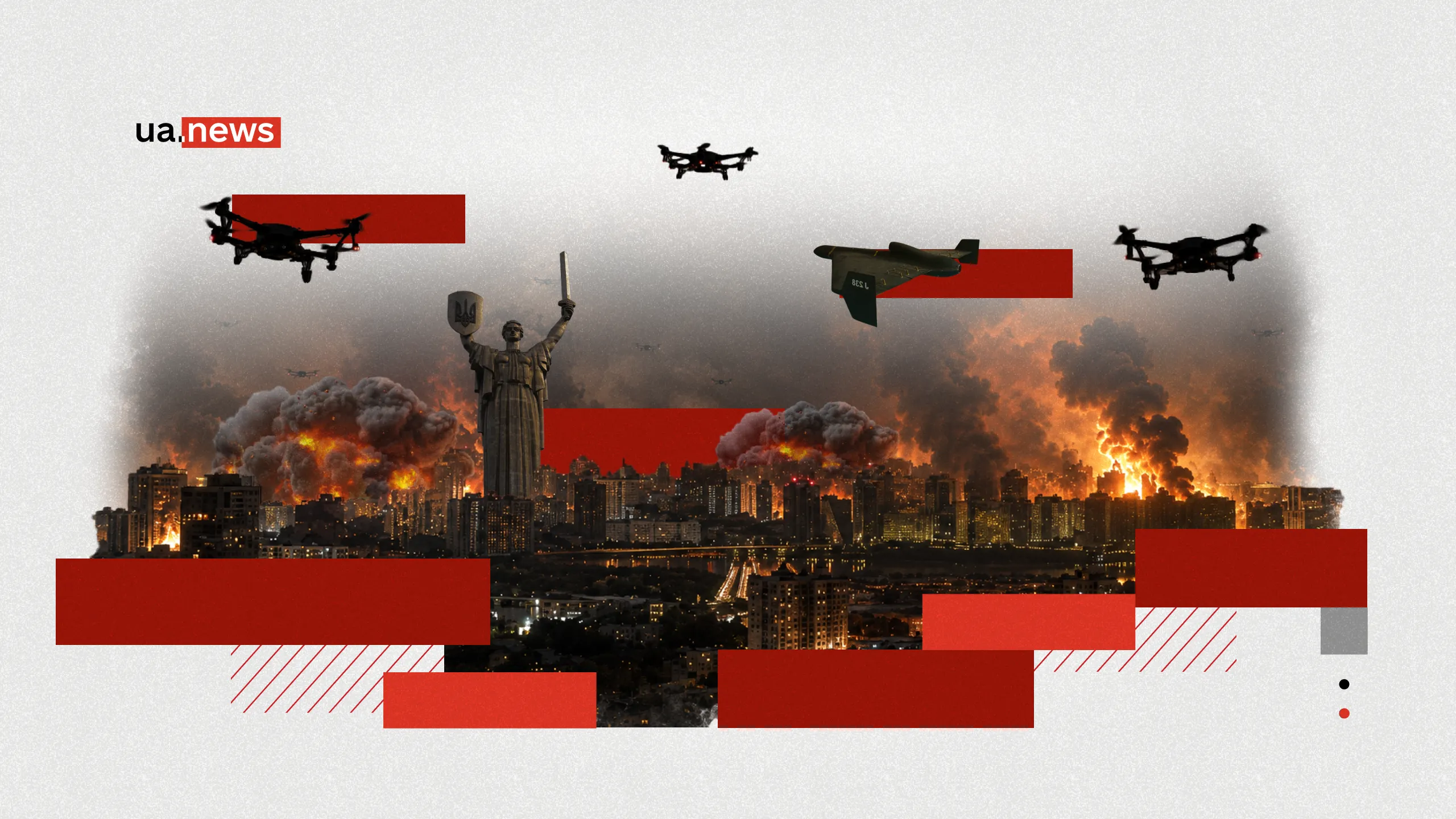
In late August 2026, Kyiv is going through a period comparable only to the very beginning of the war. The situation in the capital has been slowly but steadily escalating over the past few months, but it has deteriorated very sharply over the last week. Constant attacks by Russian drones have transformed the city from a relatively stable rear base into a place where scenes reminiscent of March 2022 have become part of everyday life.
Alarm sirens wail all day long in Kyiv, effectively paralyzing the city. Subway service to the Left Bank comes to a halt; thousands of businesses, establishments, and institutions are forced to suspend operations; somewhere, a food warehouse is struck yet again, leading to (half)empty shelves in familiar supermarkets; while elsewhere near Kyiv, an ammunition depot is hit, resulting in dozens of civilian casualties.
What has happened to the capital and the region in recent days, and why? Is there any way to counter this “terror of anxiety” and the endless drone raids? UA.News political analyst Mykyta Trachuk looked into the matter.
A Round-the-Clock Threat from the Sky: Kyiv Has Become a “City of Air Raid Alarms”
In recent days, Kyiv has been subjected to—in the literal sense—almost nonstop drone attacks. Air raid alerts have become virtually constant, lasting anywhere from a few minutes to several hours. After the all-clear, there is usually a fairly short interval—perhaps a few hours, or sometimes just a few minutes. Then the siren sounds again, and this vicious cycle begins anew.
According to observations by Ukrainian military experts, the enemy deliberately tracks the moments when the air raid alert ends and launches new waves of drones, causing the cycle to repeat indefinitely. It no longer makes sense to count the number of alarms per day—they’ve merged into a single, continuous wail of sirens.
The city’s soundscape has also changed. You can constantly hear the sounds of drones flying overhead, actual drone strikes, or the air defense systems working to shoot down enemy UAVs. These sounds have become familiar, but they’re no less unsettling for that. Unfortunately, some of the drones actually hit their targets, and the consequences of these strikes are measured either in burning warehouses full of food worth millions (which is why many supermarkets are already reporting half-empty or completely empty shelves) or in a huge number of human lives.
Officially confirmed data alone indicate 38 civilian deaths in the village of Mila near Kyiv. There are also unverified (!) reports that a significant number of military personnel may have been present at the weapons depot and were also killed. Who, after 4.5 years of war, is placing warehouses right next to residential buildings and civilian facilities—and why? What on earth is going through the minds of such commanders? These are legitimate questions.
In Kyiv itself, the number of victims of attacks is also rising. For example, just the day before yesterday, an explosion killed a very young, two-year-old girl on the Obolonska Embankment.
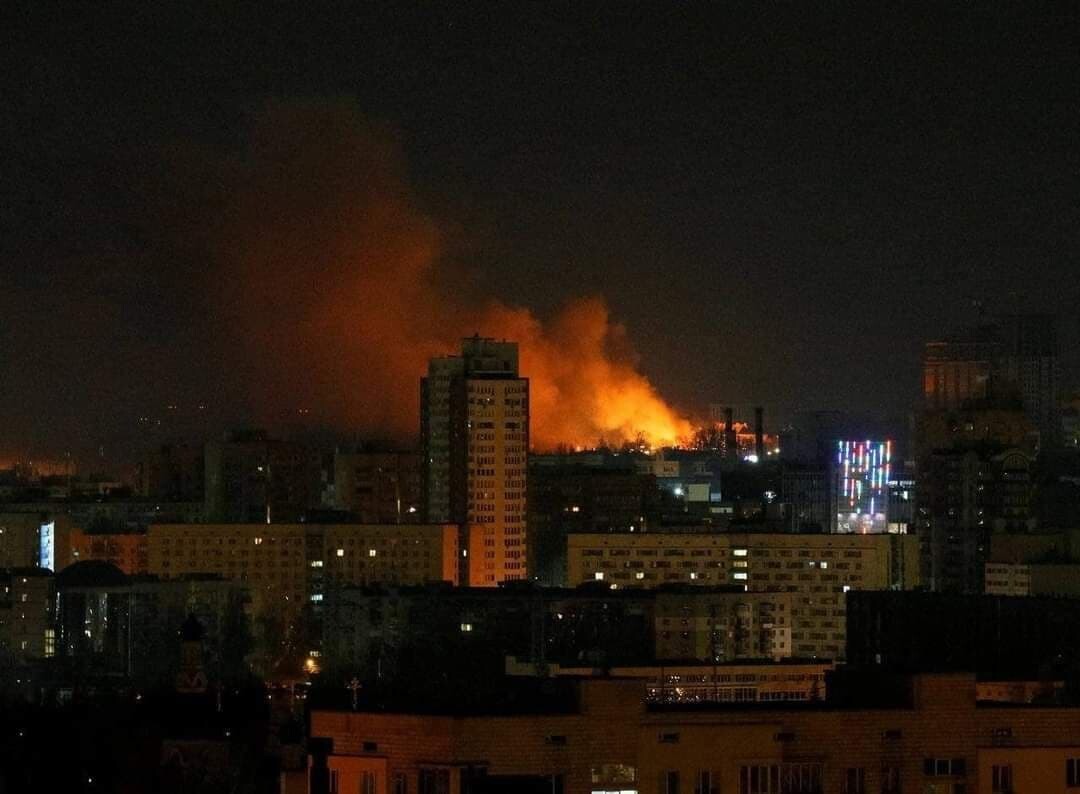
Another issue is that enemy strikes often trigger large-scale fires in many cities, leading to heavy smoke. The smog can be so thick that it sometimes causes throat irritation and headaches. Sometimes, from windows on upper floors—if the building is “favorably” located—you can see three or four fire sites at once, along with black smoke hanging over a good half of the capital. At such times, air quality drops to levels that are not merely unpleasant but downright hazardous to health.
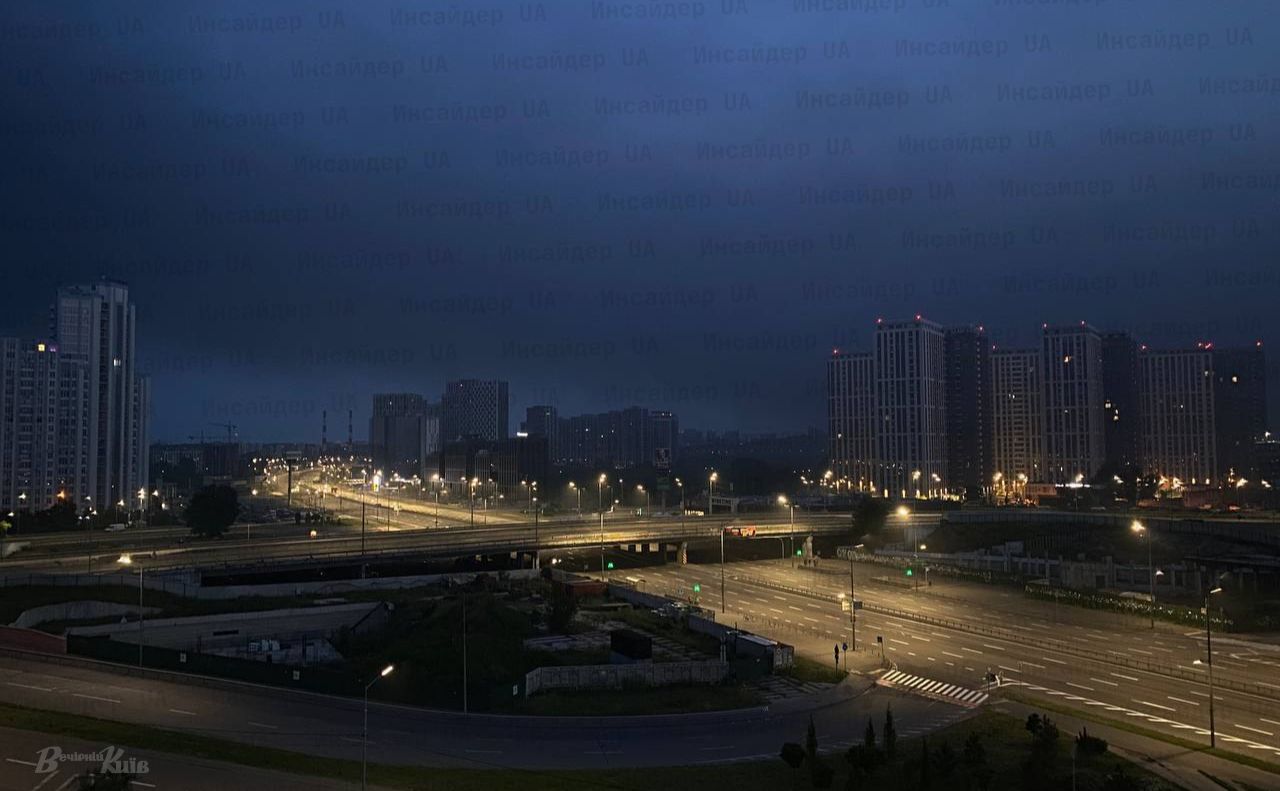
A
City Ravaged by Explosions
A simple, random drive through the capital will give you a more complete picture of the scale of the destruction caused by the airstrikes. Previously, Kyiv was clearly divided into districts, and certain areas were quite rightly considered—albeit conditionally—relatively safe, in contrast to others that were less so.
Now, however, traces of the strikes are visible in virtually every part of Kyiv: from Troieshchyna, Lisovy Massif, and Darnytsia to Lukyanivka, Shulyavka, and Obolon. In some places, within a five- to ten-minute drive, one can count dozens (!) of locations where strikes occurred or debris fell. This density indicates that the attacks are not isolated or random, but are systematic in nature and cover a wide area of the city. Although, of course, the scale of the destruction cannot yet be compared to that in Kharkiv, Sumy, or Kherson.
Trips to the region, to Kyiv’s satellite cities—Irpin, Bucha, or Brovary—will show that the capital region is also living in a state of constant stress due to ongoing alerts, drone incursions, and large-scale Russian strikes.
The region is also still in shock following the tragedy in Mila. Locals say that two days before the strike, reconnaissance drones were circling over the village, yet no measures were taken to evacuate people or even remove property from the ill-fated warehouse. This issue remains unresolved and is causing immense outrage. The burned-out warehouses, terminals, and sorting stations in Brovary also serve as clear evidence that the strikes were planned in advance and had specific targets.
Another telling sign of Kyiv’s current state is the large number of mobile air defense units. They are stationed on bridges and in various parts of the city, now even taking complete cover. Improvised “tachankas” mounted with machine guns either remain stationary or move through the streets. Their presence gives the impression of a city under siege, preparing for defense in close proximity to the front lines, even though Kyiv formally remains deep in the rear.
The operation of navigation systems poses a separate problem. During constant alerts, the GPS signal disappears or becomes unstable. In some cases, navigation devices and phones begin to display false geolocations somewhere on the other side of the world, in Latin America or Asia. Due to a time synchronization failure, a phone may switch its clock to another country’s time zone, creating further confusion.
Transportation gridlock and (half)empty shelves
Kyiv’s problem is that the city effectively grinds to a halt during emergencies. The metro to the Left Bank (where the official population alone exceeds 1.1 million) is not running, dozens of shopping centers, hundreds of businesses and enterprises cease operations—as do all government agencies, as well as employees at power plants and other critical facilities, service centers, administrative service centers, and so on. And since air raid alerts are now almost continuous, the city remains in a state of constant standstill, as if “on pause.”
This leads to significant economic losses, which will become simply enormous in the long run, and to a general decline in productivity. As noted above, the problem is particularly acute on the left bank, where the metro shutdown is causing a transportation collapse. The streets are often gridlocked, and huge lines form at bus stops, posing an additional danger during an air threat.
Alongside transportation problems, tensions are rising regarding food supplies. The shelves of major supermarket chains—ATB, Novus, Varus, Fora, “Metro,” etc.—are increasingly appearing half-empty or even completely empty.

This does not mean that food has completely disappeared. There is no threat of famine yet: there are still markets, small chains, neighborhood stores, mini-markets, and so on. However, the pace of restocking cannot keep up with demand, leading to serious shortages. Logistics are complicated, warehouses have been destroyed, some staff cannot get to work, some suppliers are changing their schedules, prices are rising rapidly, and so on—all of this creates a sense of uncertainty and instability, which only exacerbates the general anxiety and nervousness.
Overall, the atmosphere in Kyiv at the end of August increasingly resembles the first months of the full-scale invasion. One member of the parliamentary corps put it surprisingly well: “Kyiv smells like Kramatorsk.” Things have indeed taken a turn for the worse; the changes have been very abrupt and rapid, and are therefore visible even to the naked eye—they stand out in stark contrast.

In
summary, at the end of August 2026, Kyiv stands on the threshold of a very difficult period. Life in the capital has become noticeably worse in many respects: security, transportation, the economy, food supply, air quality, the psychological state of the population, and so on. Ahead lies the cold season and a harsh winter, which traditionally complicates an already dire situation. Unfortunately, there is no reason to expect any significant improvement in any area in the near future.
Is there anything that can be done about this situation? Obviously, the best and most desirable scenario would be an end to the war. This is the very “elephant in the room” that is the root cause of all these problems. However, at the moment, there is, unfortunately, no talk whatsoever of peace, not even of a temporary ceasefire or the resumption of diplomatic contacts. The parties’ positions remain infinitely far apart, and negotiations have not been taking place at all since February.
Instead, some ad hoc solutions are being discussed—possible changes to the curfew, adjustments to public transportation schedules, and other administrative measures. Exactly what these solutions will entail and to what extent they will help the capital function amid nearly constant attacks remains a big question. No details have been provided yet. So for now, one thing is clear: Kyiv is once again forced to adapt to a new reality.
But one cannot endure and adapt forever. Sooner or later, any reserve of resilience runs out: from the system’s administrative and economic resources to the psychophysical resilience of society and the individual. And we must not forget that either.




