
September 25, 2026 — Memorial Day for Euphrosyne of Alexandria
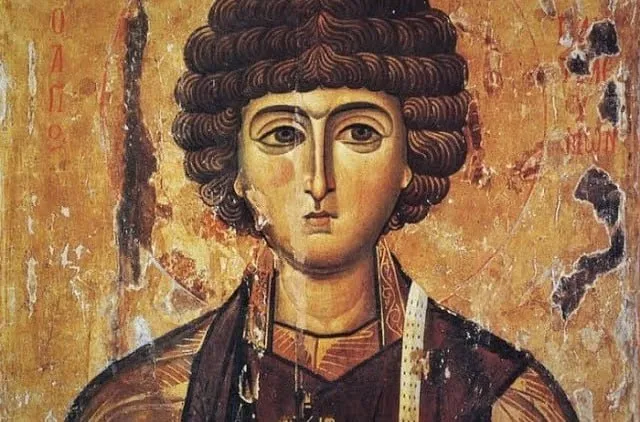
On September 25, 2026, Orthodox Christians commemorate the Venerable Euphrosyne of Alexandria, who lived in the 5th century. According to church tradition, she left her secular life, took monastic vows, and lived for many years in a men’s monastery disguised as a man. According to the old calendar, this day falls on October 8.
The feast day of the Venerable Euphrosyne of Alexandria is observed annually on September 25 according to the new style. In the church calendar based on the old Julian style, this date corresponds to October 8. That is why both dates can be found in calendars. In 2026, September 25 falls on a Friday. On this day, Orthodox calendars commemorate Saint Euphrosyne of Alexandria. She is among the saints venerated as “Venerables,” that is, people known for their monastic life and spiritual feats.

This is not a national holiday or a general day off. Its significance is tied specifically to church tradition and the commemoration of the saint. For believers, this day is an occasion to reflect on the life of Euphrosyne, to pray, and to focus on themes of faith, spiritual choice, self-discipline, and mercy.
Who Was Euphrosyne of Alexandria
Euphrosyne lived in the 5th century in Alexandria, Egypt. According to her hagiography, she came from a wealthy Christian family. Her father’s name was Paphnutius; he was a devout man and supported a monastery. Euphrosyne’s mother died when she was still young, so her father raised her. It was through him that she became familiar with monastic life from an early age. Euphrosyne was the only child in the family. Her father loved his daughter and wanted a bright future for her. When she came of age, Paphnutius decided to marry her off to a man from a good family.

However, Euphrosyne herself did not want to marry. According to church tradition, she longed to devote her life to God and become a nun. This choice marked a turning point in her life. The young woman realized that her father would hardly agree to her decision, so she decided to secretly leave her family home. It was after this that the most remarkable part of her story began. Euphrosyne decided to disguise herself and live in a men’s monastery without revealing her true name.
Why Euphrosyne Lived Disguised as a Man
According to her hagiography, Euphrosyne secretly left home when she was about 18 years old. To avoid being recognized, she dressed as a man and introduced herself as a monk named Ismaragd. In some accounts, she is also referred to as the monk Marin, so the name may vary across different texts. Euphrosyne arrived at a monastery with which her father was well acquainted. However, no one there knew who she really was. The abbot accepted her as a young man and allowed her to stay at the monastery. At first, Euphrosyne lived among the monks, but later she asked to be allowed to live in seclusion. She was given a separate cell, where she spent much of her time in prayer and spiritual practices.

According to church tradition, she lived in the monastery for 38 years disguised as a man. During this time, her true gender remained a secret to the other monks. This detail is one of the most famous in her hagiography. That is why Euphrosyne is often remembered as a saint whose story is linked to a decision—unusual for her time—to completely change her way of life for the sake of a monastic calling.
How a Father Met His Own Daughter and Did Not Recognize Her
There is another dramatic detail in her hagiography. After Euphrosyne’s disappearance, her father, Paphnutius, grieved deeply and tried to find his daughter. He did not know where she had gone or what had happened to her. Paphnutius continued to visit the monastery where “Emerald” lived. He spoke with this monk and even received spiritual counsel from him.

The most astonishing thing is that the father had no idea that his own daughter was standing right in front of him. Euphrosyne kept her secret for many years, even during conversations with him. These meetings were important to Paphnutius. He considered “Izmargad” a wise and spiritually experienced monk who could support him after his daughter’s disappearance. It was only toward the end of her life that Euphrosyne revealed the truth to her father. After that, he learned that for many years he had been communicating with his daughter, whom he had believed to be missing.
What Made the Venerable Euphrosyne Memorable
Church tradition describes Euphrosyne as a person who took her spiritual calling very seriously. She renounced a life of wealth and the opportunity to start a family, which her father had planned for her. Her story is associated with prayer, fasting, solitude, and monastic life. At the same time, it is important to remember that the details of her biography are known primarily from her hagiography, so they should be understood within the context of that tradition. Euphrosyne spent many years in the monastery without revealing her true identity. According to tradition, she attained significant spiritual authority among the monks.

After her death, her secret was revealed. Her father and others learned who the monk they knew as Izmaragda really was. It is this part of the story that has made Euphrosyne’s hagiography one of the most extraordinary accounts of female ascetics. The memory of the saint is preserved in the Orthodox calendar. In addition to September 25, she is also commemorated on February 15 according to the old style, which corresponds to February 28 according to the new style.
What Does the Name Euphrosyne Mean?
The name Euphrosyne has ancient Greek origins. It is associated with words that convey the meanings of “joy,” “cheerfulness,” and “good spirits.” This is an interesting detail, since the saint’s own story bears no resemblance to an easy and carefree life. On the contrary, according to tradition, Euphrosyne consciously chose a difficult path that required great fortitude from her.

The name Euphrosyne also appears in other church traditions and in various forms. In Ukrainian, the variant “Efrosinya” is also used, although the form “Euphrosyne” is more common in church texts regarding the saint from Alexandria. Euphrosyne of Alexandria should not be confused with other saints who have the same or a similar name. In particular, the church calendar separately mentions Euphrosyne of Suzdal. These are different historical figures.
What People Do on This Day
The day commemorating the Venerable Euphrosyne does not have a specific set of mandatory secular traditions. For believers, the main part of the day is devoted to prayer and church services. In churches on this day, people may address the saint in prayer, read her hagiography, and sing liturgical texts dedicated to Euphrosyne. In the Orthodox tradition, there are specific troparia, kondakia, canons, and akathists dedicated to her. People can spend this day in a more peaceful manner, devoting time to prayer or visiting a church. For many believers, church commemorative days are also an opportunity to reflect on their own lives and the decisions they make.
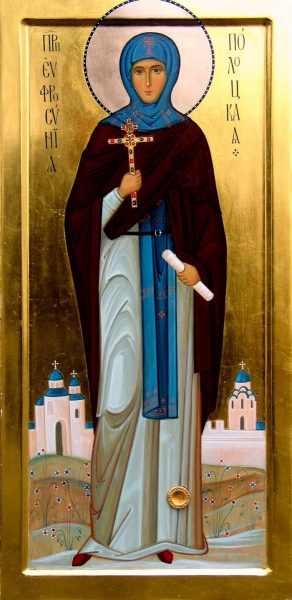
Separately, one can do a good deed for another person. Helping someone in need, supporting a loved one, or making a donation to charity are all in keeping with the general Christian understanding of charity. At the same time, there is no rule stating that on this particular day a person must perform any specific daily activity. A church holiday is primarily associated with commemorating the saint, prayer, and worship. Therefore, this day should not be turned into a list of superstitions. Folk omens and everyday superstitions, which are sometimes attributed to various dates, are not part of the life of Saint Euphrosyne herself.
What to Remember on Saint Euphrosyne’s Day
The story of the Venerable Euphrosyne is, above all, a story of personal choice. She lived at a time when a woman’s future was largely determined by her family, marriage, and social status. According to church tradition, Euphrosyne decided to choose for herself the path she considered her calling. To do so, she renounced a life of wealth and lived far from her family for many years. Her story also serves as a reminder of the complex relationship between personal choice and the expectations of loved ones. Her father wanted a different future for his daughter, but ultimately accepted her decision.

Patience and fortitude occupy a special place in her life story. For decades, Euphrosyne adhered to the way of life she had chosen and did not reveal her secret even to those closest to her. That is why, for believers, the commemoration of the saint may be more than just a date on the calendar. It is also an occasion to discuss faith, the power of convictions, mercy, and responsibility for one’s own choices.
Is September 25 Euphrosyne’s Day in 2026?
Yes. September 25, 2026, is a Friday and the feast day of the Venerable Euphrosyne of Alexandria according to the New Style calendar. According to the Old Style, her feast day falls on October 8. Ukrainian church calendars for 2026 also list Saint Euphrosyne of Alexandria among the saints commemorated on this day. This day is not a public holiday, so it does not result in an additional day off. It is observed primarily by Orthodox believers who follow the corresponding church calendar. For those named Euphrosyne or Efrosinya, this date may also be their name day. At the same time, in church tradition, the specific date of a name day may be determined according to the saint after whom the person was named.
September 25 can be observed without grand celebrations. For a believer, it is first and foremost a day of prayer and remembrance of the saint, while for others, it is an opportunity to learn more about the extraordinary story of a woman who lived in Alexandria many centuries ago. The most important aspect of this story is not the unusual fact that she lived under a different name, but that, according to church tradition, Euphrosyne consistently remained true to her spiritual choice. It is precisely for this reason that her memory is honored in the Orthodox tradition.




