

To bring about a humanitarian catastrophe and render the city completely uninhabitable—these plans by the Russian command against Kyiv have become evident over the past few weeks. As long as Ukraine lacks full-fledged protection against ballistic missiles and high-speed drones, the Kremlin continues to escalate its attacks nonstop.
The total destruction of infrastructure—ranging from warehouses and office complexes to universities and kindergartens—is crippling economic and social life in Kyiv, as well as in major cities in the east and north. Added to this are strikes on bridges across the Dnipro River, which could cripple a significant portion of logistics not only for the capital but for the entire country.
The losses are colossal. Economy Minister Oleksandr Kravchenko reported that air raid alerts are costing Ukraine’s economy approximately $45 million in business downtime. And since the beginning of 2026, more than $10 billion has already been lost.
Economic and infrastructure losses are leading to humanitarian problems that neither Ukraine nor any other European country has ever faced in modern history. Western analysts are now focusing less on the economic crisis and more on the humanitarian crisis that could engulf Ukraine’s capital this winter.
UA.News explains how the Russians’ hourly drone attacks could soon change socio-economic life in Kyiv and throughout the country. It also publishes a commentary by Vitaliy Kulyk, director of the Center for Civil Society Studies, on a possible model for the country’s survival amid constant shelling.
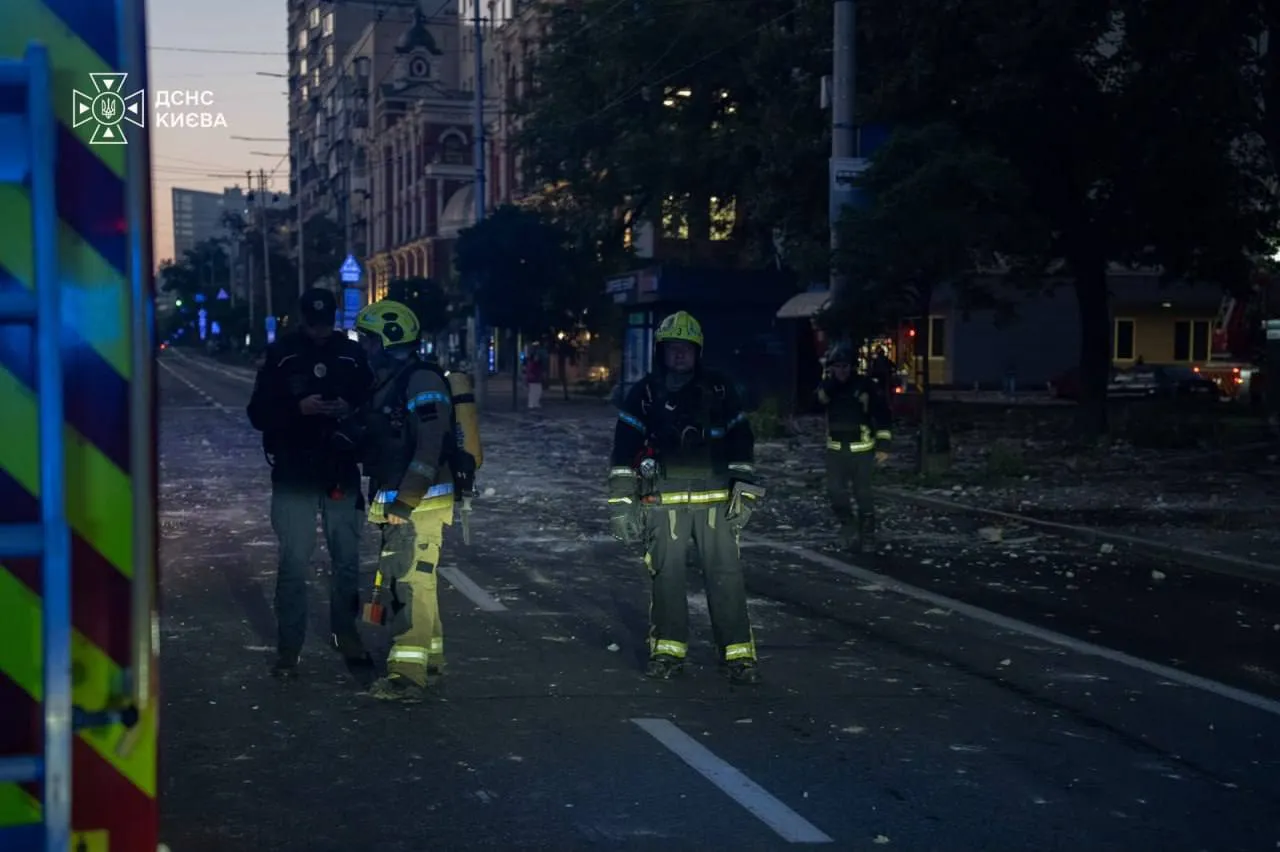
Nearly a month of continuous air raid alerts: business losses
The $45 million in losses per hour of air raid alert, as reported by the Ministry of Economy, are staggering but not final. For Kyiv, for example, the scale of losses continues to grow almost hourly. The capital has been under continuous attack by Russian high-speed drones for nearly a month. Since August 27, Kyiv has recorded 235 air raid alerts totaling 261 hours—that is, more than 10 days of continuous threat—as reported by Ihor Klymenko, Secretary of the National Security and Defense Council.
The cost of such prolonged downtime includes lost production, unsold goods, unfulfilled services, disrupted logistics, and more. A business can still survive one or two hours of downtime, but enduring many hours in a row dozens of times a month is simply unrealistic. An air raid alert alone does not destroy a business, but it does reduce its productivity and profitability. For example, a warehouse that has survived an attack cannot be used for normal operations. A store may be open, but customers are reluctant to stay inside for long during air raid alerts. Therefore, the economic damage caused by the war is not limited to the destruction of buildings.
Prime Minister Serhiy Koretskyi warned of the scale of the problems. According to him, by early September, the state treasury could be short 70 billion hryvnias in tax revenue. If the attacks continue at the current pace, the budget shortfall will grow.
By the end of September, the constant Russian strikes had already impacted the macroeconomic forecasts of international institutions. The EBRD effectively describes the Ukrainian economy’s transition from slow recovery to stagnation: in the first half of 2026, real GDP barely grew, and the growth forecast for the entire year was lowered to about 1.5%.
In its latest review, the International Monetary Fund projected Ukraine’s GDP growth in 2026 at only 1–1.6%, and under a negative scenario, at about 0.5%. The IMF warns that intensified Russian attacks on the energy sector and civilian infrastructure could slow growth, accelerate inflation, widen the budget and trade deficits, and worsen the balance of payments.
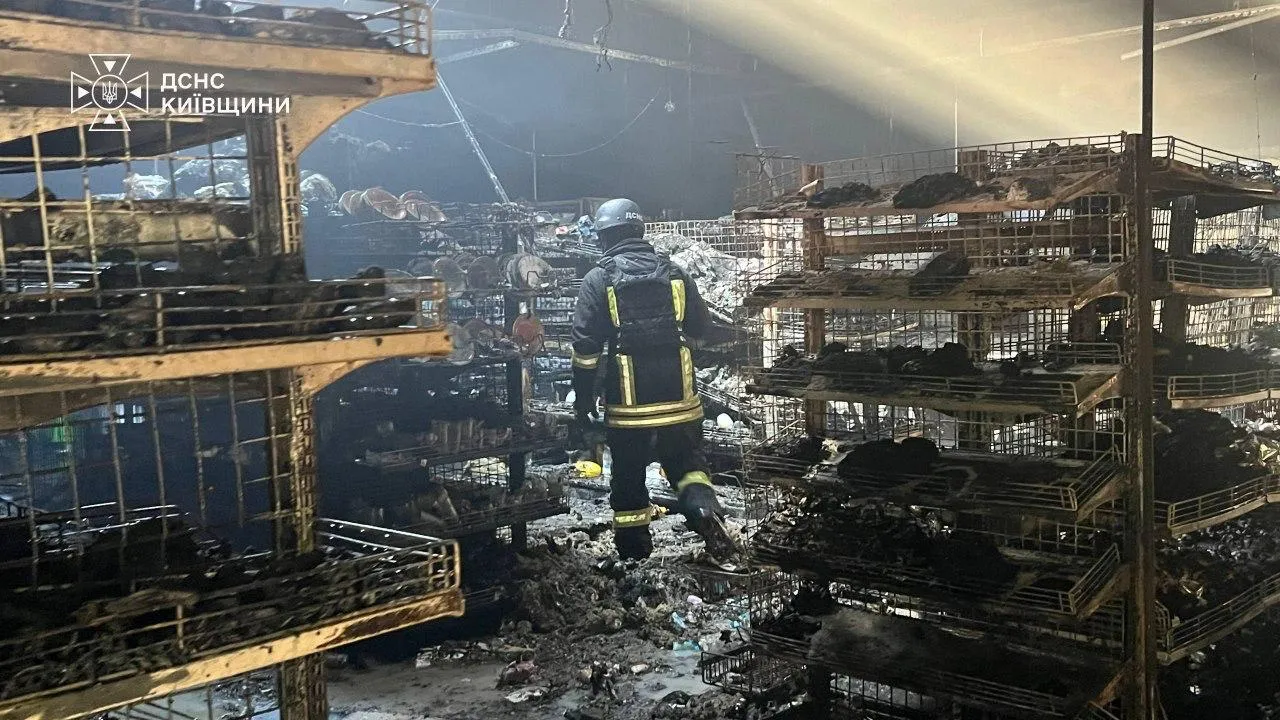
Attacks on businesses are exacerbating social tensions
Russian strikes reveal another dangerous trend—the targets are planned to maximize the disruption of social life and psychologically “crush” the civilian population. The UN human rights monitoring mission has documented a sharp increase in attacks by the Russian military on companies in the food, retail, and logistics sectors. In August, 32 attacks on facilities belonging to six major companies were documented. In July, there were 11 such strikes. Among those affected were Nova Poshta, Fozzy Group, Varus, Epicentr, Rozetka, and Aurora.
According to estimates by Ukrainian retail representatives, the total area of modern Class A and B warehouses in Ukraine is approximately 2.1 million square meters, and about 900,000 square meters were lost as a result of attacks in 2026. The targeted destruction of warehouses is causing supply chain disruptions for dozens or even hundreds of stores. At the same time, daily air raid alerts are forcing businesses to regularly suspend operations, even in areas where a missile or drone did not directly cause any damage.
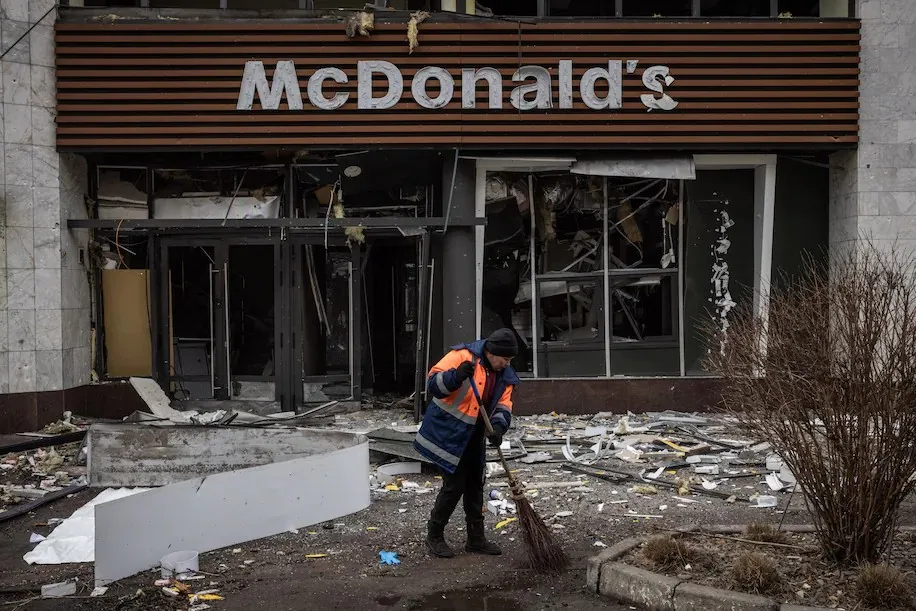
In September, Russia also struck pharmaceutical plants, gas stations, railway hubs, and data centers, causing localized internet outages. Such attacks not only weaken businesses but also make life harder for every citizen, who may be unable to obtain goods and services or could potentially lose their jobs.
Given the escalation of such terror in Kyiv and its metropolitan area, Moscow is deliberately creating the conditions for a humanitarian crisis. Analysts at the Polish Center for Eastern Studies believe that the Kremlin wants to provoke a humanitarian crisis this winter that could extend beyond Ukraine’s borders. New waves of refugees could then potentially undermine internal stability within the European Union.
Authorities and businesses are trying to find a solution
Under pressure from constant threats of airstrikes, the logistics sector is accelerating the transition from a “one large hub—many destinations” model to the creation of a network of smaller, geographically dispersed facilities. Some companies are already adopting this model. For example, after losing more than 40,000 square meters of warehouse space, Berger Cargo is expanding its network in other regions. This is costly, but decentralizing production and logistics is one of the obvious solutions.
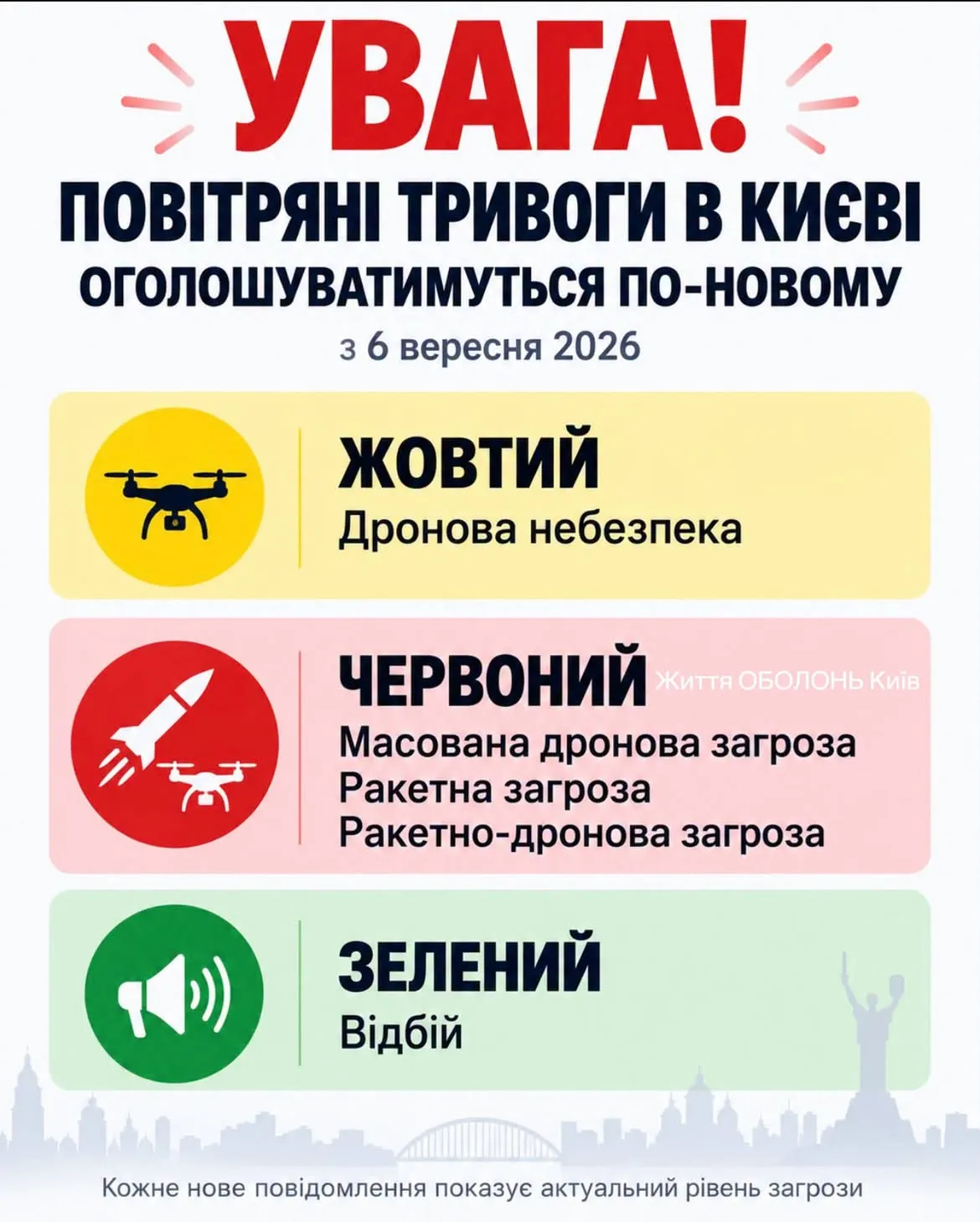
Ukraine is attempting to build an effective air defense system and launch mass production of interceptor drones. But this will take at least several months. For now, the authorities have decided to update the threat alert system and have introduced two threat levels—yellow and red. The practice of sounding the siren again after the all-clear has been canceled—now it should sound only when the alert is declared. In addition, the audible signals for air raid alerts must differ depending on the threat level.
Starting September 6, a new, differentiated air threat alert system was introduced in Kyiv. The new system has three alert levels:
Yellow level — “Drone threat.”
Red level — “Massive drone threat,” “Missile threat,” or “Missile-drone threat.”
“All Clear”—if none of the specified threats are present.
It was anticipated that government agencies, local authorities, and businesses would be able to operate during a yellow-level threat.
At the same time, the Ministry of Economy has decided to hand over the initiative to strengthen air defense of commercial facilities to the private sector. Authorities are discussing the possibility of allowing more private companies involved in air defense to purchase air defense systems. However, government officials acknowledge that even such a decision does not guarantee complete safety from Russian attacks.

Vitaliy Kulik: It is impossible to completely relocate the population and production to the western regions
As for permission to purchase air defense systems, businesses are already buying equipment and vehicles for mobile fire support units and funding their maintenance. These units also include businesspeople who are too old for military service, which is why they join the mobile fire support units, says Vitaliy Kulik, director of the Center for Civil Society Studies, noting that he supports this move.
“But it’s important to realize that this isn’t private air defense. Businesses aren’t purchasing it for themselves—they’re funding the needs of the Armed Forces of Ukraine. Everyone carrying out combat missions as part of mobile fire support units is a member of the military. For the most part, these are territorial defense units that are part of the Armed Forces of Ukraine. In other words, this is not a situation where a company has purchased a mounted machine gun for itself and is shooting down drones over its own facility. Yes, mobile groups patrol around these facilities, but they are not owned by these companies.
That’s why I fully support such measures. This has happened before: large corporations invested in security, purchased electronic warfare systems, and set up more robust defenses against attacks. This applies, in particular, to energy companies. So this is the right approach. I would even say that we’re a bit late to the game. We should have done this sooner. Although certain elements of this were already in place.”
Despite the fact that massive strikes are currently concentrated mostly on the capital, there are no fully protected regions in Ukraine, and therefore there is no other option but to strengthen defenses, according to Vitaliy Kulik.
“It’s impossible to completely relocate the population and production to Ukraine’s western regions, because the strikes are already reaching that area as well. Russia is scaling up its capabilities and increasing the range of its strikes. In fact, no one in Ukraine is completely safe—missiles and drones are reaching as far as Zakarpattia. Therefore, I wouldn’t count on being able to completely redistribute and relocate all production to the western regions. No. That won’t happen.
We must protect what we have; we must move production deeper underground. Although we already understand that such facilities can also be targeted. Russia is improving its weapons systems. We’ve seen this with the strikes on power lines.
This means that bridges are under threat. Russia may also improve its technology for striking storage facilities and bunkers. Therefore, we must defend ourselves. At the same time, we must seek a peaceful path, involving not only our Western partners in negotiations but also exploring avenues for engagement with China. Ukraine needs a ceasefire and a peace process. This must form the basis of our strategy for resolving pressing problems. The path to peace must be at the core of our policy.
Speaking purely in terms of economic decisions, everything that could be evacuated from the impact zones should have been moved out long ago. If KABs are already reaching Sumy, I hope we have already evacuated all critically important production facilities from there. If KABs are reaching Zaporizhzhia, we must realize that it is no longer possible to evacuate some of the enterprises from there, and some of them may be lost.
Therefore, we shouldn’t count on restoring the heavy metallurgy industry to its former state, with its blast furnaces—many of which have been in operation for decades. We need new production facilities, new clusters, and new specializations.
And, of course, decentralization is essential. Decentralized networks, moving away from large warehouses and hub locations that are easy to destroy and thus disrupt the entire logistics chain. We need to seek out asymmetric supply strategies.
On the other hand, if we’re talking about decentralization and distribution, this also presents an opportunity for small and medium-sized businesses. While large stores are suffering setbacks, small businesses should have a “free pass” so they can sell the same goods. This includes small stores, mini-bakeries, local retail outlets, food producers, and suppliers. We need to remove excessive tax burdens from them and provide support. If large retailers are hit hard, they should be partially replaced by a decentralized network of small retailers.
This needs to be viewed holistically. I, on the other hand, currently see the maximum possible fiscal burden being placed on small and medium-sized businesses. Because it may be that small businesses will not be able to adapt to the situation and will not be able to cover the shortfalls that will arise due to disruptions in the logistics of large retail companies.
Of course, this also involves logistics related to the West—specifically, the flow of goods we need. We must minimize delivery times as much as possible, establish warehouses in neighboring countries, and ensure the security of these logistics, as this is also crucial. This should encourage our European partners to cooperate more closely in countering drones and hybrid threats that fall below the threshold for invoking Article 5 of the NATO Treaty. And here we return once again to foreign policy.
Regarding the impact on social life, Vitaliy Kulik suggests that we are most likely to see people leaving major cities if the energy and heating infrastructure is significantly destroyed. A new wave of internal migration can be expected.
“This will place an additional burden on Ukraine’s western communities—primarily on their infrastructure, labor market, education, and healthcare. We need to be prepared for this; a Plan B is essential. This involves addressing the issue of housing people and keeping rental prices in check—at least temporarily—to prevent them from rising uncontrollably.
We must also consider those who cannot meet their own needs: the elderly, veterans, people requiring constant care, bedridden patients, and other vulnerable groups. They must be given the opportunity to leave and spend the winter in safer conditions.
We need to start preparing for this now. A mass exodus of people from Kyiv and other major cities in the event of a large-scale energy crisis is a very likely scenario.
For example, in my opinion, the Kyiv City Council, unlike the Kharkiv City Council, is not doing enough to prepare for such challenges. On the contrary, it is “muddling through” and avoiding substantive discussion, politicizing measures that could be taken. In particular, underground schools, which would allow education to continue and prevent the mass evacuation of children from Ukraine. And we’re facing this very situation. If constant air raid alerts continue for another month or two, parents will start taking their children out of schools and sending them away. And it’s not certain that all of them will return afterward.”




