
The year 2025 once again entered Ukrainian history as one of the most difficult and controversial since independence. The country lived through it amid an exhausting war, the gradual but relentless advance of the Russian aggressor, an economic downturn, rising social tension, and a series of internal political crises.
The Russian Federation managed to improve its positions on the front, Ukrainian society increasingly felt war fatigue, and the political system began to show signs of internal destabilization. Corruption scandals, conflicts within the ruling hierarchy, mobilization problems, budget difficulties, and infrastructure losses had long become part of everyday reality.
Traditionally, at the beginning of a new year, society expects positive changes, a turning point, and an improvement in the situation. However, it is necessary to be honest, first and foremost with oneself: on the threshold of 2026, there is little reason for optimism in Ukraine. Most key processes have an inertial nature and are most likely to continue developing along a negative or at least stagnant path. The new year will not bring quick solutions, simple answers, or systemic breakthroughs.
So what should Ukrainians expect in 2026? Political analyst UA.News Mykyta Trachuk, together with experts, explored this question.
Economic Situation: stable lack of growth
Ukraine’s economic condition in 2026 will remain formally and relatively stable, but in reality, everything will get worse. The state will be able to avoid sharp collapses, defaults, and financial panic, and funds for the war will also be found. However, this will be a “stability” akin to a patient on life support — a condition that is stably bad.
This is artificial stability: no growth, no prospects, no development. The survival model with the help of Western partners, established during the war years, will continue to work, but its effectiveness will gradually decrease.
The government is already declaring intentions to raise social standards next year: salaries for teachers, pensions, minimum wages, subsistence minimum, etc. On paper, these decisions may appear as weak or mediocre support for the population during a difficult period. In reality, however, their effect will be almost imperceptible.
Inflation, which officially reached almost 11% in 2025 (with the real figure likely higher), effectively neutralizes any nominal increase in incomes. Prices for food, utilities, fuel, medicine, and basic services will continue to rise faster than the incomes of the majority of citizens.
For ordinary Ukrainians, this means a continued feeling of constant financial pressure. Formally, salaries and pensions may increase, but real purchasing power will remain low or even decrease. Even if people start earning more, they simply won’t notice it and will remain at a loss.
For businesses, the situation will also not become easier. Entrepreneurs will operate under new and rising old taxes, limited access to credit resources, unstable domestic demand, and constant war-related risks. Investment activity will remain minimal, and strategic planning will be almost impossible.
In the foreign exchange market, 2026 will likely be marked by a gradual depreciation of the hryvnia. No sharp jumps in the exchange rate are expected, but a slow, systemic weakening of the national currency is almost inevitable. The dollar and euro will become more expensive, reflecting both internal budget imbalances and Ukraine’s general dependence on external financial assistance. This, in turn, will fuel inflationary pressure and further complicate life for households and businesses.
At the macroeconomic level, the situation will appear relatively controlled. The key role here is played by financial support from the European Union. The decision to provide Ukraine with a significant credit package of €90 billion over two years effectively guarantees survival during this period.
However, the key word here is “survival,” not “life” or “development.” These funds will not drive economic growth, modernize, or enable structural reforms, but will allow the most acute budget deficits to be covered, social payments funded, and the basic functioning of the state maintained. The economy in 2026 will not collapse, but it will not rise either.

Political Situation: crisis of trust and destabilization of the hierarchy
The political dimension of 2026 for Ukraine looks far more uncertain and tense than the economic one. The country enters the new year with seriously undermined trust in the government, a tired and traumatized society, and elites increasingly entering into conflicts. The war, which temporarily consolidated the political system in 2022, later began to expose its weak points.
One key factor has been the weakening of President Volodymyr Zelensky’s position at the end of 2025. The loss of his key ally and architect of the presidential hierarchy — head of the Presidential Office Andriy Yermak — amid a very high-profile corruption scandal (“Mindich-gate”) dealt a serious blow to the entire system of governance. Even if the president himself is not formally involved in criminal proceedings, responsibility for the actions of his closest associates inevitably casts a shadow on him — such is the nature of the domestic political system.
Anti-corruption agencies are fully capable of continuing to publish compromising materials, recordings, and investigations. For some reason, they are not doing so now, which has fueled rumors of “behind-the-scenes deals” with the authorities. We cannot confirm or deny this. However, the potential publication or possibility of new “tapes” will create constant informational pressure on the Presidential Office. Skepticism toward the government will grow domestically, which may also affect relations with Western partners.
Against this backdrop, the Ukrainian government increasingly publicly discusses possible elections. Although the likelihood of holding them in 2026 remains low due to martial law, merely raising the topic in the political agenda has a destabilizing effect (“Overton window”). Discussions of elections automatically weaken the ruling elite, stimulate the formation of alternative political projects, and intensify internal elite competition.
The political system gradually enters a mode of hidden pre-election struggle without clear rules. This means increasing mutual accusations, information attacks, behind-the-scenes agreements, and resource battles. In wartime, this situation is especially dangerous as it undermines state manageability and reduces its ability to make complex decisions quickly.
War: continuation of the inertial trend
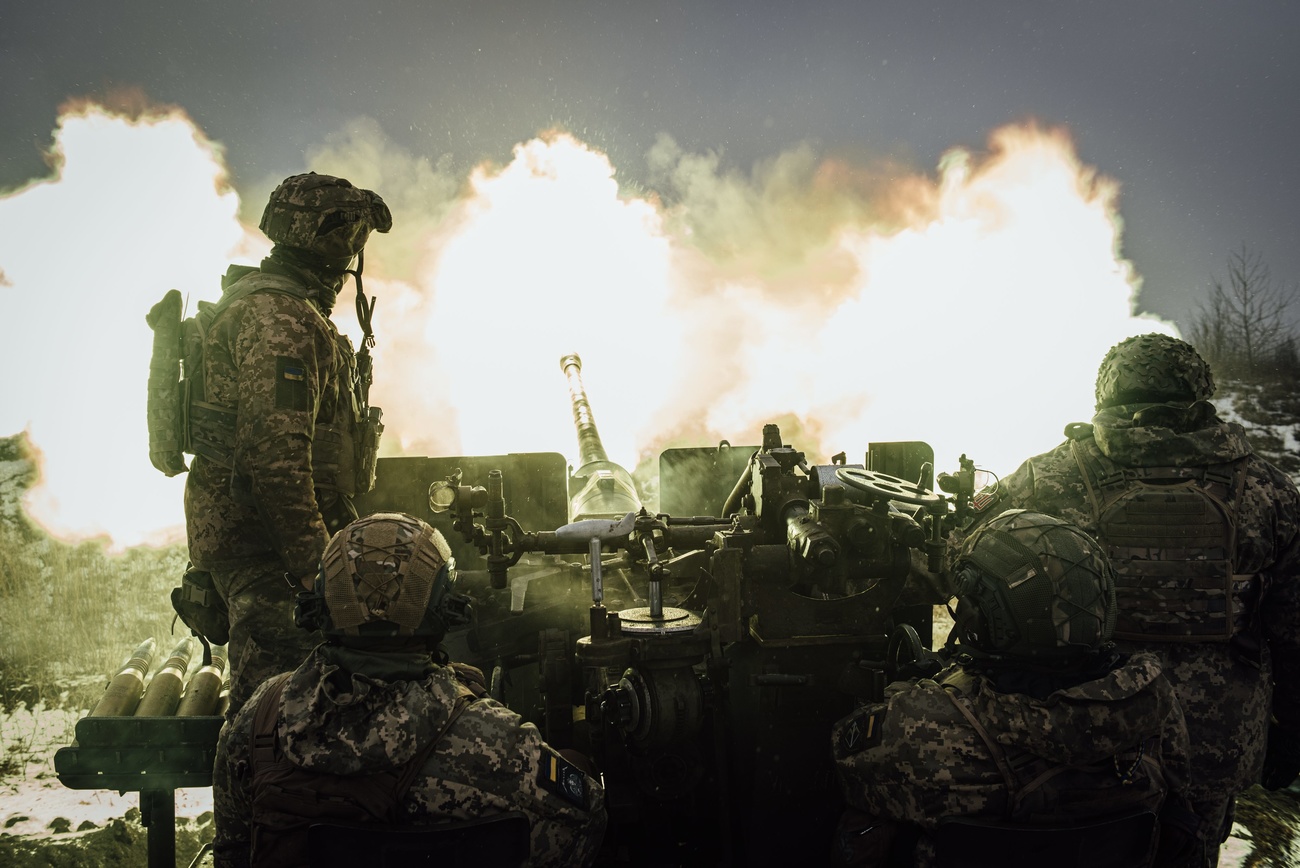
The situation on the battlefields with the Russian aggressor in 2026 will most likely follow an inertial scenario. Neither side will have sufficient resources for a rapid strategic breakthrough, but the initiative will largely remain with the Russian Federation. Moscow will continue its tactic of slow but systematic pressure, combining local offensive actions with infiltration, fire dominance, and constant strikes on rear infrastructure (mainly energy).
The Ukrainian Donbas will remain the key theater of operations and Russia’s primary territorial objective. This is where Russia will concentrate its main resources, reserves, and efforts. Meanwhile, the situation will remain tense in other front areas — north, east, and south of Ukraine. The length of the front line will continue to require superhuman efforts from the Armed Forces to maintain.
A particularly difficult challenge will be the further intensification of missile and drone attacks on Ukrainian territory. Russia will continue a strategy of systematically destroying energy, transport, residential, industrial, and military infrastructure. This will mean new waves of severe power outages, heating problems, disruptions in enterprises, rising social tension — and, consequently, continued mass migration from Ukraine.
The war will increasingly penetrate everyday life, destroying not only the front but also the rear. There are no positive military forecasts for the coming year at present.
Nevertheless, it is important to understand that the baseline scenario for 2026 does not assume a complete collapse of the Ukrainian front. The Armed Forces will maintain defense capabilities, and international military assistance, although delayed and facing certain political issues, will continue. However, this will be a continuation of a war of attrition, in which each month will cost Ukraine increasingly — economically, demographically, and psychologically.
Expert opinions
Political scientist and Director of the Institute of World Politics, Yevhen Magda, emphasizes: Ukraine is at war and will continue to be at war. This is the key challenge in 2026.
“Another point is that during 2025, many priorities in this context have shifted. The U.S., from being a strategic partner of Ukraine, has turned into a hybrid ally of Russia. This is an extremely unpleasant transformation, and we need to understand it. The European Union continues to see Ukraine as a state to deal with, but, unfortunately, I am convinced that the ‘Mindich affair’ will seriously undermine trust in Ukrainian leadership. I wouldn’t be surprised if additional requirements suddenly appear on the €90 billion loan.
We need to prepare to be more active. We need to mobilize internal reserves and strengthen internal unity and resilience. Russia will not leave Ukraine alone, this must be clear to as many people as possible. We must learn to clearly define our own goals. We have complex problems with many of our neighbors. Our neighborly relations do not work as a tool, and this, in my opinion, is extremely bad. We need to find ways to have effective talks with our partners and seek common ground. Otherwise, it will be very difficult for us. We must not bend under our partners and neighbors, but we must be adequate,” says Magda.
Political scientist and Director of the Center for Applied Political Studies “Penta,” Volodymyr Fesenko, believes that in 2026, first and foremost, one should expect the continuation and intensification of peace negotiations. However, everything depends on whether Moscow agrees and under what conditions.
“Ending the war in 2026 is possible, there are chances, but there are no guarantees it will happen. It depends not only on us, unfortunately. First of all, it depends on the military situation, on the activity, persistence, and consistency of our position. Also on our ability to withstand. Therefore, negotiations during the war will continue, with a chance to end bloodshed, but this chance is not absolute. Last year, such an opportunity did not exist. Whether we succeed in reaching an agreement — unknown. Everything will depend on circumstances. This is the main point.
Overall, the year will be difficult, very contradictory, and turbulent both externally and internally. If we are weak — on the front and in general — there will be no peace, only worsening. Therefore, the main factor influencing the effectiveness of negotiations is our ability to stop the enemy and withstand this war. I also expect further explosive NABU investigations. Elections in 2026 are unlikely, at most in the second half of the year. Rapid elections during the war will definitely not happen,” Fesenko added.
The year 2026 will be even more difficult and challenging for Ukraine than 2025. The economy will balance on the edge of survival, the political system will continue its process of “quiet” internal erosion, the war will remain as severe, bloody, and exhausting as before, and shelling of rear cities, unfortunately, will not cease.
2026 will not be a year of catastrophe, but it will not be a year of hope either. It will be a year of accumulating problems, postponed decisions, and difficult choices that can no longer be avoided. Ukraine enters it without a clear vision of the future, but with a sharp awareness that the coming years will demand an even higher price for the very right to exist in its current form.
